AIコンサル

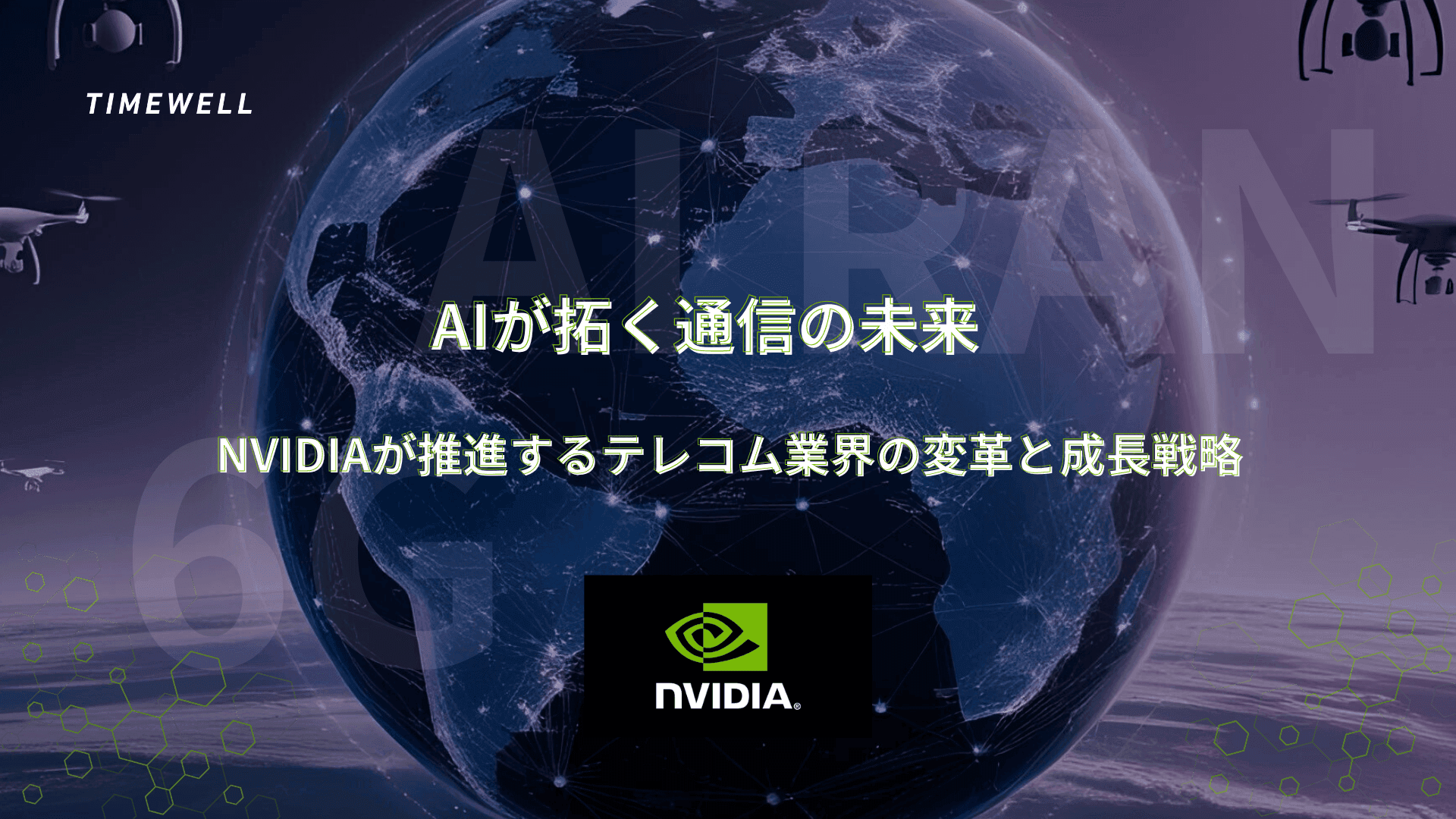
NVIDIA's Telecom Revolution: The $1 Billion Nokia Deal, AI-RAN Explained, and the Path to 6G

2026-01-21Hamamoto

NVIDIA invested $1 billion in Nokia to co-develop AI-RAN technology, accelerating the shift from 5G to 6G. T-Mobile field trials are planned for 2026. The Aerial software stack is now open-source under Apache 2.0. The AI-RAN Alliance has grown to 75+ members. Here's what AI-RAN is, why it matters, and what it means for enterprise network strategy.

NVIDIA's Telecom Revolution: The $1 Billion Nokia Deal, AI-RAN Explained, and the Path to 6G
シェア

From Ryuta Hamamoto at TIMEWELL

This is Ryuta Hamamoto from TIMEWELL Corporation.

NVIDIA has entered the telecommunications industry in a meaningful way. In late 2025, the company invested $1 billion in Nokia for joint AI-RAN development, open-sourced its Aerial software stack, and announced 6G field trials with T-Mobile. The companies and governments building tomorrow's network infrastructure are making decisions now. This article explains what AI-RAN is and why those decisions matter.

NVIDIA × Telecom: 2026 Snapshot

Item Details
Nokia investment $1 billion
New product Arc Aerial RAN Computer (6G-ready)
T-Mobile field trials 2026 launch
Aerial open-source Dec 2025 (AODT: March 2026)
AI-RAN Alliance 75+ member companies

The Nokia Partnership

NVIDIA's $1 billion investment in Nokia funds joint development of AI-RAN innovation to accelerate the transition from 5G to 6G. The practical output includes:

  • Nokia adding NVIDIA-platform AI-RAN products to its portfolio
  • Enabling carriers to deploy AI-native 5G-Advanced and 6G networks
  • Supporting US competitiveness in next-generation communications infrastructure

Alongside the Nokia deal, NVIDIA announced the Arc Aerial RAN Computer — a 6G-ready communications computing platform optimized for AI-RAN workloads, designed for high performance with low power consumption and software-defined flexibility.

Looking for AI training and consulting?

Learn about WARP training programs and consulting services in our materials.

What AI-RAN Is and Why It Matters

The problem with conventional RAN

Traditional Radio Access Networks (RAN) have several structural limitations:

Challenge Detail
Dedicated hardware Purpose-built equipment with limited flexibility
Low utilization rates Built for peak demand, average utilization ~30%
High operating costs Power consumption and maintenance overhead
Limited AI capability Not designed for AI inference workloads

AI-RAN's approach: three integrated layers

AI-RAN merges AI and RAN on a single generalized infrastructure:

  1. AI for RAN — AI improves the RAN itself: spectrum efficiency, power efficiency, operational efficiency
  2. AI running with RAN — RAN functions and AI applications run on the same hardware, dramatically improving asset utilization
  3. AI delivered on RAN — The RAN delivers AI services to endpoints; edge AI inference becomes practical

Measured results from early deployments:

  • SoftBank: improved ROI, better asset utilization, improved energy efficiency
  • Deep Sig: 70% improvement in communication speed using neural network Layer 1 processing
  • Fujitsu × SoftBank: 50% uplink performance improvement

The All-American AI-RAN Stack

NVIDIA, working with Booz Allen, Cisco, MITRE, ODC, and T-Mobile, has announced the first AI-native radio stack built in the US.

Capabilities:

  • Advanced AI integrated at hardware, software, and architecture levels
  • Designed to handle the growth trajectory of AI traffic
  • Launch planned for 2026

Target use cases:

  • Real-time data sensing and analytics
  • Automated response systems
  • AI-native devices (drones, AR/VR glasses)
  • Integrated sensing and communication (a core 6G capability)

T-Mobile field trials (2026): T-Mobile will run real-environment validation with Nokia and NVIDIA focused on performance improvements for end users and confirming the 6G innovation roadmap.

Aerial Software: Now Open Source

NVIDIA open-sourced its Aerial software stack to accelerate AI-RAN research and development.

Component Release Content
Aerial CUDA-Accelerated RAN Dec 2025 GPU-accelerated RAN stack
Aerial Framework Dec 2025 Development framework
Aerial Omniverse Digital Twin March 2026 Physically accurate RF simulation

License: Apache 2.0 (available on GitHub)

NVIDIA claims the open-source release compresses development timelines from "months to years" to "hours" for rapid prototyping through production.

The 6G Roadmap

AI-first design from the ground up

NVIDIA's approach to 6G: build AI into network design from the beginning, not retrofit it later. The 6G Developer Program has 2,000+ members and provides:

  • Sionna: a differentiable Layer 1 simulator
  • Sionna Research Kit: a hardware research kit for 6G development

Aerial Omniverse Digital Twin

This tool creates detailed 3D city models — including building materials and vegetation — to enable advanced network planning before physical deployment:

  • Simulation of base station placement scenarios
  • AI-based channel estimation (40% improvement over conventional methods)
  • Direct deployment of optimized configurations to live base stations

Then vs. Now: NVIDIA's Telecom Evolution

Item 2024 January 2026
Nokia partnership None $1 billion investment
AI-RAN products Research stage Arc Aerial RAN Computer announced
Alliance Founded (early 2024) 75+ members
Software Closed Open-sourced
6G trials Planning stage T-Mobile launch 2026
Carrier NCP partners Limited 15+ carriers

AI Factories: A New Revenue Source for Carriers

Telecommunications carriers can leverage existing infrastructure assets — real estate, power, connectivity — to operate as AI factories and generate new revenue streams.

NVIDIA Cloud Partners (NCP) program members: IOH (Indonesia), Telenor (Norway), Iliad (France), Telus (Canada — first North American carrier), and 15+ others.

Sovereign AI: Carriers are well-positioned to serve the growing demand for sovereign AI — AI infrastructure that processes data within national borders. Target sectors include healthcare, education, research institutions, and government agencies.

What This Means for Enterprise Strategy

Network partner selection

When organizations evaluate telecommunications partners, AI-RAN capability is becoming a meaningful differentiator. Key questions:

  • What has this carrier invested in AI-RAN?
  • What edge computing capacity do they offer?
  • What is their 6G readiness roadmap?
  • Do they offer AI factory services?

Edge AI applications

AI-RAN makes practical a range of edge AI applications previously constrained by latency and bandwidth:

  • Real-time video analytics
  • Autonomous vehicle edge processing
  • AR/VR latency reduction
  • Smart factory operations

Summary

NVIDIA is pursuing what it calls an AI renaissance in telecommunications. The moves are consistent and mutually reinforcing: invest in Nokia, open-source the software to build ecosystem momentum, partner with T-Mobile on 6G field trials, and give carriers a new revenue model through AI factories.

The transition from 5G to 6G isn't just about faster speeds. It's about networks that incorporate AI at the architecture level — networks that can sense, reason, and adapt. For enterprises that depend on network infrastructure, the telecom partners chosen in the next few years will significantly shape AI capability for the decade that follows.

Considering AI adoption for your organization?

Our DX and data strategy experts will design the optimal AI adoption plan for your business. First consultation is free.

Share this article if you found it useful

シェア

Newsletter

Get the latest AI and DX insights delivered weekly

Your email will only be used for newsletter delivery.

無料診断ツール

あなたのAIリテラシー、診断してみませんか?

5分で分かるAIリテラシー診断。活用レベルからセキュリティ意識まで、7つの観点で評価します。

Learn More About AIコンサル

Discover the features and case studies for AIコンサル.