This is Hamamoto from TIMEWELL.
Expo 2025 Osaka attracted significant attention from business professionals and tourists worldwide as an event where advanced global technology and diverse cultures converged. The theme "Designing Future Society for Our Lives" provided the conceptual frame, but the scale of the venue and the volume of things to see made advance planning genuinely necessary.
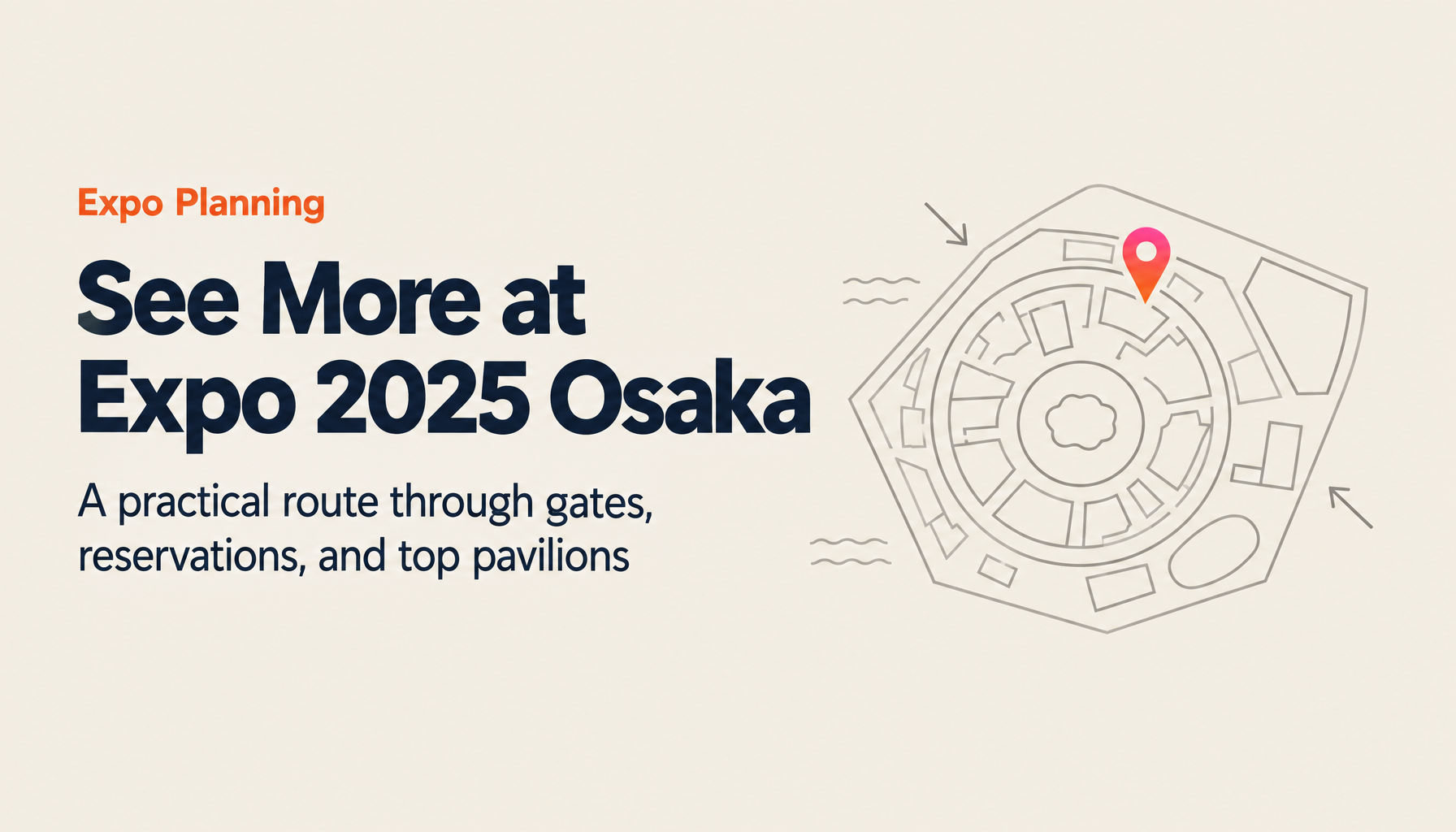
This article covers the practical logistics: how to get there, which gate to use, how the reservation system works, and how to build an itinerary that covers the major pavilions without spending the whole day waiting in lines.
- Access Strategy and Getting to the Venue
- Pavilion Visit Plan and Reservation System
- Learning from the Experience — Culture, Technology, Food, and What It All Means
- Summary
Access Strategy and Getting to the Venue
The Expo 2025 venue had two main entry points: the East Gate and the West Gate. Understanding the difference was the first planning decision every visitor needed to make.
East Gate: Accessible by subway (Chuo Line to Yumeshima Station). More popular, which means longer lines — particularly during peak hours.
West Gate: Accessible by car, bus, and taxi only. For visitors coming from Sakurajima Station, shuttle buses ran frequently. Pre-booked shuttle bus tickets virtually eliminated wait time at the stop, and visitors who arrived early in the morning reported security and entry taking approximately 10 minutes — a significant advantage over peak-hour East Gate entry.
Key access points:
- Shuttle bus from Sakurajima Station: book in advance to skip wait times
- East Gate vs. West Gate: choose based on your transport mode and tolerance for crowds
- Early arrival (opening time or shortly after): security is fast, entry is smooth
Once inside, the first 10 minutes were the most strategically important. The official Expo app allowed same-day reservations for pavilions that required them. Securing a mid-afternoon slot immediately upon entry — before beginning any free-access pavilion visits — was the key move that separated visitors who saw everything from those who spent hours in unplanned queues.
Looking for AI training and consulting?
Learn about WARP training programs and consulting services in our materials.
Pavilion Visit Plan and Reservation System
The reservation system worked as follows: visitors could book one pavilion at a time using the official app. After completing a visit, they could book their next pavilion starting approximately 10 minutes before the previous visit ended. The one-reservation-at-a-time limit made sequencing important — the optimal strategy was to align free-access pavilions with the gaps between reservations.
Morning strategy: Use the lower-crowd early hours to visit popular pavilions that do not require reservations. The US Pavilion, for example, typically had 2+ hour waits during peak hours. In the early morning, the same pavilion took approximately 20 minutes to enter.
US Pavilion: A space-themed experience centered on a stage shuttle simulation that evoked the sensation of launching into space. Rocket footage, a moon rock, and immersive production made it one of the most memorable visits for many attendees — particularly effective with children.
France Pavilion: No reservation available, making early-morning timing essential. Louis Vuitton and Chanel were among the major French brands represented, with sound and light installations that created a strong sensory impression. A typical visit ran about 30 minutes.
Thailand Pavilion: No reservation needed, wait time approximately 20-30 minutes. Live cooking demonstrations drew significant crowds — with one-of-a-kind dishes prepared fresh on site, using techniques and ingredients that most visitors had never encountered.
UK Pavilion: Short wait times, approximately 20-30 minutes. British culture, technology, branded goods, and a café serving English tea created an experience that balanced exhibition with hospitality.
Japan Pavilion: Reservations required even for ticket holders. Wait time approximately 30 minutes even with a booking. Inside, a Mars rock display and historical documents repatriated from overseas framed the theme of "life's cycles" across centuries.
Reservation system summary:
- Book your first reservation within 10 minutes of entering the Expo
- Visit unprompted pavilions in the morning when crowds are lightest
- Start a new reservation 10 minutes before finishing your current visit
- One active reservation at a time — plan the sequence accordingly
Learning from the Experience — Culture, Technology, Food, and What It All Means
The Expo was a genuinely dual-register experience: daytime pavilion visits and nighttime spectacle created two distinct kinds of engagement.
During the day, the information density was high. Each pavilion carried the cultural weight of the country or company behind it — technology demonstrations, artistic installations, historical artifacts, and food all serving as communication channels. Visitors who engaged with this content actively (rather than moving quickly from pavilion to pavilion) left with substantive impressions of the exhibiting countries' values, priorities, and vision.
After dark, the venue transformed. The Great Roof Ring — the wooden circular structure that enclosed the Expo's central space — lit up in ways that made the daytime venue feel like a different place. Evening hours also meant lighter crowds, making it possible to revisit pavilions that had been inaccessible during peak daytime hours. Evening performances combined water, sound, and light in coordinated shows visible from multiple angles within the venue.
Food played a consistent role throughout the day. The France Pavilion's boulangerie offered on-site bread and light meals. International pavilion restaurants provided context for their food — a meal at the Italian pavilion's rooftop restaurant was not just lunch, it was a demonstration of Italian craft food culture.
For business professionals, the networking dimension of the Expo was real but informal. Pavilion exits with gift shops and cafés naturally generated conversation and connection. This was not the structured networking of a conference, but the organic connection that shared experience facilitates.
The Australia Pavilion's multi-screen ocean display, visible from several vantage points inside the pavilion, was one of the more effective uses of immersive technology on the grounds — not just visually impressive but emotionally resonant in ways that a single screen could not achieve.
Summary
An effective one-day Expo 2025 Osaka visit required planning, but the planning was not complicated. The core strategy:
- Access: Shuttle bus from Sakurajima Station (pre-booked) → West Gate entry. Early arrival means fast security.
- First 10 minutes: Open the app and book your first pavilion reservation — target the afternoon slot for the most popular pavilion on your list.
- Morning: Visit free-access popular pavilions (US, France) while crowds are low.
- Afternoon: Execute your reserved pavilion sequence, initiating the next reservation as each visit concludes.
- Evening: Revisit anything missed, enjoy the nighttime spectacle, decelerate with food.
The Expo's value was not just in the individual pavilions — it was in the accumulated exposure to how different countries, companies, and cultures chose to present themselves to the world. For anyone working in international business, that kind of direct observation is genuinely useful. The one-day constraint made planning necessary; the planning made the day genuinely good.
Reference: https://www.youtube.com/watch?v=2YXnZSUa8uM
![Three Must-Do Steps to Take Parental Leave Even During Your Busiest Season [Pre-Leave: Personal Account Part 2]](/images/columns/3.png)