This is Hamamoto from TIMEWELL.
A Character That Divided Opinion — Then Conquered It
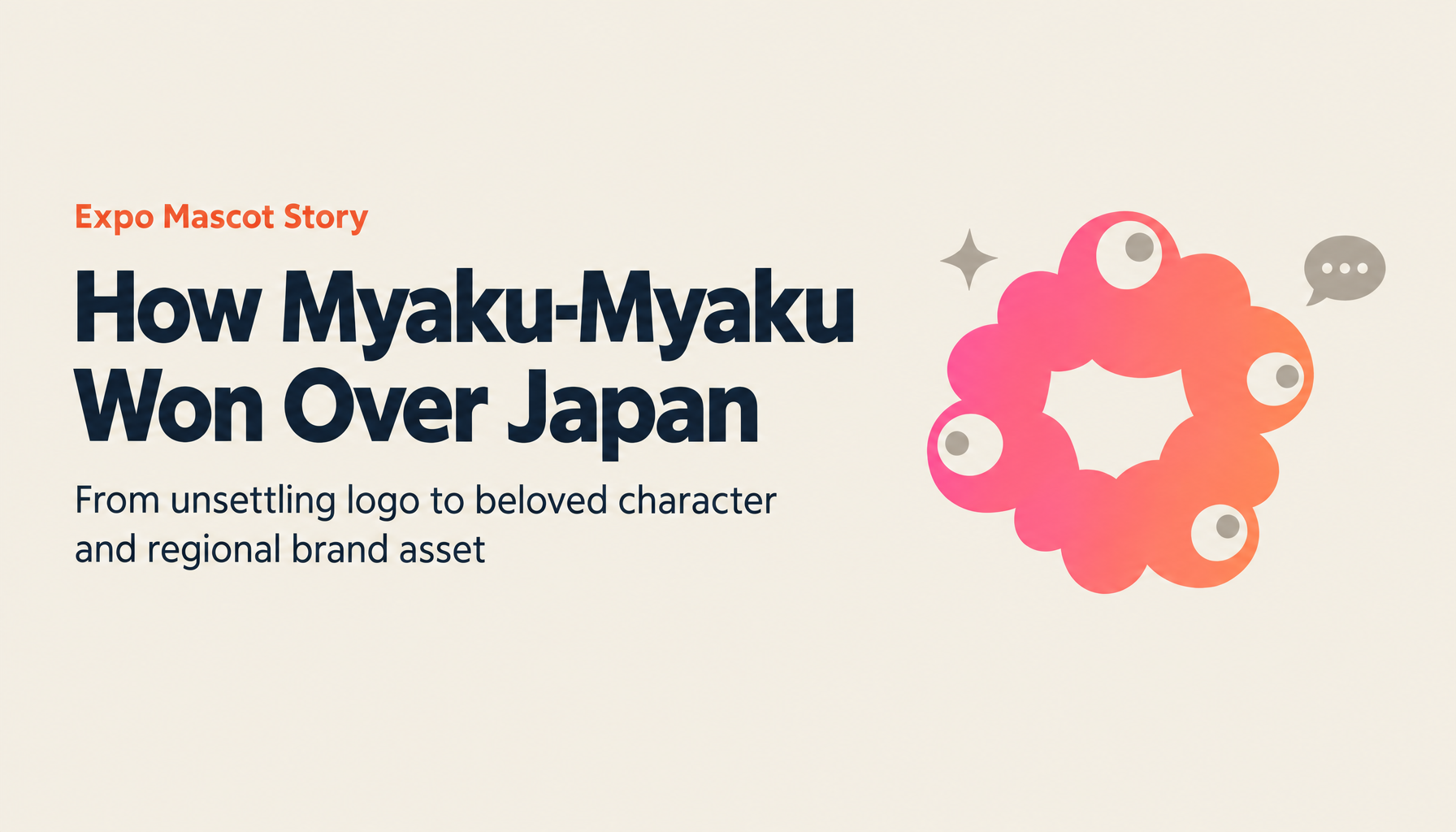
When Osaka-Kansai Expo 2025 announced its official logo in August 2020, the response was immediate and divided. The design — a cluster of cells in red and blue, with an eye structure — was unlike any previous expo mascot or Japanese regional character. A segment of the public described it as "kimochi warui" (unsettling). Another segment immediately recognized something distinctive.
What followed was a five-year arc from controversial logo to nationwide affection — driven by specific design decisions, deliberate promotional choices, and a character narrative unusual for the mascot category.
- Why that design? The creation process and design challenges
- Myaku-Myaku in motion: the promotional strategy at the venue and beyond
- After the expo: potential as a regional brand asset
- Summary
Looking for AI training and consulting?
Learn about WARP training programs and consulting services in our materials.
Why That Design? The Creation Process
The Logo's Origins
The official logo was created to represent the expo's theme: "Designing Future Society for Our Lives." The visual concept drew from the idea of life at the cellular level — the basic unit from which all existence originates. The design depicts a cell cluster with eyes, in red and blue, arranged to suggest both life and the interlocking systems of modern society.
When the character "Myaku-Myaku" was developed from this logo, the challenge was three-dimensional realization of a design that existed primarily as a flat graphic.
The 3D Realization Problem
The producer describing the development process uses the phrase: "When this design was selected, my honest first reaction was — this is going to be difficult."
The specific design challenges:
Proportions and silhouette — The character needed to look consistent from multiple viewing angles. A too-wide horizontal profile reduced the "cute" reading. Multiple rounds of prototype adjustment addressed the shoulder line, the posterior curve, and the eye proportions.
The "tail" element — The lower portion of the character, sometimes described informally as a tail, was designed specifically as an independent expressive element — not an appendage, but a presence in its own right.
Functional movement — An additional design requirement was added during development: the character needed to be capable of holding and throwing objects, enabling use during live promotional events and sports appearances. The internal structure of the suit was engineered to support this range of motion.
The narrative backstory — Myaku-Myaku's origin story describes a cell born over 3.5 billion years ago that eventually arrived in Osaka. This backstory is unusually specific for a mascot character, and the production team treated it as load-bearing: every design decision was evaluated against whether it was consistent with the character's cellular origins and its path through geological time to the present.
From "Unsettling" to Standard
The initial negative reaction to the design was real and documented. The producers were aware of it. The response was not to modify the core design toward convention, but to trust that repeated encounter with a well-executed unusual design would shift perception.
This proved correct. The mechanism: the character's distinctiveness made it easier to recognize and remember than a conventionally "cute" design, and repeated encounters in varied contexts — the venue, merchandise, street events, SNS — built the familiarity that produces affection.
Myaku-Myaku in Motion: The Promotional Strategy
At the Venue
At the East Gate and West Gate entrances, large-format Myaku-Myaku statues greet arrivals. Within the venue, character appearances generate queues that form from early morning — visitors waiting for photo opportunities before the main pavilion crowds develop.
The live character appearances are choreographed to a professional standard. Staff rehearsals are visible and thorough. The character has been documented throwing balls, dancing, and engaging in extended performer-audience interaction. This level of physical performance quality is unusual for event mascot appearances.
Merchandise and Licensing
Character merchandise became one of the top-performing retail categories at the expo. Sales extended from venue souvenir shops to licensing partnerships with manufacturers producing Myaku-Myaku items for general retail distribution.
The character also expanded into a digital product category: the official app includes a virtual Myaku-Myaku component with photography features, digital collectibles, and event participation mechanics — connecting the physical character to a persistent digital engagement layer.
Regional Reach
The promotional footprint extended well beyond the venue. Official merchandise events and photo opportunities were held in Okinawa and other regions geographically distant from Osaka. Regional commercial facilities hosted Myaku-Myaku appearances independently of the expo venue. The character appeared at local events in Osaka's ward offices, shopping districts, and community centers throughout the expo period.
After the Expo: A Regional Asset?
The Kumamon Comparison
The reference point for discussion of Myaku-Myaku's post-expo potential is Kumamon — the bear character created for Kumamoto Prefecture's regional branding in 2010. Kumamon is now globally recognized, generates substantial ongoing licensing revenue for Kumamoto Prefecture, and has become a model for the regional character strategy in Japanese tourism and economic development policy.
The elements Myaku-Myaku shares with Kumamon:
- Unusual design that bypassed convention
- Initial controversy followed by broad adoption
- Strong merchandise performance during the event period
- A narrative dimension that goes beyond pure visual appeal
The elements that are different:
- Kumamon is tied to a specific prefecture with an ongoing institutional interest in maintaining and developing the character. Myaku-Myaku is tied to a one-time event.
- Post-expo governance for the character requires a decision about which organization holds the licensing rights and promotional mandate.
- The cellular origin story, which is central to the character's identity, requires continued storytelling investment to remain meaningful rather than becoming a trivia footnote.
The Conditions for Success
For Myaku-Myaku to develop into a durable regional asset comparable to Kumamon or Hikonyan (the Hikone Castle mascot), three conditions appear necessary:
- Institutional continuity — A specific organization needs to own and manage the character actively post-expo, rather than allowing the license to disperse without coordination.
- Story investment — The 3.5-billion-year origin narrative needs to continue generating content rather than remaining a one-time introduction.
- Physical presence — Continued live character appearances, particularly in Osaka and the Kansai region, maintain the emotional familiarity that drives merchandise demand and media coverage.
Summary
Myaku-Myaku's trajectory from initial controversy to widespread affection is a branding case study that does not require the expo's resources to be instructive. The core decisions — design from a specific concept rather than from convention, trust distinctive design to build familiarity over time, invest in physical performance quality for live appearances, connect the character to a narrative rather than leaving it as pure visual identity — are applicable well beyond the mascot category.
For business visitors interested in brand building and character strategy, the progression from August 2020 (logo announcement with divided reaction) to October 2025 (nationwide merchandise success, post-expo strategic discussions) provides a compressed, observable example of how initial rejection of the unfamiliar can become a competitive advantage.
Reference: https://www.youtube.com/watch?v=jBTLAYfl0cg
![Three Must-Do Steps to Take Parental Leave Even During Your Busiest Season [Pre-Leave: Personal Account Part 2]](/images/columns/3.png)