This is Hamamoto from TIMEWELL.
What You Actually Need to Carry for a Full Day
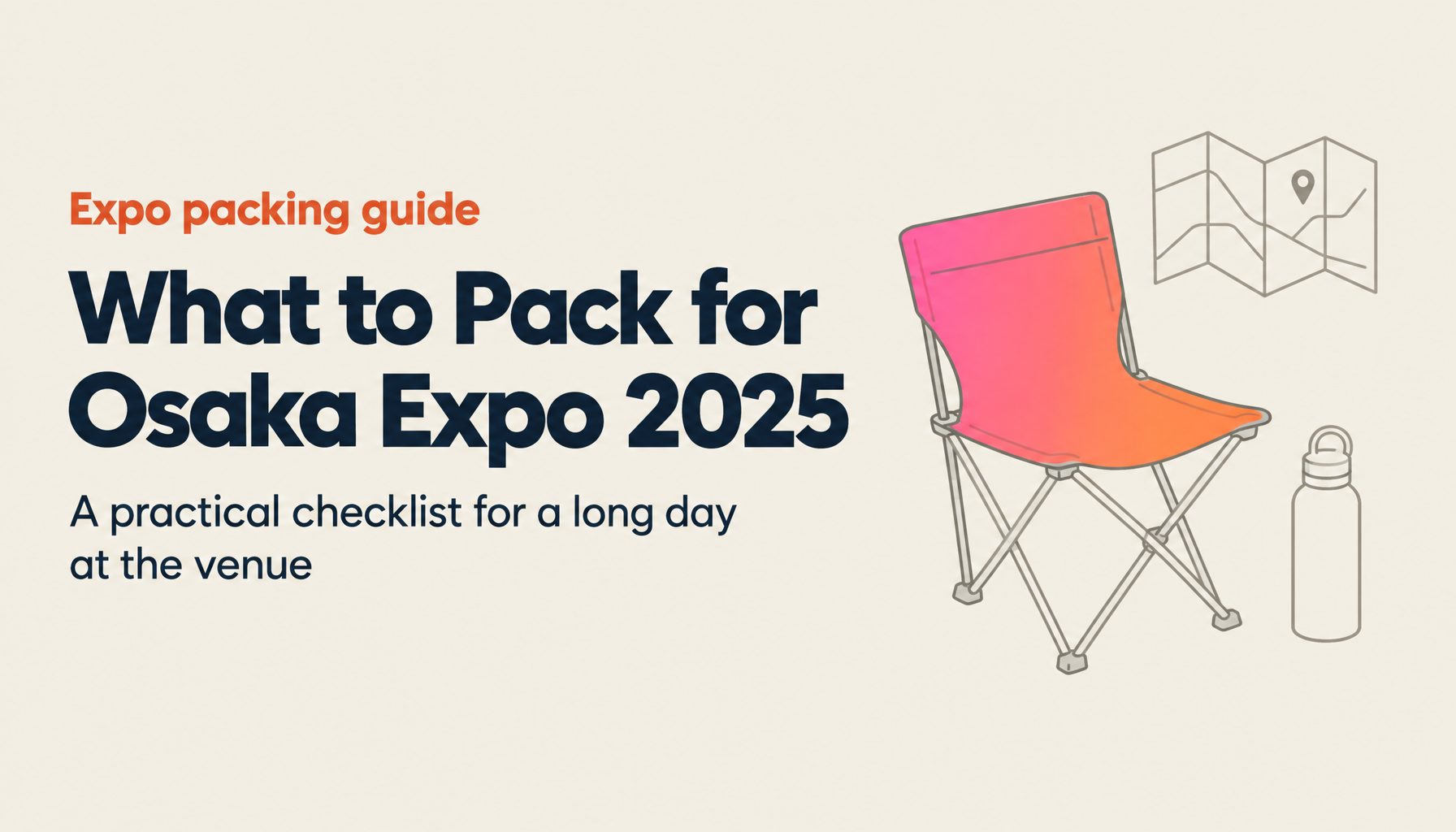
Packing for Osaka Expo 2025 is not complicated, but it is specific. The venue is large, the weather is variable, and the experience lives or dies on how well you manage three things: information access, physical endurance, and payment readiness. This article covers what made a real difference in a full-day visit — not a theoretical checklist, but items that were used continuously from 9 AM to 9 PM across approximately 25,000 steps.
- Pre-visit preparation: maps and planning
- Rain and weather gear
- Physical comfort items: water, food, chair
- Digital tools and cashless setup
- Summary
Maps: Print Before You Go
The official venue map is not distributed in print at the venue. You need to print it yourself before arrival. The official app version is functional but requires zooming in to read pavilion names — workable for quick checks, not for navigation while walking.
A separate resource that circulated widely on X (formerly Twitter): an unofficial map created by a visitor known as Tsuji-san, which consolidated pavilion-by-pavilion information including same-day reservation availability, walk-in entry windows, and reservation release times on a single sheet. This map was more useful as a day-of planning tool than the official version.
Annotation tip: mark your pre-reserved pavilions, their entry method (advance reservation / first-come / walk-in window), and target times directly on the printed map. The map then functions as a schedule card — you don't need to open the app to know where you are going next.
Bonus use of a printed map: multiple expo stamp stations allow you to mark your stamps and stickers directly on the map, creating a physical record of where you visited.
Looking for AI training and consulting?
Learn about WARP training programs and consulting services in our materials.
Rain and Weather Gear
A rain and lightning forecast was in effect on the visit day. One umbrella is not sufficient for a full-day outdoor venue visit where you are constantly moving between locations. The practical solution: a compact folding umbrella, available at Daiso and similar 100-yen shops. The compact size matters — full-size umbrellas impede movement in crowded areas, and the venue does not provide umbrella stands.
The same compact umbrella doubles as a sun shade during outdoor transitions, which reduces the need to carry a separate parasol. The combination of folding umbrella + hat + sunscreen covers the weather variation at an outdoor venue without overloading the pack.
Water, Food, and the Folding Chair
Water bottle: The venue has approximately 32 refill stations, typically located near vending machines. One technical note: clear transparent bottles can interfere with light sensors on some of the refill dispenser types. Wave your hand over the sensor if the dispenser does not activate with the bottle in position. Pre-chill the water before leaving your hotel — refill stations dispense unchilled water.
Food: Queue times at the popular restaurants peak at midday. The most efficient strategy for avoiding a 40-minute food queue: carry onigiri or a simple packed meal. Eating on an outdoor bench while others wait in line is a legitimate time recovery move. The venue permits outside food (with the standard exclusions for glass containers and alcohol).
Folding chair: The single most consequential item in the pack. A compact folding chair purchased from Rakuten for ¥2,200 was used at every queue across a 12-hour visit. The impact: queue waits that would drain energy standing became neutral — you can sit, check the app, update your schedule, record a short video. The chair was attached to the backpack with a carabiner when not in use, which kept both hands free.
The combination of a good folding chair and a printed map converts the wait time from a loss into a planning window.
Digital Tools and Cashless Payment
The venue is effectively cashless. Cash transactions are limited or unavailable at most locations. The practical response: replace your wallet with a card case holding your credit card, IC card, and a physical backup card. No cash required; fewer items to manage.
Apps to set up as home screen shortcuts before arrival:
- Official Expo Visitors App — ticket management, pavilion reservations, wait time display
- KANSAI MaaS — transport planning and shuttle reservations
- Personal Agent (within the official app) — real-time routing
The apps are useful during the visit, but they consume battery. Two 10,000mAh batteries were used over the course of the day — one depleted, one in reserve. This is the right minimum for a full-day visit where the phone is running navigation, QR code display, camera, and live updates simultaneously.
Battery strategy: Keep one battery charging your phone continuously during transit (train, shuttle); use the second as reserve for mid-afternoon when the first runs out. Do not wait until the first is fully depleted to switch.
Clothing
The recommended outfit for the visit day: lightweight breathable top, pants (not a skirt — mirrored floors at the null² Signature Pavilion), comfortable sneakers worn in before the day.
A note on coordination: the official Myaku-Myaku character is red and blue. Wearing a matching color scheme — red and blue combination — creates an unexpected social result: other visitors comment on the match, staff acknowledge it, and photos at Myaku-Myaku spots have more visual coherence. This is a minor point, but it illustrates how the expo environment rewards visitors who engage with it rather than simply passing through.
Packing Checklist
| Item | Why It Matters |
|---|---|
| Pre-printed venue map (official + unofficial Tsuji map) | Battery-independent navigation and schedule management |
| Compact folding umbrella | Rain and sun protection without restricting movement |
| Water bottle (check sensor type) | 32 refill stations available; pre-chill from hotel |
| Packed snack / onigiri | Avoid peak midday food queue times |
| Folding chair (¥2,200) | Queue waits become productive time |
| 10,000mAh battery x2 | Phone is essential all day; one battery will not be enough |
| Card case (credit card + IC card) | Venue is cashless; no need for a full wallet |
| Sunscreen + hat | Sustained outdoor queue exposure |
| Sweat sheets + sanitizing wipes | Physical interaction at pavilion exhibits + heat management |
| Ziplock bags + small garbage bag | Wet items, trash before reaching a bin |
| Water-resistant backpack | Protects electronics; distributes weight evenly |
Reference: https://www.youtube.com/watch?v=7mRCG0C8nUg
![Three Must-Do Steps to Take Parental Leave Even During Your Busiest Season [Pre-Leave: Personal Account Part 2]](/images/columns/3.png)