This is Hamamoto from TIMEWELL.
Weather Shouldn't Determine Your Expo Day
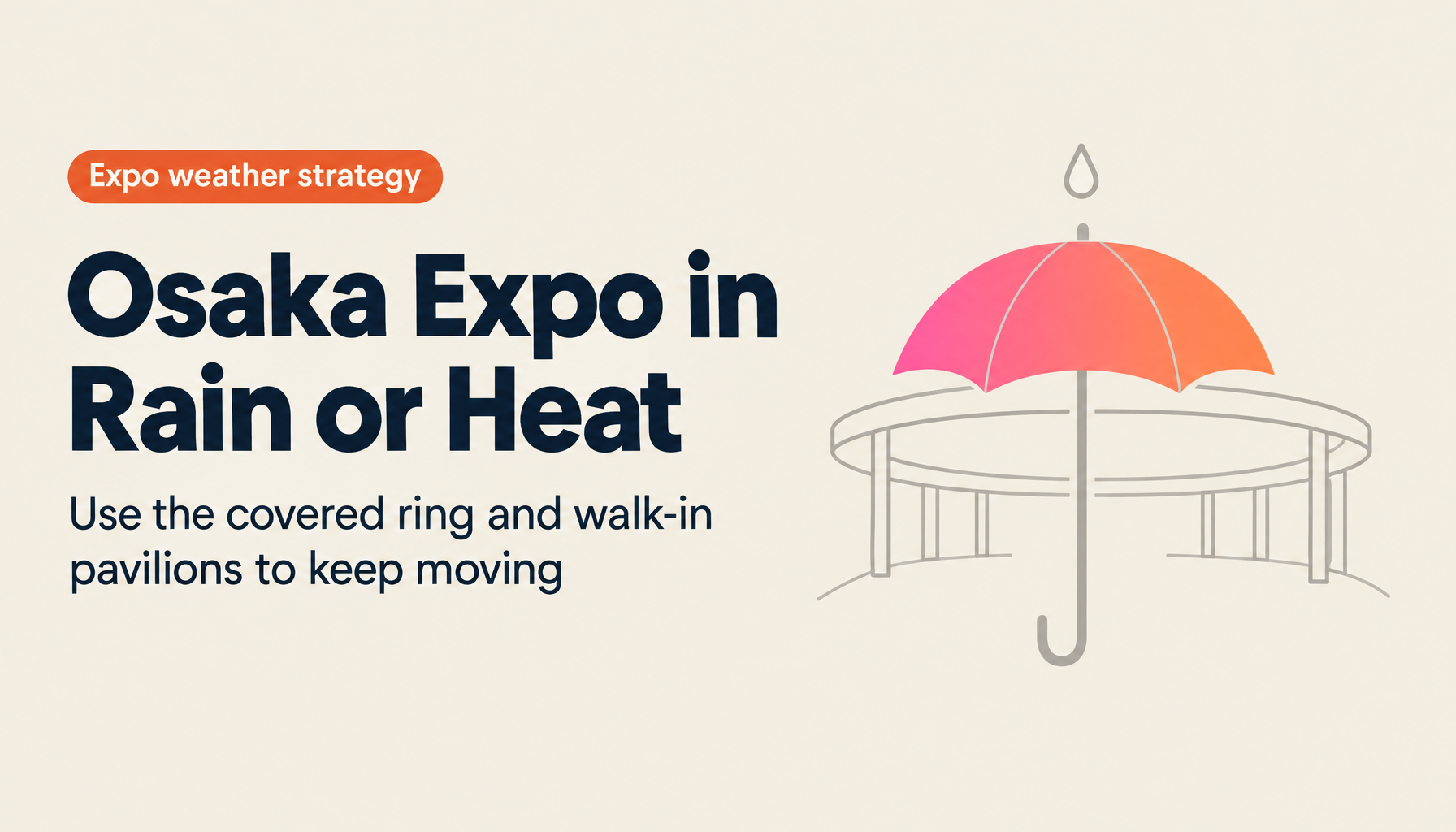
Rainy days and peak heat days at Osaka Expo 2025 are not the same as a failed visit. The venue was designed with a physical infrastructure — the Grand Roof Ring — that allows continuous movement between most major pavilions without sustained outdoor exposure. Understanding how to use this structure is the difference between a comfortable day and a physically exhausting one.
This guide covers how to navigate the venue in rain or extreme heat, and identifies the walk-in pavilions along the Grand Roof Ring route that reward opportunistic visits.
- The Grand Roof Ring: what it is and how to use it
- Walk-in pavilions along the connecting zone
- Summary
Looking for AI training and consulting?
Learn about WARP training programs and consulting services in our materials.
The Grand Roof Ring
The Grand Roof Ring is a covered, elevated walkway that forms the central axis of the venue. It connects the major pavilion zones without exposing visitors to direct sun or rain. Key properties:
- Covers a significant portion of the inter-pavilion transit route
- Air conditioning in enclosed sections
- Rest areas and hydration stations accessible from the ring
- Walk-in pavilions concentrated along the route
In rain: the ring eliminates the umbrella problem for most inter-pavilion movement. You will have outdoor exposure at entry and exit points, but the core navigation loop is covered.
In extreme heat: the ring provides temperature relief that is genuinely meaningful — the difference between moving through 35°C outdoor sun and a covered, ventilated corridor is physically significant over a full day. Using the ring as your primary transit route rather than the outdoor paths reduces total heat exposure by an estimated 40–60% depending on itinerary.
Operational note for rainy days: Some pavilions pause same-day reservation acceptance during heavy rain periods. If this affects your target pavilion, the response is to shift to walk-in pavilions along the ring rather than waiting. Real-time pavilion status is visible in the official app.
Walk-In Pavilions: Spain, Australia, India, Germany
Spain Pavilion
The Spain Pavilion is located with access from the ring. The interior is built around a 360-degree screen experience — visitors move up a staircase and emerge into a surrounded display that uses manga and hologram techniques to document Spanish history and the Japan-Spain relationship across centuries.
A practical design detail: exhibit text is written in two parallel versions — one for children, one for adults — visible simultaneously. This is unusual and effective; families with mixed ages can engage with the same exhibit without anyone being underchallenged or overwhelmed.
The visual content quality is high enough that a 30–40 minute visit is meaningful. Walk-in, no reservation required; rotation rate is good enough that queues clear continuously.
Australia Pavilion
The Australia Pavilion is walk-in, self-paced, and designed around sensory immersion. The central experience is an environment using eucalyptus scent — the smell of Australian native forest — combined with large-format nature video. Hidden endemic wildlife is embedded in the exhibit design, which rewards slower visitors who look carefully rather than walking through quickly.
An evening feature: a night starfield zone showing Australian constellations, specifically the Southern Cross constellation cluster that includes the Emu in the Sky. This section functions differently at night than during the day, making the Australia Pavilion worth revisiting at different times of day.
Rainy day utility: the enclosed, self-paced format is one of the most comfortable options for filling time during a rain event or during the 11 AM – 3 PM heat peak.
India Pavilion
The India Pavilion runs on a hybrid format: visitors begin with a group presentation covering Indian traditional arts and frontier science (moon exploration, space program context), then transition to walk-in self-paced exploration. The structured opening followed by self-directed continuation works well for groups who want shared context before independent browsing.
Content highlights:
- Moon exploration model with the Chandrayaan mission context
- Traditional dance performance visible from the exhibit floor
- VR booth experience (lines can form; use morning visits for better access)
No reservation required. Midday brings entry limits due to popularity, so morning is the recommended access window.
Germany Pavilion
The Germany Pavilion presents circular economy concepts through interactive exhibits. The character "Circular-chan" appears as a guide figure throughout, explaining sustainability systems in an accessible format for both children and adults.
The exhibit rotation rate is notably high — even when a queue forms outside, it typically moves in under 20 minutes. The content density justifies the wait: multiple interactive stations, demonstrations, and the Circular-chan narrative thread create a structured experience rather than a linear walkthrough. Strong positive feedback in visitor accounts across age groups.
Summary
| Condition | Primary Strategy |
|---|---|
| Rain | Use Grand Roof Ring for transit; shift to walk-in pavilions if reserved targets pause |
| Extreme heat (11 AM – 3 PM) | Stay on covered ring; use indoor pavilions during peak heat window |
| Weather recovery window | Spain and Germany Pavilions for dense, high-quality content in covered spaces |
| Full sensory experience | Australia Pavilion (scent + video + starfield zone) |
| Family with mixed ages | Spain Pavilion (child/adult parallel text), India Pavilion (structured then self-paced) |
The Grand Roof Ring effectively converts a weather-compromised day into a manageable one. Planning your walk-in targets in advance — specifically which pavilions along the ring you will use as weather contingencies — removes the anxiety of an unexpected rain event.
Reference: https://www.youtube.com/watch?v=5oLe1noLpAc
![Three Must-Do Steps to Take Parental Leave Even During Your Busiest Season [Pre-Leave: Personal Account Part 2]](/images/columns/3.png)