This is Hamamoto from TIMEWELL.
Market Disruption and What It Means for Startups
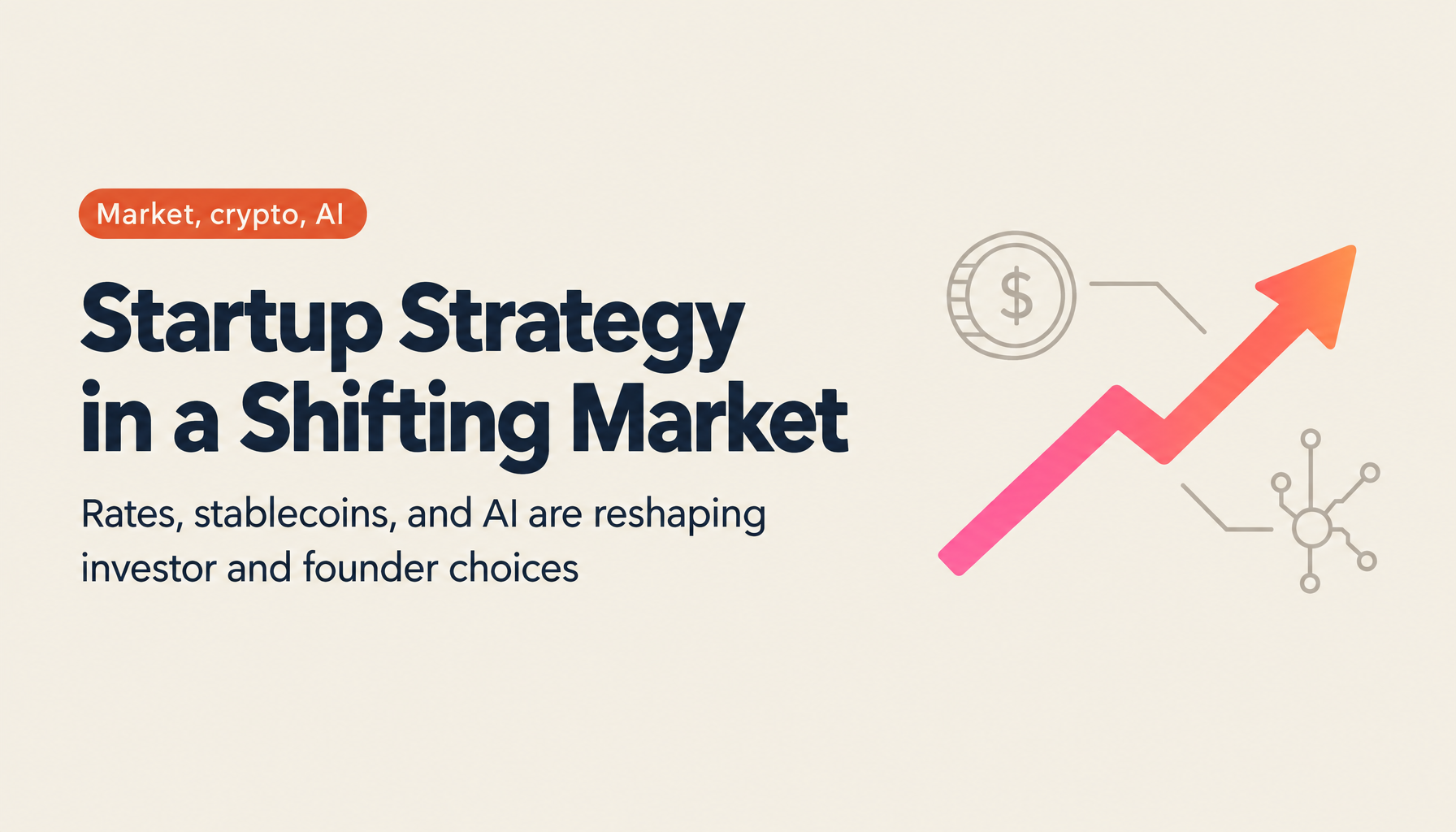
Global markets are moving in ways that create genuine strategic difficulty for startups. The new US tariff policy has produced a visible disruption in technology sector valuations, and the effects extend well beyond stock prices into customer behavior, fundraising conditions, and hiring dynamics.
This analysis covers the market mechanics, the startup-specific implications, and the frameworks that are proving useful for founders navigating this environment.
- The tariff shock: what happened and what the debate is about
- Startup implications: fundraising, sales, and supply chains
- The bright spots: Ripling, TikTok, and the hiring opportunity
- Practical frameworks from founders in the field
- Summary
Looking for AI training and consulting?
Learn about WARP training programs and consulting services in our materials.
The Tariff Shock: Market Impact
Bessemer Cloud Index: Down 30%
The Bessemer Cloud Index (WCLD), which tracks publicly traded cloud software companies, declined 30% from its recent peak in the weeks following the tariff policy announcement. Market terminology: a 10% decline is a "correction," 20% is a "bear market." 30% is in catastrophe territory for the index.
Most startups have cloud company characteristics — recurring software revenue, subscription metrics, SaaS-style growth models. The WCLD's decline affects how investors value these companies when considering fundraising rounds, and how acquirers think about exit valuations.
The Magnificent 7 — Apple, Amazon, Alphabet, Meta, Microsoft, NVIDIA, Tesla — all experienced significant market cap reductions. Sentiment across the technology sector moved negative simultaneously.
What the Policy Is and What the Debate Is About
The tariff policy has generated near-universal skepticism outside the administration's immediate circle. Jason Calacanis, host of This Week in Startups, posted publicly asking whether any expert thought the policy was a good idea — the affirmative responses were essentially absent.
Several analytical frameworks have been applied:
The FRB pressure theory: some observers argue the market disruption is intentional — designed to create conditions that push the Federal Reserve toward rate cuts, reduce 10-year Treasury yields below 4%, and enable favorable refinancing of large US debt positions. If correct, the policy would be expected to reverse once that objective is achieved, with a market recovery timed toward the midterm elections.
The inflation risk analysis: products manufactured in cost-efficient overseas locations (consumer electronics, footwear, furniture) will see cost increases that pass directly to consumers if tariff conditions persist or if companies move production to domestic facilities. The companies that have seen the sharpest stock declines — Nike, Restoration Hardware, Lululemon — share the characteristic of significant overseas manufacturing in Vietnam, India, Indonesia, and Pakistan. The inflation problem that cost the Biden administration political support is the same problem the tariff policy risks replicating.
The geopolitical fragmentation risk: reduced US market access may accelerate the formation of alternative supply chains and technology blocs involving China, Vietnam, India, Pakistan, and Russia. For American technology companies, this means reduced access to global markets at the same time that AI infrastructure costs (semiconductors, servers, storage) increase due to import tariffs on the components required.
Startup Implications
Sales: The CIO Caution Effect
Enterprise buyers slow down under uncertainty. When CFOs pull back discretionary spending and CIOs become more conservative about new technology adoption, the effect on startup sales cycles is direct: longer time to close, more scrutiny on each deal, and more pressure on pricing.
Fortune 500 clients — the highest-ACV targets for most B2B startups — are the most affected. These organizations have the most to lose from wrong-direction spending commitments during an uncertain period, and they have the organizational capacity to slow down decisions.
For startups whose sales motion depends on large enterprise deals, this environment requires more pipeline to achieve the same close rate.
Fundraising: VC Liquidity Risk
The mechanism: market uncertainty delays or cancels IPOs and M&A exits for VC-backed companies. Cloudflare, for example, paused a planned public offering. When exits are delayed, cash is not returned to LP investors. LP investors become more conservative about new fund commitments and existing fund follow-ons. New fund formation slows. Capital available for startup fundraising contracts.
This is not a theoretical risk — it is the mechanism that produced the 2022–2023 startup funding contraction, which followed the same sequence from public market deterioration to VC liquidity pressure.
AI Infrastructure Cost Increase
The tariff policy raises the cost of the hardware required to build AI infrastructure: semiconductors, servers, storage, and networking equipment. If the US becomes the highest-cost location in the world to build an AI data center, the country that has been competing for AI infrastructure advantage faces a structural cost disadvantage during the period it matters most.
This affects not only hyperscaler AI investment but also the AI-powered startups that depend on affordable compute access.
The Hiring Opportunity
One area where the disruption creates a startup advantage: if large companies respond to supply chain pressure and margin compression with layoffs, high-quality employees become available at lower salary expectations than during the talent-scarce periods of 2021–2022.
A Nike or Restoration Hardware e-commerce or marketing professional who loses a well-compensated position may be open to a startup opportunity — lower salary, higher equity, meaningful ownership — that would have been less attractive during the hiring market peak.
LinkedIn's "Hiring" indicator (the visible ring on profiles) is a practical signal for identifying which companies are still growing and what talent is becoming available.
Bright Spots
Ripling: $16 Billion at 30x ARR
Ripling, the workforce management platform, raised a new funding round during the market disruption at a $16 billion valuation — up from $13.5 billion previously. ARR reached approximately $570 million, representing 63% growth over 15 months.
At approximately 28x ARR, this valuation is significantly above the public market multiples for SaaS companies (Bessemer Index average approximately 10x, high-growth outliers 15–20x). The premium reflects market leadership positioning and investor confidence in founder Parker Conrad's execution capacity.
The Ripling example demonstrates that companies with clear market leadership, strong product, and demonstrated growth can raise at premium valuations even during broad market disruption. The disruption creates a talent acquisition opportunity and competitive separation from weaker competitors — for companies that execute well, the downturn is a differentiation window.
TikTok: The Deal That Could Change Everything
The TikTok US divestiture situation extended by 75 days after the original deadline. Amazon has been reported as a potential buyer alongside the earlier consortium discussions.
Amazon's interest, if accurate, represents more than an acquisition — it is a potential merger of strong recommendation engine technology with the world's largest e-commerce platform. TikTok's algorithm and user base would provide Amazon with social-commerce capabilities it has not been able to build organically.
The TikTok situation is entangled with the broader US-China negotiation environment: tariffs, semiconductor restrictions, Taiwan policy, and IP disputes are all in play simultaneously. A comprehensive US-China agreement that resolves multiple issues at once — the "grand deal" scenario — would likely trigger a significant market reversal if it occurs.
Practical Frameworks from Founders
Pod Engine: Narrow ICP, Maximize Conversion
Pod Engine develops AI-powered podcast research and media intelligence tools. The founder described the following state: approximately 15 enterprise contracts, revenue doubling quarter-over-quarter with a 3x trajectory for the next quarter. Clear ICP identification: podcast agencies managing guest bookings and sponsor relationships.
The challenge: how to handle multiple use cases (guest preparation reports, competitive analysis, sponsor matching) while maintaining focus.
Jason Calacanis's advice: ignore the breadth of use cases at this stage. Focus obsessively on the identified ICP. The demo-to-close rate is high — the constraint is top-of-funnel. Build personalized outreach sequences for the ICP, not generalized marketing. Create "Podcast Agent" style alert triggers that demonstrate specific value for the ICP's real-time needs.
The principle: when something is working, concentrate resources on it rather than expanding before the foundation is solid.
Abacus: Competition Is Not the Main Variable
Abacus provides on-premise generative AI tools for regulated financial industry clients — banks, insurance companies. Status: ARR over $1 million, 9 enterprise customers, serial founding team with prior shared work experience.
The concern raised: how to respond to intensifying AI market competition.
Calacanis's advice: at the early stage, the three variables that matter are team, product, and customers — in that order. Competitor monitoring should consume minimal attention. A "serial team" (founders who have worked together before) is an undervalued asset. The competitive threat that matters is the one that takes your customers. That threat becomes visible in customer feedback, not in competitor product announcements.
With ARR over $1M, the transition from reactive to planned growth is essential: set specific revenue targets (3x year-over-year), build the organizational capacity (sales team, customer success) to support those targets, and execute the plan.
The underlying principle: startups that spend significant attention on competitor movements are using capacity that should go into product development and customer value creation.
Summary
| Factor | Strategic Implication |
|---|---|
| WCLD down 30% | Startup valuations pressured; exit timelines extended |
| CIO caution | Enterprise sales cycles lengthen; pipeline volume must increase |
| VC liquidity risk | Fundraising harder; extend runway to 18+ months now |
| AI infrastructure costs | Tariffs on hardware raise compute costs for US-based AI builds |
| Hiring opportunity | Potential for high-quality candidates at lower compensation during layoff periods |
| Ripling at $16B | Market leadership + strong product can still attract premium valuation |
| TikTok extension | Grand-deal scenario remains possible; watch US-China negotiation trajectory |
The environment rewards startups that have sufficient runway to outlast the disruption, clear ICP focus that makes them indispensable to a specific buyer, and a founding team that can execute consistently under uncertainty. Companies that achieve this positioning during a market downturn often emerge with more competitive separation than they had at entry.
Reference: https://www.youtube.com/watch?v=Q70mJIQSi0s