This is Hamamoto from TIMEWELL Inc.
Connecting People, Companies, and Communities Through Human Development
NPO G-net works across Japan on regional revitalization and community development, with human development at the core of its mission. The organization serves as a bridge between companies and communities — uncovering new possibilities for people and businesses alike. In the past three years, not a single full-time hire has left the organization. The team includes not only full-time staff but also people working part-time, as side jobs, and in various other arrangements.
What exactly does G-net do? What kind of person thrives there? We spoke with Representative Director Minami to find out.
Looking for AI training and consulting?
Learn about WARP training programs and consulting services in our materials.
The Coordinator Role: Two Perspectives — Micro and Macro
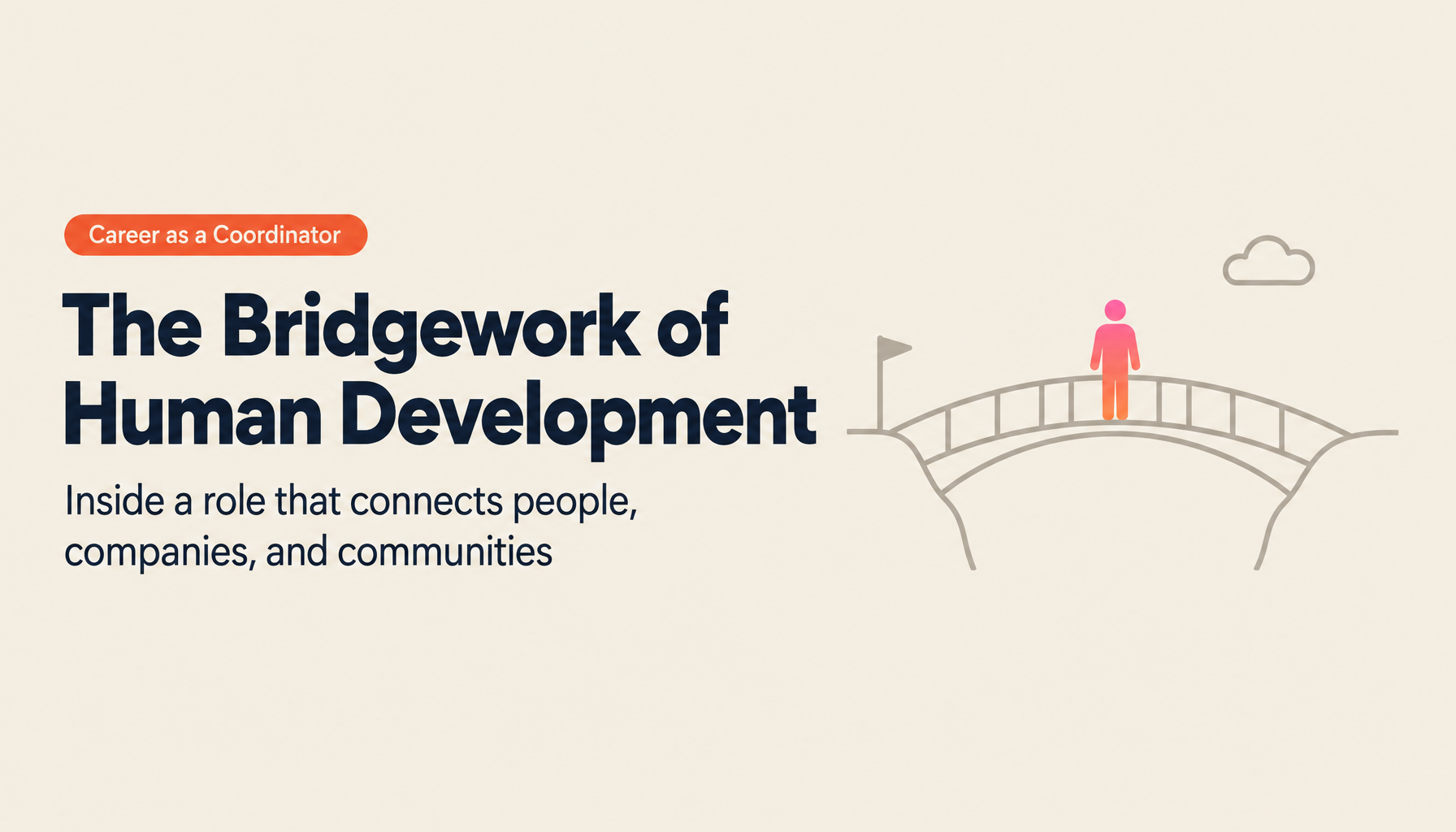
The concept of "coordinator" is central to everything G-net does. A coordinator is an accompanist — a connector — who serves as the bridge between companies and communities, universities and regions, students and employers. Most of G-net's core team members work as coordinators in some capacity.
For its core members, G-net asks them to take on the coordinator role from two distinct perspectives.
The first is the micro perspective — accompanying "one company" or "one person." In the "Honki-kei Internship" program, coordinators connect local business owners with students. In the "Furusato兼業 (side-work in the hometown)" and "SharePro" programs, they connect local business owners with working professionals. Every program has one dedicated coordinator assigned to accompany and support the team throughout.
The second is the macro perspective — connecting larger entities, such as "one company with ten regions" or "a university with young people." This involves building systems, drawing in other stakeholders, and scaling impact. One current example: a project to establish a new university, "Co-Innovation University (tentative name)," in the Hida region, where G-net coordinates the development of practical curricula for students and working professionals and oversees regional partnerships.
The scale and nature of coordination differ enormously between the micro and macro, but most G-net members experience both. The ability to work across both levels — not one or the other — is something G-net sees as one of its distinct advantages.
A New Hire's Experience: How Your Perspective Shifts
The coordinator role G-net asks of its core members involves thinking about the organization's overall direction while prioritizing and giving meaning to individual tasks. Having management or player-manager experience makes the work easier — but it is absolutely not required. New graduates and people without prior experience are welcome. G-net starts them with smaller-scale, more contained responsibilities and expands from there.
The author of this article joined G-net as a new graduate and became a coordinator herself. She hadn't studied a relevant specialty, and she admits she wasn't much of a reader. But through the work — encountering the companies and people right in front of her — she built real learning, case by case.
Looking back, her perspective shifted roughly every six months after joining G-net as a new graduate. At first, being close in age to students, her only strength was "being able to advise students on internships." As she accumulated experience, she reached the point where she "could also advise companies on internships." From there, she progressed to being able to hold higher-level discussions with companies — not just about internships, but about why they were doing internships in the first place. And eventually, she began receiving requests to think through organizational development and strategic challenges as a genuine partner — not just the internship point of contact.
She attributes this gradual ascent to a single habit: always thinking about what she could do at the level right in front of her. Watching senior colleagues receive business-wide strategic consultations, she kept asking herself: "How do I become the kind of partner they are?"
A concept she and her colleagues live by at G-net: "Unauthorized director." Even without being asked, she thinks constantly about "how could this company increase revenue?" and "who should they benchmark against?" — aiming to become someone the business owner says "you know our company better than our own employees, and you describe us better than I do."
Skills matter for coordinator work, and G-net provides ample internal and external training and knowledge-sharing opportunities. But skills alone don't make someone an effective coordinator. What matters more is how you show up and what you care about. That's precisely why G-net wants new graduates and career changers to take the leap.
G-net is also an unusually rich learning environment. Working closely with motivated, passionate business owners and entrepreneurs; being a trusted, long-term partner for various kinds of companies; engaging with skilled professionals across many fields; and working alongside large corporations and foreign companies — it is rare to find a job that offers such diverse learning material.
Paths After G-net
Members who have grown at G-net and moved on have gone on to become professional career counselors, university faculty, and management consultants. The coordinator role — built on connecting with and bridging diverse people — is also a place to sharpen highly transferable skills.
Everyone Is the CEO of "Me, Inc." — Take Ownership of Your Life
G-net tells its team members: "Be a business owner." That means approaching their work with an ownership mindset and coordinating the field from a management perspective — but it also means running their own lives that way. G-net is just one venture within the company called "Me, Inc." You can stay as long as you want. You can be involved only in your spare time. G-net supports people who make deliberate choices about their own lives — so expressing your preferences about how you want to work, at any time, is always welcome.
If there's something in the world right now that you think "this should be different," make yourself an unauthorized stakeholder — without waiting to be asked. Even a regional challenge in a place you've never been to might become something you can actually do something about, once you see yourself as a participant. G-net's various programs dissolve the walls that say "I'm just a high school student," "I'm just a university student," or "we're just a small company" — and connect across those divides. That's exactly why G-net wants its members to do the same: to leap over those walls, not cower behind them.
This interview article was produced by TIMEWELL, an online assistant service.