This is Hamamoto from TIMEWELL Inc.
The EV Revolution Is Real — But It's Not Simple
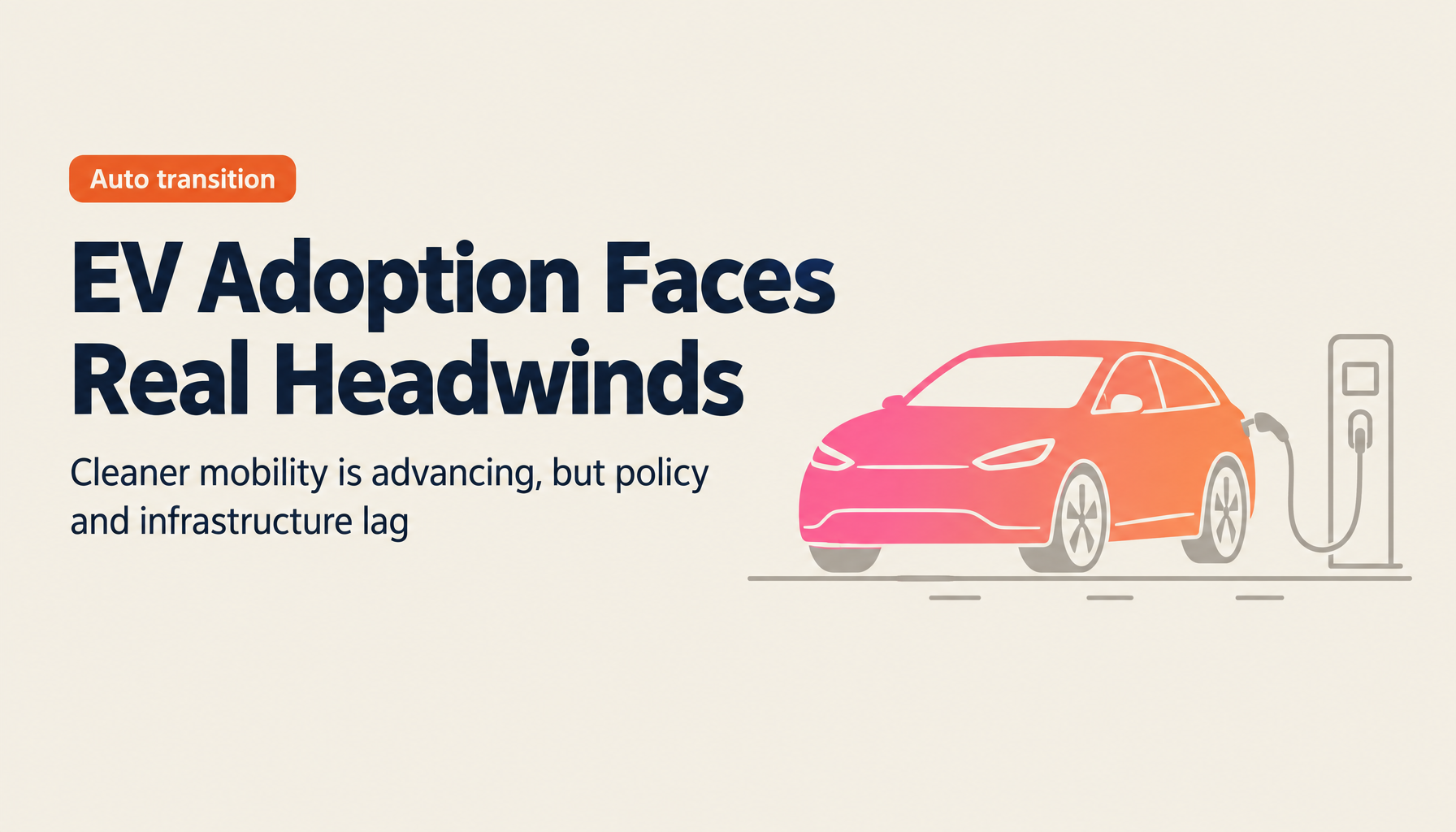
Electric vehicles have become the symbol of clean transportation and the automotive future. But global EV adoption is running into serious headwinds — policy shifts, consumer hesitation, and infrastructure gaps are all slowing the transition. This article examines where the EV market actually stands, what the major automakers are doing about it, and what needs to happen to get the transition back on track.
The Current Market: Diverging Trajectories
Global EV sales growth has stalled in key markets. In the U.S. and Europe, subsidy policy changes and persistent consumer concern about price and range anxiety have dampened momentum. In contrast, China's EV market continues to surge — making it the world's largest EV market by a wide margin. Chinese government support and the emergence of affordable, high-performing domestic EVs are driving that growth.
Andrew J. Hawkins, an EV industry analyst, frames the contrast clearly: "EV adoption hinges on government policy and shifting consumer attitudes. The divergence between markets reflects how different governments are approaching the transition. China's case demonstrates that strong government leadership can have an outsized effect on EV penetration."
Looking for AI training and consulting?
Learn about WARP training programs and consulting services in our materials.
Automaker Strategy: Racing to Lower Prices and Extend Range
EV manufacturers are pursuing two imperatives simultaneously: lower price points and longer range. Tesla has been pushing hard on affordable model launches and manufacturing cost reduction. Traditional automakers — Ford, General Motors, and others — are accelerating their EV programs while struggling to make them profitable.
"Automakers need to focus relentlessly on both technological innovation and cost competitiveness," Hawkins notes. "Battery cost reduction and range extension are table stakes. But companies also need to develop EVs with genuinely compelling design and performance — vehicles that win over consumers emotionally, not just rationally."
The economics of EVs are improving, but the gap with internal combustion vehicles remains meaningful for many buyers. Until battery costs fall further and charging becomes more convenient, price-sensitive consumers in most markets will keep hesitating.
Infrastructure: The Missing Link
Charging infrastructure remains one of the most critical — and underbuilt — elements of the EV transition. Governments, automakers, and energy companies are all investing in charging station networks. Smartphone apps that locate stations and simplify payment are helping reduce friction, but the network density in most markets still falls far short of consumer expectations.
"Charging infrastructure is one of the most pressing challenges for EV adoption," Hawkins says. "It's not just about adding more stations — it's about delivering a charging experience that's seamless and stress-free for the user. Government and industry need to work together on both infrastructure density and the user experience."
The availability of fast charging, reliability of individual stations, and the ability to charge quickly enough on long trips are all factors that affect real-world usability. Until the charging experience approaches the convenience of fueling a gasoline car, infrastructure will remain a barrier for mainstream adoption.
The Broader Challenge: Beyond Technology
EV adoption involves challenges well beyond the technical. Battery raw material sourcing, used battery recycling, grid stability, and supply chain resilience are all open questions with real stakes. The employment impact of the EV shift — on parts suppliers, dealerships, and traditional manufacturing regions — also requires active policy management.
"The road to EV adoption is not smooth," Hawkins acknowledges. "It requires technological innovation, policy support, and a broader shift in social attitudes. But the transition is unavoidable — it is essential for climate action and building a sustainable society. The work ahead is to solve each obstacle systematically and keep the momentum going."
What Would Actually Accelerate EV Adoption
Based on current market dynamics, several factors stand out as critical to closing the gap:
- Battery cost parity: When EV upfront costs match equivalent gasoline vehicles without subsidies, mainstream adoption becomes realistic
- Charging density: Doubling or tripling public charging points in underserved areas removes a key purchase objection
- Grid integration: Managed EV charging that aligns with renewable energy availability reduces total system cost
- Policy stability: Consistent, predictable incentive frameworks allow consumers and industry to plan
- Recycling infrastructure: Closed-loop battery recycling reduces raw material pressure and lifecycle emissions
Summary
The EV revolution is not in question — the direction of travel is clear. But the timeline is uncertain, and the challenges are more complex than early enthusiasm suggested.
- China: Strong government support + affordable domestic EVs = world-leading adoption
- U.S./Europe: Subsidy uncertainty + infrastructure gaps + price sensitivity = slower progress
- Automakers: Racing to cut costs and improve range while managing profitability of the transition
- Infrastructure: Critical bottleneck requiring coordinated public-private investment
- Policy: The single most powerful lever for accelerating adoption in any market
The EV transition will happen. The question for businesses, investors, and policymakers is how to navigate the complications of the middle period — and position for a world where electric vehicles are simply the default.
Reference: https://www.youtube.com/watch?v=rVrJSxVb6oU