This is Hamamoto from TIMEWELL Inc.
The SEC Puts Memecoin Promoters on Notice
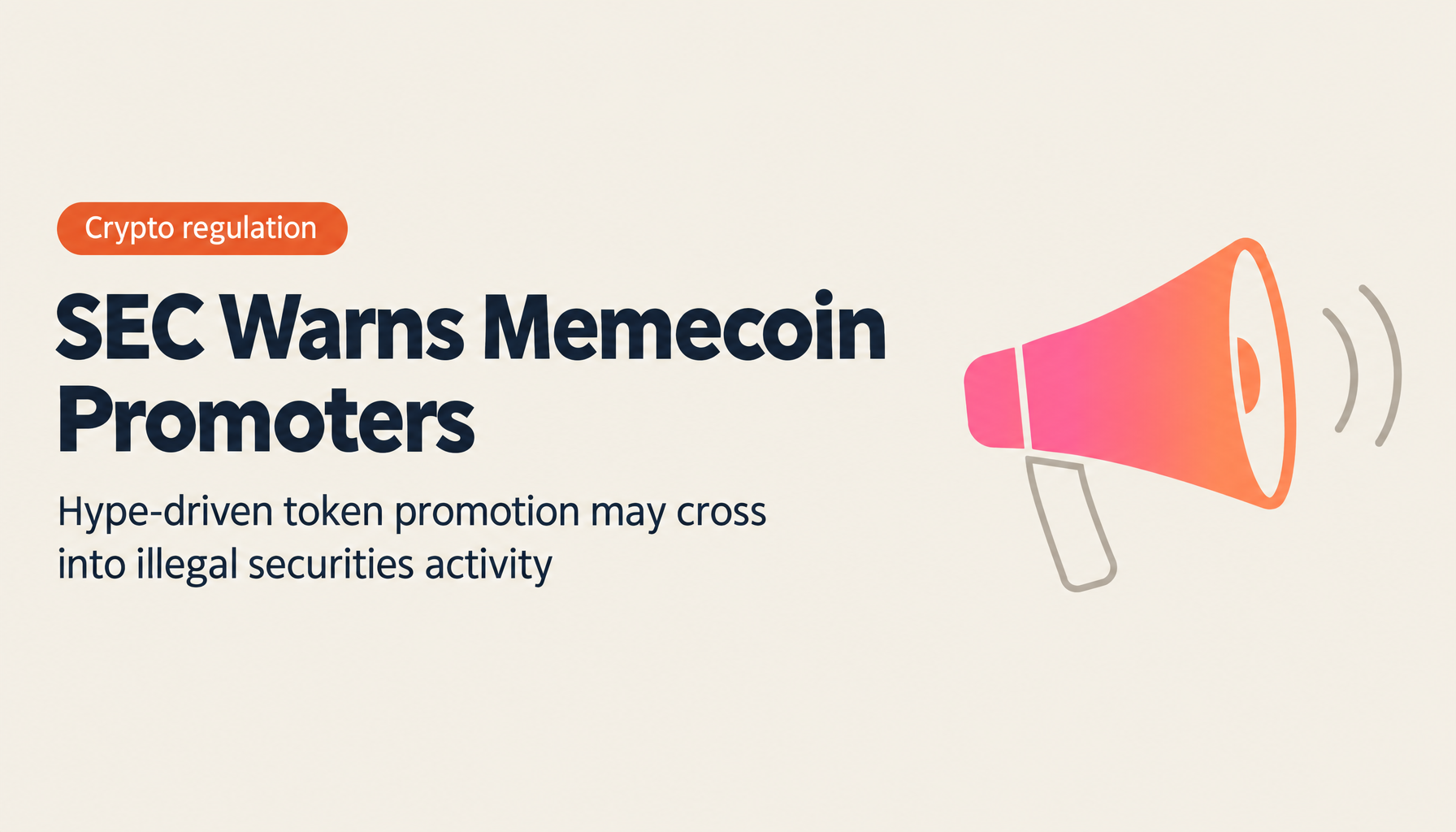
Memecoins have become one of the most discussed phenomena in social media and crypto markets. When celebrities and high-follower accounts promote specific tokens to drive up prices, the result often looks — legally — a lot like market manipulation. The U.S. Securities and Exchange Commission (SEC) has now issued formal guidance warning that certain memecoin promotion activities may constitute illegal securities activity.
This article explains what memecoins actually are, what the SEC is specifically flagging, and what the regulatory direction means for the broader crypto market.
Looking for AI training and consulting?
Learn about WARP training programs and consulting services in our materials.
What Are Memecoins?
Memecoins are cryptocurrencies created around internet memes, cultural trends, or celebrity associations rather than underlying technology, utility, or revenue-generating assets. The most prominent example is Dogecoin — which surged in price after Elon Musk tweeted about it repeatedly. TrumpCoin is another example — a token that emerged as a vehicle for speculative trading tied to the 2024 U.S. presidential election.
What distinguishes memecoins from other crypto assets:
- No underlying project: They don't represent equity, revenue rights, or access to a product
- No asset backing: Price is determined entirely by community interest and speculative demand
- Volatility pattern: Social media attention drives rapid price spikes; when attention fades, prices collapse equally fast
- Opacity: Many are issued by anonymous developers with limited disclosure
A significant subset of memecoins follow a "pump and dump" pattern: the issuer holds a large supply, generates buzz through promotion, sells into the price spike, and leaves later buyers holding losses.
What the SEC Is Warning Against
The SEC's new guidance targets specific types of memecoin promotion. The behaviors flagged as potentially illegal:
- Excessive promotion on social media or online forums that is designed to inflate the price of a token
- Lobbying to get memecoins listed on exchanges as part of a coordinated price-support effort
- Encouraging followers to buy while personally holding a large position in the promoted token
The SEC's framework for analyzing these situations draws on the Howey Test — the legal standard for determining whether a transaction constitutes a security. A security generally involves: an investment of money, in a common enterprise, with an expectation of profit, derived from the efforts of others.
Memecoin investments often fit this description, particularly when a promoter is actively working to drive the price up. If followers are buying based on the promoter's influence and efforts, the transaction starts to look like an investment in that promoter's scheme — which is the terrain of securities regulation.
The SEC's message to promoters: understand that your activities may carry legal liability, and act accordingly.
The Broader Debate: Protection vs. Innovation
The SEC's guidance has sparked debate within the crypto community. Some argue that tighter regulation will suppress memecoin trading and broadly inhibit innovation in decentralized finance. That concern is not entirely unfounded — overly broad application of securities law to crypto could create compliance burdens that disadvantage legitimate projects.
The other side of the argument: investor protection requires action. Influential individuals who use their platforms to manipulate token prices at the expense of followers are causing real harm. The market for memecoins has repeatedly produced situations where retail investors were the last to receive information — and the first to suffer losses when insiders sold.
Decentralized finance as a category has genuine technological promise: smart contract-based financial instruments, NFT-based value creation, and programmable money all represent real innovations. None of that is incompatible with accountability for bad actors who use crypto markets to enrich themselves at the expense of followers.
What This Means for Investors and Promoters
For investors: Social media hype about a specific token is not a reliable signal of value. Understanding the actual structure of what you're buying — who holds the supply, what the tokenomics look like, what utility (if any) the token has — is essential risk management. "It's trending on X" is not investment due diligence.
For promoters and influencers: If you hold a significant position in a token you're promoting to your audience, you are likely in legally sensitive territory. The SEC has now made its position explicit. Disclosure, at minimum, is required. The risk of enforcement action is real.
For the industry: The trajectory is toward more regulation, not less. Firms and projects that build compliance into their operations early — rather than treating it as an obstacle — will be better positioned as the regulatory framework solidifies.
Summary
- Memecoins are speculative tokens with no underlying assets or technology — their price is driven by social media attention
- Common pattern: anonymous issuers, large insider holdings, "pump and dump" mechanics
- SEC's concern: promotion by insiders with large positions may constitute securities fraud under the Howey Test
- Flagged behaviors: excessive social media promotion, exchange listing lobbying, encouraging followers to buy while holding large positions
- Regulatory direction: more enforcement, not less; investors and promoters need to take legal risk seriously
- Broader balance: innovation in decentralized finance is real and valuable; it doesn't require protecting bad actors from accountability
The maturation of the crypto industry requires that it develop market integrity standards proportionate to the scale of the assets and audiences involved. SEC engagement with memecoins is one signal of where that process is heading.
Reference: https://www.youtube.com/watch?v=XnyyNcuU08Q