This is Hamamoto from TIMEWELL Inc.
Budget Planning Is Where Online Events Win or Fail
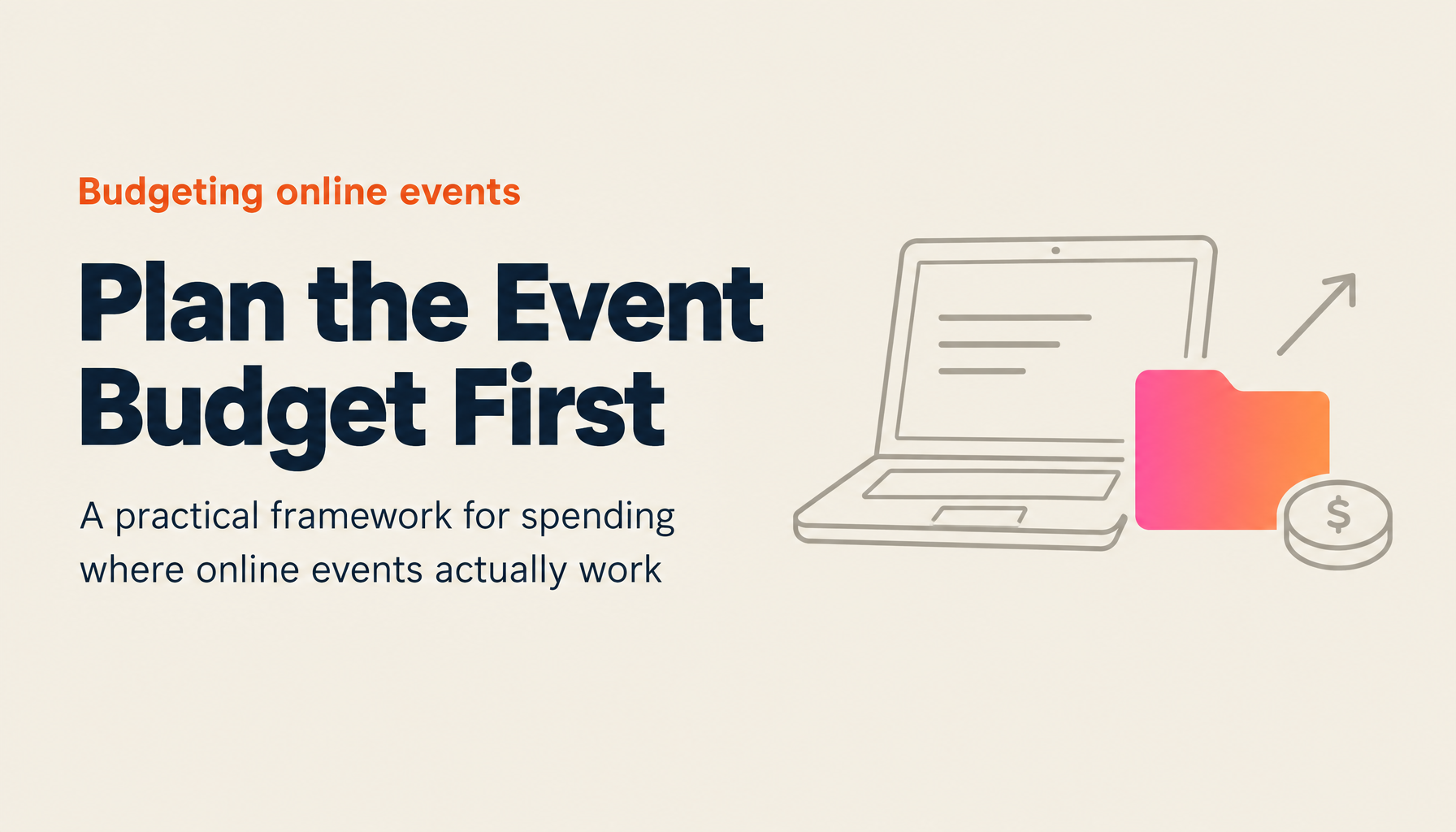
Online events have become a standard element of corporate marketing — but many organizers still approach the budget reactively rather than strategically. Costs overrun, quality gets cut in the wrong places, and ROI is hard to measure because the financial foundation was never clear to begin with.
This guide provides a practical framework for online event budgeting: the core line items, a structured planning process, and specific tactics for reducing costs without undermining the event itself.
Looking to optimize community management?
We have prepared materials on BASE best practices and success stories.
Core Budget Line Items
1. Platform Costs
Every online event requires a streaming or hosting platform. Costs vary by:
- Maximum attendee count
- Feature set (breakout rooms, Q&A tools, polling, recording)
- Duration of the event
- Technical support level included
Most platforms offer tiered pricing. Assess what you actually need at your expected attendance level — paying for enterprise features you won't use is one of the most common budget leaks.
Additional software licenses (slide tools, survey platforms, registration systems) belong in this category too.
2. Personnel Costs
Personnel is typically the largest line item:
- Staff planning and coordination time (often underestimated)
- Emcee or facilitator fees
- Speaker and panelist honoraria
- Technical support staff (live monitoring, troubleshooting)
- Post-event editing or content production
If you're outsourcing facilitation or production, get quotes early — quality operators book well in advance.
3. Content Production
Online events live or die on the quality of their content. Production-related costs include:
- Slide design and graphic assets
- Video production (intro videos, recorded segments)
- Workbooks, handouts, or digital materials for participants
- Simultaneous interpretation if multilingual
The temptation is to cut production costs to save money. In practice, poor-quality visual content damages the event's perceived value more than almost any other variable.
Three-Step Budget Planning Process
Step 1: Define Your Objectives — With Numbers
Before allocating a single yen, define what success looks like:
- Attendee target (registration count, show-up rate)
- Revenue target (ticket sales, sponsorship, lead generation value)
- ROI threshold: what return justifies the investment?
Without quantified targets, you have no basis for budget allocation decisions. Every line item should trace back to one of these objectives.
Step 2: Build the Revenue and Cost Projection
Map out both sides of the equation:
Revenue sources:
- Ticket sales (if paid)
- Sponsorships
- Membership or subscription revenue tied to the event
- Downstream lead conversion value (if trackable)
Cost structure:
- Fixed costs: platform licenses, speaker fees, design (these exist regardless of attendance)
- Variable costs: per-attendee platform fees, printed materials mailed to participants, catering for in-person segments
Separate fixed from variable early. It changes how you manage risk if registration numbers come in lower than projected.
Reserve a contingency buffer — typically 10-15% of total planned spend — for unexpected costs. Things always come up.
Step 3: Optimize the Budget
With objectives and projections in hand, go through the budget line by line:
- Where is spending disproportionate relative to impact?
- Are there items that could be done in-house rather than outsourced?
- Which elements directly affect participant experience, and which are invisible to them?
Concentrate budget on what participants will actually feel. If you have to cut, cut from behind-the-scenes operational costs before cutting from speaker quality or technical stability.
Cost Reduction Without Cutting Quality
Choose the right platform, not the most expensive one. Many events pay for features they don't use. Match the platform to your actual requirements — participant cap, session structure, integration needs.
Early-bird and off-peak pricing. Many platforms offer significant discounts for early commitments or for events scheduled outside peak periods (typically avoiding major conference seasons).
In-house versus outsourced. Content creation, social media promotion, and post-event follow-up can often be handled internally. Reserve outsourcing for technical production, professional facilitation, and areas where quality meaningfully affects participant experience.
Sponsorships. For events with a clear target audience, sponsorship from relevant companies can offset 20-40% of total event costs. Identify potential sponsors whose audience interests align with your participants, and approach them early with a clear value proposition.
Reuse content. Record sessions. Repurpose recordings as post-event on-demand content, clips for social channels, or materials for future events. Spreading the production cost across multiple uses changes the ROI calculation.
Summary
Online event budget planning is a strategic process, not just a spreadsheet exercise. The steps that produce better outcomes:
- Quantify your objectives before committing any budget
- Map revenue sources against fixed and variable costs
- Build in a contingency buffer
- Optimize allocation based on participant-visible impact
- Use platform selection, in-house capability, and sponsorships to reduce costs without sacrificing quality
Strategic budget planning is the foundation that allows everything else — content, speakers, technology — to perform at its best.

![Three Must-Do Steps to Take Parental Leave Even During Your Busiest Season [Pre-Leave: Personal Account Part 2]](/images/columns/3.png)