Payday Habits That Change Your Future
That $6 latte every morning, $18 takeout lunch, an average of $5 a day on rideshares, $3 on impulse snacks, a few dollars on that trending item you saw on TikTok, and $2 on a subscription you almost forgot you had... Are you aware that these seemingly small daily expenses add up to more than $11,000 a year?
This is not someone else's problem. For most people, money has a way of vanishing almost magically the moment a paycheck or payment hits your bank account.
"I used to be the same way," says Marina Mogilko.
When her blog began taking off in her twenties and lump sums of $10,000 or $20,000 in ad revenue arrived, she spent it without a second thought. At the time she was living in San Francisco with no children, and she thought nothing of buying luxury brands and traveling around the world.
The turning point came in 2019, when her first child was born. She felt strongly that "this has to change — this isn't healthy behavior," and made the decision to fundamentally rethink her financial habits.
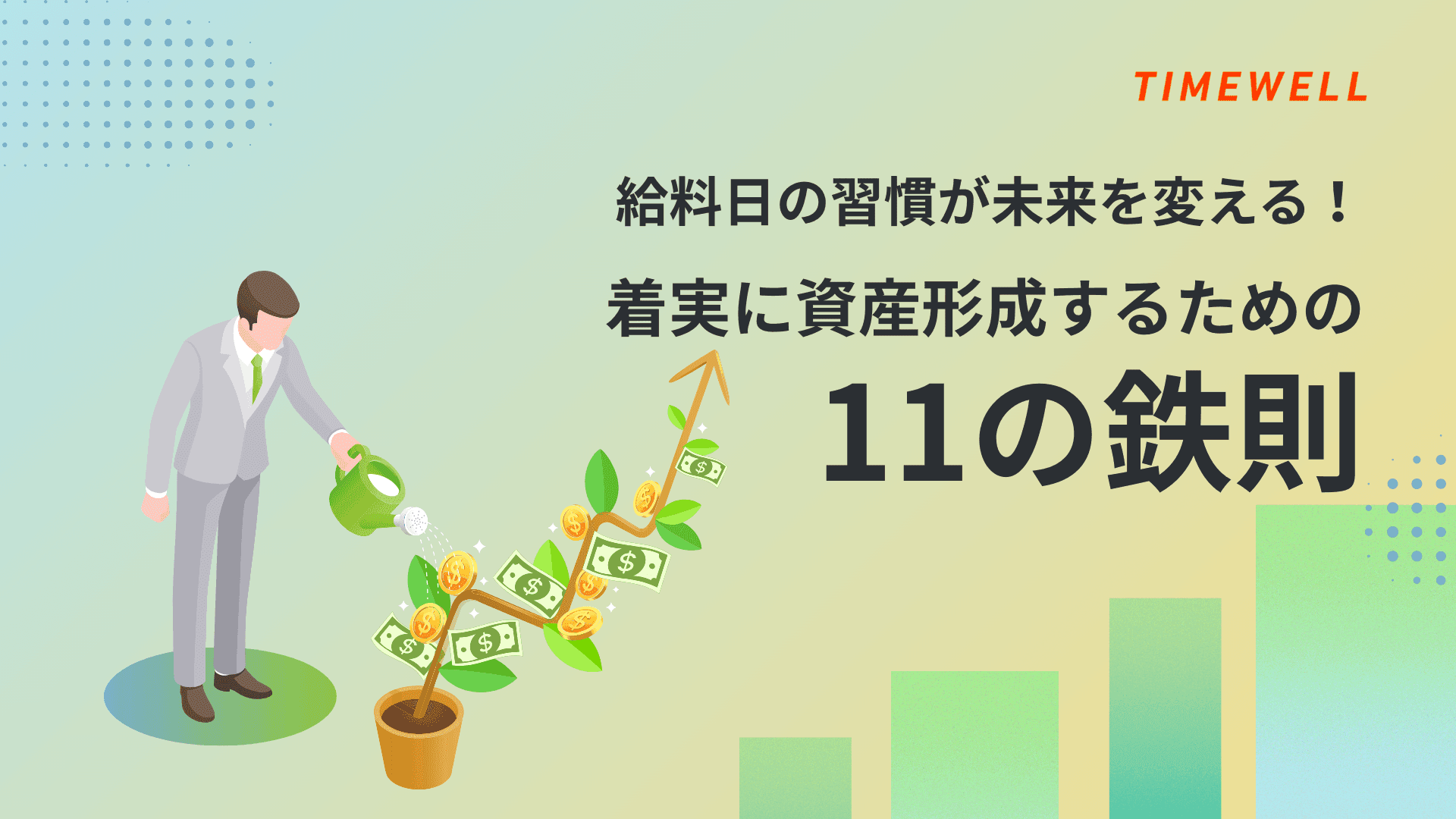
This article explains in detail the 11 specific habits Marina Mogilko practices every payday, along with the thinking behind each one. These habits are not just about saving more — they are a roadmap for building genuine wealth and achieving financial stability and freedom. Once you develop financial discipline, money starts working for you, and a future of steady, growing prosperity opens up without the need to keep competing desperately every single year.
- Top Priority: "Paying Yourself" and Covering Essential Expenses — How to Build a Stable Financial Foundation
- Understanding and Optimizing Your Current Situation: Tracking Income and Expenses, Managing Energy for Asset Growth
- Building an Unshakeable Future: From Emergency Funds to Advanced Investment Strategies and Automation — Practical Steps for Building Wealth
- Summary
Looking for AI training and consulting?
Learn about WARP training programs and consulting services in our materials.
Top Priority: "Paying Yourself" and Covering Essential Expenses — How to Build a Stable Financial Foundation
When you receive a paycheck or payment, the very first thing you should do is make "paying yourself" the top priority and ensure that your essential living expenses are reliably covered. Marina Mogilko says this is the most fundamental — and most important — step in building long-term financial stability.
Many people, especially entrepreneurs who have just started a business, tend to put their own compensation last in favor of growing the business. Mogilko herself says that when she started her business in 2011, she went a long time without paying herself a salary.
Early in her business, Mogilko did buy herself a Louis Vuitton piece, but that was a one-time self-reward, not a systematic salary. Since she was living with her parents at the time, living expenses were not a major concern, but for several years she stopped paying herself in the name of growing the company. The lesson she drew from that experience, she says, was that a fundamental understanding — that the business is there to provide financial stability for you — is indispensable.
If you only ever think about reinvesting in the business, sustainable growth is not possible. An interesting observation Mogilko heard in Silicon Valley: "Founders who own a Porsche are better founders."
The idea is that a founder who can extract profit from the business and enrich themselves has demonstrated they are no longer just working for money — they are at a stage where they can pay more attention to building a legacy and to the product itself. This is a mindset she wants especially those just starting a business to keep in mind.
If you work for three years without paying yourself, there is a high probability you will burn out — and start to question the decision to start the business in the first place. She found herself in that situation many times. That is why, several years ago, they finally set up a proper salary structure for themselves. Not every business involves a formal salary, she says, but for her media company Lingua Marina, for example, there is a clear salary figure precisely because she needs to pay herself.
And the primary KPI (key performance indicator) Mogilko sets for the Lingua Marina team is: "Secure a fixed amount of income every month and pay Marina's salary." The team treats this KPI as the top priority in daily operations, optimizing to cover expenses while ensuring Mogilko's salary is paid. If achieving the KPI looks uncertain, the team reports: "Marina, we may not be able to hit this month's KPI at this rate" — and they make decisions together. It is critically important for management and team to be aligned on this basic financial goal.
Additionally, Mogilko shares an interesting habit she recently learned regarding the mindset around receiving money.
It is the act of "being grateful for money." When money enters your account, you express appreciation for it. It is said that developing a sense of respect for money naturally changes your behavior across the board. Before going on a spending spree, first set aside savings and investment funds as an investment in your future self, identify fixed expenses essential to daily life — rent, utilities, insurance — and make sure they are paid. Taking these basic steps prevents impulsive spending and builds a stable financial foundation.
Prioritizing payment to yourself is not simply a savings act. It is also a declaration that you recognize your own value and are taking responsibility for your future.
Understanding and Optimizing Your Current Situation: Tracking Income and Expenses, Managing Energy for Asset Growth
Mogilko says that accurately understanding your current situation and optimizing your resources is indispensable for charting a path to financial success.
Specifically, the important pillars are: "tracking income and expenses," "identifying where to direct your own energy," and preparing for "taxes" as a future obligation. Making these habits will allow you to eliminate waste and maximize growth opportunities.
According to Mogilko, for "tracking income and expenses," she sets aside time at the end of every month without fail to create a spreadsheet that lists all income sources and their associated costs.
This has become almost like a religious ritual or meditation for her. Through this exercise, it becomes immediately clear which businesses are generating profit and which activities are costing more than they are worth. For example, if she has tried a new project for several months and is not seeing the expected financial results — or feels it has no meaning without a financial return — this data allows her to make an immediate decision.
A concrete example: "I've been posting Spanish-language TikTok content for four months and I can't monetize it. This isn't working — let's stop." The objective data in front of her becomes the compass for making informed decisions about which income sources to focus on, which expenses to cut, and how to optimize cash flow.
The spreadsheet she creates records not only the detailed breakdown of each income source, but also the cost of producing and publishing a single YouTube video, or the cost of maintaining her LinkedIn presence. The principle is: "What can be measured can be managed." Only by knowing all the numbers and laying them out in front of you does effective management become possible. There may be some people who currently have only one source of income. But this habit, she says, becomes the foundation for scaling smoothly when income sources diversify in the future. It is important to build a culture of financial management now. AI tools may eventually take over this work, but even then, the person who can give clear instructions about what data is needed and how it should be organized and analyzed is the one who has been practicing this habit consistently — that is you, says Mogilko.
Next is "identifying where to direct your own energy."
Through 14 years of business experience, Mogilko says she has learned that not all income is equivalent, and that "money follows energy" is a law.
"I have a notebook where I list activities that give me energy and activities that drain it. For example: singing, making short vlogs, filming short videos in public places, and acting classes give me energy. On the other hand: creating thumbnails, checking scripts, uploading songs to TuneCore, designing song artwork, and meetings without clear calls to action drain my energy.
The goal is to prioritize energy-giving tasks and delegate or eliminate energy-draining tasks. I focus on my 'superpower' — the areas where I feel passion and perform at my best — and I consciously keep energy-draining tasks to no more than 20% of my calendar."
If something consistently drains energy, think: "How can I delegate this? How can I avoid doing it?" Solutions are always there — hire a financial advisor if investing is a weakness, hire a virtual assistant if administrative work is a burden, find an AI tool that can automate a particular task.
Finally, there is "preparing for taxes." This is an issue that cannot be overlooked especially as income grows.
According to Mogilko, one of the first shocks when she moved to California was an unexpected large tax bill. The sum of tens of thousands of dollars drove home the need for careful advance planning.
Paying taxes is a civic obligation, and ending up in a situation where you cannot pay is absolutely to be avoided. The most reliable approach is to automatically transfer a portion of every payment received — say 20% or 30%, set according to your own tax rate — into a separate savings account designated for taxes, so that when tax time comes you have the funds you need without scrambling.
These habits — tracking income and expenses, optimally allocating energy, and preparing for taxes — are not mere administrative chores. They are strategic actions for actively taking control of your financial situation and achieving sustainable growth, says Mogilko.
Building an Unshakeable Future: From Emergency Funds to Advanced Investment Strategies and Automation — Practical Steps for Building Wealth
With a stable financial foundation established and your current situation accurately understood, the next step is executing a robust asset-building plan with an eye to the future. This includes building an "emergency fund" for unexpected events, contributing to tax-advantaged "retirement accounts (Solo 401k or Roth IRA)," building assets "outside retirement accounts," considering "opportunity costs" in daily spending decisions, and ultimately "automating finances" to make all of this effortless.
Executing these steps steadily makes it possible not just to save money, but to actively build wealth, says Mogilko.
First, the prerequisite is understanding your "financial baseline." Before taking any concrete action with money, you need to know exactly what your current financial situation is — specifically, how much your life costs.
Mogilko says she knows precisely what her living expenses in Silicon Valley and her children's childcare costs are. She lists "fixed expenses" — rent, utilities, insurance — and tracks "variable expenses" — food, entertainment, shopping — and plans her budget accordingly. A number of convenient budgeting apps now exist to help automate this process.
Knowing this baseline is what makes wise financial decisions possible. For example, if you have set a monthly shopping budget of $1,000 and you find an attractive bag, you can readily make the concrete decision: "I've already spent $600 this month, so I'll pass on this one." Incidentally, because Mogilko tends to buy too much when she visits physical stores, she mainly shops online.
Next is "building an emergency fund." This is the safety net that lets you maintain your life without turning to debt when an unexpected situation occurs — job loss, illness, or accident. It is generally recommended to keep three to six months' worth of living expenses in a liquid financial product you can withdraw from at any time, such as a high-yield savings account.
Mogilko emphasizes: the key is never to put this money into investments. Markets fluctuate constantly, and there is a very real possibility that the market will be down exactly when an emergency occurs. If you are forced to sell investment assets at such a moment, you risk incurring major losses. Think of emergency funds strictly as "defensive money" held in reserve for unexpected situations.
Next, a particularly powerful tool for entrepreneurs and the self-employed: "using a Solo 401k." Employees typically have access to a 401k plan offered by their employer, with the benefit of employer matching contributions. Entrepreneurs, however, usually have no such arrangement.
A Solo 401k is a retirement plan available to sole proprietors and small business owners without employees. It offers the major benefit of both preparing retirement funds and reducing current tax liability. Solo 401k contributions are deducted from taxable income, directly reducing income tax. In 2025, for example, those under 50 can contribute as both employee (themselves) and employer (their business) for a maximum contribution of up to $70,000 (contribution limits vary by year).
"We try to maximize this plan. My husband was initially skeptical: 'What's the point of putting money in an account I can't touch for decades?' But when we consulted with a financial advisor, we found that funds inside a Solo 401k account don't just sit there — subject to certain conditions, they can be used for real estate investment, invested in various assets including cryptocurrency, stocks, and bonds, or even used as collateral for a loan."
The single most important thing to remember, she says: "No one else is going to build your retirement savings for you." Starting to contribute regularly, even in small amounts, is what matters.
Another retirement vehicle worth considering is the "Roth IRA" — an individual retirement account available to those who meet eligibility requirements (primarily income limits). Unlike a Solo 401k (Traditional type), which provides a tax deduction at contribution time and is taxed upon withdrawal, a Roth IRA is funded with after-tax income — but in exchange, neither investment gains during the holding period nor withdrawals in retirement are subject to tax. In 2026, those under 50 can contribute up to $7,000 per year. This is especially advantageous for younger people in relatively low tax brackets, as it hedges against the risk of higher future tax rates.
A note of caution: there are income limits. In 2025, those who are single with an income above $165,000, or married filing jointly above $246,000, cannot make direct contributions. However, even in those cases, there may be a way to contribute through what is called a "Backdoor IRA" — worth looking into. If you are within the income limits, using this plan even once or twice in your life can be one of the best financial decisions you ever make for your retirement.
Once you have maximized these tax-advantaged retirement accounts, the next step is "building assets outside retirement accounts." Many people simply leave surplus funds sitting in an ordinary bank savings account. But considering inflation, the real value of cash erodes over time.
Mogilko says that corporate (or personal) cash that is not needed in the near term — for example, for two or more years — can be put into a brokerage account and invested. On the other hand, even short-term funds that might be needed within two to three months can be put into a money market fund (MMF), where you can earn around 4% annually (depending on market conditions) while being able to withdraw at any time — far more efficient than leaving money sitting in a savings account.
Of course, the same applies to personal cash. Once you have your emergency fund in place (three to six months of living expenses) and have maximized your 401k and Roth IRA contributions, if you still have surplus funds, consider investing in low-cost index funds like VOO (Vanguard S&P 500 ETF) — making your "money work for you."
Spending decisions also matter in building wealth. The key concept here is "considering opportunity cost." Whenever you spend money on something, get into the habit of always asking yourself: "What return could I have gotten if I had used that money for something else?" says Mogilko.
For example, suppose you want to buy a $50,000 car. What will that car be worth in five years? Probably around $25,000 — half its value or less. By contrast, if that $50,000 had been invested at an 8% annual return, it would have grown to approximately $75,000 in five years.
Of course, there are times when you need a car. But when making a major expenditure, it is important to weigh the short-term satisfaction that spending brings against the long-term gains that investment would have generated. Wise financial decisions compound over time.
Finally, the key to effortlessly continuing all these habits and maximizing their effect is "automating financial processes." By automating savings, investing, and bill payments, you can build a system where money steadily moves toward your goals without relying on willpower.
Mogilko recommends setting up automatic monthly transfers from your paycheck account to savings and investment accounts, and setting up automatic payments for utilities and credit card bills.
Going further, having a portion of each paycheck automatically invested in ETFs or index funds (auto-invest) is also effective. Mogilko has set up automatic investments weekly to avoid missing good market timing.
Once you set up financial automation, the system works for you 24/7 — you are freed from tedious procedures and the temptation of "I overspent this month, I'll skip saving" — and you can build assets steadily according to plan, without being swayed by emotion.
These steps — understanding your financial baseline, securing an emergency fund, leveraging tax-advantaged accounts, making additional investments, considering opportunity costs, and automating — are a practical roadmap for making your financial future unshakeable. By executing each one steadily, you will build wealth reliably.
Summarizing the important payday habits covered above:
11 Financial Habits to Practice on Payday
- Top priority: Pay yourself and cover essential expenses (prioritize saving and investing for the future)
- Know your current situation: Track income and expenses thoroughly (make it visible with a spreadsheet)
- Optimize your energy: Identify what drains you, focus on growth opportunities (spend time on what you're passionate about; delegate or eliminate draining tasks)
- Prepare for taxes: Set aside tax funds separately (automatically accumulate a fixed percentage of income)
- Establish the foundation: Know your financial baseline (minimum living costs) (list fixed and variable expenses)
- Build a safety net: Prepare an emergency fund (3–6 months of living expenses in a high-yield account)
- Tax advantage (for entrepreneurs): Consider and use a Solo 401(k) (retirement preparation and tax reduction)
- Tax advantage (if eligible): Consider Roth IRA contributions (aim for tax-free future withdrawals)
- Grow surplus funds: Put assets outside retirement accounts to work (invest in MMFs, index funds, etc.)
- Spend wisely: Consider opportunity cost before spending (compare with the investment opportunity you would be giving up)
- Build continuity: Automate financial processes as much as possible (automate saving, investing, and bill payment)
These habits do not take root overnight. But by tackling them steadily, one at a time, your financial situation will improve reliably, you will be freed from money-related stress, and you will move closer to true financial freedom.
Summary
This article has explained in detail the 11 specific habits Marina Mogilko practices every time she receives a paycheck or payment. Starting from the reality that small daily expenses like a morning coffee or lunch can add up to more than $10,000 a year without your realizing it, we shared the need to shift to intentional wealth building.
The steps introduced are not simply tips for saving. They are a practical guide to developing the "financial discipline" needed to actively take control of your financial future and build genuine wealth.
Steadily practicing these habits one by one may require effort at first. But once they are established, they become a powerful asset. With financial discipline in place, money is no longer an object of waste — it becomes a faithful partner working toward your goals. The path to escaping the "rat race" of working just to cover daily expenses, and to achieving financial freedom and peace of mind, will come into view.
We hope this article proves helpful in achieving your financial goals. Start with just one thing you can do today. Consistency will be the greatest force creating tomorrow's prosperity.
Reference: https://www.youtube.com/watch?v=xuN4jZpaPho
TIMEWELL's AI Consulting
TIMEWELL is a professional team supporting business transformation in the age of AI agents.
Services Offered
- AI agent implementation support: Business automation leveraging GPT-5.2, Claude Opus 4.5, and Gemini 3
- GEO strategy consulting: Content marketing strategy for the age of AI search
- DX promotion and new business development: Business model transformation through AI
In 2026, AI is evolving from something you "use" to something you "work with." Let's think through your AI strategy together.
Schedule a free consultation →
Related Articles
- The Reality of a Working Mother Returning from Two Maternity Leaves — And How Her Work Philosophy Changed | TIMEWELL
- Before Taking Paternity Leave (Part 2): Three Absolute Must-Dos for Taking Leave During a Busy Season
- A First-Class Architect Who Stays Close to the Job Site — Finding My Own Path as the Fifth-Generation Leader of a Construction Company