From Ryuta Hamamoto at TIMEWELL
This is Ryuta Hamamoto from TIMEWELL Corporation.
The most important truth about purchasing a gaming console isn't the hardware spec sheet — it's whether the games you want to play are on it. Hardware improvements matter, but they're a means to an end.
That said, Nintendo Switch 2's hardware improvements are real and measurable. This review focuses on what actually changes from the user's perspective: performance numbers with specific titles, the Joy-Con 2 redesign, the honest economics of the price jump, and the battery situation that reviewers are flagging as a real concern.
Looking for AI training and consulting?
Learn about WARP training programs and consulting services in our materials.
Hardware Improvements and What They Mean in Practice
Real-world performance gains
The numbers from early testing are concrete. Bomb Rush Cyberfunk ran at 24–30fps on original Switch; Switch 2 delivers a consistent 60fps. Resident Evil 5 moved from 30–40fps to a locked 60fps. These aren't marginal improvements — they represent the difference between "playable with compromises" and "smooth."
Preview testing of Mario Kart World and Metroid Prime 4: Beyond showed the display and processor pairing holding up well under demanding conditions, with noticeably cleaner motion and faster response to input.
Display improvements
The screen jumps from 6.2 to 7.9 inches. Resolution goes from 720p to 1080p. Refresh rate doubles from 60Hz to 120Hz. HDR10 is supported. For close-range portable play — which is how many Switch users actually use the device — these improvements are immediately visible. Fine detail in art direction, visual effects, and fast-motion sequences all benefit.
The panel is LCD, not OLED. The OLED model of the original Switch spoiled users with better black levels and contrast, and some players will notice what's absent. But compared to the non-OLED original Switch models, the display is a clear step up.
Joy-Con 2
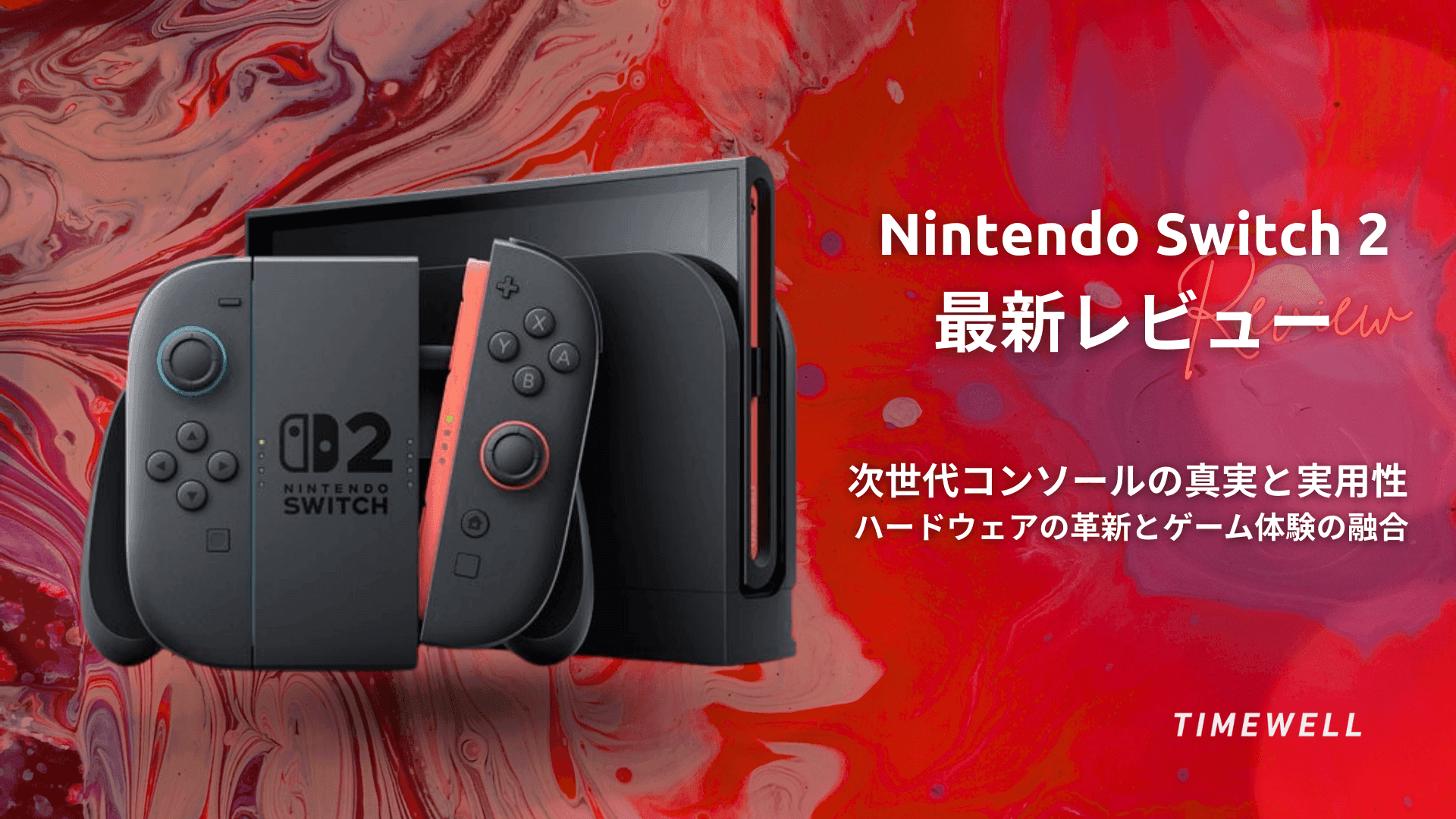
The new Joy-Con is physically larger — approximately 65–68g per unit versus 48–51g for the original. The original Joy-Con received consistent user feedback about being too small, especially for adult hands in extended play sessions. The new size addresses this.
Magnetic attachment replaces the sliding rail system. The magnetic connection produces a clean, secure click when seating the Joy-Con, and the release button on the back provides quick detachment without the occasional fussiness of the original rail mechanism.
Button and stick sizes are larger across the board, improving both ergonomics and precision input. The new C-button provides one-press access to Game Chat.
Nintendo's own usage data
Nintendo's investor briefings revealed that approximately 50% of Switch users regularly switch between handheld and docked modes. This informed Switch 2's design priorities: improvements to both portable display quality and TV-mode performance, rather than optimizing one at the expense of the other.
User Experience and Multi-Mode Versatility
Handheld mode
The higher-brightness display with improved HDR and the faster-refreshing screen both directly benefit portable use. The Joy-Con's larger buttons and sticks make extended handheld sessions more comfortable. Mouse control mode — where both Joy-Con 2 units function as mice — opens up control schemes for strategy and simulation titles that previously felt awkward on a controller.
Docked mode
The dock outputs up to 4K HDR, with a built-in cooling fan to maintain stable performance under sustained load. Long-duration TV-mode gaming, including titles with demanding graphical requirements, runs without the thermal throttling issues that affected some original Switch titles in dock mode.
UX improvements summary
- Magnetic Joy-Con system: faster and more reliable mode switching
- Larger display with HDR: better handheld visibility across lighting conditions
- 4K/HDR dock output with active cooling: consistent TV-mode performance
- Mouse control mode: expanded input options for compatible titles
- Improved kickstand: full-width, free-angle, genuinely usable for tabletop mode
The accessory ecosystem has also responded quickly. Third-party makers like Dbrand have released ergonomic grip systems for Joy-Con 2, and dock adapters supporting 4K60 passthrough are available. Switch 2 functions within a broader hardware ecosystem rather than as an isolated device.
Economics: Price, Battery, and Accessories
The 50% price increase
Original Switch launched at $300. Switch 2 is priced at approximately $450 — a roughly 50% increase. Inflation-adjusted, the original Switch's $300 would be closer to $400 today, which narrows the gap somewhat. But the absolute dollar difference is real, and it compounds.
Game prices are also increasing. Titles that launched at $60 on original Switch are now frequently $70–80 at launch on current-generation platforms. Combined with the console price increase and the cost of accessories, the total first-year investment for a new Switch 2 setup has increased substantially compared to what it cost to get into original Switch.
Battery life — the honest picture
This is the most-flagged concern in early reviews. Switch 2 has a 5,220mAh battery — larger than the original Switch's 4,310mAh. But the estimated play time is 2 to 6.5 hours, compared to 4.5 to 9 hours for the original.
In testing with brightness increased for demanding titles:
- Mario Kart World (high load): approximately 2.5 hours
- The Legend of Zelda: Breath of the Wild: approximately 3 hours
- Classic 2D titles: 4+ hours
The more powerful processor and larger, higher-refresh display draw significantly more power. The bigger battery partially offsets this, but doesn't close the gap fully. Users who rely on extended portable play without access to charging will feel this limitation. Switch 2 includes a charge limit setting that stops charging at 90% to reduce long-term battery degradation — a feature worth enabling for users who frequently charge.
Accessories and the microSD Express situation
Switch 2 uses microSD Express cards for storage expansion. Existing microSD cards used with original Switch are not compatible. With 256GB of built-in storage, the urgency is reduced — but users with large game libraries on microSD will need new cards, and microSD Express cards carry a price premium over standard microSD.
Third-party accessories are available and in many cases high quality, but they add to the total investment. Ergonomic grips, screen protectors, cases, and dock adapters are all reasonable purchases that push the real cost of owning Switch 2 higher than the $450 console price suggests.
Long-term value framing
Console hardware follows a multi-year lifecycle. Compared to smartphones — where flagship models are refreshed annually at $1,000+ — a console that will receive major game support for 5–7 years at $450 represents a different cost-per-year calculation. For users who will play heavily over multiple years, the case for the investment strengthens considerably.
Summary
Nintendo Switch 2 delivers on its hardware promises. The performance improvements are measurable and visible. Joy-Con 2 fixes longstanding ergonomic issues. The display is meaningfully better for portable play. Docked mode now reaches 4K.
The tradeoffs are equally real: battery life is shorter despite a bigger battery, the display is LCD not OLED, existing microSD cards don't transfer, and the price increase adds up when accessories and game costs are included.
The ultimate purchase decision, as always, comes down to games. Switch 2 is a strong platform for players who want the upcoming Nintendo first-party catalog, online multiplayer, or improved portable display quality. For users satisfied with their existing Switch libraries and hardware, the urgency is lower.
For everyone evaluating the upgrade: the hardware improvement is genuine. The economics require honest accounting.
Reference: https://www.youtube.com/watch?v=-NNCca97v98
TIMEWELL AI Consulting
TIMEWELL is a professional team helping businesses transform in the AI agent era.
Services
- AI Agent Implementation: Business automation using GPT-5.2, Claude Opus 4.5, and Gemini 3
- GEO Strategy Consulting: Content marketing strategy for the AI search era
- DX and New Business Development: Business model transformation through AI
In 2026, AI is evolving from a tool you use to a partner you work with. Let's build your AI strategy together.