From Ryuta Hamamoto at TIMEWELL
This is Ryuta Hamamoto from TIMEWELL Corporation.
In 2017, Nintendo released the Switch into a portable gaming market that many assumed was in terminal decline — squeezed out by smartphones on one side and full home consoles on the other. The hybrid design, which let players move between TV mode and handheld without losing their place, turned out to be exactly what a large number of people wanted.
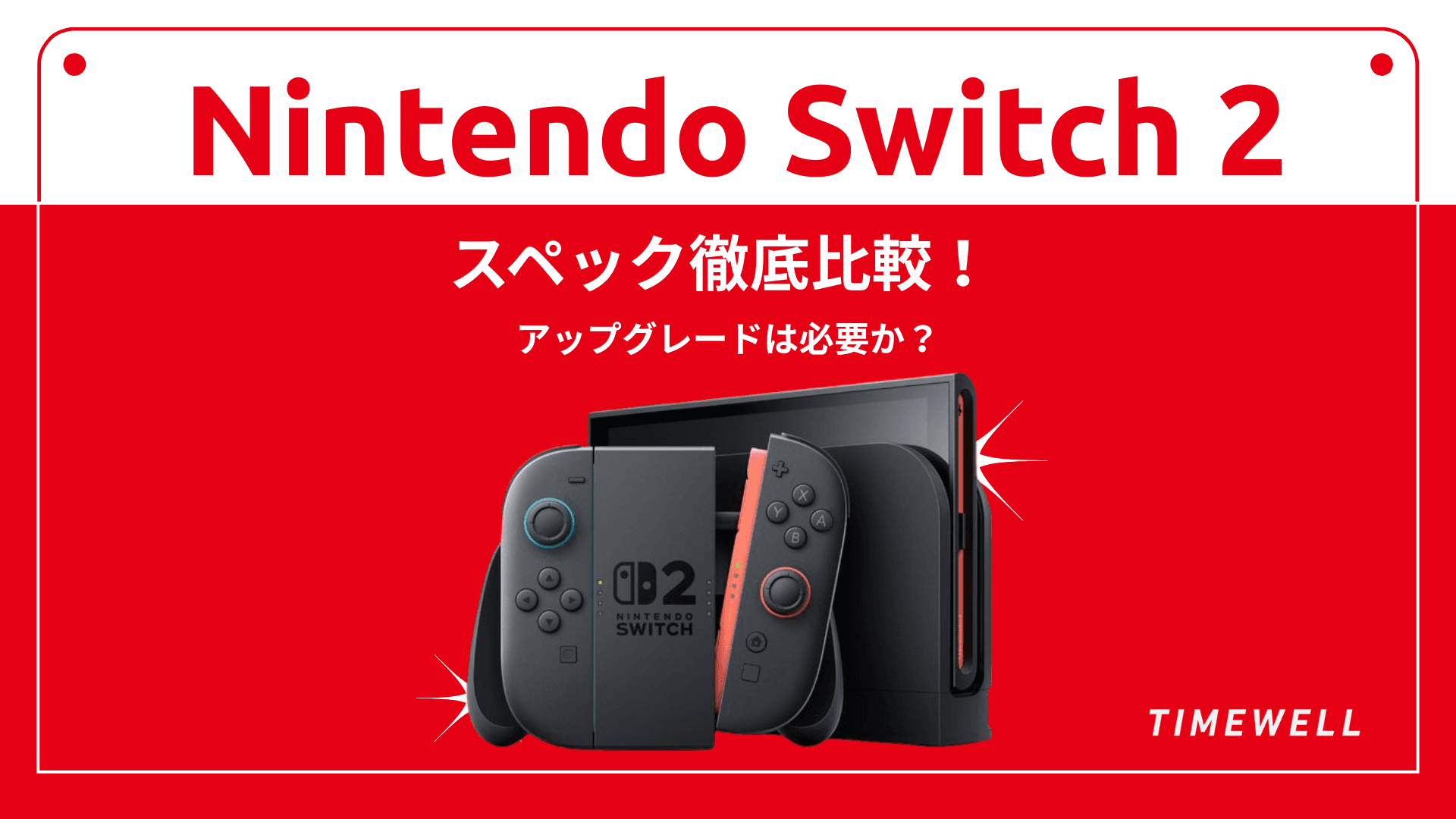
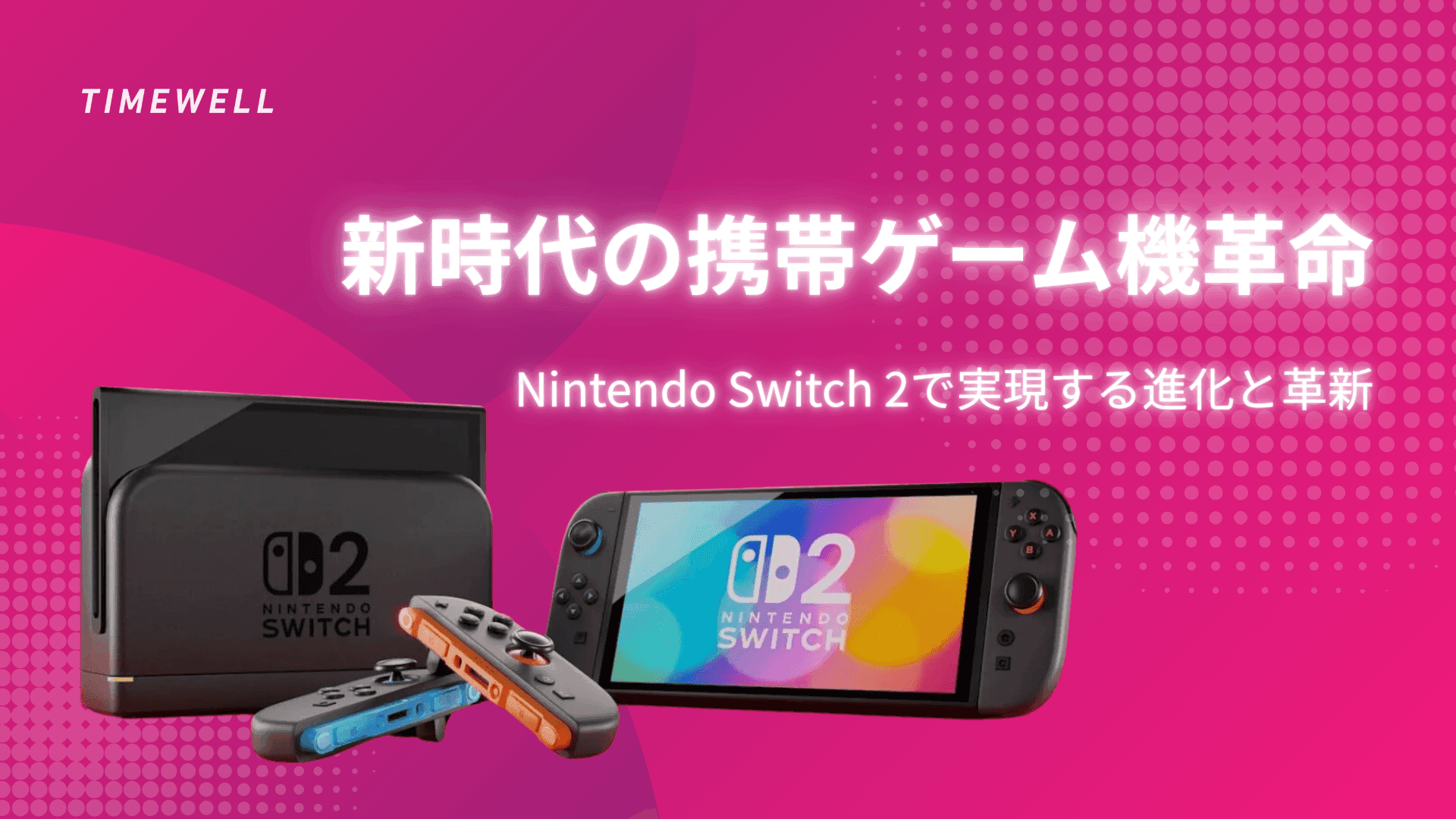
Nintendo Switch 2 takes that concept and runs it through a fundamentally more powerful hardware architecture. This isn't a spec bump. The internal chip delivers an estimated 10x the graphics performance of the original. The display grows from 6.2 to 7.9 inches and gains 1080p resolution, 120Hz refresh rate, and HDR. The Joy-Con attach magnetically. The dock outputs up to 4K. DLSS and ray tracing are supported.
This article covers three areas:
- Hardware redesign: display, Joy-Con, chip, storage, and form factor
- Game performance and backward compatibility
- Connectivity, battery, Game Chat, and HD Rumble 2
Looking for AI training and consulting?
Learn about WARP training programs and consulting services in our materials.
Hardware Redesign
Display The display jump is one of the most immediately noticeable improvements. Screen size goes from 6.2 to 7.9 inches. Resolution goes from 720p to 1080p (1920×1080). Refresh rate doubles from 60Hz to 120Hz. HDR10 is supported.
The panel is LCD, not OLED. The OLED model of the original Switch had notably better black levels and contrast, and some users will notice the difference. That said, the combination of higher resolution, higher refresh rate, and HDR represents a genuine and visible improvement over the LCD models of the original Switch.
Joy-Con 2 and magnetic attachment Joy-Con 2 attaches to the console magnetically rather than sliding into a rail. A release button on the back detaches cleanly. The magnetic connection provides firmer seating in handheld mode and eliminates the rail alignment issues some users experienced with the original.
Button and stick sizes are larger across the board — particularly the SL/SR buttons, which benefit users who play with Joy-Con held sideways or in shared-play configurations. The C-button on the right Joy-Con provides one-press access to Game Chat.
Mouse control mode is supported: both Joy-Con 2 units can function as mice in compatible titles. This is potentially significant for genres — strategy, simulation, point-and-click — that have historically been awkward on controllers.
Custom Nvidia chip Nintendo has stated that the custom chip delivers 10x the graphics performance of the original Switch's processor. DLSS (Deep Learning Super Sampling) is supported, as is ray tracing — both dependent on developer implementation per title.
12GB of RAM pairs with this chip. Combined with 256GB of internal storage (up from 32GB on the base original Switch), load times and overall system responsiveness improve substantially.
Form factor Switch 2 is somewhat larger than the original: approximately 10.7 inches wide and 4.5 inches tall with Joy-Con attached, versus 9.4 by 4 inches for the original. Thickness is maintained at roughly 13.9mm.
Two USB-C ports are available — one on the bottom, one on the top — enabling charging in tabletop mode and connection of accessories including the optional camera. The kickstand is full-width and free-angle, a meaningful improvement over the original's narrow, angle-limited kickstand.
Game cartridges use a red card format (changed from black). The form factor is the same as original Switch cards, maintaining physical compatibility.
Game Performance and Backward Compatibility
Performance gains in practice Early testing shows specific improvements on known titles:
- Bomb Rush Cyberfunk: frame rate jumps from 24–30fps to 60fps
- Resident Evil 5: from 30–40fps to 60fps
For AAAq titles, the new chip enables 4K output (via dock) and 1440p in some configurations, subject to per-title optimization.
Backward compatibility Switch 2 plays approximately 90%+ of existing Nintendo Switch software. The remaining titles either have hardware-specific incompatibilities — Ring Fit Adventure with its accessory dependencies being one cited example — or haven't been verified yet. Nintendo is providing an official compatibility list.
Original Joy-Con can be paired with Switch 2, which preserves existing accessory investments. Existing microSD cards are not compatible — Switch 2 uses microSD Express, a faster standard — but existing game cartridges work.
Classic titles in Nintendo's catalog are receiving upgrade packs: The Legend of Zelda: Breath of the Wild, Super Mario Odyssey, and others are getting HDR support, improved frame rates, and extended draw distances.
Connectivity, Battery, Game Chat, and HD Rumble 2
Dock and 4K output The new dock outputs up to 4K HDR via HDMI. A cooling fan is built in to manage heat during sustained high-resolution output. A wired LAN port is standard (the original Switch required a USB adapter for wired connection; only the OLED dock had LAN built in). The dock is slightly larger than the original — approximately 4.5 by 7.9 inches versus 4.1 by 6.8 inches.
Battery Switch 2 has a 5,220mAh battery, up from 4,310mAh. Estimated play time is 2 to 6.5 hours depending on the title and settings — shorter than the original Switch's 4.5 to 9 hours. The more powerful chip and larger, higher-refresh display draw more power than the increased battery capacity can fully offset.
Real-world test results:
- Mario Kart World (high load): approximately 2.5 hours
- The Legend of Zelda: Breath of the Wild: approximately 3 hours
- Classic 2D titles: 4+ hours
A battery charge limit feature is available — users can cap charging at 90% to extend long-term battery health.
Game Chat Game Chat is a built-in voice and video communication system accessed via the C-button on Joy-Con 2 or the new Pro Controller. The built-in microphone uses noise cancellation. Chat works across different games, functioning as a persistent social layer rather than a game-specific feature.
The optional Nintendo Switch 2 Camera connects via USB-C and enables video calls overlaid on the game display. Automatic voice-to-text and text-to-speech are built in for accessibility.
HD Rumble 2 The haptic feedback system has been upgraded from the original Joy-Con's HD Rumble. The improvement in precision and tactile range is most noticeable in action titles — combat sequences, specific gameplay events — where the original haptics felt relatively generic.
Nintendo Switch Online integration Online multiplayer, cloud saves, and backup functionality connect through Nintendo Switch Online, which remains a subscription-based service. The combination of Game Chat (built directly into the hardware), improved online infrastructure, and seamless access to a large multiplayer catalog represents a significant upgrade over the original Switch's fragmented online communication experience.
Summary
Nintendo Switch 2 is a substantive hardware upgrade that preserves the hybrid concept while addressing most of the original's limitations:
- Display: 7.9-inch 1080p 120Hz HDR LCD (up from 6.2-inch 720p 60Hz)
- Chip: Custom Nvidia with 10x graphics performance, DLSS, ray tracing
- Memory: 12GB RAM
- Storage: 256GB internal (8x the base original)
- Dock: 4K HDR output with built-in cooling fan and LAN port
- Joy-Con: Magnetic attachment, C-button, mouse control, larger buttons/sticks
- Communication: Built-in microphone, Game Chat, optional camera
Tradeoffs worth knowing: battery life is shorter despite a larger battery; the display is LCD not OLED; existing microSD cards don't work with Switch 2.
For users who play online, want a better portable display, or are upgrading from the original LCD Switch models, the improvements are clear. For OLED model owners, the display decision matters more. As the game catalog develops with Switch 2-specific optimization, the performance headroom from the new chip will become increasingly visible.
Reference: https://www.youtube.com/watch?v=VETpWr-_fRk
TIMEWELL AI Consulting
TIMEWELL is a professional team helping businesses transform in the AI agent era.
Services
- AI Agent Implementation: Business automation using GPT-5.2, Claude Opus 4.5, and Gemini 3
- GEO Strategy Consulting: Content marketing strategy for the AI search era
- DX and New Business Development: Business model transformation through AI
In 2026, AI is evolving from a tool you use to a partner you work with. Let's build your AI strategy together.