From Ryuta Hamamoto at TIMEWELL
This is Ryuta Hamamoto from TIMEWELL Corporation.
On January 1, 2024, a powerful earthquake struck off the Noto Peninsula. The epicenter was close enough to Suzu City — located at the very tip of the peninsula in Ishikawa Prefecture — to cause maximum recorded intensity of 7. Tsunami warnings followed. The damage was severe.
Then in September, the area was hit again — this time by heavy rains and flooding. Two major disasters in a single year, affecting a city of roughly 15,000 people already dealing with the slow pressures of population decline and an aging demographic.
I've been visiting Suzu City since May, and this week I returned alongside a group of business owners to assess the situation and explore what long-term support can actually look like.
Getting There
Previous trips took the land route from Kanazawa — roughly 2.5 hours by car, 4 hours from Tokyo when you include the train. This time, I flew Haneda to Noto Airport. About one hour in the air, then 30 minutes by rental car to the city. Far more practical. If you're visiting Noto, the air route is the right answer.
Looking for AI training and consulting?
Learn about WARP training programs and consulting services in our materials.
What the City Looks Like Now
Driving through, the volume of debris is noticeably reduced compared to earlier visits. Roads have improved. The immediate crisis conditions have eased.
But something else is also visible: the cityscape is becoming flatter. Buildings that couldn't be salvaged have come down, and the cleared lots haven't yet filled with anything new. Residents described this in terms that stuck with me — they want to restore color and life to the streets, not just clear away what was lost.
The Health Problem Nobody Talks About Enough
One of the clearest concerns emerging from this visit isn't infrastructure — it's health. Residents, particularly elderly residents, have been going out less since the disasters. Reduced mobility, disrupted routines, and the psychological weight of loss have combined to produce a population that is more sedentary and more socially isolated than before.
The medical volunteers working in the area are doing genuinely difficult work. But what's needed goes beyond episodic care. People need environments that make it easy to move, connect, and eat well over the long term — not just during the acute recovery phase.
Practical ideas that came up in conversations: accessible community spaces focused on enjoyable physical activity, and easier access to healthy food options that don't require long trips or complex logistics. These require coordination across municipal, healthcare, and business stakeholders. No single actor can build them alone.
Three Purposes for This Visit
1. Reviewing recovery progress and discussing support options
The meetings at City Hall were substantive. Progress is being made on reconstruction plans, but the labor shortage is real. Debris removal and cleanup still depend heavily on volunteer support. Anyone who can contribute time in the region has a direct impact.
2. Finding new ideas through conversations with local businesses and residents
What struck me in conversations with local operators wasn't discouragement — it was forward orientation. The question being asked was how to make Noto more attractive and full of life going forward, not just how to return to what existed before. That energy is worth taking seriously and working alongside.
3. Beginning the "Color for Noto" initiative
Recovery from a disaster of this scale isn't completed by rebuilding infrastructure. The harder and ultimately more important work is restoring the sense of possibility — giving people reason to stay, reason to return, and reason to invest in this place's future.
I brought several proposals into discussions this visit. The conversations were productive enough that I'm moving toward action with some urgency. The goal is to build alongside the people who live there, not for them.
What Businesses Can Contribute
Companies visiting Noto have more to offer than volunteer hours, though those matter. The longer-term opportunities include product development using the region's exceptional ingredients, developing and communicating its overlooked tourism assets, and applying technology to create new economic activity in a context where traditional models have been under stress for years before the earthquakes arrived.
The most important orientation is long-term engagement rather than one-time support. Being an outsider with fresh perspective has value — but only when combined with genuine commitment to understanding and staying with the community over time.
Noto Itself
Flying over the peninsula, the landscape is striking — rias coastline on a peninsula that extends into the Sea of Japan like a finger pointing toward the horizon. The combination of sea and mountains, the quality of the seafood, the autumn foliage visible from above — these are real assets that the region has not fully leveraged.
This visit included a shared meal of buri shabu with local residents. Simple, excellent, deeply regional. Meals like that are part of how anyone comes to genuinely care about a place.
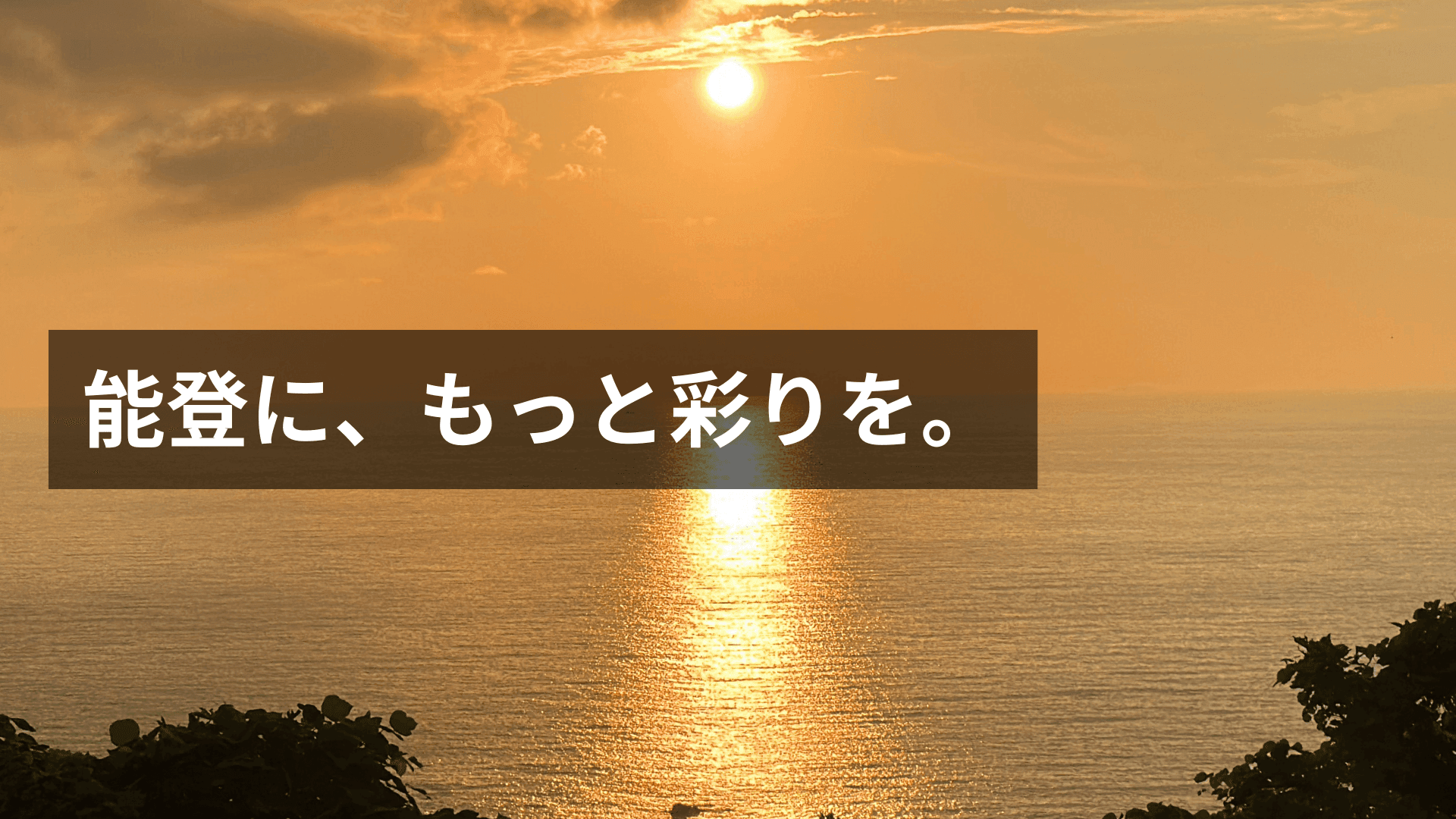
The phrase residents kept returning to was: "We want more color in Noto." It's about more than aesthetics. It means vitality, hope, and the feeling that good things are still ahead. That's what recovery ultimately means, and it's the goal I'm working toward together with the people there.
Noto isn't far. By air, it's genuinely close. If you're interested in seeing this region or exploring what corporate involvement in Noto recovery could look like, TIMEWELL offers corporate retreat programs based in the area.
https://timewell.jp/timewell-noto