This is Hamamoto from TIMEWELL.
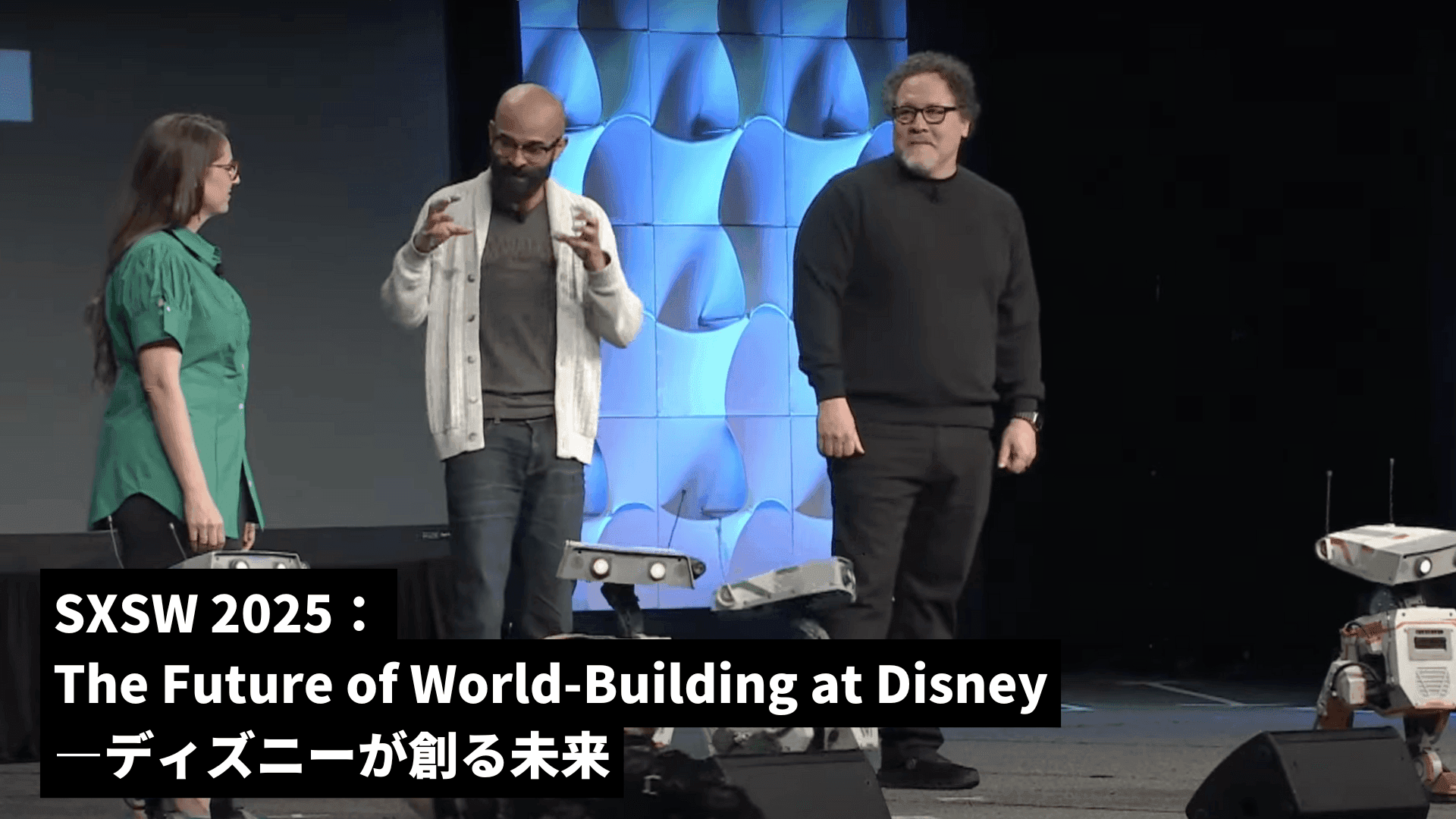
The following is a session report from SXSW. The talk session addressed psychedelics and their relationship to creative work — how altered states of consciousness have influenced some artists' processes, and what that means for the work they produce.
Eric Andre on Dissociative Logic
Comedian and television host Eric Andre was a central figure in the session. He discussed the format of his show — which uses what he described as dissociative logic: structuring comedy around the kind of unexpected, non-linear reasoning that resembles the internal experience of certain substances, without requiring those substances to produce the effect.
The practical example he gave was memorable: a show concept involving locking a Republican and a Democrat in a room together and requiring them to solve a problem. The comedy comes from the collision of incompatible logics in a constrained space — exactly the kind of scenario that dissociative thinking produces naturally.
His broader point: you can simulate the logic of an altered state through deliberate creative choices. The goal is the experience the audience has, not the method by which the creator arrived at it.
Looking for AI training and consulting?
Learn about WARP training programs and consulting services in our materials.
Personal Accounts of Psychedelic Use and Creativity
Other panelists shared more personal accounts. One described LSD as the experience that led them to start creating art — the encounter with an altered state that made them see the world differently and want to express what they were seeing.
Another described how immersion in psychedelic music drew them toward DJing as a creative practice.
These accounts were presented honestly: psychedelics were the catalyst, not the condition. The creative work required everything else — skill, practice, intention — that came after.
The Purposeful Use Question
The most substantive exchange in the session concerned the difference between using substances and using them with purpose. One of the speakers was direct: simply being under the influence does not make someone creative. The substance is not the source of the creative work; it may alter the conditions under which the work happens, but the work itself requires intention.
The counterexample offered: if you use substances without a purpose — without something you are trying to make or understand — you are simply high. That is not the same as purposeful exploration.
The speaker who addressed this most directly was clear that he has experimented with various substances — he was not presenting himself as abstaining — but equally clear that the purpose matters more than the substance.
Key Points
- Dissociative logic can be reproduced through creative structure without requiring substances: the goal is the audience's experience of altered thinking
- For some artists, psychedelic experiences served as a catalyst for pursuing creative work — not as a condition of continuing it
- Using substances purposefully — with a creative or self-discovery intention — is substantively different from recreational use without direction
- The creative work itself requires skill, intention, and sustained effort regardless of what altered states may have contributed to its initiation
This event report was produced by TIMEWELL.
Reference: https://one-x.jp/PMiwA1Mb/P5k7Xxc_
Related Articles
- The Reality of a Part-Time Employee Who Worked Full-Time, Took Two Maternity Leaves, and Changed Her View of Work | TIMEWELL
- Before Paternity Leave — What You Absolutely Must Do to Take Leave Even During a Busy Period
- Pursuing a Hands-On Architecture Firm: Finding My Own Way as the 5th Generation of a Construction Company | Fujita Construction

![Three Must-Do Steps to Take Parental Leave Even During Your Busiest Season [Pre-Leave: Personal Account Part 2]](/images/columns/3.png?dpl=dpl_GTagW71VKjD4VDo3w4ymrXrCfn1y)