Hello, I'm Hamamoto from TIMEWELL.
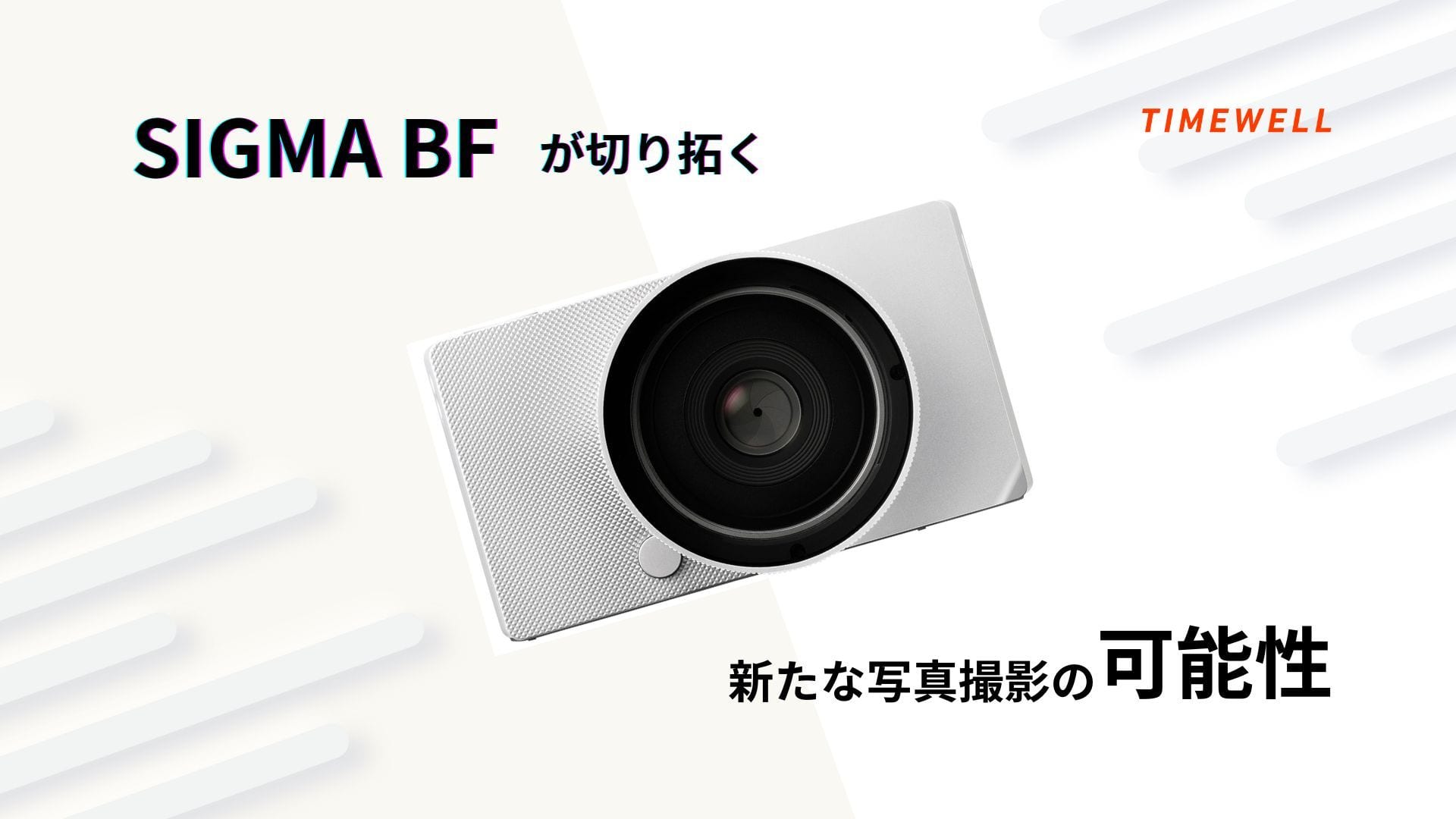
Camera technology has generally moved in one direction: more automation, better AI-assisted focusing, more processing power to correct mistakes before they become problems. Sigma's BF goes in the opposite direction — fewer buttons, no viewfinder, less automation — and positions the simplification as the point.
The Design Philosophy
The SIGMA BF is a compact rectangular body that removes almost everything a conventional camera would consider standard:
- No viewfinder — composition happens entirely through the rear LCD
- Minimal physical controls — buttons and dials reduced to essentials
- Reduced automation emphasis — the camera presents fewer automatic intervention options
The practical result is that a photographer using the BF has to make explicit decisions. White balance, shutter speed, ISO — these are dial adjustments, visible and intentional, not settings the camera manages invisibly in the background.
Whether this is a limitation or a feature depends entirely on what you want from photography.
Looking for AI training and consulting?
Learn about WARP training programs and consulting services in our materials.
What Using It Actually Looks Like
The absence of a viewfinder is the most immediately noticeable aspect of the BF experience. Photographers accustomed to putting the camera to their eye and looking through the scene will need to adjust — everything composes through the screen.
Many photographers find this initially uncomfortable and later report that it changes how they see. The physical act of holding the camera away from your face, looking at the LCD, creates a slightly different relationship with the scene. It's less immersive in one sense, more observational in another.
Settings are accessible without menu diving. The intent is that adjusting exposure or white balance feels like tuning an instrument — part of the shooting process rather than an interruption of it.
Creative Formats
The BF's format options are a practical asset:
21:9 widescreen: Produces the aspect ratio associated with cinema and widescreen film — useful for video production or photographers who want that visual register in still images. This isn't a crop applied in post; it's the native composition you're working with when you shoot.
1:1 square: Optimized for social media platforms that favor square images. Composing in square directly in camera produces better results than cropping after the fact — the framing decisions you make while shooting reflect the final format.
13 color modes: Film simulation styles, high-contrast black and white, specific color interpretations. Digital camera producing analog-film aesthetic results. For photographers who spend time in post-processing trying to achieve these looks, having them in-camera changes the workflow.
The Argument Sigma Is Making
Modern cameras are extremely good at doing things automatically. Face detection, eye tracking, scene recognition, computational HDR — these capabilities mean that a technically correct image is achievable without the photographer understanding much of what's happening.
Sigma's BF is premised on the idea that this automation solves a problem many photographers don't have, while creating a different problem: the experience of taking photographs becomes less engaging when the camera is making most of the decisions.
The BF doesn't claim to produce better photographs automatically. It claims to produce a better experience of photography — more tension at the moment of pressing the shutter, more intentionality in composition, more engagement with the result afterward because you were more involved in making it.
Who This Camera Is For
The BF is well-suited for:
- Deliberate photographers who want to slow down and be more conscious of each frame
- Videographers and filmmakers who need the 21:9 format built in
- Content creators working heavily in square format for social platforms
- Film photography migrants who want a digital camera that requires similar engagement
The BF is not well-suited for:
- Sports or wildlife photographers who depend on fast, reliable continuous autofocus
- Event photographers working in rapidly changing conditions
- Anyone who wants maximum shooting efficiency with minimum technical attention
The Broader Signal
The BF's existence says something about where at least some of the camera market is heading. There's an appetite for equipment that provides a different relationship with the photographic process — not more capable in the conventional sense, but more engaging in a way that capability-maximizing cameras have moved away from.
This is a pattern visible across other product categories: premium products that do less but do it more intentionally, targeting customers who have enough access to maximum capability and want something with a more considered design.
Whether that's the right trade-off for any individual photographer is a question of what they actually want from the experience of taking pictures.
Reference: https://www.youtube.com/watch?v=-YRgEimkhH0
Related Articles
- The Reality of a Part-Time Employee Who Took Two Maternity Leaves and How Her View of Work Changed | TIMEWELL
- Before Taking Parental Leave — Three Things You Absolutely Must Do, Even During the Busiest Season
- Committed to Hands-On Work: How a Fifth-Generation Builder Found His Own Path at Fujita Construction