This is Hamamoto from TIMEWELL.
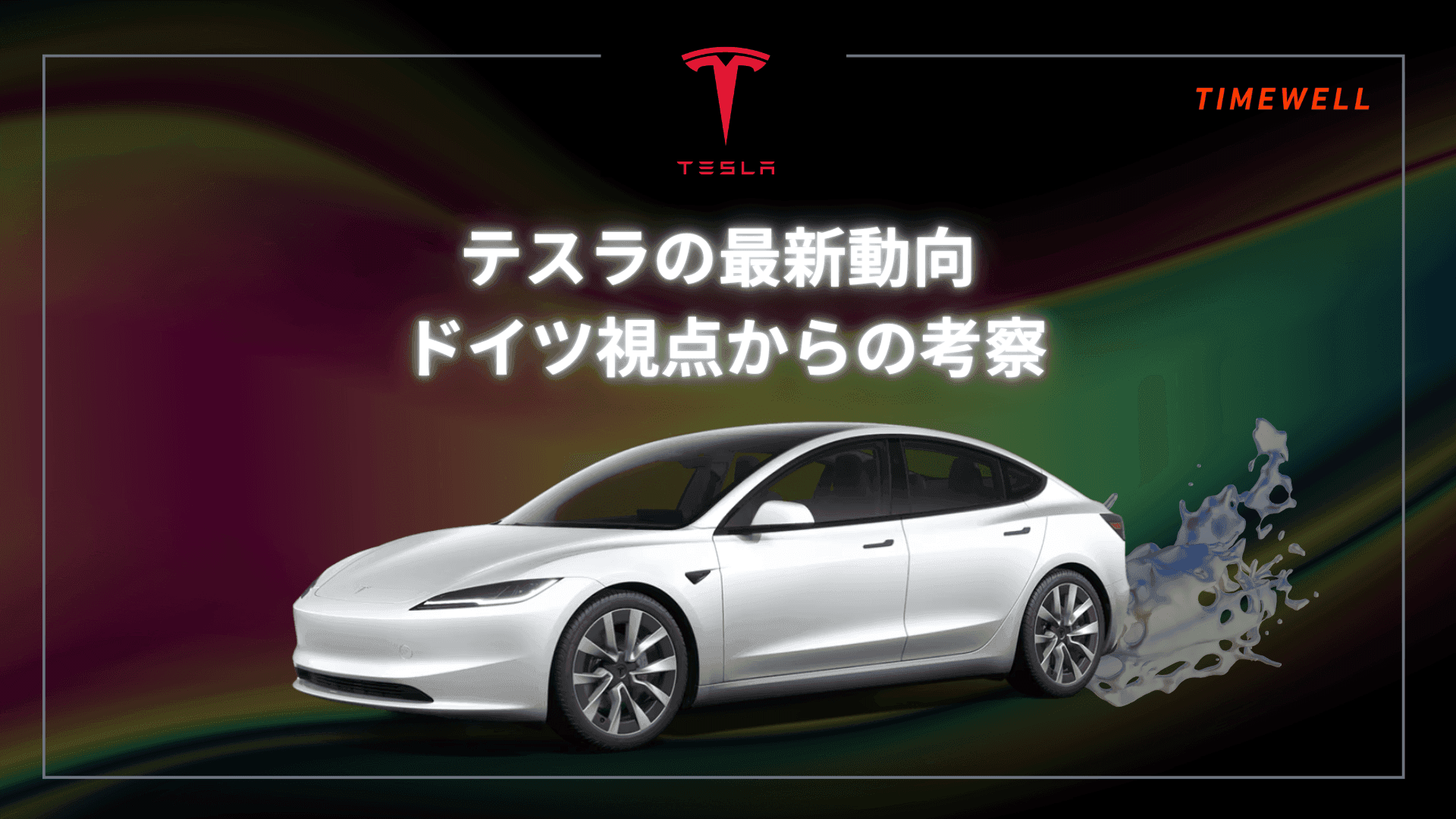
Tesla Through a German Lens
A Germany-based Tesla specialist recently provided a detailed perspective on Tesla's situation in Europe — covering public reception, sales dynamics, stock volatility, and the FSD trajectory. This article synthesizes those observations.
Topics:
- Tesla's reputation and public reception in Germany
- Stock dynamics and sales performance
- FSD and the future of autonomous logistics
Looking for AI training and consulting?
Learn about WARP training programs and consulting services in our materials.
Tesla in Germany: Complicated Reception, Strong Product
Germany is one of the most challenging markets for Tesla in terms of public perception. Media coverage has been predominantly negative, and a series of arson attacks targeting Tesla vehicles generated international attention. On social and political grounds, a segment of the German public views Tesla — and by extension Elon Musk — with hostility.
Yet the product reality diverges from the media narrative. The German Tesla specialist noted that people who actually test drive a Tesla consistently report high satisfaction. The technical execution, software integration, and driving experience are evaluated positively by those who form their opinions through direct product contact rather than media framing.
Whether negative sentiment translates into purchasing behavior at scale remains an open question. The available evidence suggests it does not — product quality is a strong enough counter-force that Tesla's sales figures have been resilient through periods of brand controversy.
New Model Y: A Candidate for Germany's Best-Seller
The New Model Y represents a substantial rather than incremental update. The specialist's assessment: the model has a realistic path to becoming Germany's best-selling vehicle in 2025. The combination of product improvement and Tesla's existing brand recognition among EV buyers creates conditions for strong performance once supply normalizes from retooling.
Stock Dynamics: 36% in a Week
Tesla's stock declined 36% over the week covered, reaching approximately ¥36,000 per share (at the exchange rate at the time). This volatility is a structural feature of Tesla shares, not necessarily a signal of fundamental deterioration.
Two factors drove the decline:
- Q1 delivery numbers below analyst estimates — though, as discussed elsewhere, the cause was a production retool rather than demand weakness
- Tariff escalation news introduced macro uncertainty affecting the broader auto sector, with Tesla's high valuation making it more sensitive to sentiment shifts
For long-term analysis, the weekly stock movement is noise. The underlying metrics that matter — vehicle registrations, energy storage deployments, FSD adoption rates — tell a different story from the stock price.
Sales Performance: The Real Signal
US EV registrations in January 2025 showed Tesla maintaining dominant market share. The 11% year-over-year decline to 4,775 units needs to be read alongside the 20% reduction in inventory levels — a lean operations choice, not a demand signal.
China's March figures showed near-record sales following the production retool. Norway saw Tesla take the top spot across all vehicle categories. Regional variation is real, but the aggregate picture does not support a "Tesla demand collapse" thesis.
FSD: What European Approval Changes
Tesla's FSD Supervised is working through European regulatory approval. The Netherlands is expected to receive formal authorization first. The EU's exemption structure could then enable rapid expansion to other member states without requiring country-by-country approvals.
The specialist's FSD experience in the US was striking: enter a destination, and the car handles the entire journey. In Germany, regulatory constraints currently prevent this. European Tesla owners who purchased FSD — paying a meaningful premium — have been waiting for full functionality.
When that approval arrives, the implications extend beyond personal convenience:
Logistics transformation: If autonomous vehicles can transport cargo without a driver, the economics of last-mile and regional delivery change fundamentally. Transportation costs represent a significant portion of supply chain expense. A driverless vehicle operating 20–22 hours per day at scale resets those economics.
Tesla's manufacturing advantage — domestically produced vehicles for the US market, Gigaberlin for Europe — positions the company to scale autonomous vehicle deployment faster than competitors dependent on a more distributed supply chain.
Summary
The German perspective on Tesla reflects a broader pattern: public and media reception diverges from product performance and user satisfaction. Key points:
- Tesla's German public reception is contested, but product satisfaction among actual users is high
- The New Model Y has the potential to become Germany's best-selling car in 2025
- Weekly stock volatility does not reflect quarterly or annual fundamentals
- FSD Supervised approval in Europe will unlock autonomous driving for European customers and set the stage for logistics transformation
Tesla remains the standard against which other EV manufacturers are measured — in Germany as elsewhere.
References:
TIMEWELL AI Consulting
TIMEWELL supports business transformation in the age of AI agents.