This is Hamamoto from TIMEWELL.
The Heat Problem at Expo 2025
Osaka Expo 2025 is a summer event held on reclaimed land with minimal natural windbreak. The combination of sustained sun exposure, high humidity, and large crowds walking long distances creates genuine heat stress risk. This guide covers what to bring, where to find relief inside the venue, and how to structure your day to stay functional from morning through evening.
- Essential heat protection gear
- Air-conditioned rest spots and cool zones inside the venue
- Daily planning strategy for summer visits
- Summary
Looking for AI training and consulting?
Learn about WARP training programs and consulting services in our materials.
Essential Heat Protection Gear
The Basics: Sun Coverage
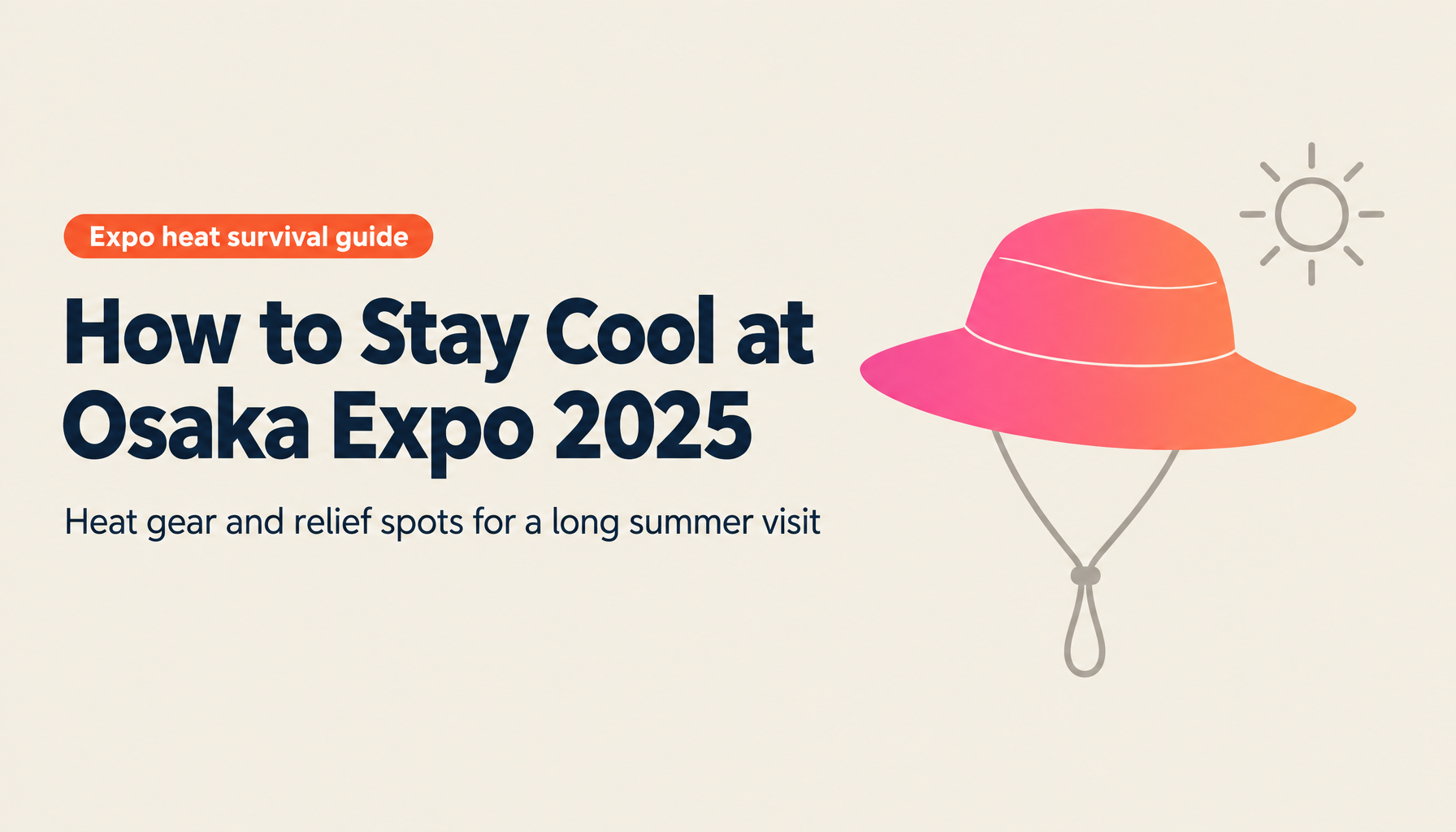
Wide-brimmed hat — A cap covers only part of the face. A hat with a full brim protects the neck, ears, and sides of the face, all of which burn quickly during sustained outdoor activity. Choose a hiking or travel-specific model: these are designed for extended outdoor use, wick sweat, and are made from materials that don't trap heat. A chin strap is important — the site experiences strong sea wind.
Sun umbrella — For visitors who aren't suited to a hat, a sun umbrella offers better coverage of the face and shoulders. Dual-purpose rain/sun umbrellas are the practical choice: summer storms arrive without warning, and having one item that covers both situations removes a packing decision.
Sunglasses — Often skipped, rarely irrelevant. The light at an open, waterside venue is reflected from multiple surfaces. Even visitors who don't normally wear sunglasses will notice eye fatigue during a full expo day.
Arm covers — Particularly useful for visitors spending significant time on their phones. The habit of holding a phone with arms extended means significant cumulative sun exposure to the hands and forearms. Cooling-fabric arm covers block UV while providing some temperature reduction.
Hydration Management
Insulated bottle — A stainless-steel insulated bottle filled with cold water or tea at departure, supplemented with ice, is the most reliable way to ensure access to cold liquid throughout the day. The venue has free water refill stations; the bottle makes them useful. Vending machines are available but can run low during peak hours.
Insulated bag with ice packs — Keeps a frozen bottle cold for hours. A single frozen bottle placed in an insulated bag provides not just cold water as it thaws, but also a contact cooling tool — applicable directly to the neck, underarms, or face to reduce body temperature quickly.
Cooling Accessories
- Cooling ring (neck band) — Frozen before departure, provides 1-2 hours of sustained cooling at the neck. Recharging is possible with ice from the insulated bag.
- Cooling towel — Products like Biore's cooling towel provide immediate cooling on contact. Particularly effective for the face and neck during peak afternoon heat.
- Hat insert cooling band — A cooling insert placed inside the hat brim, positioned against the forehead. Provides targeted cooling at the head without requiring visible accessories.
- Handheld fan — Useful for targeted cooling during stationary periods (waiting in queues). Visitors with long hair should use a fan guard to prevent entanglement.
Direct ice pack application — At extreme heat moments, a partially melted ice pack applied to the neck, underarms, or face provides immediate temperature relief. Use a thin cloth layer to avoid skin damage.
Cool Spots Inside the Venue
Grand Roof Ring — Western End
The western end of the Grand Roof Ring, closest to the sea, consistently receives sea breeze and provides natural shade through structural elements. Benches are available. Light retail and food is within walking distance. This is consistently less crowded than ground-level rest areas and functions as a natural cooling spot without requiring entry to any pavilion.
Indoor Cool Rooms
Multiple areas inside the venue have dedicated air-conditioned interior spaces — small-room formats with sufficient cooling to bring body temperature down meaningfully. These are best used proactively during the hottest part of the afternoon (12 PM to 3 PM) rather than as emergency responses after overheating has begun.
Calm Down / Cool Down Rooms
Located adjacent to toilet facilities throughout the venue, these are private air-conditioned individual rooms. They serve visitors who need genuine quiet and temperature control — those managing anxiety in crowds, visitors with health conditions, or anyone who simply needs a few minutes of private recovery. The rooms are an underused resource; most visitors don't know they exist.
Green Park Bus Stops
Internal rest structures visible from the circulation paths provide shade and some air circulation. Not as effective as fully enclosed air-conditioned spaces, but accessible without entering any pavilion or facility.
No-Queue Pavilions as Default Cool Spots
Several pavilions — particularly the Commons group — have large interior air-conditioned areas accessible without reservations. Using these as scheduled rest points during the afternoon is more effective than waiting until you feel heat stress. The Osaka Healthcare Pavilion, when not crowded, provides over two hours of cool interior space.
Mist Systems
Positioned throughout the venue, the mist systems activate every 15 minutes and provide temporary ambient temperature reduction across the surrounding area. Planning rest points near these systems during peak afternoon heat provides passive cooling alongside food or rest.
Daily Planning for Summer Visits
Morning: Start early. The first two hours after opening (9 AM to 11 AM) are cooler and significantly less crowded. This is when physically demanding outdoor activity — walking between pavilions, standing in queues — should be concentrated.
Late morning: Prioritize any reserved pavilions. Indoor time during the late morning is comfortable and productive.
Midday: Transition to air-conditioned spaces. 12 PM to 3 PM is the hottest window. Use this time for lunch (indoor seating), scheduled rest at an air-conditioned pavilion, or the Calm Down Rooms. Avoid extended outdoor queuing during this period.
Afternoon/evening: As temperature drops toward 4 PM, outdoor activity becomes manageable again. Evening shows can be watched from the Grand Roof Ring.
Flexible adjustment: Heat forecasts and actual crowd conditions vary by day. Check the weather forecast the day before. If maximum temperature exceeds 35°C (95°F), increase the proportion of the day spent in air-conditioned spaces and reduce outdoor queuing targets.
Summary
The heat at Osaka Expo 2025 is manageable with the right preparation. The essentials are simple: a hat, arm covers, an insulated bottle, ice packs, and a cooling ring. The key knowledge is location-based — knowing where the air-conditioned rest spaces are before you need them means using them proactively rather than reactively. And the strategic principle is straightforward: concentrate outdoor activity in the morning, use the afternoon for indoor pavilions and scheduled rest, and stay flexible enough to respond to conditions on the day.
Reference: https://www.youtube.com/watch?v=P16w6WWjBps