Can AI Truly Support Emotional Well-Being? Claude and the Frontiers of Emotional AI
A New Kind of Conversation
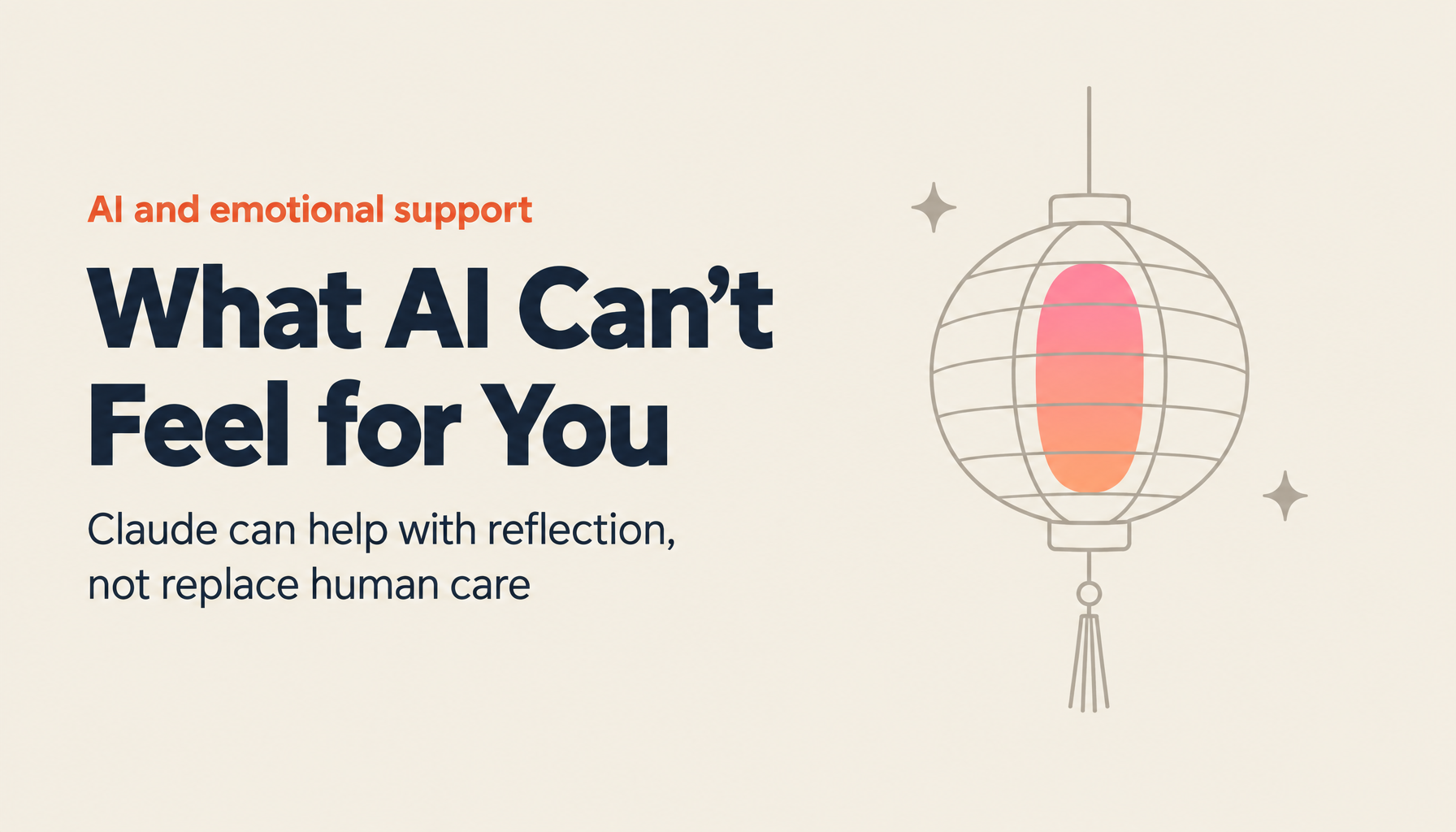
People are increasingly turning to AI models like Claude not just for information or task assistance, but for emotional support. Users share personal struggles, process difficult emotions, and seek advice that they might once have reserved for a trusted friend or therapist.
This trend raises important questions for individuals, businesses, and society: What can AI legitimately offer in this space? Where are the hard limits? And what responsibilities come with building and deploying emotionally supportive AI?
Looking for AI training and consulting?
Learn about WARP training programs and consulting services in our materials.
What AI Can Actually Do Well
Despite not having emotions itself, a well-designed AI like Claude can provide genuinely useful support in several ways:
Active listening without judgment. People sometimes need to articulate their thoughts and feelings without fear of being judged or burdening someone else. An AI can provide this space—available at 3am, never impatient, never distracted.
Reflection and reframing. Claude can help users examine a situation from different angles, identify patterns in their thinking, and consider interpretations they hadn't considered. This isn't therapy, but it's a form of useful cognitive scaffolding.
Practical information. For people navigating grief, job loss, relationship difficulty, or health challenges, having accurate, relevant information readily available can reduce anxiety and support better decision-making.
Consistency and availability. Unlike human support networks, AI is available whenever needed, doesn't experience compassion fatigue, and maintains consistency across interactions.
The Hard Limits
Understanding where AI support breaks down is as important as recognizing its value:
No genuine empathy. Claude responds with language that reflects understanding, but it doesn't feel what the user feels. This distinction matters—particularly when someone is in genuine distress.
Risk of misidentifying severity. An AI cannot reliably identify when someone needs professional intervention. A user describing symptoms of severe depression or suicidal ideation requires immediate professional response that AI cannot provide.
Dependency risk. Regular reliance on AI for emotional regulation may substitute for developing human connections and professional mental health support—both of which have better evidence for long-term outcomes.
Privacy concerns. Sensitive emotional content shared with AI systems is processed by servers, potentially reviewed by humans for safety, and subject to data retention policies that users may not fully understand.
Appropriate Use Cases
AI emotional support tools are most appropriate as:
| Use Case | Appropriate? | Notes |
|---|---|---|
| Processing minor daily stress | Yes | Low risk, readily available |
| Articulating feelings before a hard conversation | Yes | Useful preparation tool |
| Late-night anxious thinking when support isn't available | Conditional | Should not replace professional help |
| Grief processing over extended period | With caution | Should supplement, not replace, human support |
| Active suicidal ideation or crisis | No | Requires immediate professional intervention |
| Replacing therapy for diagnosed conditions | No | Not a clinical tool |
How Claude Approaches Emotional Conversations
Anthropic has designed Claude with specific guardrails for emotionally sensitive interactions:
- Encourages professional help when the conversation suggests clinical need
- Declines to roleplay as a therapist or claim clinical capabilities
- Maintains appropriate limits on the depth of the relationship
- Provides crisis resources when safety concerns arise
These design choices reflect a recognition that AI emotional support, if irresponsibly deployed, can harm the very users it's meant to help.
Implications for Business
Organizations considering deploying emotionally supportive AI features—in wellness apps, HR platforms, or customer service contexts—should ask:
- Are we being transparent about what users are talking to?
- Do we have clear escalation paths to human support and professional resources?
- Have we considered the psychological impact on users who may develop parasocial attachment to AI?
- Are we collecting and protecting sensitive emotional data appropriately?
The potential is real, but so is the responsibility.
Summary
AI like Claude can play a meaningful, if limited, role in emotional support contexts. The key is honesty about what it is and isn't—a capable conversational tool that can help with reflection, information, and articulation, but not a substitute for human connection or professional mental health care. Organizations building in this space have an obligation to design for this distinction clearly and to prioritize user safety over engagement metrics.
TIMEWELL AI Consulting
TIMEWELL supports business transformation in the AI agent era.
Our Services
- ZEROCK: High-security AI agent running on domestic servers
- TIMEWELL Base: AI-native event management platform
- WARP: AI talent development program