Claude Code and the Future of Developer Experience
A New Category of Development Tool
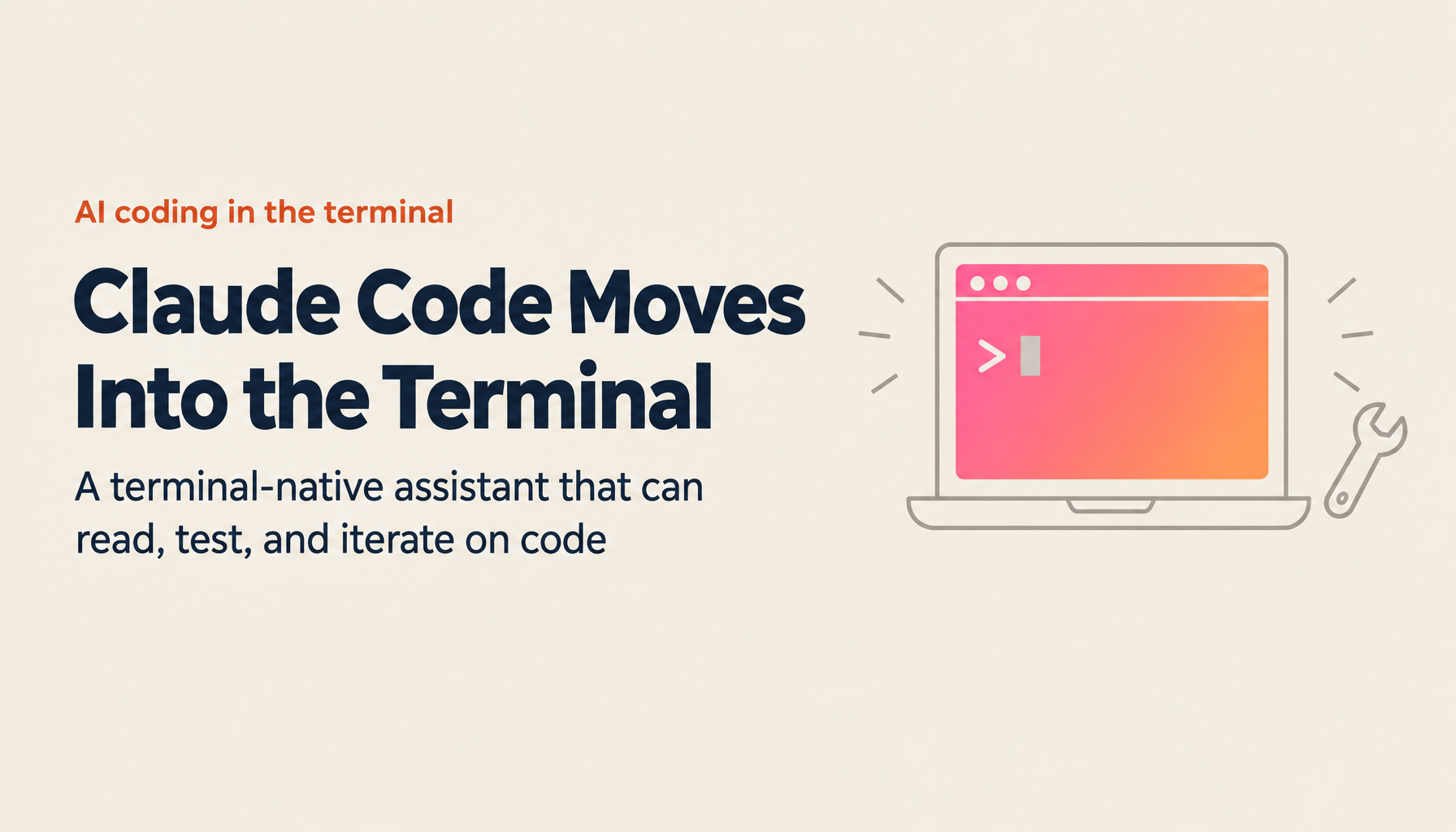
Claude Code isn't just another code autocomplete or chatbot for developers. It's designed as an agentic coding assistant that operates in the terminal, understands the full context of a codebase, and can take meaningful autonomous actions—creating files, running tests, making commits, and iterating until tasks are complete.
This represents a genuine shift in what's possible for individual developers and small teams.
Looking for AI training and consulting?
Learn about WARP training programs and consulting services in our materials.
What Makes Claude Code Different
Terminal-Native Operation
Most AI coding tools are IDE plugins or web interfaces. Claude Code runs in the terminal, which means it operates at the same level as other developer tools—git, npm, bash scripts, CI/CD pipelines. This isn't cosmetic: it means Claude Code can actually do things in your development environment, not just suggest them.
Codebase-Level Context
One of the persistent limitations of AI coding assistance has been context window size—the amount of code the model can "see" at once. Claude Code addresses this by intelligently indexing and retrieving relevant parts of a codebase rather than trying to load everything into context at once.
In practice, this means Claude Code can work on a task that spans multiple files, understand how components interact, and avoid the common failure mode of producing code that works in isolation but conflicts with the rest of the project.
Agentic Task Execution
Claude Code can be given a goal and work toward it iteratively:
- Read the relevant code
- Plan the changes needed
- Make the changes
- Run tests to verify
- Fix failures
- Repeat until the task is complete or it needs human input
This loop—which mirrors how a skilled developer actually works—is more useful than single-turn code generation for most real-world tasks.
Practical Use Cases
Feature Implementation
Describe a feature in natural language and Claude Code will:
- Identify which files to modify
- Implement the changes
- Write tests
- Handle edge cases you specify
Bug Investigation and Fixing
Point Claude Code to a failing test or a reported issue and it will:
- Trace through the code to identify the root cause
- Propose and implement a fix
- Verify the fix resolves the original issue without breaking other tests
Refactoring
Request a refactor (extracting a function, updating an API interface, migrating to a new pattern) and Claude Code will execute it systematically across the affected files.
Code Review Assistance
Walk through a diff with Claude Code to:
- Identify potential bugs or security issues
- Check for consistency with existing patterns
- Generate a written review summary
The Human Role in Agentic Development
As AI handles more of the execution, the developer's role becomes more explicitly about:
- Framing the problem. Clear task specifications produce much better results than vague requests.
- Reviewing output. Agentic AI is capable but not infallible. Every meaningful change should be reviewed.
- Setting constraints. Telling Claude Code what not to do (don't modify these files, don't introduce new dependencies, stay within this scope) is as important as what to do.
- Judgment calls. When Claude Code encounters ambiguity, it should ask rather than guess—and developers need to provide clear guidance.
Pair Programming with AI
One framing that resonates with many developers is treating Claude Code as a pair programming partner rather than an automation tool. In pair programming:
- The driver (who types) and navigator (who thinks) switch roles regularly
- The conversation between them often surfaces issues that neither would have caught alone
- The benefit is as much in the dialogue as in the output
Claude Code operates similarly—its value isn't just in the code it produces, but in the back-and-forth that helps developers think through problems more clearly.
Limitations to Be Aware Of
- Still makes mistakes. Claude Code can misunderstand complex codebases, introduce subtle bugs, or miss context that isn't in the indexed files.
- Security sensitivity. Be thoughtful about which codebases you allow terminal-level AI access to, especially for production systems.
- Cost. Agentic, multi-turn operations consume significantly more tokens than single prompts. For heavy use, this adds up.
Summary
Claude Code represents a meaningful step forward in how AI assists software development—moving from single-turn suggestions to genuinely agentic, context-aware assistance that can operate at the task level rather than the line-of-code level. For developers who learn to work with it effectively, the productivity gains are substantial. The key is approaching it as a capable but imperfect partner that requires clear direction and careful review.
TIMEWELL AI Consulting
TIMEWELL supports business transformation in the AI agent era.
Our Services
- ZEROCK: High-security AI agent running on domestic servers
- TIMEWELL Base: AI-native event management platform
- WARP: AI talent development program