This is Hamamoto from TIMEWELL.
I recently participated in a session with overseas members at EMC GLOBAL SUMMIT 2026. The talk by serial entrepreneur Ikuo Hiraishi, along with the dialogue among entrepreneurs gathered from India, Singapore, the Philippines, and beyond, brought the challenges and possibilities of Japan's startup ecosystem into sharp, vivid focus.
This report attempts to reconstruct those 88 minutes as faithfully as possible.
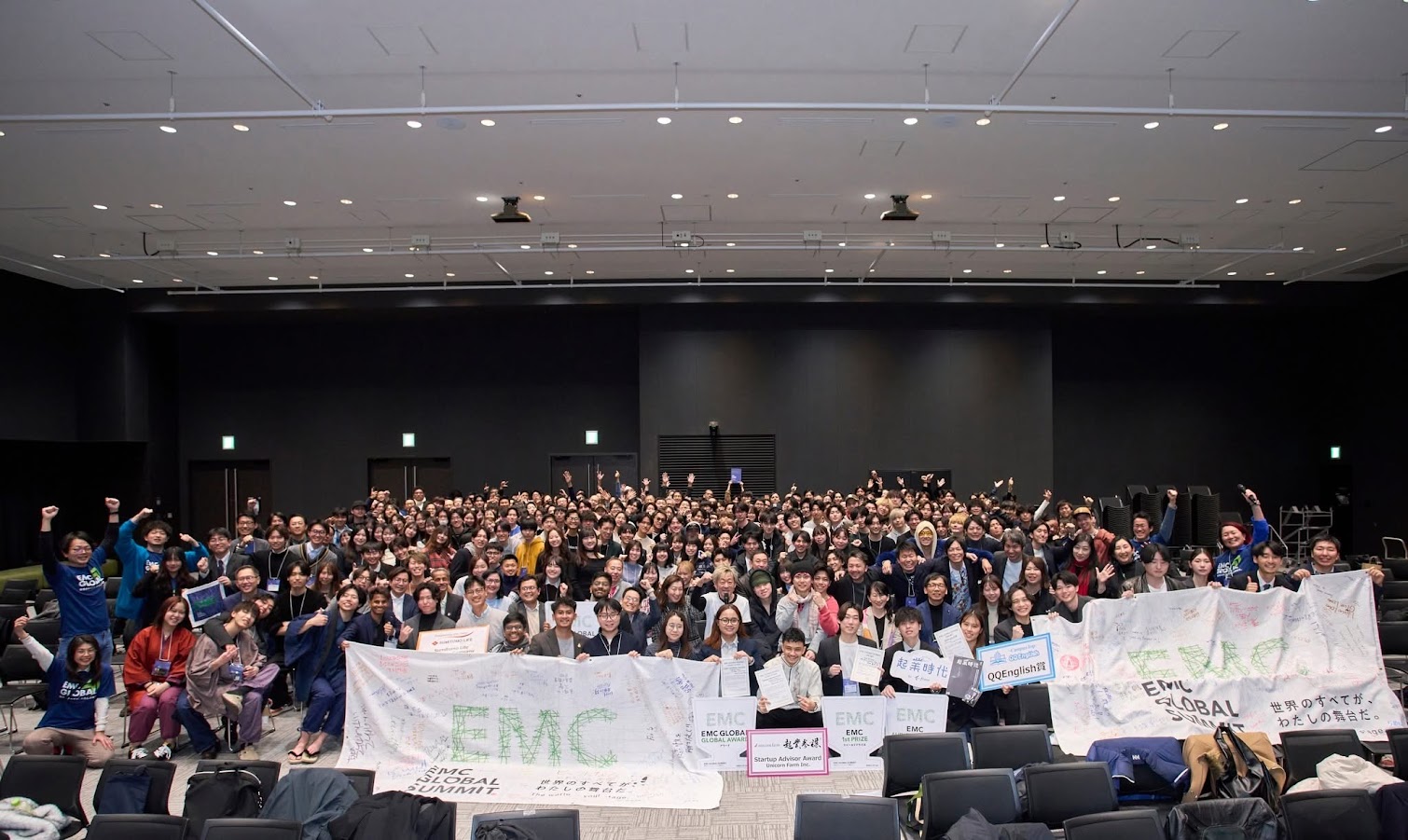 Participants at EMC GLOBAL SUMMIT 2026. Gathered from countries across the Asia-Pacific region, including Japan, India, Singapore, and the Philippines.
Part 1: Ikuo Hiraishi's Talk — Japan's Current Position and a Warning Against Becoming the "Last Samurai"
A "Rollercoaster" Life That Doesn't Fear Failure
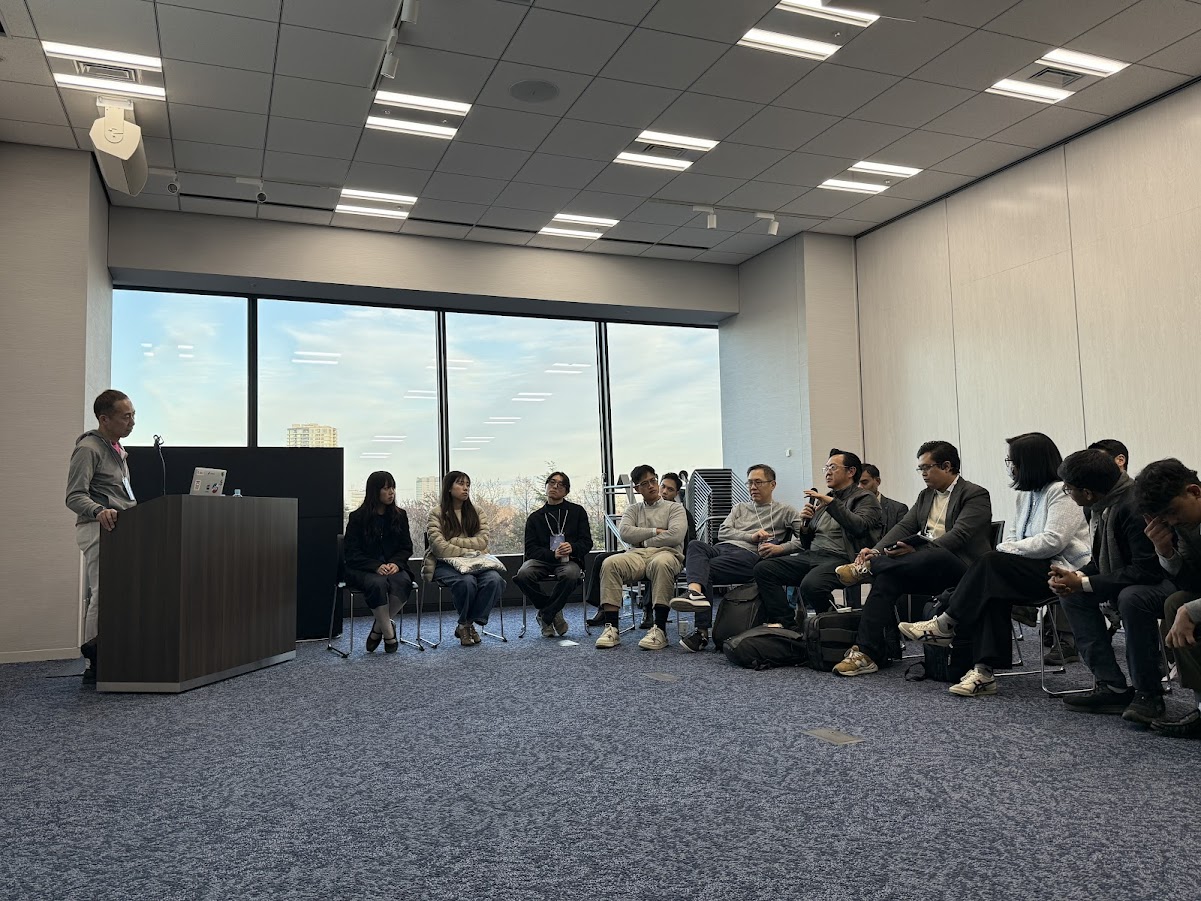 Ikuo Hiraishi's talk. Chairs arranged in a circle allowed for an intimate dialogue with participants.
January 2026, Tokyo. One room at the EMC GLOBAL SUMMIT 2026 venue radiated an energy in stark contrast to the winter sky outside. Seated in chairs arranged in a circle were young entrepreneurs and students carrying the future of the Asia-Pacific. Their eyes were fixed on Ikuo Hiraishi.
Known as a serial entrepreneur with one IPO and one M&A exit under his belt, Hiraishi opened his talk not with a triumphant success story, but with failure.
"My career is, truly, an 'ongoing roller coaster ride.'"
His portfolio company Infarm became a unicorn at one point, but ultimately collapsed, and his investment went to zero. The 10th company he founded in Singapore closed after just two months. "Decisions to withdraw should be made quickly. Procrastinating is genuinely bad," he said — words drawn from painful personal experience.
This raw self-disclosure set the tone for the entire session. This was not a place to parade success. It was a place to learn from failure and speak to what matters.
Japan's Position Through the Data
Hiraishi used calm data analysis to illuminate where Japan's startup ecosystem stands today.
In the number of unicorns produced, the United States and China dominate the world, and in city-level rankings, San Francisco, Beijing, New York, and Shanghai occupy the top. Japanese cities don't even appear on the radar.
But shift the perspective and a different picture emerges.
"When you look at the number of listed companies with a market cap of $1 billion or more, Japan ranks second only to the United States. More than India or China."
Japan has formed its own distinctive ecosystem — one of "earthshot" (grounded challenges) rather than the American "moonshot" (bold, world-changing ambitions). IPO is the primary exit strategy, and the tendency is toward steady but not explosive growth.
Culture as an "Invisible Wall"
Why can't Japan shoot for the moon? Hiraishi's analysis reaches all the way down to the deep layers of culture.
| Dimension | Silicon Valley | Japan |
|---|---|---|
| Product Development | Launch quickly, iterate continuously | Pursue perfection before release |
| Risk Tolerance | Embrace risk | Avoid risk |
| Orientation | Global | Domestic market |
| Diversity | More than half of founders are immigrants | Homogeneous, "read the room" culture |
| Communication | Storytelling and vision | Product quality and attention to detail |
"Japan has a word, 'KY' — 'can't read the air.' Society implicitly demands conformity. That's why people generally fear 'being different.'"
In Silicon Valley, more than 50% of startup founders are immigrants, and diversity is the norm. This homogeneity, Hiraishi argued, is the single greatest handicap in Japan's ecosystem.
Why Is the Next Sony or Honda Not Being Born?
At the heart of the talk, Hiraishi posed the most fundamental question of all.
"Japan has the world's fourth-largest GDP, low crime rates, and excellent food. But isn't this comfortable environment 'spoiling' the people?"
He offered six reasons:
- Highly homogeneous society: Diverse perspectives are slow to emerge
- Resting on past success: Sony, Honda, and Toyota built national prosperity, removing the sense of urgency
- Risk-averse culture
- Dependence on the domestic market
- Lack of entrepreneurship education
- The language barrier
Then he brought the data.
"63% of American unicorns have immigrant founders. Even in the EU, 40%. The more diverse the founders' backgrounds, the more unicorns are created. Japan, a homogeneous country, carries a major disadvantage."
Do You Want to Be the Last Samurai?
The closing message was powerful.
"Japan has 120 million people. But if you target only Japanese people inside a homogeneous country, are we trying to become the 'Last Samurai'? At least, I don't want to be."
"Let's stay connected, keep in touch, and keep discussing many things. And hopefully, someday, conferences and platforms like this will produce the next unicorn."
Taking on AI-driven work? You do not have to do it alone
WARP is a hands-on program for people who want to build with AI themselves, from training through implementation support.
Part 2: A Cross-Border Dialogue of the Soul — Risk, Struggle, and Hope
Hiraishi's provocative challenges ignited the souls of the young talent gathered from across the Asia-Pacific. From this point, it was a genuine contest with no predetermined conclusions.
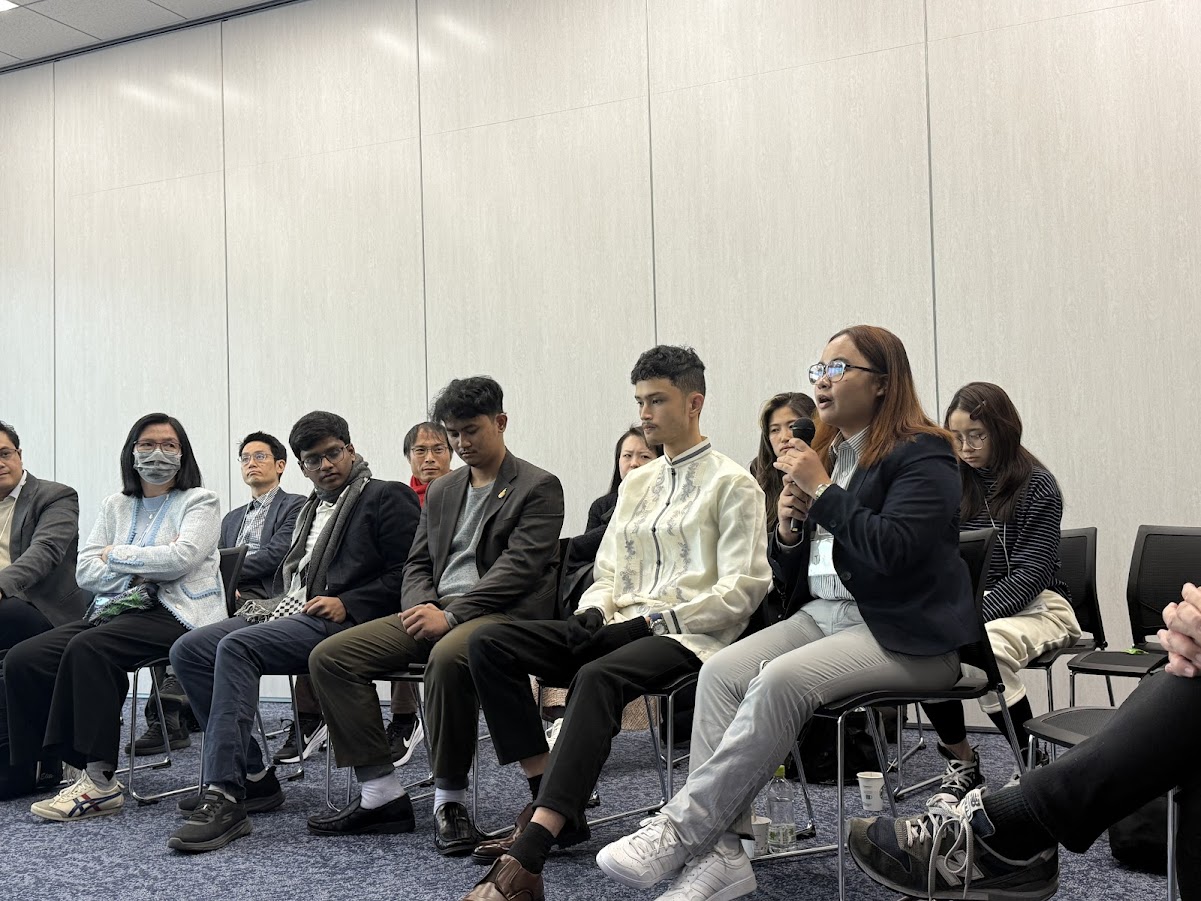 A cross-border dialogue. Participants from India, the Philippines, Singapore, and Japan shared their realities with each other.
Why Did the Unicorn Collapse?
The discussion was sparked by a sharp question from one participant: "Why did the unicorn you invested in collapse?"
Hiraishi shared the inside story of Infarm. Despite carrying a valuation of $1.57 billion, it was running entirely at a loss. There were two direct causes.
First cause: Russia's invasion of Ukraine. Energy prices in Europe tripled, and electricity — the primary cost of vertical farming — surged. The business model became unviable.
Second cause: The Fed's interest rate hikes. Rates were raised to 5%, and LPs began pulling capital out of VCs. "You could do better just investing in the S&P 500 and sitting on the couch," was the calculation.
"Geopolitical triggers collapsed the unicorn bubble. That's why we failed."
How to See Risk — Adventure or Fear?
The question "Why are there so few entrepreneurs in Japan?" opened a discussion that cut to the essence of "risk" itself.
Voice from India: "The thrill outweighs the risk"
"I don't think you need to be extraordinarily smart to become an entrepreneur. You just need to keep going, and to be resourceful. That's all."
"To be an entrepreneur you need to be a little delusional. You think you'll be the greatest, and if that doesn't happen, you think next time you'll be the greatest. This loop goes on forever. That's the entrepreneurial spirit."
Voice from the Philippines: "Every day is risk, so challenge is celebrated"
"Typhoons and other natural disasters, political risks, even getting a job is a risk. Every day is risk. So people naturally come to accept risk."
"We have a word, 'diskarte.' The ability to strategize, persevere, and think beyond expectations. That's what a great entrepreneur needs."
A Japanese participant's struggle: "The risk of being cast out by society"
"Even a small risk — if you behave differently from other people — can itself become a risk. Because there's a possibility of being ostracized from society."
A stable society hesitates challenge; an unstable society makes challenge necessary. This paradox was the very embodiment of Asia-Pacific diversity.
"Face" and the Willingness to Suffer
Voice from Singapore:
"I had done the math. If I got a job, the median salary was about 9 million yen a year. So taking the risk was a big thing. Concretely, what I would lose was 'face.' At reunions, others have big companies and titles, and you're still eating ramen every night."
"Young people want to be the next Facebook, want to start TikTok. But they're not ready to suffer. If someone wants to start a startup for the money, you shouldn't invest in that company."
Hiraishi then posed a core question: "If your startup fails, can you get a job at a large company again?"
The participant from Singapore answered immediately: "No problem. I can go back." The participant from India said: "It takes time." The participant from the Philippines said: "I'm more likely to get hired overseas than domestically" — speaking to the reality of talent drain.
Whether failure is tolerated, and whether a path to try again is secured — these emerged from the dialogue as one barometer of an ecosystem's maturity.
Diversity as Hope, and the Path to Co-Creation
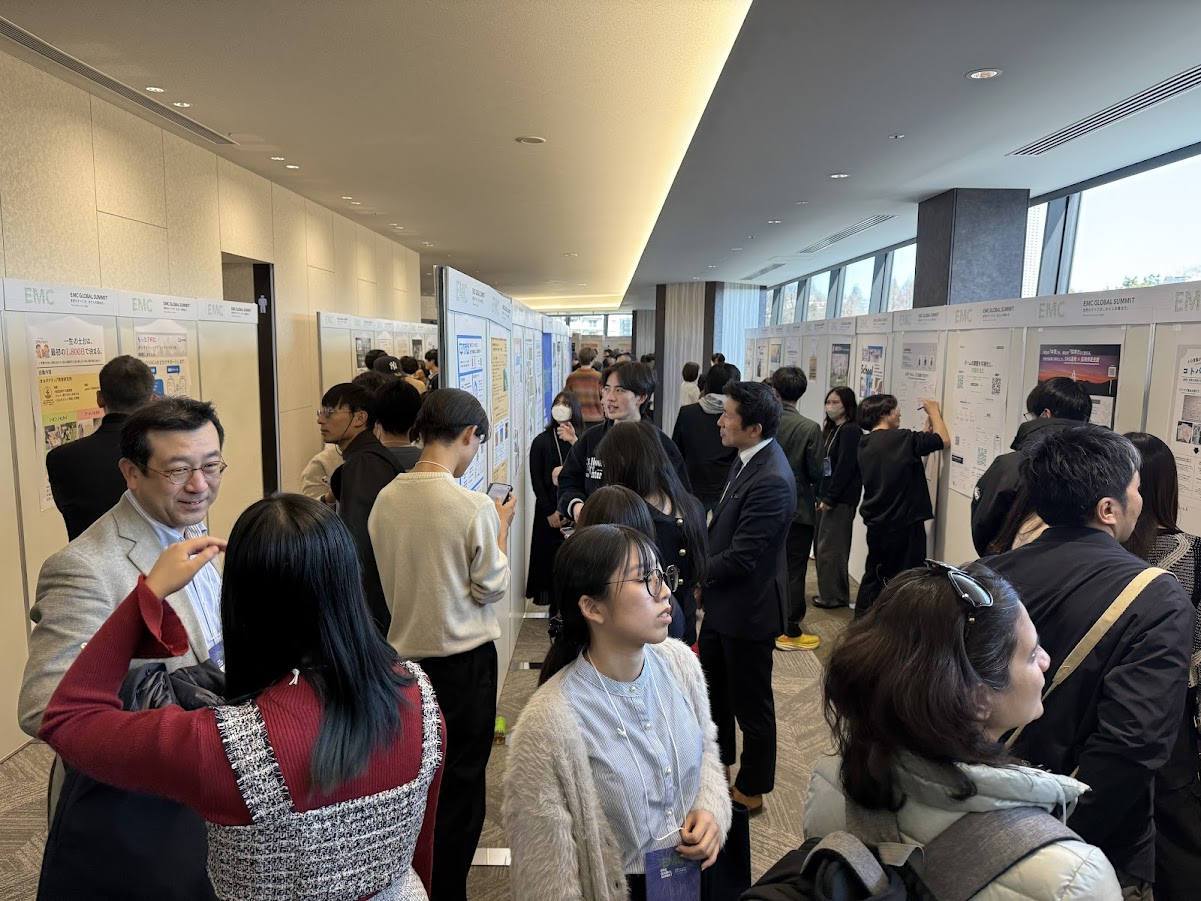 Networking during the poster session. Cross-border dialogue was breaking out everywhere.
Voice from Singapore:
"Most successful startups have a mix of founders from different backgrounds, different nationalities. Not everyone can be Singaporean."
This statement was a powerful answer to Hiraishi's message of "don't become the Last Samurai."
Near the end of the session, a concrete proposal came from one of the participants.
"Japan has wonderful technology and know-how. Why not create a co-founder matching platform? Through EMC, we could help people who want to explore ventures in Japan find collaborators."
A seed of cross-border "co-creation" — that was the first concrete step born from that day's dialogue.
In Closing: From Dialogue to Co-Creation
Hiraishi brought the session to a close with a gentle smile.
"I hope you enjoyed the conversation with everyone. Thank you very much."
The 88-minute dialogue left many questions behind.
- Is stability truly happiness?
- Is risk something to lose, or something to gain?
- Is there a future for a society that cannot tolerate failure?
- Why do we challenge ourselves?
The chemistry that happened in this room at EMC GLOBAL SUMMIT 2026 may become a turning point, as the Asia-Pacific startup ecosystem shifts from "competition" to "co-creation." When Japan's technology fuses with Asia's hunger, innovations no one imagined should emerge.
About EMC GLOBAL
EMC GLOBAL is a community that aims to produce challengers from the Asia-Pacific who will change the world. TIMEWELL representative Hamamoto is co-driving it alongside Yoichi Ito and Tatsuya Tsubuki. Countries including India, Indonesia, the Philippines, South Korea, Thailand, and Singapore — six or more nations — are participating, operating under the banner of "United Asia."
Event information and community participation for EMC GLOBAL can be found at the official site. Announcements for the next summit and various sessions are also distributed there. Those who want to challenge themselves globally, or who are interested in the Asia-Pacific entrepreneurship network, are encouraged to visit.
Thank you for reading to the end.