This is Hamamoto from TIMEWELL.
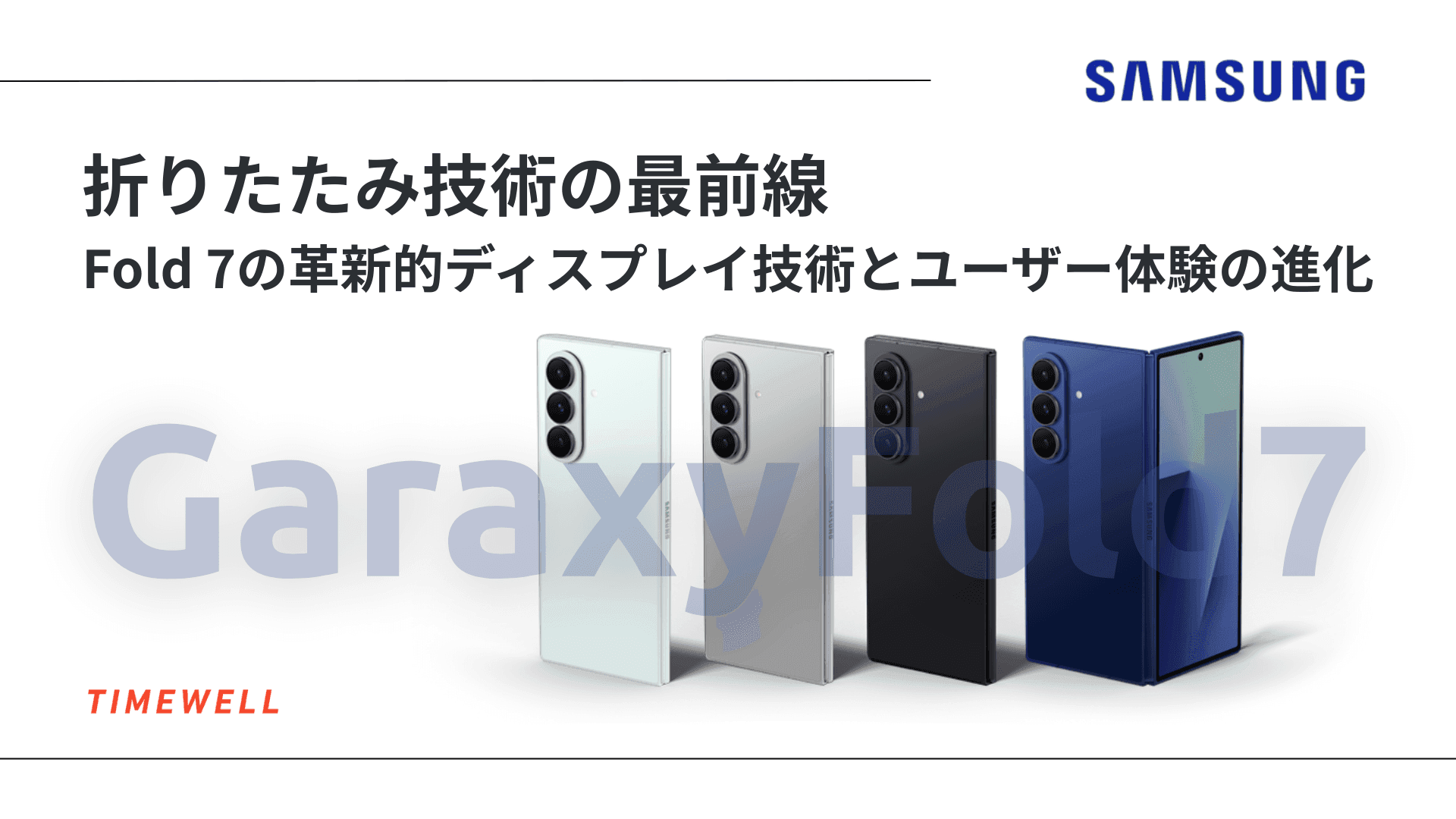
Samsung's Galaxy Z Fold 7 represents a measurable step forward in foldable display engineering — not just a generational refresh, but a structural rethinking of how foldable layers interact. Here's a detailed look at how the display is built and why those choices matter for the user experience.
The Display Stack: Four Layers Working Together
The Fold 7's inner display is constructed from four distinct layers, each solving a different problem that earlier foldables struggled with.
Titanium plate: The structural base of the display assembly. Titanium provides high rigidity-to-weight ratio, reducing overall device thickness compared to earlier metal alloys while maintaining the support structure needed for the flexible layers above. This is the foundation that allows everything else to be thinner.
Ultra-thin OLED panel: Previous OLED panels had thickness limitations that constrained folding radius. The Fold 7 uses a thinner panel construction that improves folding radius while maintaining the color accuracy and brightness Samsung's OLED is known for. The thinner panel reduces the fold crease formation and improves screen uniformity when open.
Ultra Thin Glass (UTG): The glass layer directly above the OLED is the element most visible to users. UTG is thin enough to flex with the display but hard enough to resist surface scratching in everyday use. The UTG layer is central to reducing fold crease visibility — by distributing flex stress more evenly, it prevents the sharp visible line that was a persistent criticism of first-generation foldables.
Protective layer (PL): The outermost layer absorbs impact and surface abrasion from daily use. It works in combination with the UTG to extend display longevity without adding significant thickness.
Looking for AI training and consulting?
Learn about WARP training programs and consulting services in our materials.
Mont Flex: The Hinge Innovation
The hinge system in the Fold 7 uses a structure Samsung calls Mont Flex. The key function: force distribution across the hinge is redesigned to keep the display surface optically flat when open.
Previous foldable hinges allowed micro-gaps between the display layers when fully open, contributing to the "trampoline" effect — slight bounce and visible center crease when the screen was pressed. Mont Flex integrates the hinge and display connection more tightly, eliminating this gap and producing a consistently flat surface.
The practical result: users interacting with the inner display in open position encounter less crease-related disruption during scrolling, writing, or media consumption.
Durability Testing: 500,000 Open-Close Cycles
The Fold 7's display assembly passed Samsung's internal standard of 500,000 open-close cycles. At 100 cycles per day — representing extremely heavy usage — this corresponds to roughly 14 years of use.
This matters commercially because early foldable skepticism centered on durability. The repeated finding that fold crease and hinge wear degraded within months was a significant adoption barrier. The 500,000-cycle rating provides engineering-backed confidence for buyers considering a foldable as a primary device rather than a secondary experiment.
Display Quality: Brightness, Color, and Outdoor Visibility
Beyond the folding mechanics, the Fold 7's inner OLED panel addresses a secondary complaint from earlier generations: outdoor visibility. The updated panel achieves higher peak brightness with improved color accuracy, reducing the "washed out" appearance that OLED screens can develop in direct sunlight.
The outer display also receives an update: reduced bezels that improve the aspect ratio for single-hand use while folded. The Fold 7 in folded state functions more closely to a standard flagship smartphone — a deliberate design priority, since many users spend significant portions of their day in folded mode.
Summary
The Fold 7's engineering choices cohere around a single goal: making the foldable form factor invisible during use. The layers, hinge, and outer display design are all oriented toward removing the visual and tactile reminders that you're using a foldable device.
- Titanium plate: thinner structural base
- Ultra-thin OLED: reduced crease formation
- UTG glass: crease visibility minimized
- Mont Flex hinge: optically flat open display
- 500,000 cycle durability: long-term reliability confirmed
The result is a device where the foldable mechanism becomes an advantage (tablet-scale inner display when needed) without the traditional trade-offs dominating the experience.
Reference: https://www.youtube.com/watch?v=NolKPgLp7dY