From TIMEWELL
This is Hamamoto from TIMEWELL Inc.
AI Takes Center Stage in Healthcare
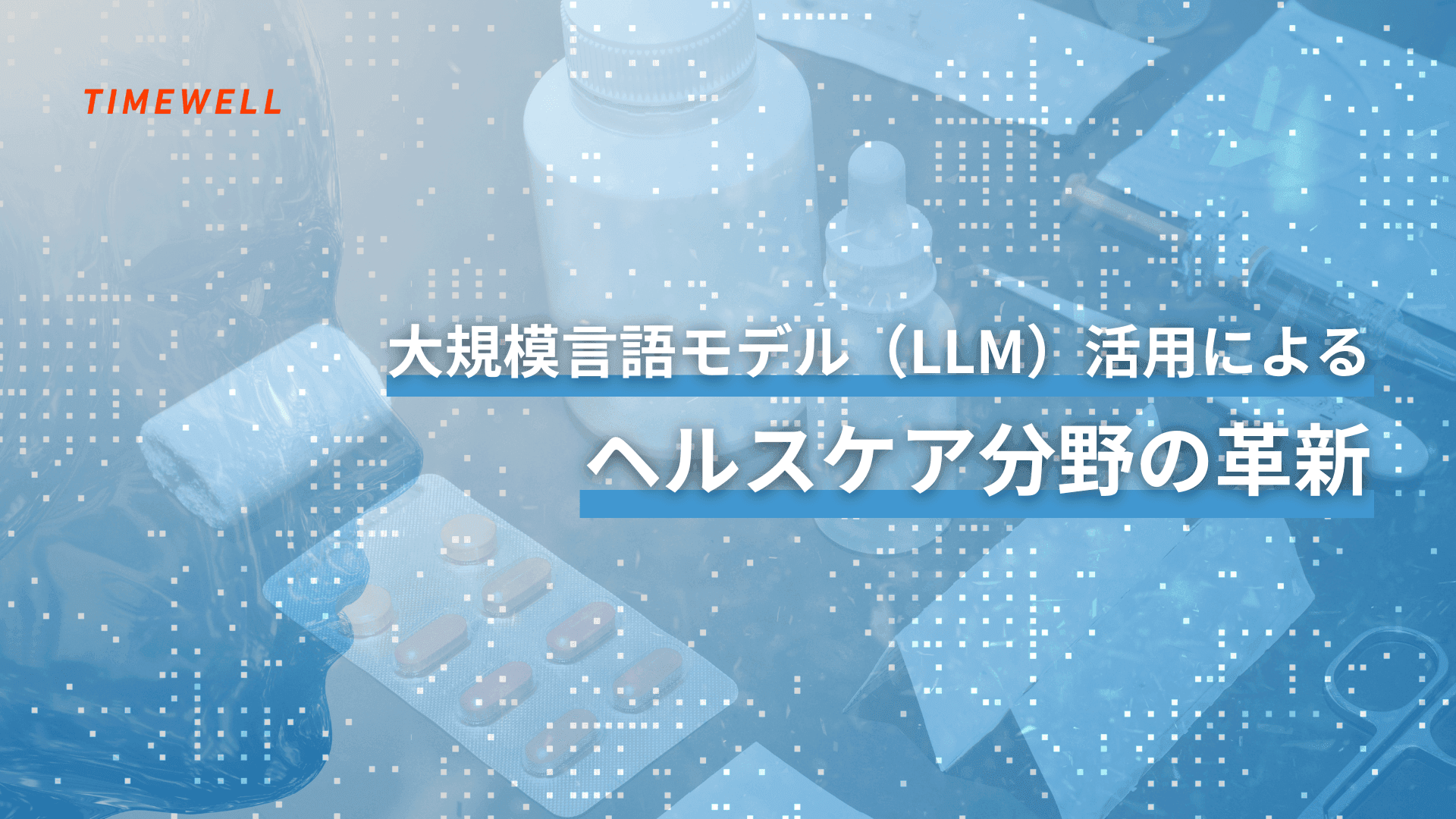
In recent years, the healthcare industry has turned to advanced artificial intelligence (AI) to address serious staffing shortages and increasingly complex operational processes. Autonomous AI agents powered by large language models (LLMs) are tackling a wide range of healthcare tasks — phone handling, data collection, and patient communication — reducing the burden on frontline staff while improving service quality. One company, which set out to apply AI to healthcare from its founding in 2019, built credibility and a track record by first automating tasks that human agents had previously handled through high-volume phone interactions — benefits verification, claim status checks, and similar work. Through repeated trial and error in phone operations, the team experienced firsthand what it means for an AI agent to actually answer a ringing phone and respond appropriately to questions. This turned a bold hypothesis — "AI can handle real phone calls" — into an operational reality, ultimately securing partnerships with numerous healthcare organizations, insurers, and pharmacy benefit managers (PBMs).
This article explains in detail, with real-world examples, the practical applications of LLM-based voice recognition and generation technology, the integration of autonomous agents with human-copilot systems, and the risk management and future outlook for this market. Our goal is to paint a complete picture of the challenges facing modern healthcare and the AI-driven solutions available, contributing one new perspective to the direction of the industry.
- Practical Applications of LLMs in Healthcare
- Operational Efficiency Through the Integration of Autonomous AI Agents and Human-Copilot Systems
- Risk Management and Market Outlook for AI Adoption — Challenges and the Road Ahead
- Summary
Looking for AI training and consulting?
Learn about WARP training programs and consulting services in our materials.
Practical Applications of LLMs in Healthcare
Alongside the rapid progress of LLMs in recent years, efforts to streamline healthcare operations are steadily advancing at hospitals, clinics, and insurance organizations across the country. The company in question applied AI agents from an early stage after founding, focusing on automating the operational process of phone handling — particularly benefits verification, claim status confirmation, and prior authorization support for high-acuity patients — all conducted via voice.
Early on, the company ran its first demonstration in 2019, using a fictitious patient name — "Bruce Willis" — to run an automated call scenario to UnitedHealthcare. In the first attempt, the other party hung up when the AI agent called, but through repeated efforts, the system eventually elicited responses including dates and other verification information — demonstrating that AI-driven automated dialogue was achievable. This experiment was an important first step in showing that AI had sufficient judgment and responsiveness for phone handling, and could genuinely play a role in real-world operations.
AI Agents Automate Long, Labor-Intensive Calls
Compared with fully manual data entry and inquiry handling, AI agents have automated lengthy phone calls, delivering significant labor savings and efficiency gains for both the organizations using the system and the healthcare institutions they serve. The company has processed more than five million phone calls and over one hundred million hours of voice data. This has demonstrated concrete outcomes — "reduced human response time" and "automated processes" — with expected ripple effects across the industry.
A key advantage of LLMs is their outstanding performance in voice recognition and natural language processing (NLP). Phone calls require a continuous chain of processes — speech-to-text conversion, semantic analysis via natural language processing, and back to voice generation — and LLMs are applied at each stage. The speech recognition component achieves dramatically greater accuracy than legacy systems, and the natural language processing component reads user intent instantly from the information obtained, delivering an optimized response. This approach is a clear step above traditional phone response systems, and is required to deliver sufficient reliability even in demanding healthcare environments where errors are not tolerated.
LLM-powered systems are also trained on enormous amounts of labeled data, enabling high-accuracy responses that reflect knowledge accumulated through real-world healthcare operations. Building on successes and failures from the early experimental phase, the company developed robust "guardrail" functions to minimize "hallucinations" — incorrect responses — during conversations. These guardrails are a critical technical component for achieving the safety assurance and regulatory compliance that are difficult for LLMs alone to guarantee.
Furthermore, in the healthcare setting, inaccurate AI responses can have serious consequences — delayed treatment, increased medical costs — so operations that assume collaboration between AI and humans are prioritized. In practice, the systems deployed by this company automate phone handling while also incorporating a mechanism that allows human staff to intervene and assist with problem resolution in appropriate circumstances.
In the specific evolution of this system, an important achievement is the ability to consistently process end-to-end not only phone calls but also complex healthcare procedures (benefits verification, prior authorization, document review, and more) in a single automated workflow. This has substantially reduced the burden on patients and providers while rationalizing processes industry-wide, and has also contributed to eliminating redundant verification steps and preventing human error.
Key Success Factors for LLM Adoption
The key success factors for adopting LLMs can be summarized as follows:
- An iterative improvement process based on data from early experiments
- Building an end-to-end system from speech recognition through NLP to voice generation
- Introducing multi-layered guardrails to ensure safety and compliance
- Fine-tuning the model through a feedback loop grounded in real-world operations
System Design That Goes Beyond Simply Deploying an LLM
These efforts achieve outstanding operational results not merely by deploying LLMs, but through system design tailored to specific frontline needs and by rapidly incorporating feedback from the actual operating environment. The company also developed a system capable of flexibly adapting to the "where and how" of communication for patients and staff — not just from a technical standpoint, but also in consideration of the realities of healthcare settings and patient psychology. In particular, the ability for AI to smoothly supplement the process in situations requiring real-time voice responses — such as emergency situations or explaining circumstances to family members — represents a major innovation.
In this way, deploying LLM-powered systems is directly linked not just to operational efficiency in healthcare, but also to improving safety and standardizing service quality on the frontline. In fact, the track record of automating phone calls has been widely recognized across the industry, leading to strengthened partnerships with healthcare organizations and insurance companies. As LLMs continue to evolve, systems incorporating even more advanced NLP and voice generation technologies will undoubtedly continue to be developed, playing a key role in the digital transformation of healthcare.
Operational Efficiency Through the Integration of Autonomous AI Agents and Human-Copilot Systems
In the healthcare industry, the combination of autonomous AI agents and human copilots is drawing increasing attention — not just for automating simple tasks, but from the perspective of sharing complex work. Earlier systems aimed for full autonomy in certain tasks such as phone handling, but in practice, the need for AI-human collaboration became indispensable, as real healthcare settings require patient information verification and the integration of multiple data sources.
In fact, after the initial autonomous AI agent proof of concept, this company developed an "AI copilot" system that not only fully automates some phone handling tasks but also enables coordination with human staff. In a phone call scenario, for example, the AI first attempts to interact with an insurer or healthcare institution through IVR (Interactive Voice Response), and may at times be placed on hold. During that hold period, the waiting AI agent serves as a gateway for handing off specialized inquiries to human staff when needed. The system is designed so that humans do not need to spend long periods waiting on hold themselves, but can intervene efficiently at the right moment.
Many Advantages Over Fully Autonomous Systems
Compared with fully autonomous systems, this approach offers many advantages. First, wait times in phone interactions are reduced and issues can be resolved more quickly. When a healthcare provider calls to perform a verification, for example, the system first automatically collects the necessary information and checks its accuracy. As a result, information that previously required multiple rounds of confirmation is increasingly confirmed on the first response, reducing the burden on both parties.
The copilot system also incorporates an "error detection" function specific to healthcare settings: if the AI agent conveys incorrect information, the operator can intervene immediately and correct it. This preserves operational continuity while minimizing impact on patients. In one actual case, coordination between AI and human staff found information discrepancies in 25% of interactions on the same call, but AI re-verification enabled accurate information to be delivered quickly in 70–80% of those cases.
In building the system, the team first defined the inputs and outputs of each operational process in detail, and then established rules for when the AI agent should respond automatically and when human staff should intervene. These processes are designed not only for voice recognition and NLP, but with the actual operational flow of the frontline in mind, making a major contribution to on-the-ground operations.
The system can also be customized to fit the operating environment of the adopting organization. Healthcare organizations each have different operational structures and information systems, so a one-size-fits-all solution cannot address all needs. The company therefore provides the following flexible responses:
- Core functions: voice response, verification, and call transfer
- Continuous system improvement based on frontline feedback
- Interface customization to build functions that fit each organization's workflow
Through these efforts, the company achieved higher accuracy and efficiency than traditional fully automated phone systems. In practice, this AI copilot system played a major role in meeting sudden surges in phone demand at healthcare organizations and in handling contacts during peak periods, prompting a rethinking of traditional staffing and working hours.
The integration of AI agents and human copilots also has the potential to improve the quality of healthcare services themselves, not just operational efficiency. When patients call with inquiries and receive fast, accurate information, anxiety about procedures and consultations is substantially reduced — ultimately improving patient satisfaction. Furthermore, automating phone handling reduces the burden on operators who had previously handled repetitive tasks such as reception and data collection, freeing them to shift toward higher-skilled work directly connected to patient care.
Such systems are extremely attractive to healthcare organizations and insurance systems not only for cost reduction, but also from the perspectives of faster operations, reduced human error, and improved overall operational efficiency. In fact, major healthcare institutions and PBMs (prescription drug management departments) have already adopted AI agents, and the results of this company's work are widely recognized on the frontline.
The Digital Transformation Wave Accelerates
This wave of rapid digital transformation is expected to continue evolving, with processes like phone handling and information collection achieving an even higher level of automation and human touch integration. Within the industry, the AI copilot is expected to dramatically reduce response times, ease the stress on operators, and make overall operations more robust and flexible. This evolution in real healthcare settings will generate synergies across the industry, becoming a major turning point that contributes to both higher quality healthcare services and greater efficiency.
Risk Management and Market Outlook for AI Adoption — Challenges and the Road Ahead
While AI technology is advancing rapidly and healthcare adoption is progressing, its widespread adoption also involves technical and organizational challenges. In particular, the misinformation (hallucinations) that LLMs can produce, and ensuring security and compliance, are critically important themes in healthcare. From an early stage, this company paid close attention to these risks from both technical and operational angles, embedding rigorous guardrails throughout the system. In early experiments, challenges emerged during test calls with insurers — patient data discrepancies and inconsistencies within documents — which prompted urgent recognition of the need to improve the system and strengthen data integration management.
In the market, healthcare organizations and PBMs frequently express concerns about adoption costs, operational risks, and compatibility with existing systems when considering AI. At the same time, given the reality of labor shortages and the strong need to streamline complex back-office tasks, voices insisting that adoption of leading-edge AI technology is unavoidable are growing louder. Through the combination of autonomous AI agents and human copilots in phone handling and data collection, the company has surfaced operational challenges that traditional processes could not detect and has found improvement opportunities there.
On the technical side, alongside LLMs' own evolution, companies are comparing and selecting among multiple AI models and building infrastructure capable of switching to the latest and most suitable model. In the early days, operations relied on fine-tuning pioneering models like T5, but today a combination of the latest LLMs from multiple providers, tuned with proprietary data, has established high-accuracy response systems specialized by domain. This approach allows the company to always maintain optimal performance without being left behind by market advances and technological innovation.
Checks and Internal Controls Also Evolving
Alongside advancing AI adoption in healthcare settings, checks and internal control mechanisms are also developing. Systems are being put in place for coordination with frontline operators, so that if the AI's response contains an error, a human can immediately correct it — a double safety net. At healthcare organizations, rigorous pilot operations are conducted before adoption, and systems are fine-tuned based on the feedback obtained, with ongoing efforts to thoroughly reduce risk in the actual operating environment.
These measures have become a major factor in convincing healthcare organizations and PBMs to launch operations, after weighing "the risks AI brings" against "the benefits of increased efficiency." Across the market, as AI vendors compete, standardization of technology and platform integration are being pursued, and some companies are proposing full automation of phone handling through integration with various IVR systems — developing new forward-looking approaches.
Technological evolution is also expected to shift beyond current phone handling to full automation of back-office work via digital APIs in the future. However, the complexity of medical information and the problem of non-standardized operational flows remain, meaning that human collaboration will be indispensable until full automation is achieved. The hybrid model of autonomous AI and human staff is thus accumulating a track record within the industry and playing an important role in both solving current challenges and establishing the foundation for future digital healthcare.
In terms of market outlook, it is expected that within the next five years, advances in information integration and standardization will usher in an era in which many on-the-ground processes are managed through automatic APIs. However, because direct patient interaction and voice responses that flexibly meet individual needs will always require a human "touch," full automation in this area is considered difficult. In any case, flexible system design that reflects operational realities will remain a major differentiator in future market competition.
AI adoption in healthcare also ultimately translates directly to improved patient experience and reduced time and financial costs, not just operational efficiency. For example, eliminating the enormous resources devoted to handling calls and confirming data opens up the possibility of redirecting those resources toward improving healthcare services and advancing personalized medicine. These efforts are driving transformation rooted in traditional operational processes on one hand, and prompting market-wide restructuring driven by new technological innovation on the other.
AI Adoption's Risk Management and Market Outlook Are Rapidly Evolving
Overall, the risk management and market outlook associated with AI adoption are changing rapidly alongside technological evolution. The fusion of the realities of healthcare with cutting-edge technology is expected to deliver levels of efficiency improvement and service enhancement that were previously unimaginable. The day when healthcare organizations, insurers, and technology vendors join hands to pursue further innovation is not far off.
This article has provided a detailed look at the practical cases of AI solutions grounded in large language models (LLMs) in the healthcare industry, their evolution, and the market-wide risk management and future outlook. Starting from early autonomous AI agent proof-of-concept trials focused on phone handling, enormous volumes of phone interactions were processed, and through integration with human-copilot systems, concrete processes for solving the challenges of current healthcare operations were established. As a result, labor shortages and the challenge of streamlining complex operational flows became achievable realities, and the reliability and speed of healthcare frontlines improved dramatically.
The shift from a single autonomous system to a hybrid model in which humans and AI collaborate — driven by the evolution of LLMs — also carries great significance in terms of ensuring safety and regulatory compliance. The introduction of various guardrails, precise data management, and an iterative improvement process that reflects frontline feedback are expected to drive wider adoption of AI in healthcare going forward. Furthermore, technological evolution suggests that beyond traditional phone handling, there is the potential to contribute to building next-generation healthcare infrastructure, including full back-office automation through API integration.
More Than Half of Healthcare Processes Already Improved
At healthcare organizations and insurance companies, more than half of operational processes have already been improved by this AI technology, with new resource allocation becoming a reality. The evolution of AI agents is realizing value creation grounded in real-world conditions — not just task automation, but improved patient experiences, enhanced quality of healthcare services, and reduced unnecessary wait times.
Ultimately, the healthcare AI market will continue to grow while also needing to respond flexibly to risks and challenges that shift alongside technological innovation. The way for each organization to collaborate, incorporating the latest LLM technology, and build an even safer and more efficient healthcare service delivery framework will be an important factor in realizing a healthy society.
Reference: https://www.youtube.com/watch?v=A1elR8lofOo
Related Articles
- The Reality of a Working Mother Returning from Two Maternity Leaves — And How Her Work Philosophy Changed | TIMEWELL
- Before Taking Paternity Leave (Part 2): Three Absolute Must-Dos for Taking Leave During a Busy Season
- A First-Class Architect Who Stays Close to the Job Site — Finding My Own Path as the Fifth-Generation Leader of a Construction Company