From Ryuta Hamamoto at TIMEWELL
This is Ryuta Hamamoto from TIMEWELL Corporation.
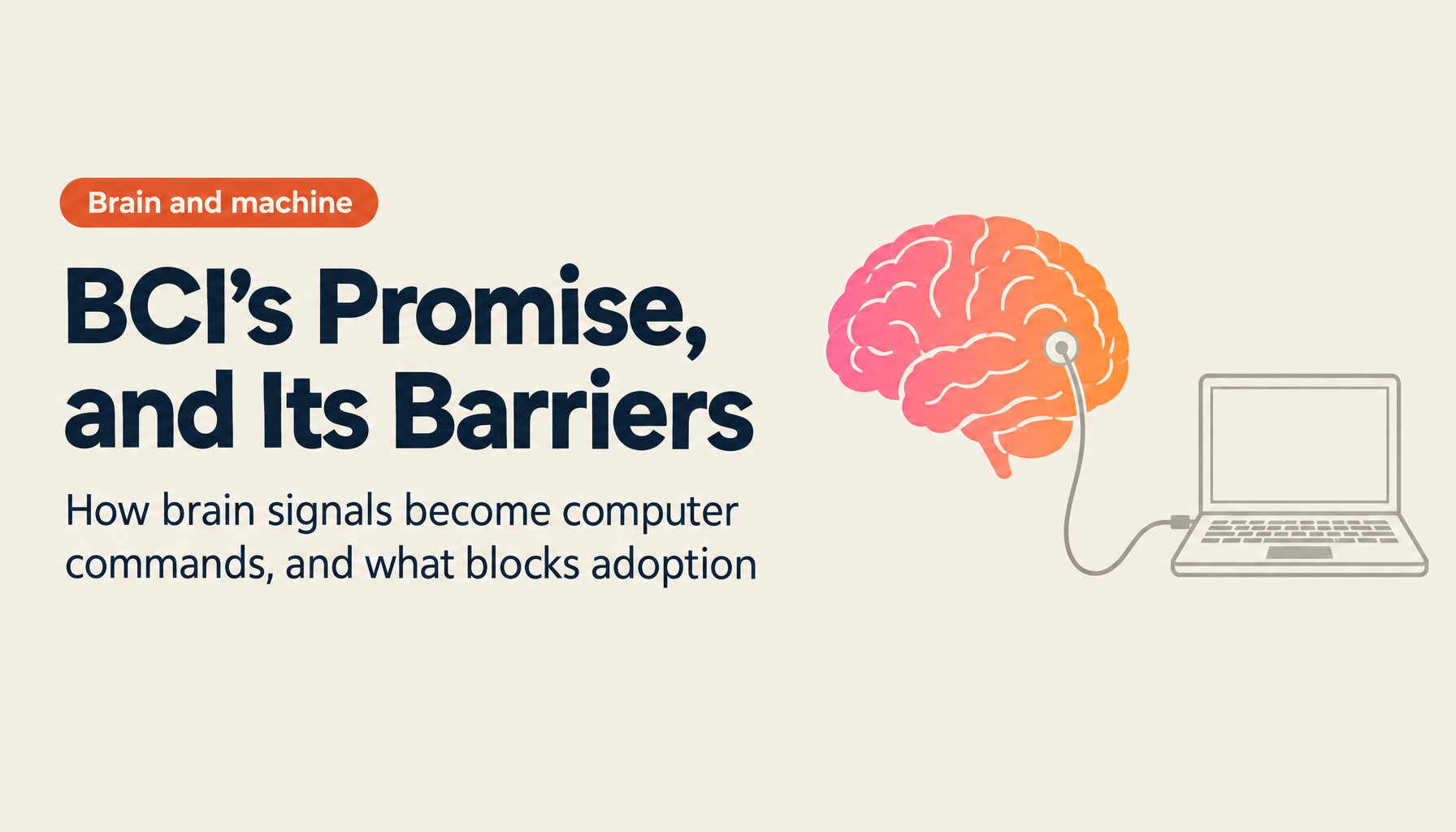
"Control a computer with your thoughts alone" — what once existed only in science fiction is becoming real.
Neuralink, the brain-computer interface company Elon Musk founded in 2016, has implanted brain devices in nine patients. Its first patient achieved data transfer speeds exceeding 9 bits per second — double the previous record. Neuralink's Blindsight vision restoration device and a speech restoration system have both received FDA Breakthrough Device designation.
This article covers Neuralink's current technology, clinical trial results, and what brain-computer interfaces may mean for the future.
What Is Neuralink: Connecting Brain and Computer
Overview
Neuralink develops technology that implants a small chip — the "Link" — in the brain, using ultra-fine electrodes ("threads") to read neural signals and transmit them to a computer.
Basic facts:
- Founded: 2016 by Elon Musk
- Headquarters: Fremont, California
- Mission: Treating neurological conditions; enabling human-AI coexistence
- Clinical trial name: PRIME Study
How the Technology Works
Neuralink's system components:
- Link: A coin-sized brain implant
- Threads: Electrode wires thinner than a human hair (1,024 total)
- Robotic surgical device: Automates precise thread insertion
- Wireless communication: Transmits brain signals to smartphone or PC
Operating principle:
- Detects neural signals from the motor cortex
- AI analyzes patterns and interprets intent
- Translates into cursor movement, typing, and device control
Looking for AI training and consulting?
Learn about WARP training programs and consulting services in our materials.
Clinical Trial Results
Nine Patients Implanted
As of mid-2025, Neuralink has implanted brain devices in nine patients.
Trial participants:
- Quadriplegia from spinal cord injury
- ALS (amyotrophic lateral sclerosis)
- Other neurological conditions
The First Patient: Noland Arbaugh
Noland Arbaugh, who received his implant in 2024, has produced remarkable results.
Noland's achievements:
- Using a computer through thought alone for over 10 hours per day
- Data transfer rate: over 9 bits per second (double the previous record)
- Playing games, browsing the web, and communicating — all via thought
The Second Patient: Technical Improvements
In the second patient, Alex, the "thread retraction" issue that had occurred with the first patient was avoided. Improvements to surgical technique and implantation method have enabled more stable long-term operation.
Expanding the Trial
Neuralink is extending its clinical trials outside the United States.
Trial locations:
- United States (initial 5 slots, now expanded)
- Canada (6 slots)
- United Kingdom (recruiting)
- UAE (planned)
Goals:
- Enroll 20–30 new participants by end of 2025
- At least 8 additional implants by end of 2026
FDA Breakthrough Device Designations
Blindsight: Vision Restoration
In September 2024, Neuralink's Blindsight device received FDA Breakthrough Device designation.
How Blindsight works:
- Implants an electrode array in the visual cortex
- Converts video feed from an external camera into electrical signals
- Stimulates neurons in the visual cortex to generate "vision"
Target patients:
- Those who have lost sight in both eyes
- Those with damaged optic nerves
- Those with an intact visual cortex
Expected outcomes:
- Initial resolution similar to early video games (low resolution, but functional)
- Long-term potential to surpass normal human visual acuity
Clinical trial timeline:
- Human trials planned for late 2025 to early 2026
- Recruiting vision-impaired volunteers in the US, Canada, and UK
Speech Restoration System
In May 2025, Neuralink received a second FDA Breakthrough Device designation — for a speech restoration system targeting individuals with severe communication impairments caused by ALS, stroke, or cerebral palsy.
What the system offers:
- Reads speech intent from brain signals
- Converts to text or synthesized speech
- Supports communication for those who can no longer speak
Then vs. Now: Neuralink's Evolution
Comparing where Neuralink was to where it stands today shows substantial progress.
Then (late 2024):
- A handful of clinical trial participants
- Thread retraction problem occurring
- US-only trials
- Blindsight at conceptual stage
Now (January 2026):
- Nine clinical trial participants
- Data transfer rate doubled from previous record
- Expanded to US, Canada, UK, UAE
- Blindsight and speech restoration system with FDA Breakthrough designation
- Target of 20–30 new enrollments by end of 2025
Brain-computer interfaces are transitioning from experimental to practical.
Neuralink's Potential and Challenges
Medical Applications on the Horizon
1. Quadriplegia
- Device control through thought
- Support for independent daily living
- Communication restoration
2. Visual impairment
- Blindsight vision restoration
- Providing visual experience to those who are blind
3. Speech impairment
- Communication after ALS or stroke
- Thought-to-text or thought-to-speech conversion
4. Parkinson's disease
- Motor symptom management
- Advancement of existing deep brain stimulation therapy
Challenges and Concerns
1. Safety
- Risks of brain surgery
- Long-term biocompatibility
- Thread stability over time
2. Privacy
- Protection of brain data
- Concerns about monitoring of thoughts
- Data ownership
3. Ethics
- Debate around human "augmentation"
- Risk of widening social inequalities
- Equitable access
4. Regulation
- FDA approval process
- Regulatory compliance across countries
- Building long-term safety data
Competitive Landscape
| Company | Approach | Stage |
|---|---|---|
| Neuralink | High-density electrodes, robotic surgery | Human clinical trials ongoing |
| Synchron | Endovascular (minimally invasive) | FDA clearance, human trials ongoing |
| Blackrock Neurotech | Research-grade BCI | Clinical use |
| Precision Neuroscience | Layer 7 Cortical Interface | Human trials ongoing |
Neuralink differentiates through high electrode density and precise robotic implantation.
Considerations for Organizations and Healthcare Providers
Future BCI Applications Beyond Medicine
Brain-computer interfaces are expected to extend well beyond clinical settings.
Longer-term possibilities:
- Employment support for severely disabled individuals
- Communication support for the elderly
- Advanced rehabilitation
- Educational and learning support
What to Watch
BCIs remain in clinical trial stages, and general deployment is still some time away.
Key developments to monitor:
- FDA approval progress
- Long-term safety data
- Cost and accessibility
- Ethical and legal frameworks
At TIMEWELL, our WARP consulting service helps organizations track developments in frontier technologies like BCI and assess their potential business impact.
Key Takeaways
Neuralink is making steady, measurable progress toward practical brain-computer interface deployment.
The essentials:
- Brain implants completed in nine patients
- Data transfer rate: 9+ bits/second (2x the previous record)
- Blindsight (vision restoration) receives FDA Breakthrough designation
- Speech restoration system also receives FDA Breakthrough designation
- Clinical trials expanded to US, Canada, UK, UAE
- Target of 20–30 new enrollments by end of 2025
"Control a computer through thought" — this is no longer a science fiction premise. It is happening in clinical settings. For conditions like quadriplegia, blindness, and speech impairment — long considered very difficult to address — Neuralink is offering new possibilities. As technology advances and ethical frameworks develop in parallel, brain-computer interfaces are worth watching closely.