On "The Technological Republic": Why Founders in the AI Era Should Be Willing to Work for Their Country
Hello, this is Ryuta Hamamoto from TIMEWELL.
I closed Alex Karp's book with a heaviness I had not expected. "The Technological Republic: Hard Power, Soft Belief, and the Future of the West," written with Palantir's head of corporate affairs Nicholas Zamiska, is a deliberately confrontational argument aimed at Silicon Valley. The message, in plain language: stop pouring our best minds into ad algorithms and food-delivery apps. Show up for the country.
We at TIMEWELL run TRAFEED, an intelligence platform for the national-security and economic-security space. It is built for the people whose decisions get harder every time geopolitics shifts. We are also moving into physical AI - putting models into robots, autonomous systems, logistics, and defense applications. That is to say, this book did not feel like a foreign argument to me. The closer AI gets to the center of national power, the more directly it touches the work my team does every day. What follows is one founder's reading of the book, written for other founders.
America Was a Technological Republic at Its Founding
Karp opens by reminding the reader that science and statecraft have been entangled in the United States from day one. Thomas Jefferson designed cipher devices and rotating chairs. Benjamin Franklin proved out the lightning rod, invented bifocals and the household stove, and ran much of the early scientific infrastructure of the colonies. He has been called, by historians of science, an inventor who happened to also be a politician. The civilian-engineer-and-statesman archetype is genuinely the source code of the American republic.
The pattern intensified in the twentieth century. In the 1940s the federal government was simultaneously sponsoring research on novel pharmaceuticals, intercontinental ballistic missiles, and artificial satellites. Einstein corresponded with Roosevelt and was a guest at the White House. Out of this came the Manhattan Project. Japan's wartime science directorate believed an atomic weapon was at least twenty years away; the United States built one first. A twenty-year technology lead, on a battlefield, is not a margin - it is total decision.
The same wiring continued into the Cold War. When Sputnik launched in 1957, President Eisenhower summoned the German-American theoretical physicist Hans Bethe to the White House and, in roughly an hour, set in motion what would become NASA the following year. DARPA was stood up in the same window, and from that one institution we eventually got the modern internet and GPS. An hour of conversation, a year to NASA: faster than most modern startups.
Karp's point is not nostalgic. It is structural. The American advantage in the twentieth century was generated by tight coupling between political leadership and the scientific-technical class. That, he writes, is what "technological republic" actually means. The first half of the book stamps this idea into the reader through sheer detail and proper nouns. I closed Part I thinking I had not had the American story re-loaded into my head with this much precision in years. That is the book's first source of force.
Replace siloed classification work with AI.
METI's FY2024 data shows 52% of foreign exchange law violations stem from classification errors. Download the TRAFEED product catalog covering features and rollout.
The Counter-Tradition: The Liberation Tools That Made Silicon Valley
The story turns in the 1970s. Vietnam, the counter-culture, distrust of the establishment - and out of that ferment, the personal computing revolution. The Homebrew Computer Club, the Whole Earth Catalog, Lee Felsenstein's line that "we wanted personal computers because with one you could escape the institutions, governments and companies alike." A generation built tools that put computational power in individual hands and treated that as a moral act in itself.
And then Steve Jobs steps onto the stage. I still revere Jobs without reservation. The Stanford commencement, the line from the Whole Earth Catalog - "Stay hungry, stay foolish" - is part of how I came to start a company. The 1984 Macintosh ad is still, in my view, the greatest sixty seconds in advertising history, because it crystallized the underlying claim: the technology in your hand is yours, not the state's, not the mainframe's. The Macintosh weighed eight kilograms, had a handle, fit on a kitchen table. IBM's mainframes filled rooms and only governments and large enterprises could afford them. That contrast was the entire emotional argument, and it worked.
This counter-cultural genome shaped everything Silicon Valley has produced since. Google, Facebook, Twitter, Stripe, Airbnb, the iPhone, every consumer service you and I use - they all sit downstream of Jobs. Paul Graham's "make something people want," the founder ethos that "disruption is justice," all of it is heritage code from this lineage. We are alive professionally because of it.
I do not read Karp as wanting to repudiate that lineage. He is asking, with some force, what happens when a movement that began as a corrective stays in charge for forty more years. The 1984 underdog Apple is no longer 1984's underdog. The frame that animated personal computing is now the default frame, and the default frame is no longer fit for purpose against the new shape of the problem. That is not an attack on Jobs. It is a question put to those of us who inherited his world.
What I Saw in San Francisco: A Discomfort the Book Brought Back
I have been to Silicon Valley more times than I can count, including a few extended stays. In Palo Alto, Menlo Park, Mountain View, and around Stanford, I have met more focused founders and engineers per square mile than anywhere else on earth. Healthcare, agriculture, semiconductors, space, defense, autonomy - in every domain that matters, the very best minds in the world are pulling on the work in front of them as if their lives depend on it. Each visit has made me stand straighter.
But cross the Bay Bridge into San Francisco itself and the air changes. Walking through the Tenderloin or near City Hall, you see people unconscious from fentanyl on the sidewalks, store windows boarded over, supermarket goods chained to the shelves. There are streets where I will not walk alone, day or night. The most concentrated cluster of technology capital on the planet sits next to the most basic public failures of housing, public health, and public safety, unsolved and getting worse year over year. The question that stayed with me on later visits was simple: is this industry actually facing what is in front of it?
It is a twenty-minute drive from the world's most advanced AI labs to a part of the city where someone has just died of an overdose. Trillions of dollars of market value are being created on the same blocks where the next street is collapsing. None of the founders I admire are, individually, ignoring this. But the city, taken as a whole, shows technology and capital somehow unable to repair the ground they stand on. In some ways the concentration itself - rents, displacement, the polarization of who gets to live there - has been part of the problem rather than the solution. You feel that in person in a way you cannot quite read on a screen.
When Karp puts down his hardest sentences against the way the Valley has spent a generation on food delivery, photo sharing, and ad targeting, the picture in my head is not a strawman. It is the literal walk from a billion-dollar AI lab to the Tenderloin in twenty minutes. Apps with unicorn valuations launch in this city week after week, while people next door die of overdoses and families live in tents. To say this is "indiscriminate destruction" is too strong; to say nothing of it is too weak. Silicon Valley is unquestionably collecting the best minds in the world. The question Karp drives home is what those minds are pointed at, and I cannot stop thinking about that question after each trip.
The AI Era Is Already Past the Inflection Point
So why now? Because of AI, and Karp is unembarrassed about saying so. To paraphrase him: the next era of warfare will be decided by software, in victory or in defeat. The age of nuclear deterrence is closing; the age of AI deterrence is opening. The book's title concept - "Hard Power, Soft Belief" - is two-sided. A liberal democratic society does not win on moral arguments alone. It needs hard power, and in this century hard power runs on software. He is also pointedly using "soft belief," not "soft power," to mark the difference from Joseph Nye.
He follows that with a sharp observation about authoritarian regimes: their leaders may, quite literally, lose their lives if they lose control. For Putin, for Xi, military-grade AI is not an optional program. It is a survival program. From that asymmetry the conclusion follows: if we do not develop these capabilities, they will. And, he argues, they will do so without the ethical brakes Western labs do at least apply. Technical parity will not produce strategic parity; only overmatch will.
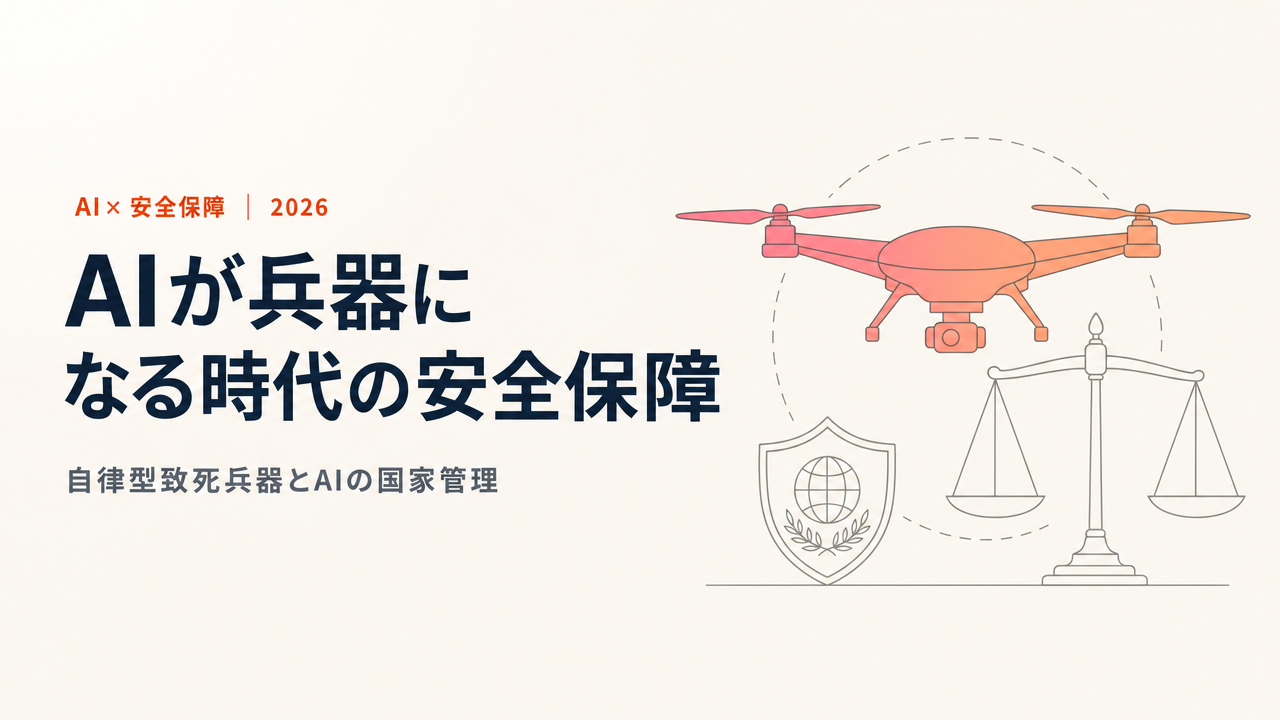
This sets up his charge against Silicon Valley directly. The frontier AI labs are building systems that can automate vast swathes of white-collar work, disruptions on a civilizational scale, and yet a meaningful share of those labs' staff have a strong allergy to working with the military or the intelligence community. In 2018, Google signed a contract with the Department of Defense to support Project Maven; staff revolted, and within roughly two months the contract was abandoned. Karp treats this as a betrayal of democratic society. "You cannot build a system that takes people's jobs and convince society that you are providing it with value," he writes, in spirit. The end state of the position - take the white-collar jobs, refuse to build for the military - is, he argues, eventual nationalization of the technology industry. He has made the same warning explicitly from the stage at Andreessen Horowitz's summit, in even blunter terms.
The argument is intentionally extreme, and yet, as a CEO, I find myself unable to brush it off. A great deal of what Silicon Valley has produced in the last twenty years has been beautiful, and yet the species-scale problems - security, energy, food, healthcare, the hollowed-out manufacturing base - have not always received the very best minds. Apps for "minor daily inconveniences" are saturated; meanwhile, the geopolitical risk surface has quietly thickened. Pair that observation with the literal walk through San Francisco and the indictment is harder to wave away.
TRAFEED: Our Own Attempt at a Technological Republic
TRAFEED is the product we built at TIMEWELL out of exactly this concern. It consolidates fragmented primary sources for the people whose decisions feed national security and economic security: government bodies, critical-infrastructure operators, security-relevant research institutions. Our role is to ride alongside those decision makers in a period when the geopolitical baseline is moving fast. From here we are extending into physical AI - taking models out of the screen and into the physical world: logistics, manufacturing, disaster response, defense.
What I respond to most strongly in Karp's book is its insistence on backing builders. He frames the next technological republic as resting on two pillars: an engineering mindset, and a sense of belonging to a state and a community. To that I would add a third pillar: believing in challengers and betting on them. If Japan is going to recover its national capability in the next decade, the work cannot be done only inside Kasumigaseki and the large corporate sector. It will require a society that genuinely backs people willing to take a real risk in a new field - inside startups, inside government agencies, and inside large companies.
Something has shifted in what is socially permissible to say. Through the 2010s, Japanese startup orthodoxy pointed at global consumer markets and SaaS, and that was the right strategy in its time. But once AI begins to push directly on the security order, declaring that you are building "for the country" or "for the alliance" or "for the free world" is no longer awkward. When I started TRAFEED, I noticed I could say "this work serves the country" without flinching - and I noticed how recently that would have felt embarrassing to say out loud. The wind has changed.
The caveat matters too. Karp's framing - "the adversary has no ethics" - is a posture I keep at arm's length. There is a real distinction between staring at geopolitical reality without flinching and lumping the population of an adversary state into a moral block. The thing we are defending is an open, liberal society, not an inward-turned imperialism, and Japanese founders in particular need to hold that line. We have built TRAFEED around supporting better evidence-based decisions, not louder ones. The technology should improve judgment, not amplify outrage.
In Defense of Building Both
Where I sit slightly apart from Karp is here. I read his book as a deliberately one-sided pull on the rope. The pendulum had swung far toward consumer technology, and his job, on the page, is to yank it back hard the other way. That the book is now a bestseller and the summary tweets are everywhere is not an accident. It is the strategy. He is repopulating the Western technology conversation with a big story, and our discussing it - including this column - is part of the success of that strategy.
But the actual technology landscape can and should be more pluralistic than the book argues. DeepMind's AlphaFold, recognized in the 2024 Nobel Prize in Chemistry, is not a defense project. It does not need to be. AI used to understand disease and design therapeutics is, in every meaningful sense, civilization-scale work. The book itself does not dwell on this medical and scientific frontier, but it would be perverse to read it as denying that frontier's significance. The same goes for climate, the energy transition, and personalized education. Important work is not solely concentrated in the security domain.
And I am not willing to let go of the original liberation thesis. The arrival of the smartphone in every hand around the world is what allowed a young person in a remote town to learn, allowed women in many regions to gain economic independence, allowed citizens of authoritarian states to find the truth. To dismiss these results as collateral noise would be wrong. Empowering individuals and strengthening states are not opposites; the strength of a country is, in real history, the sum of strong individuals. When I look at our own technology history, Sony's founders building the Walkman so that a single person could carry their music with them is what eventually pushed Japanese industrial competitiveness to the top of the world. That lineage deserves respect, not contempt.
So my own position is that the next generation of builders should have full freedom to choose either path. Some will work at the front of national security and physical AI. Others will build AI in healthcare and education. Others still will build entertainment, games, and consumer products that simply make life better. Karp is right that the security front needs more talent than it currently gets. He is also right that without underlying belief there is nothing to defend. But the underlying belief is not preserved by attacking the people building outside the security domain. It is preserved by mutual respect among people building across all of these domains. At TIMEWELL we take TRAFEED into the security domain with conviction, and we treat builders working in other domains with full respect. Working on national security does not mean despising consumer products. The two are connected, and a healthy technological republic needs people willing to do both.
Want to Build in This Space?
If you are exploring how to start something at the intersection of AI and national security, TRAFEED and our consulting practice can stand alongside you. We help with export-control program design, counterparty diligence, and AI governance for security-cleared organizations - the building blocks that founders most often underestimate. If any of this resonates, please reach out. I look forward to talking with people who share the question.
The next decade will be a period of contest, and not a hypothetical one. That is the price of admission for building anything serious in this era. The question for Japanese founders - the question I think Karp is actually asking - is whether we are willing to honor what Silicon Valley built over half a century while also rolling up our sleeves for our own country and for the free world. The day we have more founders carrying both at once is the day Japan can step back into the center of the global story. I will keep rowing the small boat called TRAFEED with that in mind.
This book deserves a wide reading among founders, executives, and policymakers. Disagree with parts of it - that is the point. Reading actively, asking yourself where you push back, is itself, in Karp's own language, the first act of "intellectual courage to believe in something you cannot yet prove."
References
[1] Alex Karp and Nicholas W. Zamiska, "The Technological Republic: Hard Power, Soft Belief, and the Future of the West," Crown, 2025.
[2] Akiko Murai (translator), "Technological Republic: The Future of the State, Military Power, and Technology," Nikkei BP, 2026 (Japanese edition).
[3] WIRED Japan, "How to Build a Tech Republic, the Palantir Way: Book Review." https://wired.jp/article/sz-the-palantir-guide-to-saving-americas-soul/
[4] Nikkei Book Plus, "Foreword to The Technological Republic." https://bookplus.nikkei.com/atcl/column/032900009/031201221/
[5] AI World Journal, "Book Review: The Technological Republic by Palantir's CEO Alex Karp." https://aiworldjournal.com/book-review-the-technological-republic-by-palantirs-ceo-alex-karp/
[6] Mark O'Connell, "The War App," The New York Review of Books, September 25, 2025. https://www.nybooks.com/articles/2025/09/25/the-war-app-the-technological-republic-karp-zamiska/
[7] Futurism, "AI CEOs Warn of 'Nationalization' If Silicon Valley Doesn't Help With Defense." https://futurism.com/artificial-intelligence/ai-ceos-nationalization
Author
Ryuta Hamamoto, founder and CEO of TIMEWELL. Operator of TRAFEED, an intelligence service for Japan's national-security and economic-security ecosystem. Currently extending the company's work into physical AI, with a longer-term commitment to backing the country's next generation of challengers.
If you are reviewing export-control operations or classification workflows, download the TRAFEED product catalog (PDF) or contact us.