This is Hamamoto from TIMEWELL.
First-Time Event Organizers: You Don't Have to Figure This Out Alone
Even experienced event professionals find organizing demanding. For a first-time organizer, the question "where do I even start?" can stop momentum entirely.
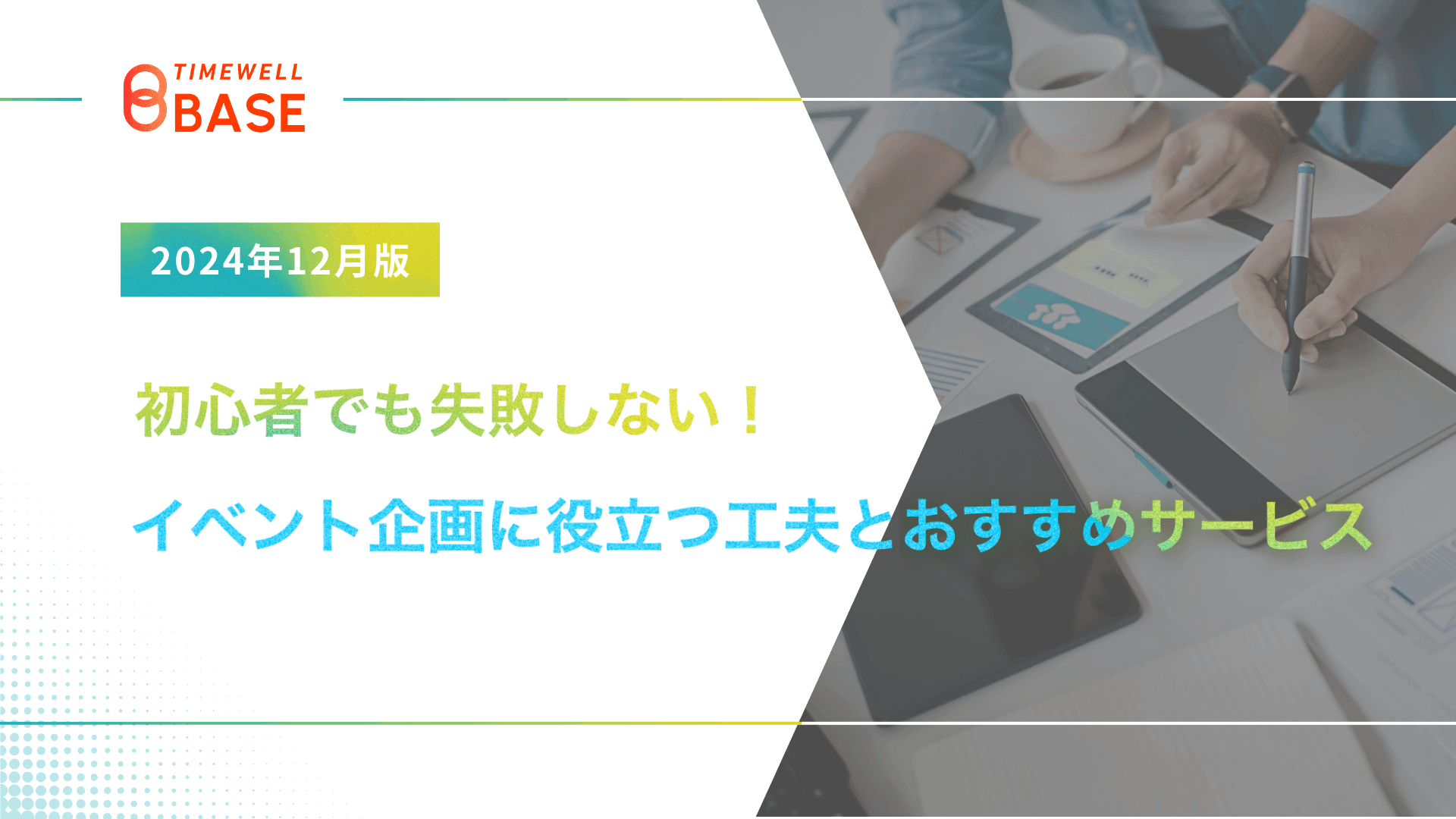
The good news: the core principles for successful events are learnable, and tools have improved dramatically. This article covers 7 essential points for event success, three tools worth using, and what TIMEWELL BASE — released in December 2024 — offers as an integrated solution.
Looking to optimize community management?
We have prepared materials on BASE best practices and success stories.
7 Points for a Successful Event
1. Define Your Purpose and Target Audience
Start here, before anything else. What do you want this event to accomplish? For a promotional event, the target might be potential customers. For a networking event, it might be industry peers. Clear purpose and target audience determine every decision that follows.
2. Choose the Right Date and Venue
Select dates when your target audience is available — weekends and holidays tend to work better for community events. Choose a venue sized appropriately for your expected attendance. Date and venue directly affect turnout.
3. Promote Across Multiple Channels
Use SNS, email newsletters, and event listing platforms. Write a headline and description that makes the event's value immediately clear. Promotion is where most first-time events underinvest.
4. Prepare Thoroughly for the Day
Venue setup, materials, and a detailed run-of-show schedule are non-negotiable. Think through equipment failure scenarios in advance — not because they'll happen, but because planning for them prevents panic if they do.
5. Design for Attendee Satisfaction
Facilitated interaction between attendees, content that matches their actual interests, and a post-event survey all contribute to satisfaction. Satisfaction drives return attendance and word of mouth.
6. Build Operational Flexibility
Unexpected changes happen. Maintain close coordination between staff and be ready to adjust the schedule if needed. The ability to adapt is a sign of mature operations.
7. Review and Improve
After the event, systematically capture what worked and what didn't. PDCA applied to event management compounds over time — the third event is significantly better than the first.
Three Tools for Beginner Event Organizers
- Doorkeeper: Event page creation and registration management. Simple to set up and widely used in Japan's event community
- Canva: Professional-quality flyers and promotional materials without design expertise
- Zoom: Reliable online or hybrid event streaming with breakout room and recording features
The Challenge: Knowing the Principles Is Not Enough
Even with a good checklist, executing well across all stages — targeting, promotion optimization, LP design, on-day operations — requires expertise and ongoing iteration. Most beginners don't have the bandwidth to do all of it themselves and maintain the event quality they want.
This is where dedicated support services become valuable.
TIMEWELL BASE: AI + Matching for Better Events
TIMEWELL BASE is an integrated event management platform with AI at the core:
- Event copy generation: Input your event overview and AI generates name candidates, attendee-facing descriptions, and promotional copy
- Interest tag matching: Attendees tag their interests; the platform surfaces connections between people who share them, improving networking quality before the event even starts
- Contact exchange: Apple Wallet integration and QR codes make connections easy on the day
- End-to-end support: Planning, promotion, on-day support, and post-event report generation in one platform
For a first-time organizer, TIMEWELL BASE reduces the complexity of getting all the pieces right simultaneously — which is what makes organizing feel overwhelming in the first place.
TIMEWELL AI Consulting
TIMEWELL supports business transformation in the age of AI agents.