This is Hamamoto from TIMEWELL.
The Audience Development Challenge
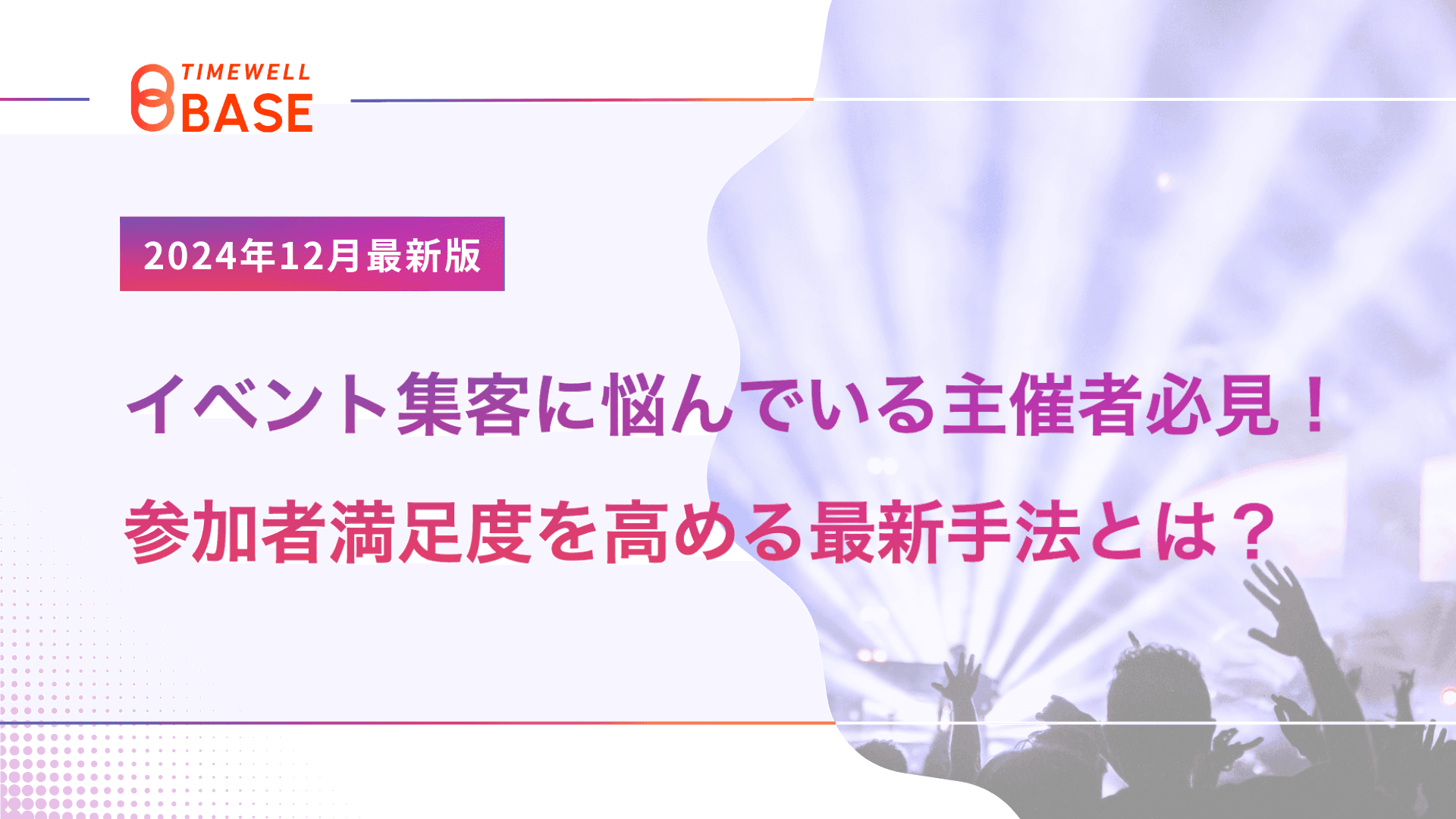
You've planned a great event. The content is good, the speakers are prepared, the venue is set. But if nobody shows up, none of that matters.
Audience development is consistently what trips up event organizers — beginners and experienced ones alike. The techniques are learnable. Executing them well across all channels, consistently, with iteration, is genuinely difficult.
This article covers five techniques, explains why self-execution at scale is hard, and introduces TIMEWELL BASE as an integrated solution.
Looking to optimize community management?
We have prepared materials on BASE best practices and success stories.
5 Techniques for Event Audience Development
1. Define Your Target Precisely — Then Build Everything Around It
The single most important decision in audience development is specificity. Not "startup founders" but "Series A founders in B2B SaaS who are building in Tokyo." The more specific your target, the more precisely you can tailor copy, channels, and calls to action. Vague targeting produces vague results.
Create a persona: age, role, interests, what problem they're trying to solve, why they'd come to this event. Then use it to evaluate every piece of promotional material you create.
2. SNS and Web Advertising: Choose Strategically
Social media and web ads are essential — but platform choice matters as much as content. Use the platforms your target actually uses, not the ones you're comfortable with.
- LinkedIn: B2B, professional development, career-focused events
- X (Twitter): Tech, startup, and real-time community engagement
- Instagram: Consumer, lifestyle, visual content
- Meta Ads: Detailed demographic and interest targeting
Paid advertising allows precise targeting that organic posting rarely achieves for new events without an existing audience.
3. Build a Dedicated Landing Page
A landing page for the event — separate from your general website — gives you a focused space to make the case for attendance. Include: what the event is, who it's for, what attendees will get from it, who is speaking or participating, logistics, and a clear registration call to action.
Remove friction from the path to registration. Every unnecessary click is a potential dropout.
4. Email Marketing to Existing Lists
If you have an existing customer or subscriber list, this is your highest-conversion channel. People who have already opted in to hear from you are more likely to attend your event.
Timing, subject line, and body copy all matter:
- Subject lines should communicate the specific value of attending, not just announce the event
- Include a clear CTA button
- Send a reminder 48–72 hours before registration closes
5. Build Interaction Mechanisms That Generate Social Proof
Events benefit from network effects: if people can see who else is coming, they're more likely to register. Before the event, share attendee profiles (with permission) or host a pre-event community channel where attendees can connect.
This converts individual registrations into social momentum — and gives early attendees a reason to encourage their networks to join.
The Self-Execution Reality Check
Knowing these five techniques is different from executing them well. Each requires expertise:
- Targeting: requires understanding your market deeply enough to build precise personas
- Ad optimization: requires ongoing testing and adjustment, not set-and-forget
- Landing page copy: requires conversion writing skills
- Email marketing: requires list management, segmentation, and testing
- PDCA: requires data infrastructure and the discipline to actually act on findings
Doing all of this simultaneously, while also preparing the actual event content, is beyond most organizers' bandwidth. Something gets shallow. The right answer, in many cases, is to bring in dedicated support.
TIMEWELL BASE: AI + Matching in an Integrated Platform
TIMEWELL BASE addresses both the labor and quality problems in event management:
For promotion and preparation:
- AI-generated event descriptions, announcement copy, and promotional text based on your event overview
- Event page creation and registration management in one place
For attendee experience:
- Interest-tag matching connects attendees who share specific interests before the event begins
- Easy contact exchange via Apple Wallet and QR codes
- Networking quality improvement built into the platform design
For post-event:
- Automated report generation
- Data capture for next-event improvement
For organizers who want better results without expanding their team, TIMEWELL BASE provides the combination of AI efficiency and human-connection quality that determines whether an event becomes a community.
TIMEWELL AI Consulting
TIMEWELL supports business transformation in the age of AI agents.