This is Hamamoto from TIMEWELL.
PR TIMES & IDEAS FOR GOOD, Vol. 11
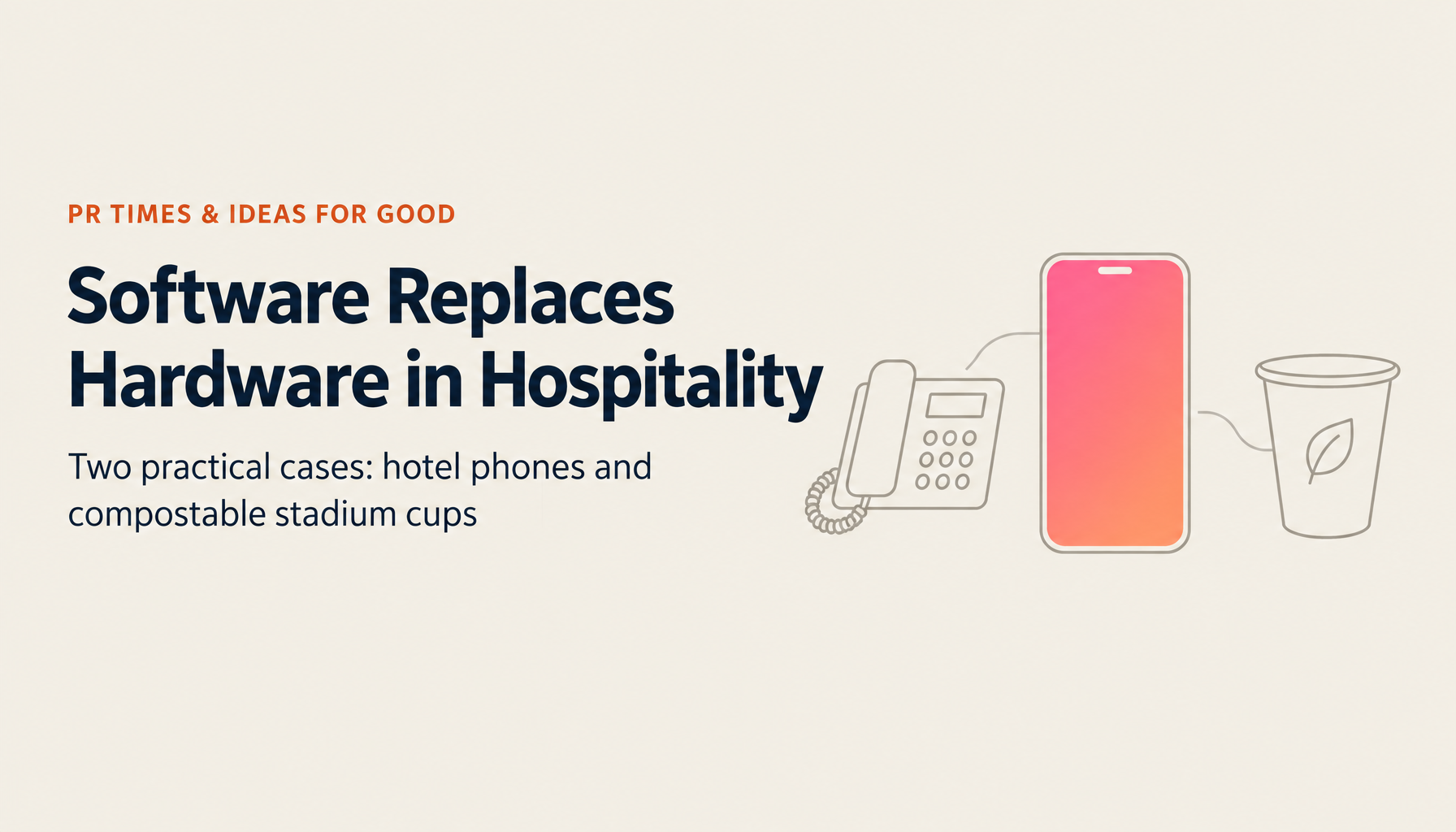
Two releases this edition: hotel room phone replacement and compostable stadium cups.
This week's two releases:
- HOT/TEL app launched: hotel room phones replaced by smartphones
- Gamba Osaka (J.League) introduces compostable drink cups under Japan's new Plastic Circulation Law
Looking for AI training and consulting?
Learn about WARP training programs and consulting services in our materials.
1. HOT/TEL: Eliminating the Hotel Room Phone
HOT/TEL is a smartphone app that replaces the physical telephone in hotel rooms. The app allows guests to call the front desk, access facility guides and in-room information, and request services—all from their own device.
The problem it solves: Hotel room phones have two structural issues:
High maintenance cost: Room telephone hardware (handsets, wiring, PBX systems) is expensive to install and maintain. Hotels often have dozens or hundreds of rooms.
System aging: The PHS and intercom systems that many Japanese hotels installed years ago are aging out of vendor support. Replacing them like-for-like requires significant capital investment.
HOT/TEL's approach: instead of replacing old hardware with new hardware, replace it with software that runs on hardware the guest already owns. The hotel avoids the hardware investment; the guest gets functionality that works on a familiar device.
The broader pattern: This is a recurring dynamic in hospitality DX—many guest services rely on hardware that was installed at building completion and becomes progressively more expensive to maintain. Software-first alternatives that leverage guest devices remove the hardware dependency and allow services to be updated continuously.
Hotel services are particularly well-suited to this model because the improvement cycle can be continuous. Unlike physical hardware that requires physical service, a software app can add features overnight.
2. Gamba Osaka's Compostable Cup: The Cost Barrier to Green Stadiums
J.League club Gamba Osaka introduced compostable cups (cups that return to soil) at their stadium. The initiative came in response to Japan's Plastic Resource Circulation Law, which took effect in April 2022 and requires businesses to reduce single-use plastic usage.
The sports industry is accelerating its response to this law. Large events—J.League matches, concerts, festivals—distribute enormous numbers of single-use drink containers. Switching to compostable alternatives is the obvious direction.
The honest challenge: Compostable cups cost more. This is the friction point that is slowing adoption across the industry. Gamba Osaka's testing and public reporting on their experience—including the cost reality—is valuable precisely because it's honest about the difficulty.
The advertising angle: One counter to the cost problem is treating SDGs investment as marketing. A compostable cup with the team logo and a sustainability message is advertising in addition to packaging. The cost per impression may actually be favorable compared to traditional advertising—and "actively sustainable company" is a message that resonates with younger fans. The net economics of the initiative look different once you account for brand value.
TIMEWELL AI Consulting
TIMEWELL supports business transformation in the AI agent era.
Our Services
- ZEROCK: High-security AI agent running on domestic servers
- TIMEWELL Base: AI-native event management platform
- WARP: AI talent development program