If ChatGPT Isn't on Your Smartphone, What Are You Doing?
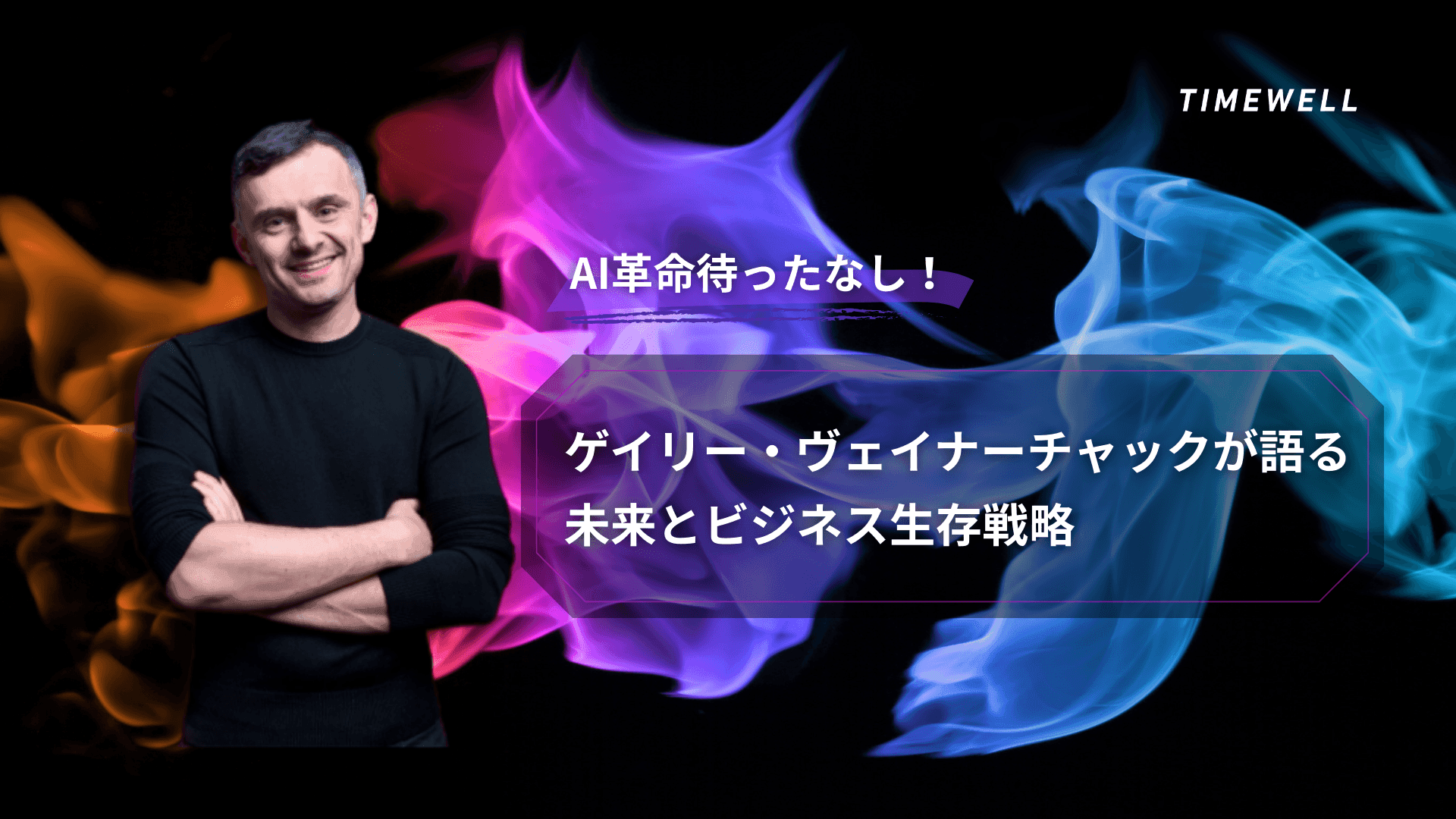
"If ChatGPT isn't on your smartphone right now, what exactly are you doing?" — renowned entrepreneur and marketer Gary Vaynerchuk puts that question to his audience with unmistakable intensity. The AI wave is no longer a distant future. It is the reality we face today, and it is poised to reshape our businesses — and our lives — from the ground up. Citing the example of a Portuguese company that generated $100 million in revenue with AI bots, Vaynerchuk points out sharply that those who "don't believe in AI" are not actually skeptics — they are simply indulging in laziness or entitlement. The speed at which AI is evolving far exceeds our imagination, and its implications are immeasurable. As we chase convenience, we are gradually and imperceptibly ceding control over brand choice to technology itself.
This article draws on Vaynerchuk's insights to examine the disruptive changes AI brings, the brand strategies companies and individuals need to survive within them, and the concrete actions we should be taking right now. This is not mere futurism. It is a wake-up call about a reality that anyone competing at the frontlines of business cannot afford to ignore.
AI Redefines Convenience — and Puts the Essence of Brand Value to the Test Why Resistance to Change Is Futile — Technology Evolution and the Future of Social Media No More Excuses — The Actions and Mindset Shifts to Win the AI Era Conclusion AI Redefines Convenience — and Puts the Essence of Brand Value to the Test
Gary Vaynerchuk's vision of AI's future is not a narrow conversation about technical progress. It holds the potential to fundamentally overturn our consumption habits, decision-making processes, and relationship with brands. What he emphasizes most is the "ultimate convenience" that comes from the fusion of AI and voice devices (smart speakers and the like) — and the brand crisis that accompanies it.
Imagine standing in your kitchen and saying, "Alexa, tonight my son has a sleepover with three friends. One is lactose intolerant, one is gluten-free. Two like spicy food, and one is a Persian kid, so I want to include something that feels comfortable for him. I want to sit down for dinner at seven-thirty — can you order dinner for everyone?" AI understands your request perfectly, selects optimal menu items from multiple restaurants, and has it delivered at the specified time. This is not science fiction. According to Vaynerchuk, this is the reality we are about to face.
In this scenario, what is the most important thing to notice? It is the fact that the consumer is not "naming" a specific restaurant or brand — they are "delegating" the choice to the AI platform (in this case, Amazon Alexa). AI analyzes enormous amounts of data in an instant — the user's preferences, past purchase history, reviews, price, delivery time — and presents the "optimal" option. As a result, the consumer achieves the goal of "ordering dinner" without being conscious of any individual restaurant's brand. At that moment, a platform like Amazon holds immense power as the "gatekeeper" deciding which restaurant receives the order. From the restaurant's perspective, this is an extremely vulnerable situation where their brand power simply does not apply. The difference between "Alexa, send pizza tonight for twenty people" and "Alexa, send Pizza Hut tonight for twenty people" is enormous. In the first case, which pizza chain gets the order is up to the AI — in the second, the consumer has explicitly chosen "Pizza Hut" as a brand.
At the root of this shift, as Vaynerchuk points out, is the universal human tendency to "always prioritize convenience above all else." Even when we can't necessarily afford it, we don't hesitate to use premium services (like ordering a $28 bagel through Seamless delivery) if they save us time. AI has the potential to satisfy this "craving for convenience" at levels previously unimaginable. As AI agents work in the background to shop for us, manage our schedules, and gather information, our lives will be dramatically more efficient. But the trade-off is that we will unconsciously delegate a growing number of choices to AI.
In such a future, what is the key for companies to survive? Vaynerchuk's answer is unambiguous: "Brand." In a world where AI presents optimal options for general requests ("I need sneakers," "I want pizza," "I want business advice"), unless consumers name a specific brand ("I need Reebok," "I want Pizza Hut," "I want business advice from Gary Vaynerchuk"), business opportunities will flow to the nameless — or platform-recommended — option chosen by the AI's algorithm. A powerful brand is one that builds a firm position in the consumer's mind, creates an emotional connection, and has the power to drive "intentional choice." It is not merely a logo or product, but the sum of trust, values, and story. The more AI drives efficiency and standardization, the more important — paradoxically — brands that provide human connection and emotional value become.
Let us look further at the food delivery example. Once upon a time (those over forty will remember), we searched through paper menus in a kitchen drawer, dialed a phone number, and placed an order by speaking directly to a staff member. Today we can order easily with a few taps on an app like Uber Eats or Seamless. This is a dramatic leap forward — but Vaynerchuk predicts that even this current "convenience" will feel dated in fifteen years. Because AI will be ordering meals for us, calibrated to our health state and mood, before we even consciously think to do it. "You're all robots — you just don't know it yet," he says. A health monitoring device constantly tracks our biometric data, and based on that data an AI automatically orders the optimal meal. We will enjoy that convenience and probably come to love it.
But at that point, how many truly self-directed choices like "let's go eat pasta at Luigi's tonight" will remain? If you genuinely love "Luigi's" and feel strongly about it, you will override the AI's suggestion and go there anyway. But most people don't realize how few things they actually "feel strongly about." This "absence of strong preference" is both the greatest opportunity and the greatest vulnerability in AI-era business. Companies that don't build powerful enough brands to make consumers feel "I want this one" — strongly enough to override an AI suggestion — risk being swallowed by the algorithmic ocean of AI platforms.
Taking on AI-driven work? You do not have to do it alone
WARP is a hands-on program for people who want to build with AI themselves, from training through implementation support.
Why Resistance to Change Is Futile — Technology Evolution and the Future of Social Media
When Gary Vaynerchuk argues for the importance of AI, he frequently turns to history. Understanding how people have reacted to past technology shifts provides important lessons for responding to current and future change. "I understand now why I got into history — I rely on it so much in my decision-making," he says.
One example he cites is electricity. When electricity was first invented, many people were afraid to install it in their homes. Rumors spread that "there's a devil inside electricity," and people kept using the candles they were comfortable with. It seems unimaginable today, but at the time, the concept of an invisible force coursing through the home was a terror beyond comprehension. A more recent example he gives is BlackBerry. Many business professionals refused to give up their BlackBerry precisely because it had physical buttons. "A touchscreen is hard to use," "the feel of buttons matters" — those were the objections — but smartphones with touchscreens became dominant, and BlackBerry disappeared from the market.
Online dating is the same. In the early 2000s, couples who met on sites like Match.com considered the fact embarrassing and even lied about how they met. Today, online dating is widely accepted as one of the primary ways people find partners. What these historical examples show is that initial resistance and skepticism toward technological change are universal — but ultimately, new technology that offers convenience and efficiency spreads and even changes social norms. "Change is going to happen whether you like it or not," Vaynerchuk states flatly.
From this historical perspective, he sends an important message to modern business professionals: "Using the word 'no' in business means you already have a problem." Taking a negative attitude toward new technologies and consumer trends — "that's not possible," "it doesn't apply to our industry," "I can't believe it" — closes off your own possibilities and increases the risk of being left behind by the times. Instead of "no," he proposes the word "maybe." You don't have to jump on everything new right away, but rather than completely denying possibilities, holding the open attitude of "maybe this could be important" or "let me look into it a bit more" is indispensable. With technology especially, committing to "maybe" is the key to not falling behind.
He identifies "laziness" as the most common excuse people use for not trying new things. When TikTok emerged, for example, some people gave patriotic-sounding reasons like "I won't use it because it's Chinese-made" — but Gary points out that this was just an excuse to hide their laziness in not wanting to learn a new platform. "We've been too prosperous — we're lazy and coddled," he says bluntly.
And the cutting edge of this change is social media. Vaynerchuk emphasizes that the "free reach" that social media currently offers is an opportunity unprecedented in history. In the past, wielding significant influence required either paying large sums to newspapers, radio, or television, or getting past a stern gatekeeper (editors, producers, etc.). Today, with just a smartphone, anyone can post content for free and potentially reach people all over the world. His own client's example — where a single viral TikTok video led to interview requests flooding in from People, Newsweek, and the Today Show — speaks volumes about that potential.
But Vaynerchuk warns that this "golden age of free reach" will not last forever. "This will end," he predicts. His reasoning is the continued evolution of technology. He believes it's likely that the smartphones dominant today will feel like antiquated devices in ten years. If new devices like the smart glasses being developed by Meta (Facebook), Apple, and Google become widespread, the way people consume information and communicate will change fundamentally. If that happens, the current timeline-based social media feed may lose much of its relevance.
He points to the rise of "live social shopping" as an early sign of this change. On platforms like TikTok Shop, Whatnot, Fanatics Live, and eBay Live, influencers and companies sell products through live streaming while interacting with viewers in real time. Whatnot in particular has already achieved an annual GMV of $3 billion — evidence that live social shopping is not just a trend but an already enormous market. For companies selling physical products, this new sales channel will bring significant business opportunity over the next thirty-six to forty-eight months, he stresses. "First-mover advantage is critically important," he notes, suggesting that those who didn't act when he was shouting about TikTok's importance in 2017 are probably regretting it today.
In conclusion: technology constantly evolves, and the business environment evolves with it. As history shows, resistance to change is futile — and in fact harmful. Business leaders need to learn from past lessons, embrace new technology and trends with the spirit of "maybe" rather than "no," experiment, and adapt. With social media especially, maximizing the current opportunity of free reach while preparing for the next wave — smart glasses, live social shopping — will be indispensable to future success.
No More Excuses — The Actions and Mindset Shifts to Win the AI Era
Gary Vaynerchuk's message goes far beyond future predictions or strategic frameworks. At the core of his words is always a powerful call to "action" and a transformation of "mindset." "Just coming here to receive information and doing nothing is the same as doing nothing. It's the same as lying on your bed watching YouTube. Please — act," he urges. Understanding the importance of AI and brand strategy is not enough. Translating that understanding into concrete actions, and building the strong mental foundation that supports those actions, is what he argues is the key to winning in an era of rapid change.
So what specifically should you do? He presents a simple, practical set of directives — his version of a non-negotiable minimum:
Research and practice AI: Right now, carve out fifty to one hundred hours to research AI and actually download and use AI tools (especially ChatGPT). "Ask ChatGPT 'what does AI mean for the real estate industry?'" he offers as a concrete example. Understanding what impact AI will have on your own business and industry — and what possibilities it opens — is something you must explore proactively, not leave to others. Saying you "don't believe in AI" is simply laziness, or an excuse to avoid facing change. Even if retirement is near, AI tools may improve the quality of your life after you step down.
Comprehensive social media content planning and execution: Have a comprehensive plan to create and publish content across all major social networks — not just TikTok and Instagram, but LinkedIn, YouTube Shorts, Facebook, and Twitter/X as well. And execute on it. Simply having accounts is meaningless. You need to understand the characteristics of each platform, sharpen the "skills" of thumbnails, opening three seconds, and copywriting, and actually develop a strategy to maximize reach. Rather than depending on a single platform, building a presence across multiple is essential, he notes — and he himself says recently that "classic Facebook" has become the most important.
The biggest obstacles to these actions are, in most cases, not technical problems but psychological barriers — mindset. "Gary has a team so he can do it," or "my industry is different so it doesn't apply" — these are the typical thinking patterns that justify inaction. Gary reveals that even he spent seven and a half years doing social media alone with enormous time investment, and emphasizes that "work is part of the equation." Technology doesn't come "naturally" to him either — when something new appears, he sometimes feels irritated at having "yet another new thing to learn." But he pushes through it and keeps acting. Because he understands the harsh reality that failing to act means being left behind and ultimately eliminated.
Using the analogy of marathon training, he explains the importance of small daily efforts compounded over time. "I can run a marathon because I train every day. You can't lie on a couch eating chips and drinking beer for a year and then run the New York Marathon." Daily social media posts and AI learning are exactly that training. As technology keeps evolving, neglecting daily practice widens the gap and makes catching up increasingly difficult.
He also identifies another major factor blocking the path to success: an excessive concern with others' opinions and a lack of self-worth. "If you could stop worrying about people's judgment..." he says. He laments that far too many people hesitate to pursue their dreams out of fear of negative comments or disappointment about view counts. "You won't chase your dreams because Sally Pants 96 said you were fat? Because Donnie Knoxville 463 said you were stupid? Are you serious?" Why should strangers' comments on social media have any say over your life?
He also hints at concrete steps for reclaiming self-worth and finding inner strength. Start by "cutting off negative information sources." Limit exposure to biased news (Fox News and CNN are his examples), and limit contact with chronically complaining friends or family. He says you can even control your own social media feed. "If you don't like your news feed, search for positive things — sunsets, rainbows, puppies — and keep hitting 'like.' The feed will change. The news feed doesn't push propaganda at you — it mirrors you back to yourself."
Ultimately, the most important thing is holding the mindset that "I have 100% control over my own life." Stop blaming your parents, your boss, or society — take full responsibility for everything yourself. "At what age do you stop blaming your parents and realize you're an adult who can change the outcomes of your own life?" When a person reaches this place of "total self-accountability," they are finally freed from excuses and complaints and can begin to realize their true potential. Envy, jealousy, and blaming others are poisons that block success. Using "luck" as a weapon, he says, means the defeat is already decided. Even being born into a wealthy family doesn't guarantee success (the opposite is often true), he points out, emphasizing that external circumstances are not the decisive factor — inner mindset is.
Gary Vaynerchuk's message can be harsh and uncomfortable to hear at times. But for those of us competing in business while facing the unprecedented change brought by AI, it serves as a powerful alarm to wake us up. Stop making excuses, overcome fear, take concrete action, and above all believe in yourself. That is the only path to surviving the AI era and achieving success.
Conclusion
As Gary Vaynerchuk argues with passion, the evolution of AI is an undeniable reality and is bringing revolutionary change to our businesses and lives. The future he describes has a dual character: on one hand, AI pursuing ultimate convenience — on the other, a radical questioning of what brand value really means. In an era where consumers delegate choices to AI, companies must build not just products and services, but powerful brands that resonate with consumers and drive intentional choice — or they won't survive.
But understanding the strategy is not enough. What Vaynerchuk repeatedly emphasizes is the importance of action. Start learning about AI right now, and actually touch the tools. Keep actively producing content across all major social media platforms. These are, in concrete terms, training to adapt to a fast-changing era.
And what supports that action is mindset. As history demonstrates, resistance to change is futile, and a flexibility that embraces new things with the spirit of "maybe" rather than "no" is required. Even more important is holding the consciousness of "total self-accountability" — believing in your own value and taking the wheel of your own life, rather than being swayed by others' evaluations or negative opinions. When you let go of excuses, complaints, and envy, and find your inner strength, you can finally confront the challenges of the AI era — and seize the limitless opportunities concealed within them. Gary Vaynerchuk's words are not merely advice — they are a compass for the future. The time to listen to his warning and transform your own actions and consciousness is now.
Reference: https://www.youtube.com/watch?v=_RiVvFwZ2sw
TIMEWELL's AI Consulting
TIMEWELL is a professional team supporting business transformation in the AI agent era.
Services Offered
- AI Agent Implementation Support: Business automation leveraging GPT-5.2, Claude Opus 4.5, and Gemini 3
- GEO Strategy Consulting: Content marketing strategy for the AI search era
- DX Advancement & New Business Development: Business model transformation through AI
In 2026, AI is shifting from "something you use" to "something you work with." Shall we think through your company's AI strategy together?