We come to your floor and solve it.
Fast, affordable, secure AI adoption.
We are not a company that only presents in meeting rooms. Our founders and engineers work inside your workplace, show a running prototype on day one, deliver results in 45 to 90 days, and hand over a system your own people can run. Priced at half or less of large-firm contract development as a guideline, under an ISO/IEC 27001 certified system with a track record at universities and other public institutions.
Founders who drove product and business development at major telecom and electronics manufacturers handle engagements in person. We provide an AI service (TRAFEED) adopted by more than 20 organizations including universities and other public institutions. ISO/IEC 27001 certified (scope: planning, development, and provision of SaaS products using AI technology).
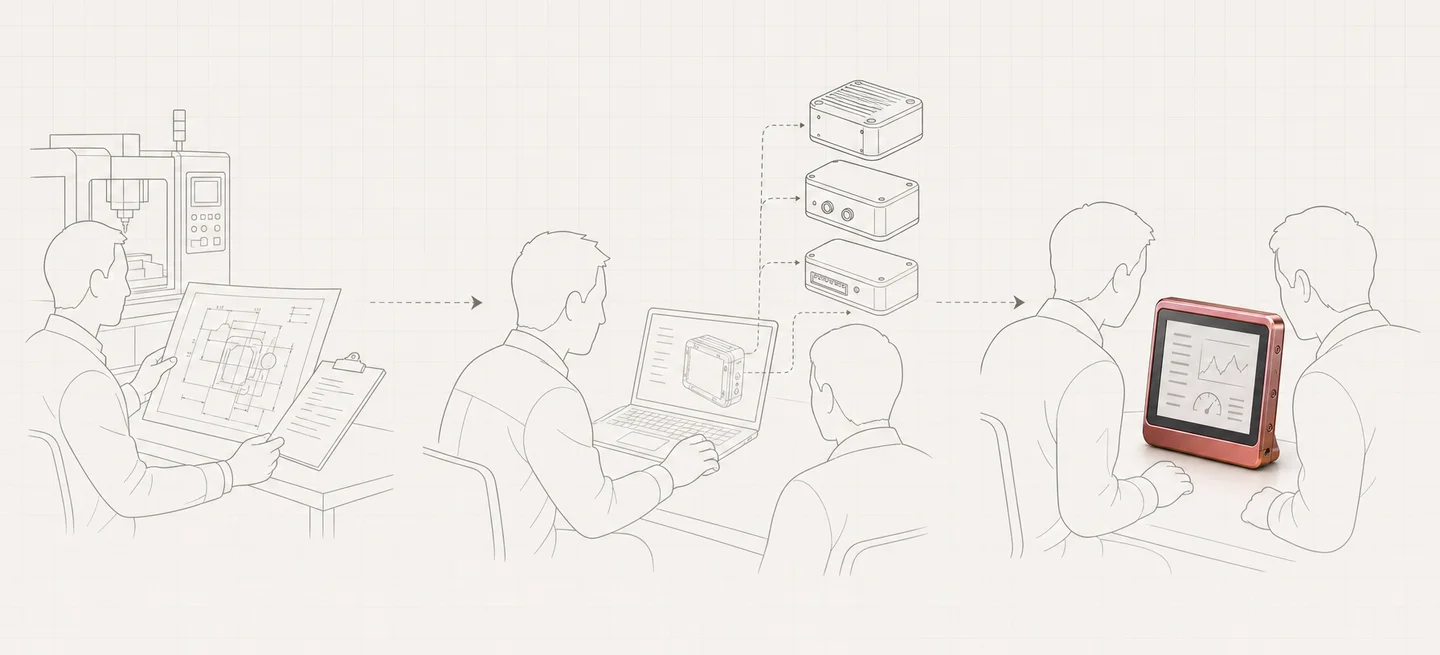
- Day 1
- A running prototype
- A prototype running on your anonymized real data, shown to the person on site by the evening of day one
- 45–90days
- to results
- The period and the end condition are set at the start, and we hand over a system your people can update themselves
- 1/2or less
- of large-firm contract development, as a guideline
- AI-driven development cuts hours, and fees are set by period. Varies with scope
- 27001
- ISO/IEC certified
- The international standard for information security. On request, we can also build a configuration that keeps data inside a domestic region
A prototype on day one, half or less of large-firm pricing, and an ISO/IEC 27001 certified system
What a workplace stuck on AI adoption needs is not documents or proposals but people who come, build, and fix. We promise three things.
Fast
A running prototype on day one and a new version every day. We set the end, 45 to 90 days, before we start. We build on components already running in ZEROCK and TRAFEED, so nothing starts from zero.
Affordable
Half or less of large-firm contract development as a guideline. AI-driven development cuts hours dramatically, and fees are set by period rather than accumulated hours. No contract that rewards staying longer.
Secure
ISO/IEC 27001 certified, and we provide an AI service adopted by more than 20 organizations including universities and other public institutions. On request, we build configurations that keep data inside a domestic region. Humans approve significant decisions, and the founders handle it in person.
95% of AI adoption stalls on the floor. That is why you need a team that comes to the floor
When postings grow fiftyfold and 38 companies line up, most are contract development renamed 'FDE'. The real thing is told by one question: is learning returning to the product so that hours per customer fall?
An FDE is an engineer who comes to your workplace and turns the problem into running software
The medical analogy is a house call. Instead of waiting for the patient at the hospital, go to the home, examine on the spot, treat on the spot. Instead of waiting for a specification, put an incomplete working artifact down on day one, ask what is different, fix it the next day. That loop draws out the requirements that never surface in a meeting room.
- 01Ask
Ask executives, the division, and the floor; sit at the workstation and catch the steps and exceptions nobody explained.
- 02Build
Assemble a first version on our product components in a few hours, running on your anonymized real data, and put it in front of the person on site.
- 03Return to the product
Patterns other companies also have go into the product as standard features; your own branches stay as your extensions. The next site gets faster.
We turn paper drawings, forms, and coarse-grained data into a proper database, thoroughly
Most AI adoption stalls not at the model but before the data: still on paper, still in PDFs, still in someone's head. We do not skip this part. We sit on the floor and shape the data with our own hands until AI can use it.
Digitizing paper, PDFs, and images
Paper drawings, handwritten daily reports, scanned PDFs, photos. We structure them with our reading components and fill in what could not be read by checking on site.
Cleaning and reconciling spreadsheets and forms
Tables written differently by each person, part numbers that differ by department, inconsistent spellings. We set the rules, unify them, and record them in your business glossary.
Filling in coarse-grained data
Work that runs on 'roughly' and 'the usual' gets turned into numbers and categories through interviews and observation, at a granularity AI can use for decisions.
A database AI can actually use
The cleaned data, together with your terms and how your work connects, becomes a database AI can traverse (a knowledge graph). Only then does AI work on the floor.
Prototype on Monday, sort on Friday. Repeat this week for 45 to 90 days until your people run it themselves
We do not run phases in series. Asking, building, reading the reaction, and returning to the product happen in parallel every week.
- Free consultation
30 minutes to confirm the problem and the conditions
We ask what executives, division heads, and the shop floor want to change, and confirm the conditions for speed: access to data and the person's time. If it is not a fit, we say so on the spot.
- Monday
Ask the three layers, find the data owner, put down the first version in the evening
A first version running on anonymized real data is built on our product components in a few hours and put in front of the person on site.
- Tue–Thu
Collect exceptions by observation, one version a day
Sit at the workstation, catch the unexplained steps, ship one spec-driven version a day. Take a provisional measurement on Thursday.
- Friday
Make groups, update the dictionary, return patterns to the product
Turn the week's fragments into structure, update your dictionary of nouns and verbs, send shared patterns to the product and your own branches to your extensions.
- Weeks 4–12
Introduce writes gradually and leave with your team running it
From around week four the person on site edits the dictionary. When the loop turns on days our engineer is not there, we are done.
Write integrations with core systems and connections that need security review do not reach production in a week. The review runs in parallel while we work on anonymized data.
Contract development builds to the spec. FDE stays on the floor and fixes it until results show
This is not about FDE being better or worse. Work with fixed requirements that needs building once is cheaper and more certain as contract development. FDE suits work whose requirements are buried on the floor and only surface while something is running.
| Aspect | Contract development | Staff augmentation | Consulting | FDE (us) |
|---|---|---|---|---|
| First code | After requirements and design | Once instructed | None (recommendations) | Day one (a first version on anonymized real data) |
| Accountable for | Deliverable to spec | Hours worked | Report and recommendations | The person's daily metrics (waiting time, rejections, overtime) |
| Scope | Fixed by contract; changes cost extra | Whatever is instructed | The study scope | Expansion that serves the mission is welcome; branches against product principles get a reasoned no |
| Where learning goes | The customer's asset | Individual experience | The report | Patterns to the product; branches are your extensions; the dictionary is yours |
| What hours mean | Revenue; longer is better | Revenue; longer is better | Revenue | Investment; fewer per customer is better (usage fee plus a time box) |
| How it ends | Acceptance and withdrawal | Contract expiry | Report and withdrawal | You run it and roll it out (45 to 90 days) |
Engineers with manufacturing, IoT, and robotics experience go on site
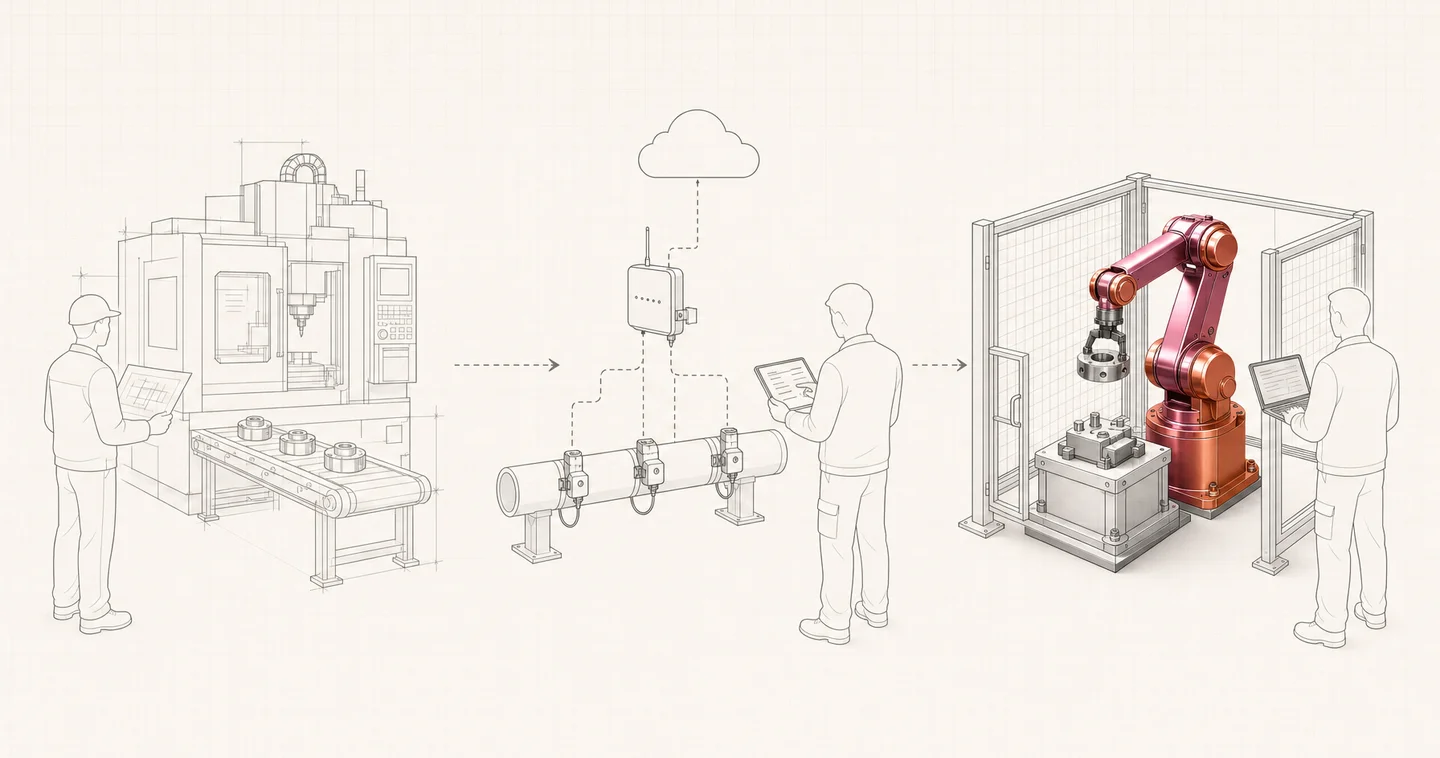
Most of our members have worked on manufacturing production floors, IoT sensors and data platforms, and robotics control and operations. Being able to talk in the language of drawings, processes, equipment, sensor data, and safety standards is what makes digging out requirements fast.
Manufacturing
Drawings, processes, quotes, quality records. ZEROCK's drawing reading and quote support came out of manufacturing floors.
IoT
We design around the data flow from sensor to cloud and the network constraints of real sites.
Robotics
Control, safety, field operations. We bring the care required by systems that act in the physical world to the design of AI agents.
Economic security and export control
Regulatory practice built up through TRAFEED. We also take engagements adjacent to defense and economic security.
Founders who drove product and business development at major telecom and electronics manufacturers consult and deploy in person
We do not assign staff; the founding executives themselves go into your workplace. Because our AI-driven development (spec-driven development with coding agents) cuts effort dramatically, having the executives on site still lets us price at half or less of large-firm contract development as a guideline.
Executives on site
Founding members who drove product and business development at major telecom and electronics manufacturers handle consulting through implementation themselves.
AI-driven development, far fewer hours
We write the spec first and have coding agents implement it, so a small team ships one new version every day.
Specialists who know the floor
Hands-on experience in manufacturing, IoT, robotics, and product security lets us dig out requirements in the language of the floor.

- Drove factory automation and automotive edge-AI business development at Panasonic
- Specially appointed associate professor, Shinshu University (AI education)
- Designs our on-site interviews and requirement discovery

- AI development at a major IT company
- Leads the architecture of ZEROCK and TRAFEED
- Designs our AI agent platform and AI-driven development practice

- Drove Panasonic North America and Silicon Valley IoT projects
- Product security specialist at a consulting firm
- Designs our security-sensitive engagements

- Formerly Panasonic; in-house engineering instructor
- 2nd place worldwide, RoboCup @Home league (robotics)
- Designs products with broad expertise in IoT, software, and UX
Under an ISO/IEC 27001 certified system, we work in confidential workplaces. Domestic-region-only operation can be built on request
The stricter the security requirements, the better the fit for us: we have a certified management system and a track record of meeting public-institution requirements.
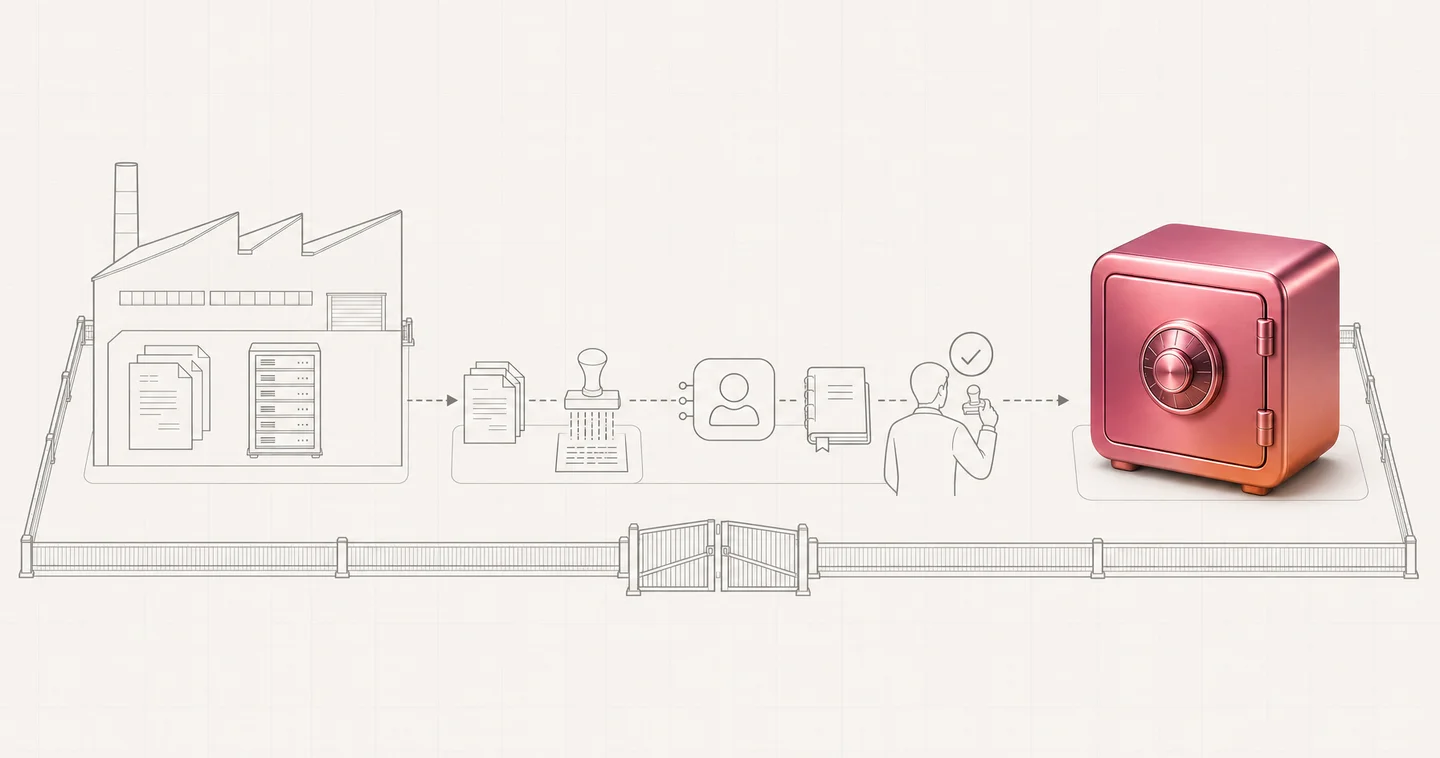
ISO/IEC 27001 certified
We hold certification to the international standard for information security management (scope: planning, development, and provision of SaaS products using AI technology).
Adopted by universities and public institutions
TRAFEED, our AI agent for export control, is used by more than 20 organizations including universities and other public institutions. We bring the same system that met their security requirements.
Domestic-region-only operation on request
We operate in the AWS Tokyo region with encryption. On request, we design and build configurations that keep data inside a domestic region, or run inside your own environment.
Four conditions before AI writes
Permissions, prior simulation, human approval on significant decisions, and audit records. Nothing writes to core systems until all four are in place, and real data is anonymized before use.

ISO/IEC 27001:2022 certified Certificate No. JP26/00000255 Scope: Planning, development and operation of SaaS products utilizing AI technology
We reuse components already running in our own products, so it is faster and cheaper than starting from zero
We build and operate ZEROCK, which puts a company's knowledge into a form AI can use, and TRAFEED, an AI agent for export control. Using the components that already run there lets us skip most of the development. For you, that means a prototype on day one, fees at half or less, and parts that are already proven in production.
Knowledge graph (GraphRAG)
A foundation that holds your nouns and verbs as a structure of meaning agents can traverse. It answers questions about relationships that document search cannot.
Permissions and audit logs
A record of who read what and who wrote what back. The prerequisite for putting an agent that writes into production.
Agent execution with human approval
Human involvement on significant decisions and simulation before execution. It prevents mistaken orders and shipments.
Integrations
Connectors to the tools you already use, including Slack, Microsoft Teams, Google Workspace, and Salesforce.
Drawing and form reading
Components that turn paper drawings, PDFs, spreadsheets, and images into structured data, hardened on manufacturing floors.
Regulatory list and counterparty screening
A matching engine for national control lists and counterparty data, used in export-control and economic-security engagements.
Domestic-region operations
Operated in the AWS Tokyo region with encryption. On request, we can configure it so data never leaves a domestic region.
An AI-native way of building
Spec-driven development and coding agents that put one new version a day in front of the person on site.
Half or less of large-firm contract development as a guideline, starting with a free consultation
Our pricing is made of two parts: product usage and a time-boxed deployment fee. We do not price by accumulated hours, because pricing by hours writes the incentive to stay into the contract.
Free consultation (30 minutes)
Confirming the problem and the conditions. No cost at this stage. We sometimes decline engagements that are not a fit.
Time-boxed deployment fee
Tied to a 45-to-90-day period and outcome metrics. Additional requests during the period: patterns at no extra charge; your own branches absorbed by configuration or declined with reasons.
Product usage
Usage fees for ZEROCK and TRAFEED. After deployment ends, you run on usage fees alone.
"Half or less" is a guideline from our pricing design relative to large-firm contract development and varies with scope and conditions. A quote follows the free consultation.
Architecture reviews and retained technical advisory for the product you are building
Beyond embedded development, we also work with your team on the architecture of the product you are building, as design reviews or as a monthly retained technical advisor.
Architecture design review
We review your agent platform, knowledge graph, permissions and audit, and integration design against the configurations we run in production.
Monthly technical advisory
We accompany your development team's design decisions month by month, including spec-driven development and the operation of coding agents.
Security and data-sovereignty design
Domestic regions, encryption, control over writes, and handling of export-controlled data, from the design stage.
We decline requests that do not fit, leave the glossary with you, and set the end condition first
The more companies call themselves FDE providers, the clearer the failure patterns become. Three failures, and how we prevent each.
Becoming the odd-job person
Every request from the floor gets a yes, the team drowns in one-off fixes, and nothing accumulates.
We decline the wrong request with reasons. Additional requests: patterns at no extra charge; your own branches absorbed by configuration or declined.
Shelfware
The deliverable stays specific to you, and when the person changes nobody can update it.
We update the dictionary of nouns and verbs weekly and have the person on site edit it from around week four. The contract says the dictionary is yours.
Key-person dependency
Nothing runs without one particular engineer, so the residency never ends.
We set the end condition first: a week when the loop ran without our engineer on site. If it does not, we revisit the design rather than extend.
Work we welcome
Here is where we are strong as FDEs, and, honestly, where we are not.
- AI agents for manufacturing floor work (drawings, quotes, processes, quality records)
- Cleaning and databasing coarse-grained data such as paper drawings, forms, and spreadsheets
- Platforms that connect IoT and robotics data to operational decisions
- Business AI with strict security requirements where data cannot leave the country or the company
- Automation of work involving export control and economic security
- Embedding AI agents into existing internal systems and SaaS
- Advisory on the architecture of a product under development
- One-off contract development with fixed requirements and acceptance (a contract developer suits you better than we do)
- Sites where the person's time and access to data cannot be secured
- Engagements made entirely of your own procedures with no pattern likely to return to the product

FDE whitepaper
What an FDE is, why it moves customer problems forward, a checklist of pitfalls when running it in-house, and advice on getting the most out of FDEs.
Questions we are often asked about FDE
How is this different from contract development?
Phases are not run in series, outcomes are measured by the person's daily metrics rather than acceptance, learning returns to our products, and the incentive to stay is kept out of the contract. A contractor earns more the longer they stay; an FDE creates more value the sooner they leave.
Who owns the business knowledge you learn on site?
It is split three ways. Patterns shared by other companies (such as multi-stage approval) return to our products as standard features. Procedures unique to you stay as your extensions. The contents of the dictionary of your nouns and verbs belong to you. It is written into the contract.
Is it true you ship code on day one?
We put down an incomplete first version running on your anonymized real data. It is not a finished product but a device for drawing out the answer to 'what is different?' Anything that writes goes in only after permissions, prior simulation, human involvement, and audit records are in place.
We require a security review. Can you handle that?
Yes. We arrange at the first meeting to run the review in parallel and work on anonymized data while it is pending. We are ISO/IEC 27001 certified and can operate in a domestic region or inside your environment.
What does it cost?
Two parts: product usage and a deployment fee for a 45-to-90-day period. We design pricing at half or less of large-firm contract development as a guideline, but it varies with scope and conditions. A quote follows the free consultation.
Can we engage you for advisory only?
Yes. We take architecture design reviews and monthly retained technical advisory for products under development, separately from embedded development. Ask in the free consultation.
We have our own engineers. Can we build together?
Yes, and we prefer it. The sooner your engineers learn our components and how to update the dictionary, the sooner you run it yourselves. From around week four your side does the updating.
Can you work remotely?
Sitting on the floor is the condition for speed, so the first week and observation days are in person. The rest of the development and the weekly loop run remotely. Location is not a constraint.
What is the contract form?
A quasi-mandate (Civil Code Art. 656) as the base, stating the term (45 to 90 days), outcome metrics, and ownership (patterns to our product; branches and the dictionary to you). We do not sign contracts that end at acceptance alone.
Which industries do you work with most?
Manufacturing (drawings, quotes, processes, quality records), workplaces handling IoT and robotics data, and work involving export control and economic security. The more our product components apply as-is, the faster we move.
Write one line about the problem and send it
'We want quotes from drawings to go faster' or 'we want sensor data to reach the people making decisions' is enough. We will reply with times for a free 30-minute consultation. A rough topic is fine; we can start from there.
Start with a free 30-minute consultation
We listen to the problem on your floor and tell you plainly whether it is one we can solve fast, affordably, and securely. Architecture consultations and retained advisory come through the same door.
Related columns
Most read this month
Deepen your understanding with our in-depth articles, then explore the service.

FDEs and Business Ethnography | Turning What a Workplace Takes for Granted into Product

Filming the Shop Floor and Analyzing It with AI | Consent, Camera Setup, and the Analysis Pattern

The Interview Skills That Make an FDE Work | How to Draw Real Insight Out of the Shop Floor
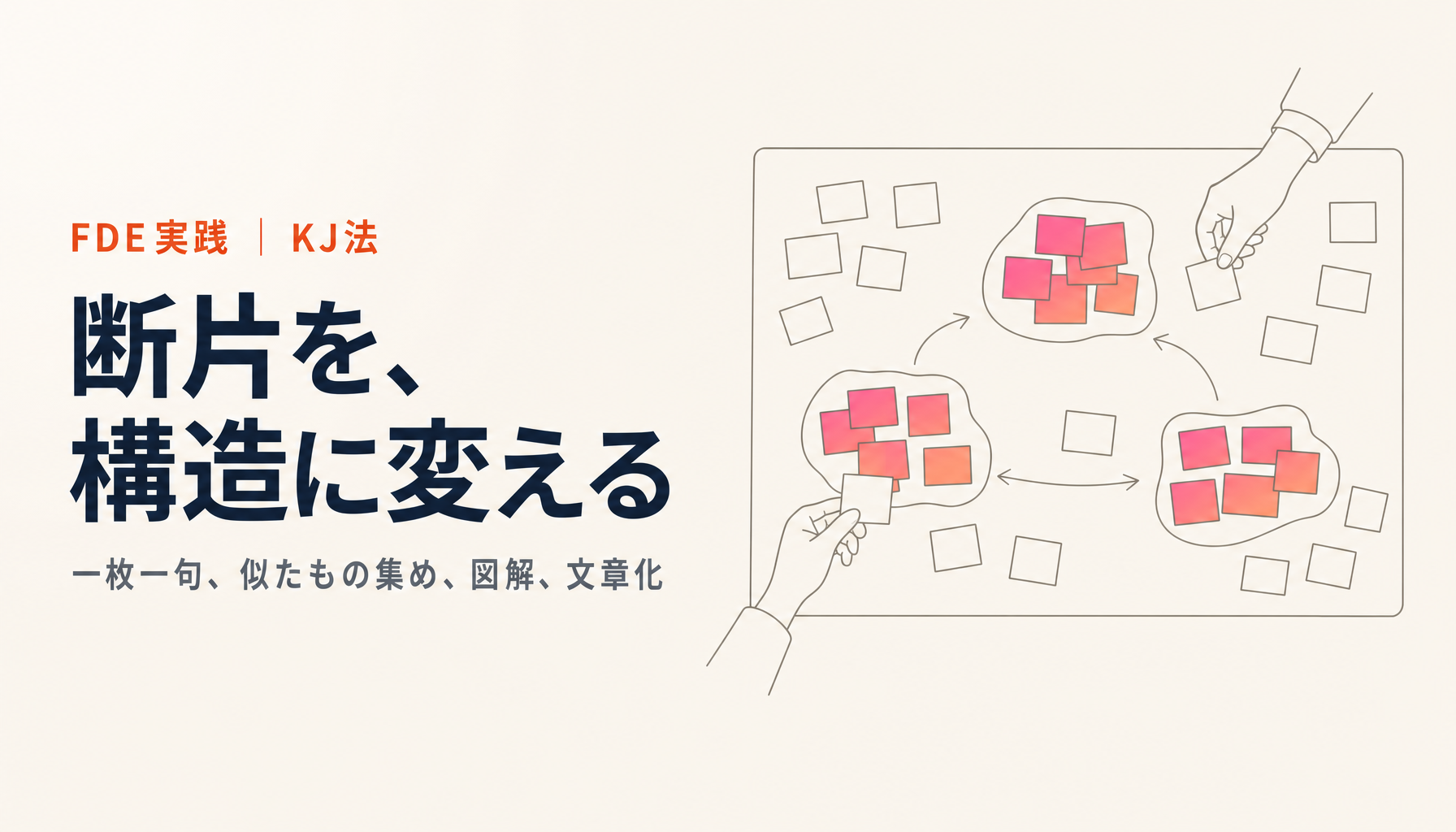
FDEs and the KJ Method | Turning Field Fragments into Structure, and Where AI Stops

Why the FDE Market Exploded | 2026 in the Numbers on Jobs, Investment, Acquisitions, and Results

How FDEs Observe | Shadowing and Contextual Inquiry to Catch the Steps Nobody Explains

An FDE's Week | From Code on Day One to Returning the Learning to the Product on Friday

How an FDE Builds an Ontology from Field Notes | A Dictionary of Nouns and Verbs an AI Can Traverse

How FDE Outcomes Are Measured and Contracted | Engineering Hours as Investment, Not Billing

How to Develop FDEs | Training and Evaluation Through Which Engineers Learn Field Skills

What Is an FDE (Forward Deployed Engineer)? Seven Secrets for Drawing Out Insight