Hello, this is Ryuta Hamamoto from TIMEWELL.
"Our own servers are well protected. Yet data could still leak through an outside service." In November 2026, an incident put exactly that question on the table. After unauthorized access to a customer-experience analytics platform, several companies that used it announced, one after another, possible leaks of personal information.
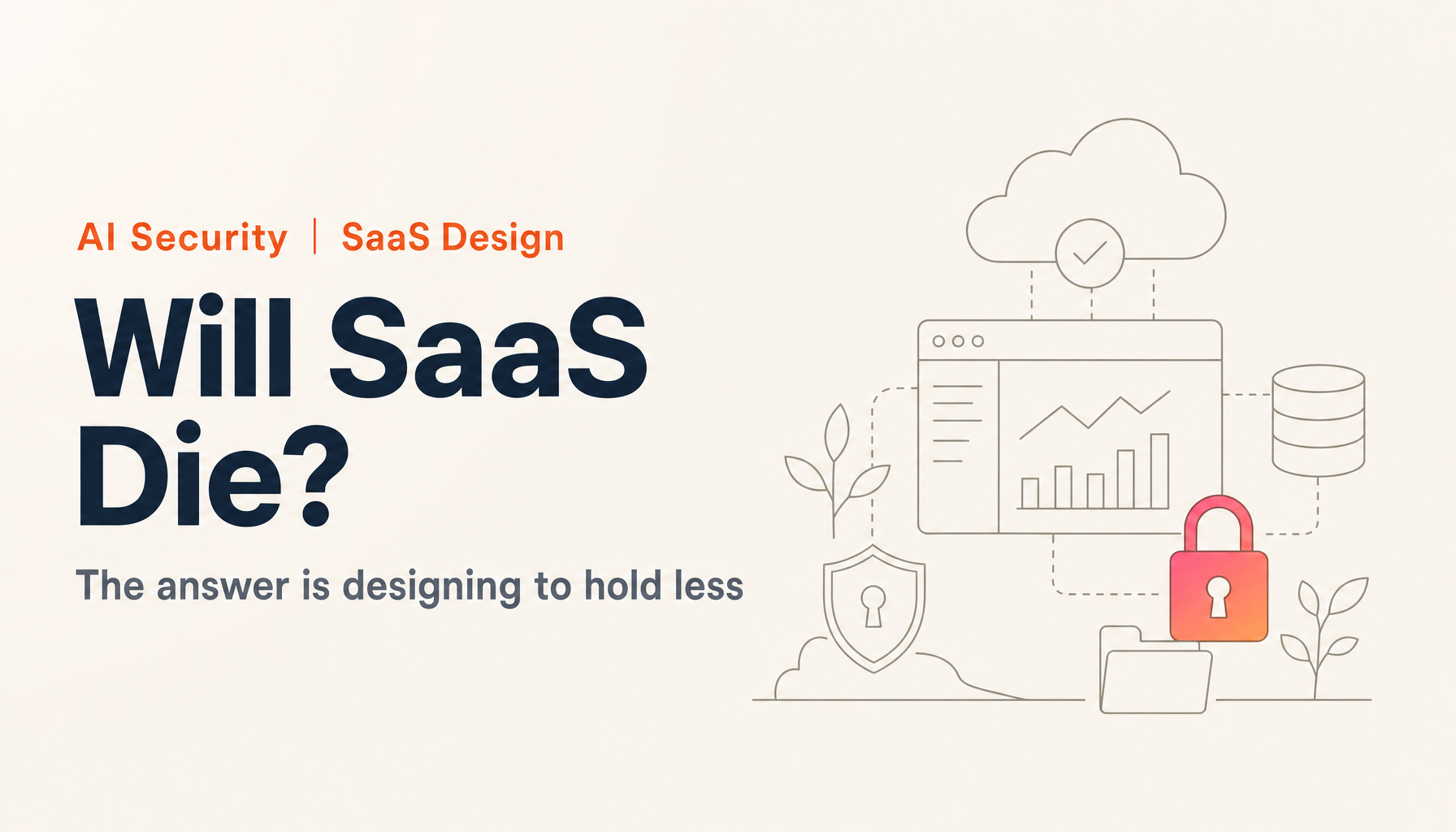
On social media I saw people saying "SaaS is too dangerous to use now" and "we should go back to on-premises." I see it differently. This incident does not mark the end of SaaS. It shows that the standards for how SaaS is built and chosen are shifting.
Here is my answer up front. It is not a retreat to on-premises. It is a strong cloud, used well, backed by a team that fixes vulnerabilities fast. To get there, I start from the facts the official sources confirm, then work through the design questions from both sides: the companies that provide SaaS and the companies that use it.
One more thing before we start. I am not criticizing any specific company here. The vendor is also a victim of the attack, and I keep confirmed facts and general design principles clearly apart.
What the vendor and its customers have disclosed
This article reflects information as of 19 November 2026. I treat the facts in two groups. One is what the vendor announced officially, which we checked against the original. The other is what user companies disclosed, which we could not check against each company's original and so handle as information via press reports. Both are about the same leak, but they carry different weight, so keep the distinction in mind as you read.
What official sources confirm
First, what the vendor, Plaid, announced officially.1
According to the announcement, unauthorized access occurred in the early hours of 13 November 2026 and was detected at 8:59 the same day. A third party exploited a vulnerability in Plaid's servers, stole credentials used to connect to systems and databases, and read data out. Using the stolen credentials, the attacker took over Plaid's own accounts and also got into its admin console.
Three kinds of information were confirmed as leaked. The first is email addresses registered to service accounts, 79,249 in number. The second is credentials for connecting to external services, such as secret keys and access tokens. Think of a secret key or access token as a spare key that lets services verify each other; whoever holds it can read and write data within its privileges. The third is part of the customer data that user companies imported, including data brought in through a feature called the "linking table" (a table user companies import to tie their own customer records to data on the service). The counts for the second and third are still under investigation.
The announcement describes invalidating the stolen credentials, stopping servers and blocking traffic from the attack source, and says containment was completed around 15:23 the same day. No new unauthorized access has been confirmed since. On its status page, on 15 November, the vendor asked user companies again to invalidate integration credentials.2 As of 19 November, all functions remained suspended and the date of resumption was undecided.
What the official sources leave out matters just as much. The type of vulnerability, the intrusion method, the total number of affected user companies and the attacker's identity are not confirmed. Nor do they say whether the "database connection credentials" and the "integration keys" were taken in the same intrusion, or in what order. I will not guess at any of these.
Announcements by user companies, and how to read them
Several user companies also made announcements. According to press reports, one apparel retailer's member data is about 7 million records, one eyewear retailer's registered member accounts are up to about 18.29 million, and one health and beauty company's email addresses are up to about 4.32 million including duplicates. We could not directly confirm the official originals, so we treat these as information via press reports.
Read those numbers with three cautions.
A count does not mean the same thing at every company. Some come with conditions such as "an upper limit on registered accounts; the actual number leaked is under investigation" or "including duplicates." You cannot simply add them up.
The leaked items differ too. Press reports say several companies explained that they had not entrusted names, phone numbers, credit card information or passwords to this service. That is a real-world example of how limiting the data you hand over shapes the scope of harm, and I would not skip past it.
And the full picture is still unknown. Plaid has not published the total number of affected companies. Figures like "dozens of companies" online are third-party tallies, not official ones.
AI Security training, taken seriously
A 2-day intensive course fully aligned with OWASP, NIST, ISO/IEC 42001, and METI. Take it as executives, practitioners, or both.
So, will SaaS die?
I don't think so, for three reasons.
Holding everything in-house is no longer realistic. Marketing, customer support, payments, analytics: specialist services in each of these have raised the speed and quality of business a great deal. Walking away from SaaS means giving those gains up.
Attackers do not target only SaaS, either. Systems you run yourself get attacked as well. Changing the form does not make the risk go away.
Most of all, what is really at stake is design, not form. Even among SaaS products, the amount of data held, how keys are managed and how customers are separated make a big difference to the damage from a breach.
That said, carrying on as before is not an option. A SaaS that gathers many companies' data in one place is an efficient target. Get into that one place, and an attacker may reach the data of many companies behind it. SaaS from here on has to be designed with that structure in mind. In my view the starting point is the same for vendors and users alike: hand over less data, protect what you do hold, and keep a breach confined to part of the whole. Thinking in that order keeps the discussion from sprawling.
Three design principles that assume a breach
What follows is general. The first principle is to reduce what can be stolen, the second is to protect what you hold, and the third is to keep a breach confined to part of the whole. None of it is an assessment of any particular vendor's design.
Principle 1: hold nothing, or hold less
The most reliable defense is not to hold the data at all. If there is nothing to steal, a break-in does no harm.
A SaaS provider has to ask again: is that data really needed for the service to work? If it is, does the service need information that directly identifies a person, such as a name or phone number? Could an identifier or a processed form do the job instead?
User companies face the same question. Once marketing gets more sophisticated, the team on the ground asks to "sync age, gender and purchase history, all of it, to the SaaS." It is convenient. But the more you hand over, the bigger your own damage when the outside service is breached. Deciding item by item whether this item is really needed for this function is what data minimization means. Apply the same idea to privileges and you get "least privilege": grant only the access the work requires, and nothing more.
Principle 2: if you hold it, protect it strongly
Sometimes a service has to hold data by its nature. Then design on the premise that you will be breached, so the harm stays small.
In practice, that looks like this. Encrypt data when you store it, and manage the encryption keys apart from the data. Do not keep using the same credentials for system-to-system connections for long; renew them in short cycles. Narrow privileges to the minimum necessary and remove them as soon as they are no longer needed. Limit network paths to what is permitted. Record who accessed what and when, so you can spot anomalies early.
In the Plaid incident, the official explanation is that credentials used to connect to systems were stolen. That fact alone does not let us conclude that "credential management was inadequate," and the official sources do not go that far. What can be said in general is that once an attacker is in, credentials become the most valuable target. Storing them safely and narrowing their privileges sit at the center of SaaS design.
Principle 3: even if breached, do not let it cross customers
This third one is, I think, the most important. Even if someone gets in, the design should stop them from taking every customer's data across the board.
A SaaS handles many customers' data on one platform. If losing a single credential for that platform opens every customer's data, the damage spreads at once.
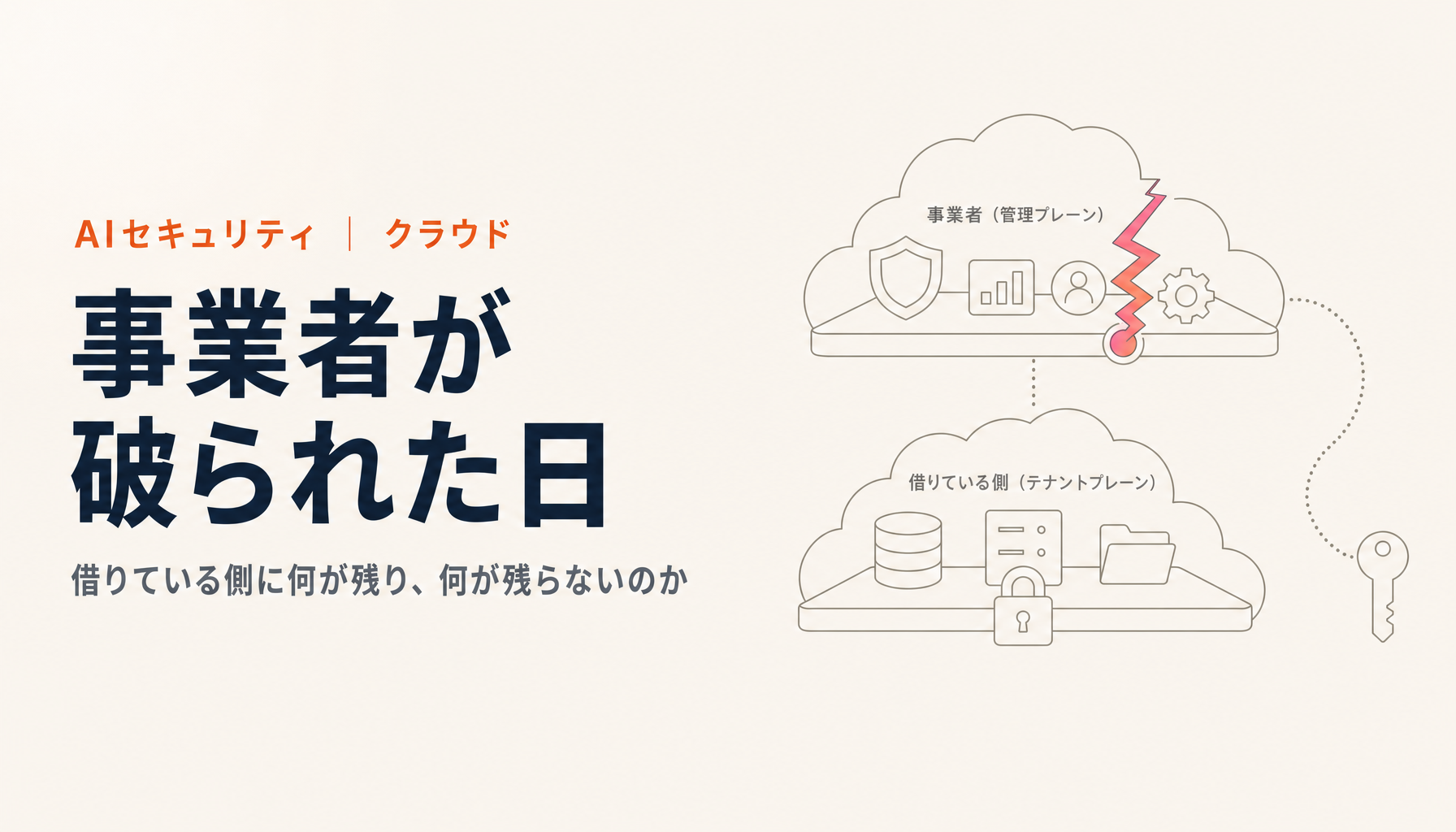
The way to avoid that is "isolation." Storing data separately for each customer (in SaaS terms, each "tenant") is called tenant isolation. Give each customer separate encryption keys, too, and separate connection credentials that cannot be used on anyone else's data. Keep the powerful credentials that can operate the whole platform few in number and tightly controlled.
Isolation has a cost. Design and operation get more complex. Still, whether one breach reaches every customer or only some of them comes down to this design. "Customer data cannot be taken across the board" is, I believe, a basic promise SaaS vendors need to make to their customers from now on.
To be clear, Plaid has not explained officially how its systems were actually designed. The principles here are general, not an assessment of any vendor's design.
What user companies can check now
There is work user companies can start today.
First, list the external services you integrate with, and for each one, write down which data you pass and which credentials you have issued. Then stop syncing items you do not need and narrow each credential's privileges to the minimum.
More important still is to ask, at design time, "if this external service were fully compromised tomorrow, what of ours would be taken?" Then decide in advance how you will quickly reissue the keys of all integrations when a compromise is announced. In a case like this one, stopping one service is not the end of it. Replacing the keys of the other services it was linked to reduces the chance of misuse. Without a written procedure, that work lands hard on the people doing it.
Reporting a leak of personal information also comes with deadlines. According to Japan's Personal Information Protection Commission, from the day the leak is discovered, a preliminary report is due within 3 to 5 days and a final report within 30 days (60 days if the leak may have been committed with unlawful intent). Please check the Commission's page for detailed conditions, such as when reporting applies.3 Have a setup in place well before you need it, so you can meet those deadlines.
A word for ordinary users as well. Leaked details such as email address, date of birth and area of residence can be combined into convincing fake emails and text messages. The vendor's announcement also warns about suspicious emails impersonating the vendor. If a message arrives with wording like "apology" or "re-authentication," do not click the link. Check through the official app or a bookmark instead.
Choose by readiness and design, not by location
None of this goes away by stepping outside SaaS. What separates safe from unsafe, as I see it, is not where a system sits but how fast vulnerabilities get fixed and whether a breach stays contained.
"On-premises is safe" is not reliable either
By now some readers will be thinking, "then isn't it safer to run everything on our own servers?" I am cautious about that idea too.
A system run on-premises leaves vulnerability response entirely to you. Delayed updates, old equipment left in place and monitoring that does not reach everywhere are not unusual. There are cases in which systems built on on-premises assumptions suffered serious damage. I covered this point in Is "On-Premises Is Safe" True? The Weaknesses of Legacy Seen Against the Cloud.
What matters is not where a system sits. It is whether you have three things in place.
The first is a setup that responds to vulnerabilities quickly: learning of a vulnerability early, judging its impact and applying a fix in a short time. That time can be measured, so manage it with "days from disclosure to patch" as a metric.
The second is a strong foundation. Configure the network isolation, key management, monitoring and privilege management that cloud providers offer correctly, and you can reach a level of protection that is hard to build alone. A wrong setting, though, can become a hole. You need a way to check settings continuously.
The third is a design in which a breach does not spread: the three principles above of holding less, protecting strongly and not crossing customers.
So the answer is not "go back to on-premises." It is "use a strong cloud well, together with a setup that responds to vulnerabilities quickly."
New questions when choosing SaaS
Finally, some questions for those who choose SaaS. Selection used to center on features, price and ease of use. I recommend adding these.
- Which data does this service hold, and why? Is it designed so it need not hold it?
- Are data and keys separated per customer? Can one credential reach all customers?
- Are integration credentials narrow in privilege, short-lived and quick to revoke and reissue?
- With what setup and how quickly does the vendor respond to vulnerabilities?
- In a breach, how fast and with what content are customers informed?
Whether a vendor can answer these concretely will, I think, become the basis for trusting a SaaS. TIMEWELL provides SaaS too, and I take these questions as aimed at us as well.
Closing: from "entrust" to "choose the design"
SaaS will not die from this incident. What changes is how SaaS is chosen and built. We have entered a period, I think, in which the quality of design, "do not hold too much," "do not let a breach spread" and "fix quickly," becomes a reason to choose one service over another.
The matter is still under investigation. I will update this article as new information appears, and keep facts and general principles apart.
How to respond
Integration with external services, narrowing privileges, procedures for reissuing keys, a setup for vulnerability response: you cannot do all of it at once. Setting priorities and improving step by step is the realistic path.
TIMEWELL's WARP SECURITY supports the design and operation of security around AI and cloud use. From taking stock of integrated services and reviewing what you entrust, to preparing procedures for a compromise, we work it through with you, starting from priorities.
If you are wondering what you actually pass to external services, or what you would do first when a compromise is announced, feel free to reach out.
Footnotes
-
Plaid, Inc., "Notice of unauthorized access" (posted 13 November 2026, updated 16 November), https://plaid.co.jp/news/20261113/ , and "Apology and notice regarding the leak of information that may include personal information due to unauthorized access" (16 November 2026), https://plaid.co.jp/news/20261116/ . The date and time of occurrence and detection, the explanation of cause, the three kinds of information confirmed leaked, the 79,249 email addresses and the course of response are from these announcements. Checked by us on 19 November 2026 (in Japanese). ↩
-
KARTE status page, https://status.karte.io/ . The update of 15 November (a renewed request to invalidate integration credentials) and the undecided resumption as of 11:08 on 19 November are from this page. Checked by us on 19 November 2026. ↩
-
Personal Information Protection Commission of Japan, page on responding to leaks, https://www.ppc.go.jp/personalinfo/legal/leakAction/ . The deadlines (preliminary report within 3 to 5 days, final report within 30 days, or 60 days where unlawful intent may be involved, from the day of discovery) are from this page. Checked by us on 19 November 2026. The counts and items in user companies' announcements come from press reports quoting each company's official announcement (ITmedia, Net Shop Tantosha Forum and others, 17 to 19 November 2026). We could not directly confirm the official originals. The conditions on counts (upper limit, including duplicates) follow the wording in those reports. ↩