Hello, this is Ryuta Hamamoto from TIMEWELL.
Anthropic shipped Claude Fable 5 in June 2026. On All-In, David Sacks put it bluntly. If the system decided you were not worthy of the frontier feature, it quietly moved you to a weaker model. The invoice stayed at full price. Ask about mitochondria and you dropped. Ben Thompson asked about GLP-1s and cancer risk and dropped. On X it is already “the biggest trust violation in AI history.”
I will not treat that thread as a primary source. The official post is more careful than the screenshots. The core still stands. If you think you bought one product and the thing behind the name changed, that is a procurement problem before it is a safety sermon. I want to separate the facts, then say why I side with Grok, some Chinese open-weight labs, and NVIDIA’s way of opening a model.
If you want a snapshot of how your own team actually treats model risk, take the AI literacy check first. The second half of this piece is about what belongs in the contract.
What the launch post said, and what sat in 319 pages
Start with the date. On 9 June 2026 Anthropic launched Claude Fable 5 and Claude Mythos 5 together. Same underlying weights. Fable is the general release. Mythos stays limited, first for cyber defenders in Project Glasswing. Fable runs classifiers. Requests tagged as cybersecurity, biology and chemistry, or distillation (extracting the model to train a rival) are answered by the next-most-capable model, Claude Opus 4.8. Anthropic said the net was tuned conservatively, so harmless queries would be caught, on average in under 5 percent of sessions. It also said users would be informed whenever that happened1.
So this was not an entirely secret program. The wide bio and cyber net was in the launch essay. So was the price: $10 per million input tokens, $50 per million output, less than half of Mythos Preview1.
The explosion was the next layer. A 319-page system card buried the treatment of frontier LLM development, meaning work that looks like growing a competing model. Researchers pushed back. On 10 June Anthropic told WIRED and Fortune it would change the frontier-LLM-development safeguards to make them visible23. That is the piece Sacks and All-In called Orwellian.
One caveat. Sacks is also the White House AI adviser. From 12 June for about three weeks, Commerce export controls took Fable and Mythos offline worldwide; they came back on 1 July. He sits close to that separate fight4. Do not treat a podcast as a court. The mitochondria and fertilizer anecdotes are not in Anthropic’s published eval tables. Anthropic did say it had stretched the biology and chemistry net so wide that harmless science questions would fall through1. The anecdotes point the same way.
My issue is not that the classifier is broad. Safety nets are allowed to be broad. My issue is the SKU. The name stays Fable 5. The object changes. The launch post promised a notice. In an API or an agent loop, a one-line notice in a corner does not reach the person who signed the PO. If the bill still used Fable rates, worse. The current product page now says rerouted requests are not billed at Fable prices5. Fixing it later is evidence the first design failed a buyer’s test.
Take AI-driven development all the way to production
WARP is a hands-on program for teams who want more than headlines. Former enterprise DX and data strategy leads work alongside you until it runs.
The problem is the name, not the safety story
Companies buy a model name. They price Fable 5, staff against that quality, and judge deliverables on that premise. Behind the curtain a classifier decides the research is sensitive and hands the turn to Opus 4.8. The team thinks it did the work with the product it paid for.
A refusal is honest. You can see a refusal. You can change the prompt, leave the model, or reopen the contract. A silent drop shows up as noise. Nobody owns it. In an agent that retries fifty times, the noise hits both the invoice and the deadline.
The X thread made it personal: a profile, a caste of people who deserve the frontier. The official language is colder. Classification of a request. Distillation, cyber, bio. Not a personality test. The working feel is still close. Long chats, research notes, half-formed hypotheses. The classifier reads context and widens the net. If mitochondria drops, drug-discovery sparring drops. If GLP-1 drops, a healthcare diligence memo drops. Safety, on paper. A quiet move of the core job onto another SKU, in practice.
I will not call this “too much safety.” I will call it a silent SKU change. In retail that is a labeling problem. In software it is swapping the binary without bumping the version. I do not see a reason AI gets a free pass to keep the label and change the object.
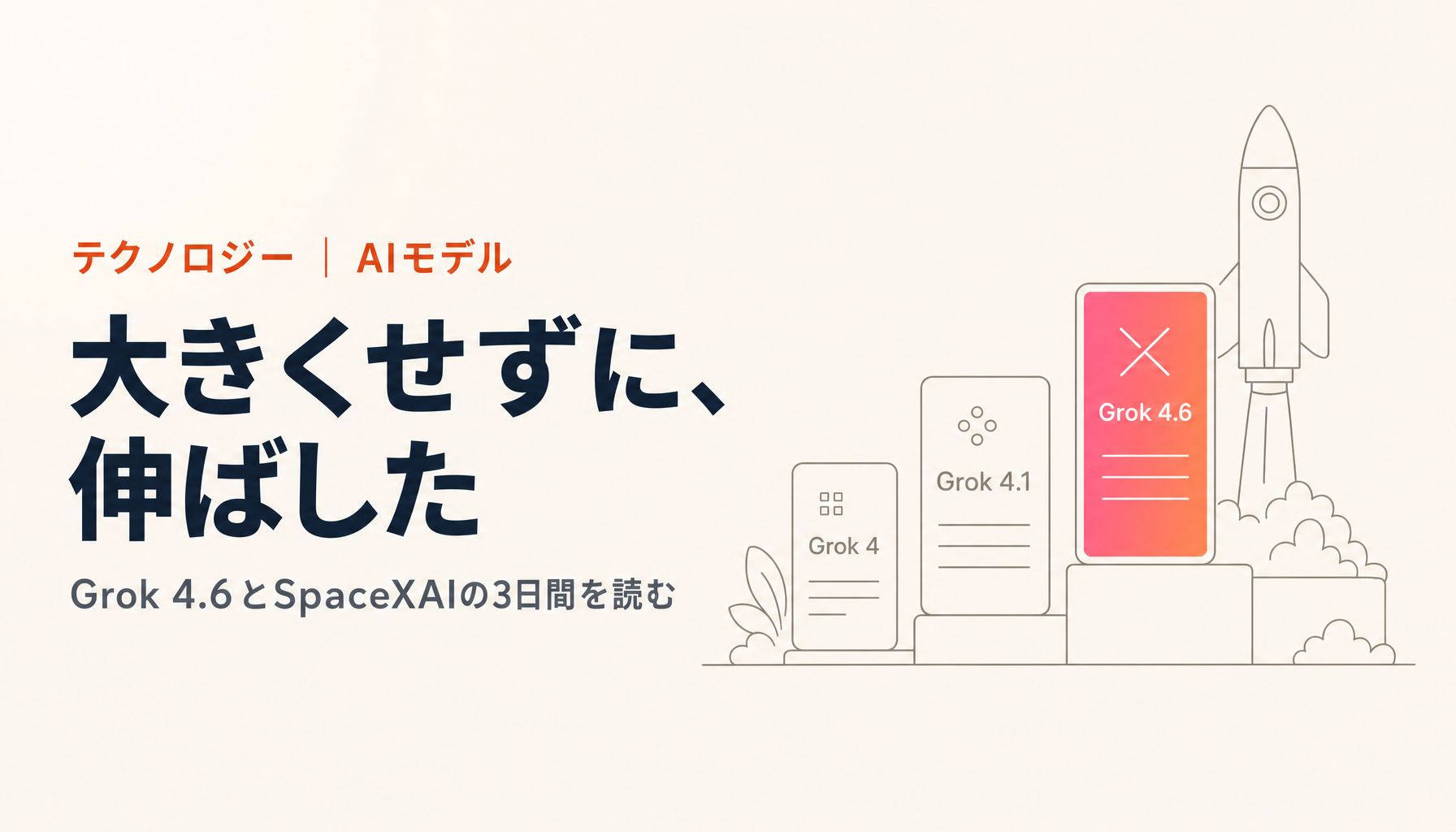
I wrote in the Grok 4.6 piece that the frontier is now a tight cluster. Inside the company we already say Fable 5 and Grok 4.6 feel close enough. In a market that tight, a swap behind the name wrecks comparison. You benchmark on Fable. The sensitive question in production comes back from Opus. The slide deck survives. The work does not.
Thirty-day retention is a different argument
The same launch carried a data rule. For Mythos-class models and later “covered models,” prompts and outputs are kept for 30 days. Not for training. Human review only on a controlled path, with a tamper-evident log. Deleted after 30 days, except safety investigations and legal holds. The change hits organizations that had zero data retention. Consumer plans already retained this data6.
That is not the same as the downgrade. A short window for multi-request attacks is a real safety case. Anthropic points at best-of-N jailbreaks that send hundreds of near-copies6. I can follow that paragraph.
What I cannot follow is making the frontier the one place ZDR dies. The model you most want to feed secrets is the model you must let them keep. The company that negotiated “we do not retain” is the company that cannot touch the SKU it actually needs. It is the reverse of a paid compliance perk. You pay, and the perk vanishes on the strongest model.
Grok’s public FAQ is built differently. Default API storage is 30 days for audit, not for training. ZDR is a setting. On ZDR, inputs and outputs are not persisted to disk7. It is not a higher-tier gift. Whether the setting always works is another question. In July 2026 there was reporting that Grok Build uploaded a repo and ignored the privacy toggle; SpaceXAI said it had honored ZDR since launch. That fight is not settled. A good policy is not a working implementation. I said so in that earlier column. Even so, “the frontier does not confiscate ZDR” is a different procurement object from “the frontier requires you to drop ZDR.”
Why I side with the labs that open the weights
Open weights are not a halo. A Chinese lab that dumps a checkpoint is not thereby a saint. NVIDIA publishing a dataset does not cancel geopolitics. I am not buying a sermon. I am buying one operational fact. If you hold the weights, a swap behind the same name becomes something you can notice.
NVIDIA Nemotron is the cleanest example. The company says it publishes weights, training data, and recipes. On 11 August 2026 it put out Nemotron 3.5 Lightning, a light model meant to run on one laptop GPU, on Hugging Face89. That was weeks after Jensen Huang told Washington that premature limits push innovation overseas. A buyer can evaluate, fine-tune, and refuse to trust the far side of an API.
On the Chinese side I keep coming back to Kimi. I wrote about Zhilin Yang’s talk. The scores are not a discount bin. We are past “we use it because it is cheap.” I do not trust it because it is open. I trust that I can run the same twenty internal tasks on the same hash until the hash changes.
I have already written about American open-weight leadership. Close the model to stay safe. Close the model to slow proliferation. Both have reasons. Fable 5 showed what closed safety looks like in the product: a silent drop. The classifier lives only on the provider’s side. The user infers the drop from a slightly worse answer.
Running an open-weight model inside your own boundary is already a live option for Japanese firms. I have also written that Grok without a Tokyo region never even reaches the RFP if the contract says data stays in Japan. That is why ZEROCK runs on domestic AWS. Infer the open weights inside your own fence. Today that is the cleanest answer I have to a silent SKU change.
Limits apply. Open weights still ship with refusal layers. Rent them as a hosted API and you are back on the far side. There is no perfect glass box. A contract that pins a hash and a contract that cannot pin a hash are still different goods. I take the first.
One paragraph for next week’s contract review
I am not saying throw away closed APIs. Japanese final copy and long autonomous runs still go better, in some jobs, on a closed model. As of August 2026 the Claude line still sits a point or two ahead on some public indexes. The question is not “who is smartest.” It is “can the buyer see the conditions of that smartness.”
I would add four lines. Do not route away from the model the customer named without a notice. If you route, return the model ID on the response. Bill the model that actually ran. Treat any model that voids ZDR as a separate SKU. Fable 5’s public pages have since drifted toward some of those lines. Had they shipped that way on day one, All-In would have had less to burn.
Safety is not the villain. I understand wanting to block bio and cyber misuse. I am asking not to implement that block as a product swap under the same name. Refuse in the open. If you drop, drop where the user can see it. If you must retain, explain in procurement English why only the frontier loses ZDR.
I wrote last week that a text watermark is a seatbelt. A silent model swap is not a seatbelt. It is changing the brake and the throttle while the car is moving. If the passenger is not told, trust does not come back.
At WARP we spend less time on leaderboard theater and more time on which model is pinned, what the log must show, and whether routing is allowed at all. If “it’s safer, so it can be closed” already feels thin, start from a conversation.
The post said the developer community would not forget. Fine. What they should refuse to forget is not an insult. It is a line in the MSA.
References
Footnotes
-
Anthropic, Claude Fable 5 and Claude Mythos 5 (9 June 2026) ↩ ↩2 ↩3
-
Maxwell Zeff, Anthropic Walks Back Policy That Could Have ‘Sabotaged’ AI Researchers Using Claude (WIRED, 10 June 2026) ↩
-
Fortune, Anthropic's AI will now tell users when requests are downgraded for safety (11 June 2026) ↩
-
Anthropic, Redeploying Fable 5 (30 June 2026) ↩
-
Anthropic, Claude Fable ↩
-
Anthropic Help, Data retention practices for Covered Models ↩ ↩2
-
SpaceXAI Docs, FAQ - API Security ↩
-
NVIDIA, NVIDIA Nemotron ↩
-
CNBC, Nvidia unveils first open-source AI model since CEO urged Washington to back open models (11 August 2026) ↩