When AI Meets Wearables: The New Accessibility Frontier
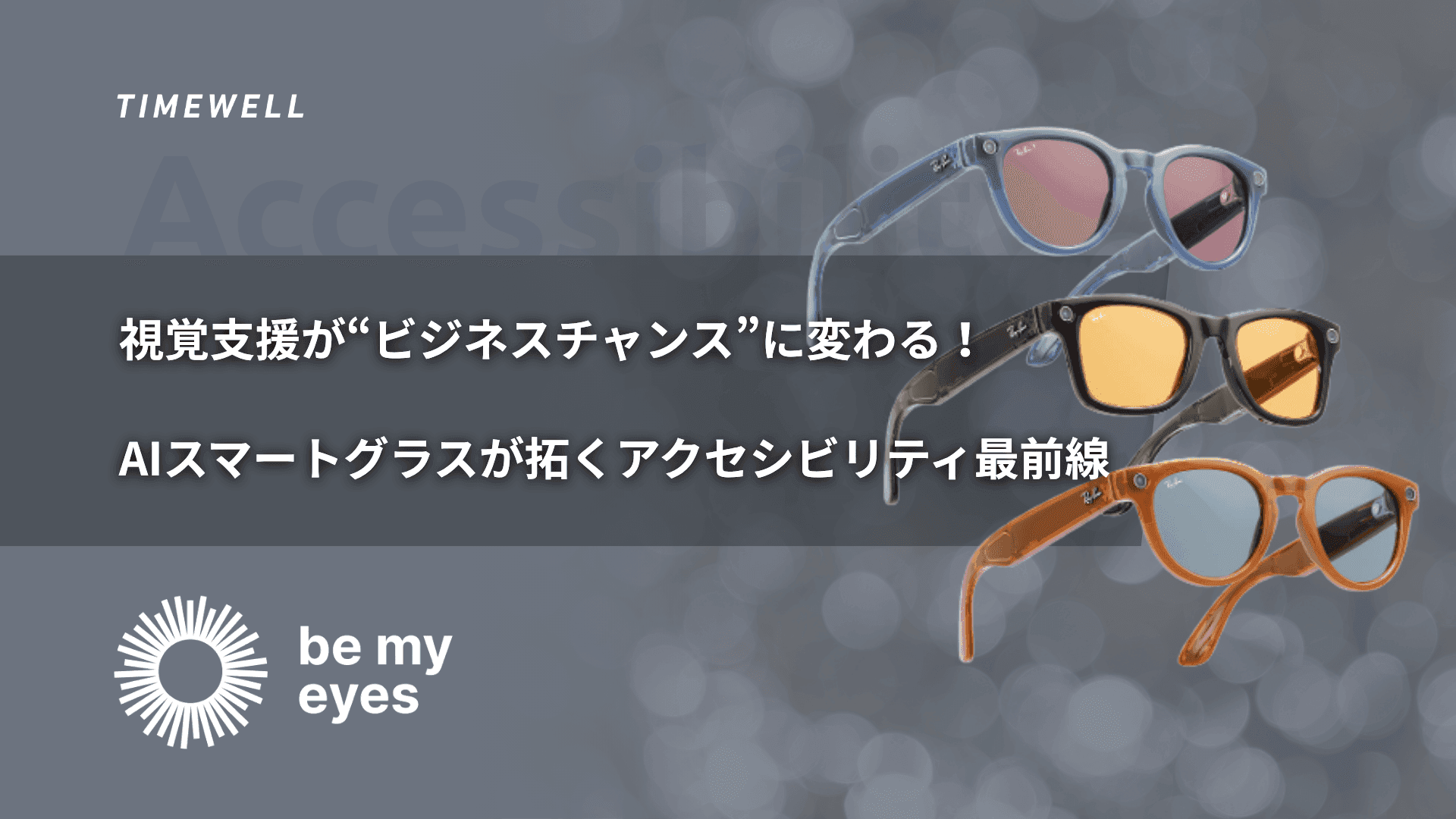
The convergence of artificial intelligence and wearable technology is driving dramatic change in the accessibility space. AI-powered smart glasses — combining voice recognition and image analysis — are opening new possibilities for people with visual impairments in their daily lives, while drawing serious attention from businesses as a genuinely transformative technology. Drawing on a Vergecast transcript, this article examines real-world use cases of Meta's AI-equipped smart glasses, the partnership between smart glasses and Be My Eyes' support service, and the privacy and usage etiquette considerations that enterprise adopters need to understand.
For visually impaired users, the adoption of smart glasses as a practical alternative to conventional assistive technology comes down to three things: cost advantage, ease of use, and the ability to support independent living. Through user stories, we look at specific scenarios — independent shopping and navigation in low-visibility environments, the experience of getting fast, accurate information through AI integration, and the sense of confidence and self-efficacy that spreads to users and their families alike.
- How AI Smart Glasses Changed Behavior for Visually Impaired Users: Real Examples and Technical Insights
- Be My Eyes × Smart Glasses: The Hybrid Support Ecosystem Where AI and Volunteers Meet
- Privacy and Etiquette: The Rules That Matter for Business Use of Smart Glasses
- Summary
Take AI-driven development all the way to production
WARP is a hands-on program for teams who want more than headlines. Former enterprise DX and data strategy leads work alongside you until it runs.
How AI Smart Glasses Changed Behavior for Visually Impaired Users: Real Examples and Technical Insights
Meta's AI-equipped smart glasses deliver a cost and usability advantage over conventional assistive technology that is hard to overstate. Jason Valley, a user with visual impairment, describes the difference clearly: compared to expensive dedicated devices like OrCam, he was able to acquire refurbished Meta glasses at a fraction of the cost, and the impact on his daily life was immediate. His specific example: being able to read menu text independently at a restaurant, without asking for help — eliminating the awkwardness and dependence that had been unavoidable before.
On the technical side, the glasses combine high-accuracy image analysis with a fast text-to-speech engine that delivers information at the exact moment it's needed. Recognition of building facades, product labels, and printed text — with contextual commentary attached — gives users a substantially richer understanding of their physical environment. Users who face challenges like reduced visibility at close range can be guided by the AI to an optimal distance and angle, receiving accurate information without the guesswork.
Key points from real-world use:
- Smart glasses available at accessible price points are spreading rapidly as a visual assistance option
- High-accuracy, real-time AI image analysis means users get the information they need immediately
- Independent living is meaningfully enhanced — users make their own decisions, and the burden on family members and caregivers is reduced
Jason describes his specific condition — NAION (non-arteritic anterior ischemic optic neuropathy) — in concrete terms: no light perception in one direction in his left eye, and loss of central vision in his right eye. Smart glasses allowed him to move past the conventional assistive framework entirely, managing his own information needs day-to-day and regaining the confidence to go out independently.
The interface design also matters: text size, background contrast, voice tone, and speech speed are all adjustable to individual preference, closing the information gap that visually impaired users have long experienced. For companies, this kind of universal design thinking represents both a CSR commitment and a practical path to broader consumer trust.
Real-time AI assistance extends well beyond text reading — combining location data and environmental context into a dynamic support system that works in complex urban environments. Navigating public transit, moving between stores while shopping, finding directions in an unfamiliar city: in all these situations, the ability to get accurate information instantly has real significance for independent living.
Be My Eyes × Smart Glasses: The Hybrid Support Ecosystem Where AI and Volunteers Meet
Smart glasses' impact goes beyond hardware advances alone. In the visual impairment support space, the convergence of technology and human connection is producing something genuinely new. Be My Eyes is the clearest example. CEO Michael Buckley describes in his interview why bidirectional support — between visually impaired users and volunteers — is so important to the model.
Be My Eyes connects visually impaired users with volunteers in real time through smartphones and smart glasses. A user opens the app, starts a conversation through the screen, and gets help with whatever they're facing — checking product packaging, navigating an ATM, making everyday decisions. Buckley's growth story: 10,000 users joined in the first week after launch; today the platform connects over 900,000 users with more than 8.8 million volunteers worldwide.
The distinctive feature of Be My Eyes is the hybrid model: AI-powered "visual interpretation sessions" combined with direct human communication. AI immediately analyzes camera footage and provides baseline information; when more detail is needed, a volunteer connects and provides specific, expert explanation. Fine print on a product label, safety instructions — the AI reads the standard information, and if the user needs more, a volunteer responds. Privacy, speed, and human warmth converge in a single interaction.
Be My Eyes is also actively expanding its smart glasses integration. In collaboration with Meta, work is underway to implement direct volunteer connection from the glasses themselves — addressing use cases where holding a smartphone isn't practical, for busy professionals or users on the go. In airports and large office buildings, visual information, wayfinding guidance, and emergency support could be delivered more seamlessly than ever. The implications for enterprise accessibility programs and public infrastructure support systems are significant.
Key requirements for technology adoption:
- Hybrid support combining instant AI visual analysis with detailed human volunteer follow-up
- Seamless on-site support through smart glasses integration
- Flexibility for users to choose between privacy-respecting AI and direct human communication
Buckley describes ambitions beyond the core accessibility use case: international expansion and application as an enterprise customer support tool, making the model relevant to workplace diversity initiatives and the broader future of work.
User feedback from the field: people consistently report not just greater confidence, but measurable improvements in daily efficiency. One user described using public transit alone for the first time — evidence that this is not just a technology story, but a story about autonomy and social participation. For companies, this kind of user experience data is a source of genuine product improvement insight.
Privacy and Etiquette: The Rules That Matter for Business Use of Smart Glasses
As smart glasses and AI technology spread rapidly, diversity of use cases brings new challenges: privacy protection and usage etiquette. For business users in particular, the concern that personal or confidential information might be exposed is persistent. The impact on private spaces — home use, intimate personal situations — is a real issue that can't be dismissed.
A question on The Vergecast hotline highlighted the risk: in intimate domestic situations — private moments between partners, bathrooms, bedrooms — the always-on cameras in smart glasses could automatically record information the user never intended to capture. For technology companies, this underscores the need for clear usage guidelines, physical off switches, and visible LED indicators that make recording status obvious. Users themselves need to actively manage device on/off states and maintain the balance between convenience and privacy.
In business settings, smart glasses may be used in meetings and presentations — where the privacy of every participant must be considered. Preventing confidential information from being inadvertently recorded requires establishing usage rules in advance. For personal use, a clear distinction between private and public spaces, and careful timing of device use, is essential.
The key points:
- Hardware-level privacy protections — physical off switches, LED indicators — are advancing as smart glasses proliferate
- Business use requires clear guidelines: handling confidential information, recording risks in meetings, operational rules that are understood and followed
- In home and private settings, prior agreement with partners and household members is necessary to maintain the balance between device use and privacy
"Digital hygiene" — the user's own awareness of information management — is central. A business traveler using smart glasses at a hotel or office needs to turn the device off or store it appropriately once they've gotten the information they need. Failing to do so increases the risk of unintentional information leakage, with real consequences for corporate compliance and brand reputation.
As next-generation technology spreads, establishing robust privacy protection and usage etiquette is essential on both the development and user education sides. Companies and developers should adopt designs that maximize user convenience while fully respecting individual privacy and security — and provide practical usage guidelines based on real-world scenarios. Meeting this standard is what builds product credibility.
Privacy concerns also directly affect the consumer-company relationship. As regulations on personal data handling tighten, whether smart glasses and similar technologies comply with legal and industry standards becomes a critical factor for CSR and brand trust. Companies must balance the risks and benefits of technological innovation carefully — creating environments where users can adopt new technology with confidence.
Summary
This article examined how the latest AI-equipped smart glasses are transforming life for visually impaired users, and how the Be My Eyes partnership creates a comprehensive support system that enhances user autonomy and reduces the burden on families and caregivers. It also made clear why smart glasses adoption matters for businesses as a meaningful element of diversity management and CSR strategy — while highlighting the new challenges of privacy protection and usage etiquette that must be addressed.
The convergence of smart glasses and AI goes beyond technological innovation, reshaping daily life and the business environment in ways that compound as the technology matures. The expectation going forward is continued development toward safer, more usable devices — and flexible service delivery that responds to the specific needs of individual users. For business professionals, these technologies and support systems represent both a new market opportunity and a genuine contribution to social value.
Reference: https://www.youtube.com/watch?v=pgu0a9QK75E
Streamline Event Management with AI | TIMEWELL Base
Struggling with large-scale event operations?
TIMEWELL Base is an AI-powered event management platform.
Track Record
- Adventure World: Managed Dream Day with 4,272 participants
- TechGALA 2026: Centrally managed 110 side events
Key Features
| Feature | Result |
|---|---|
| AI page generation | Event page completed in 30 seconds |
| Low-cost payments | 4.8% fee (industry-leading low rate) |
| Community features | 65% continue engaging after events |
Feel free to reach out for a consultation on streamlining your event operations.