This is Hamamoto from TIMEWELL.
Selecting the Right Audience Is Essential from the Planning Stage
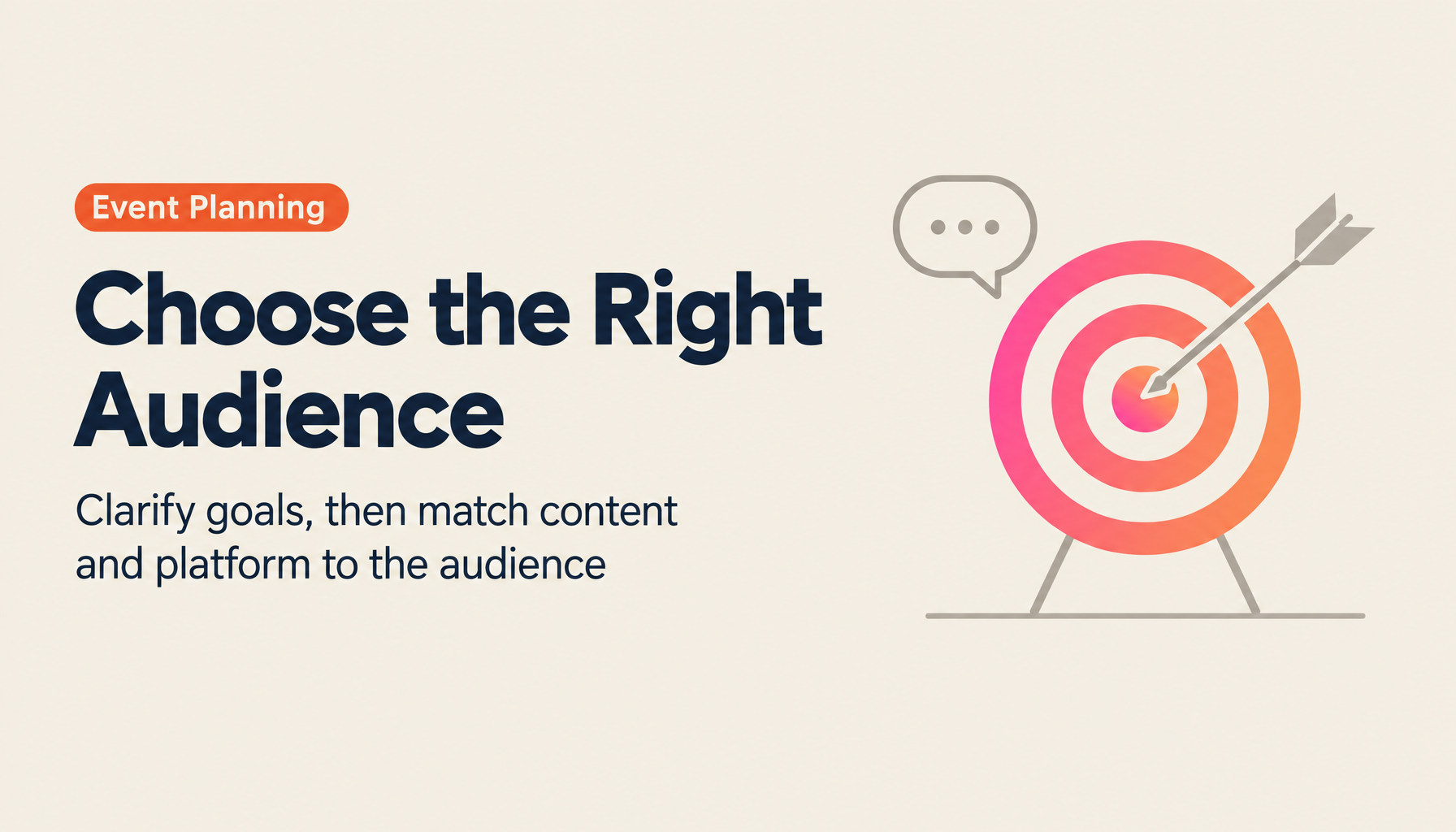
Getting your target audience right in the planning stage is non-negotiable for online event success. By clearly defining your event's purpose and developing a deep understanding of your target audience's needs and challenges, you can run far more effective events. This article covers the key tips and important considerations for selecting the right target audience for your online event.
Topics covered:
- Clarifying the purpose of your event
- Developing a concrete understanding of your target audience
- Choosing the right platform and content
Step 1: Clarify the Purpose of Your Event
The first step in selecting a target audience for an online event is to clearly define what you want to achieve. Why are you hosting this event, and what outcomes are you aiming for? Answering these questions concretely is what gives your audience selection process direction.
- Clarify whether you're aiming to raise awareness of a new product or service, or to deepen engagement with existing customers.
Looking to optimize community management?
We have prepared materials on BASE best practices and success stories.
Setting KPIs
- Quantify your post-event goals and set KPIs (key performance indicators).
- Use your stated purpose to narrow down the attributes and characteristics of the target audience you're looking for.
By defining your event's purpose this way, you can focus your discussion around the right audience profile and choose a theme that is genuinely compelling and meaningful to that group.
Step 2: Develop a Concrete Understanding of Your Target Audience
When selecting your target audience, you need to go beyond surface-level demographics and develop a genuinely deep understanding of who you're trying to reach. In addition to basic information such as age, gender, and profession, it's important to dig into the challenges and needs your target audience faces.
Understand Demographics
- Understand the demographic attributes of your target audience — age, gender, location, profession, income level, and so on.
- Analyze psychographic attributes such as interests, behavioral tendencies, and lifestyle.
- Identify the problems and challenges your target audience faces, and consider what value your event can provide.
Using existing customer data and conducting market research are effective ways to gather this information. With the data in hand, segment your target audience and take a personalized approach — this is what drives online event success.
Step 3: Choose the Right Platform and Content
Once you've defined your target audience, the next step is to select the platform and content that best fit that audience. Different social media platforms and online event tools each have their own characteristics and user demographics.
- Research which social media platforms and tools your target audience uses most, and choose the most appropriate channel.
- Understand the characteristics of your chosen platform and adopt communication methods that work well in that environment.
Deliver Content That Resonates
- Providing valuable content that genuinely resonates with your target audience is what drives engagement.
After the event, it's equally important to analyze participant data and gather feedback. Running a continuous PDCA cycle — plan, do, check, act — is what drives ongoing improvement and leads to online event success.
Summary
The key to selecting the right target audience for your online event is to clarify your event's purpose and develop a deep understanding of your audience's needs and challenges. Choosing appropriate platforms and content, and continuously improving through a PDCA cycle, is what ultimately makes online events succeed. Apply the principles in this article to build a more effective target audience selection process.
![Three Must-Do Steps to Take Parental Leave Even During Your Busiest Season [Pre-Leave: Personal Account Part 2]](/images/columns/3.png)
![[October Update] Upcoming Accelerator Program Schedule](/images/columns/ainews-accelerator/cover.en.png)