Technology Is Evolving at an Accelerating Pace
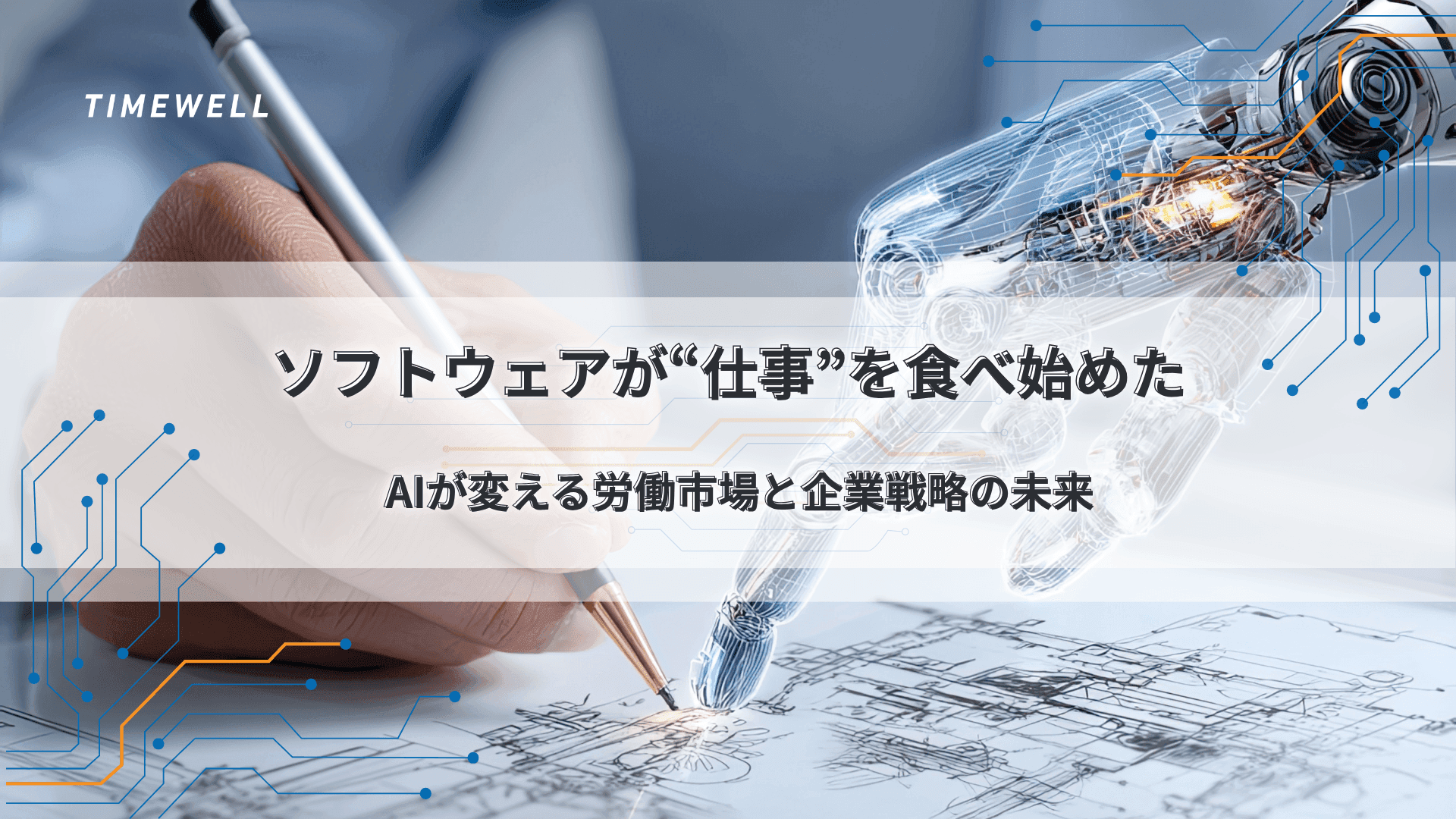
Technology is evolving at an accelerating pace, and the latest marketing capabilities Google has unveiled are forcing a major shift across the industry. The AI features announced at Google Marketing Live 2025 are expected to bring changes that fundamentally rethink marketing approaches, and their impact on business going forward is all but certain.
Marketing professionals at companies have traditionally spent enormous amounts of time and effort across the full spectrum — from awareness campaigns through communication, distribution, and transaction. But AI is now automating many of these functions, and the "standard" of what marketing looks like is changing. Marketing strategist Kazuki Nishiguchi has stated that "within five years, roughly 80% of marketing work will likely disappear," and a future where the structure of work itself is being reorganized is coming into view.
This article explains how Google's latest AI capabilities are transforming marketing, and uses the "5 Distances" framework Nishiguchi advocates — awareness, communication, distribution, transaction, and latent need recognition — to map their impact. As the industry stands at a genuine inflection point where conventional wisdom is being rewritten, we offer perspectives that no one thinking about future business strategy can afford to miss.
- Google's AI Revolution and the Transformation of Marketing Structure
- Reading the Change Through 5 Distances: How AI Is Redesigning the Customer Experience and Purchase Process
- Is the Marketer's Role Disappearing? The Value That Remains in the AI Era and the Capabilities Required
- Summary: Will You Be Swept Away by Change, or Turn It into Growth? What Companies Must Decide Now
Looking for AI training and consulting?
Learn about WARP training programs and consulting services in our materials.
Google's AI Revolution and the Transformation of Marketing Structure
The latest AI features Google announced at its recent Marketing Live event were not just updates — they represent a challenge to the very structure of how marketing work gets done. Through this announcement, Google made clear its direction: to automate and optimize the full sequence of marketing processes — from advertising creation and information delivery, to the search experience and decision-making support — with much greater precision.
The first development to pay attention to is the change in the search experience. When a user types keywords into a search box, instead of related information appearing in sequence as before, an "AI Overview" reads the intent behind the query and presents summarized, relevant information. This eliminates the need to visit multiple sites to gather information, dramatically compressing the steps to a decision. Because search is the critical first touchpoint in the purchase process, changes here will have a major impact on companies' overall strategy.
Next is the automation in advertising creation. This announcement emphasized that creative generation for banner ads and search ads will be automated by AI. The process of marketing teams and outside creatives developing messaging strategies, writing copy, producing multiple variations, and preparing dozens of ad creatives for A/B testing — all of this will be generated and optimized in one pass by AI. The example Google presented of "automatically creating 10 banner variations" symbolizes the potential disruption of an industry built on specialization and labor-intensive production.
Furthermore, this announcement goes beyond advertising and search. The important point is that it represents an effort to redesign the entire customer experience from product awareness through to purchase. When framed through the "5 Distances" — awareness, communication, distribution, transaction, latent need recognition — that Nishiguchi advocates, it becomes clear that AI is shortening each distance and redefining the value exchange process between companies and customers.
Specifically: AI reading ahead of search intent to deliver information can significantly shorten the "awareness distance"; automated ad creative generation can compress "communication distance"; advances in e-commerce and logistics optimization can reduce "distribution distance"; the spread of seamless payments can eliminate "transaction distance"; and improvements in recommendation precision can shorten "latent need recognition distance."
Taking an educational content service as an example: traditionally, a user needed to go through multiple stages — learning about the service, comparing and evaluating options, navigating to a sign-up page, and then building motivation to learn after purchasing. But with AI, the full sequence — search, information acquisition, comparison, sign-up, learning design, and continued support — can be optimized end-to-end. Companies' human resources are dramatically reduced, while users gain a stress-free purchase and learning experience.
These changes, while generating anxiety among many marketing professionals that "my role will become unnecessary," also create opportunities for new value creation. Experienced specialists in the marketing field are the first to strongly sense that this change has the potential to fundamentally shake the existing value exchange model, and many describe it as "an inflection point where the structure of the industry itself is changing."
The key point to take away can be captured in one line:
- With advances in search prediction and automatic ad generation, more than 80% of marketing work could be automated within a few years.
The marketing of the future — as AI utilization becomes more sophisticated — will evolve beyond labor reduction into a "value delivery model" that captures customers' latent needs in real time and makes optimal recommendations. Companies have entered a stage where they need to shift away from dependence on the traditional advertising-centric model toward a new business model that treats the customer experience itself as the value.
Reading the Change Through 5 Distances: How AI Is Redesigning the Customer Experience and Purchase Process
The essence of marketing strategy lies in the entire value exchange process: how a product or service is communicated, understood, accepted, and ultimately converted into a transaction. Mapping Google's latest updates against Nishiguchi's "5 Distances" framework makes it even clearer how AI is shortening and redefining each distance.
The first is Awareness Distance — how far a user is from knowing a product or service exists. Traditionally this required entering keywords into a search engine and comparing multiple sites to gather information. Going forward, "AI Overview" will read ahead of search intent and display summarized information, giving users an at-a-glance overview. The dramatic reduction in information discovery effort significantly shortens the awareness distance — with major implications for company strategy.
The second is Communication Distance — how far a company is from effectively conveying its value and service content. Traditionally this centered on manual work: banner creation, copywriting, producing multiple variations, and testing. But we are approaching a stage where AI can automatically generate the full sequence — message point extraction, copy generation, visual design, targeting, and distribution optimization. When a new product launches, ads optimized for each region and target audience created instantly by AI and deployed is a future scenario that is gaining credibility.
Distribution Distance is how far a user is from accessing a product or service. Online platforms and e-commerce have dissolved geographic constraints, but AI is now proposing optimal products based on preference data and purchase history, building pathways to "buy the moment you know it exists." Combined with advances in logistics, the experience of "I want it and it arrives immediately" is already a reality in some cases, and the very concept of distribution is starting to change.
Transaction Distance is the gap between a purchase decision and completed payment. Previously this involved friction like entering card information or making bank transfers, but in recent years the spread of Apple Watch, smartphone biometric authentication payments, and transit-gate-style payments means users are approaching a world where they can "buy without thinking about payment." A friction-free purchase experience is a major competitive advantage for companies.
Finally, Latent Need Recognition Distance is how far a user is from recognizing needs they don't yet know they have. Traditionally the dominant approach was to "create awareness" through advertising and content. Going forward, AI will analyze behavioral data and past selection patterns to proactively recommend the products and services needed. For example, a 20-something business professional working in finance might have the optimal learning content surfaced by AI before they even recognize the skills they need for their career. Companies are increasingly expected to play the role not of information provider but "companion that supports growth and behavioral change."
To summarize how each of the 5 Distances is being shortened:
- Awareness Distance: AI Overview reads ahead of search intent and presents optimized information
- Communication Distance: Automatic ad creative generation accelerates value communication
- Distribution Distance: Online platforms and logistics optimization normalize instant purchase
- Transaction Distance: Seamless payment eliminates "the effort to buy"
- Latent Need Recognition Distance: AI proactively surfaces pre-conscious needs
These changes have the potential not just to reduce marketer workloads but to redesign the entire process through which companies build relationships with users. The domains AI takes on will continue expanding — from ad creation to customer touchpoint optimization to reading ahead of needs.
Is the Marketer's Role Disappearing? The Value That Remains in the AI Era and the Capabilities Required
The AI marketing features Google announced are not merely technological progress — they have the impact of forcing companies to redesign their business models. Nishiguchi, who has produced results on the front lines of marketing for many years, points out that work that previously required significant time and effort can now be replaced in an instant by AI advances. As AI enters a stage where it analyzes vast amounts of data in real time, not just to automatically generate optimal advertising creatives, but to read ahead of user behavior history and intent and even visualize latent needs, the very definition of what marketing work is is changing.
The travel industry transformation is one symbolic example of this future. Traditionally, users had to research a destination, compare options, check reviews, and complete a booking process. Going forward, AI is expected to integrate users' preferences, past travel history, purchase behavior, and external data like weather and crowd conditions to automatically generate optimal travel plans. Further, as smartphones and wearables enable voice recognition and facial authentication payments to seamlessly connect booking, payment, and on-location service access, users will be freed from the "search → select → arrange" process and transition to a lifestyle focused on "experiencing the experience itself."
The same acceleration is occurring in finance and education. In finance, AI is evolving to analyze the financial, marketing, and management knowledge needed for career development and recommend personalized learning content — before young business professionals even recognize the skills they need to grow. In education, AI-navigated learning that automatically rebuilds curriculum based on learning progress and proficiency speed, reinforcing areas of shallow understanding, is becoming mainstream. These represent a transition to an era where companies don't just deliver information but "deliver needed value before users realize they need it."
These changes have major implications for company strategy as well. As AI takes over work, the marketer's role shifts from "task executor" to "value designer." That means what becomes required is not the efficiency of information dissemination and ad creation, but the ability to design the entire customer experience and map out where revenue opportunities arise in the business model. As AI reshapes markets, staying tethered to the traditional advertising-dependent model will not sustain competitive advantage — companies need to transform their revenue structures themselves. A mindset for establishing revenue sources outside of advertising — brand experience design, customer lifetime value improvement, community-based value creation — becomes indispensable.
At the same time, anxiety in response to change is real. For marketers who have built expertise over many years, AI-driven task automation raises genuine concerns that "my value will be lost." But technological innovation is not a moment of taking away human roles — it's a moment of redefining them. Marketers need to shift toward "integrative thinking" — the ability to read the results of AI-executed initiatives and apply them to overall strategy — and toward "concept creation," a domain that is difficult for AI to replace.
This Google announcement contains an extremely important implication for companies: in a future where AI utilization advances, the redesign of role division — "which work to entrust to AI, and which domains for humans to own" — is unavoidable. This is not merely about operational efficiency; it goes to the core question of how a company creates value and where it builds competitive advantage. AI is repainting the premise of marketing and generating new value creation opportunities. The critical thing is to view this change not as a threat but as a growth opportunity — and to redesign the form of value delivery and reason for existence in the AI era.
The next few years will be a critical juncture for companies in determining the direction of their business. Whether to pivot toward AI-native business model construction, maintain existing models while gradually transforming, or enter entirely new value creation domains — competitive position will change dramatically depending on the choice. In the AI era of marketing, what is being asked is not how to adapt to technological evolution — but how to redesign your company's unique value.
Summary: Will You Be Swept Away by Change, or Turn It into Growth? What Companies Must Decide Now
The latest AI marketing capabilities Google has unveiled dramatically shorten the touchpoints between companies and users across awareness, communication, distribution, and transaction — and the scale of the impact is clearly demonstrated through the lens of Nishiguchi's "5 Distances" framework. As processes that used to require considerable effort and time are entrusted to AI, a future where advertising operations, creative production, customer touchpoints, purchase behavior, and payments are all optimized almost automatically is gaining real credibility.
These changes redefine the nature of marketing work itself and represent a major turning point for roles that have depended on traditional functions. At the same time, alongside the "things being taken away" by automation, there is simultaneously a "things being created" dimension — new markets and new value creation opportunities. What matters is the perspective from which companies and marketers view this transformation.
What is called for now is not resistance to change but a mental shift toward next-generation marketing strategy that takes AI as a given. How to maximize unique value that AI cannot replicate, while improving operational efficiency, will determine competitiveness going forward. This initiative is not just a feature addition — it is only the beginning of a fundamental rewrite of how marketing structure and customer touchpoints work.
How AI will change market environments and consumer behavior. And identifying where new business opportunities will emerge. Right now is precisely the time for companies to face their own future vision and begin preparing to evolve toward an AI-era business model. Whether this change is seen as a "threat" or embraced as a "catalyst for growth" — that choice will determine where companies stand several years from now.
Source: https://www.youtube.com/watch?v=ALHuW4WhHp0
Streamline Event Management with AI | TIMEWELL Base
Struggling to manage large-scale events?
TIMEWELL Base is an AI-powered event management platform.
Proven Results
- Adventure World: Managed a Dream Day event with 4,272 attendees
- TechGALA 2026: Centrally managed 110 side events
Key Features
| Feature | Benefit |
|---|---|
| AI Page Generation | Event page ready in 30 seconds |
| Low-Cost Payments | 4.8% transaction fee (among the lowest in the industry) |
| Community Features | 65% of attendees continue engaging after the event |
Feel free to reach out to discuss how we can make your event operations more efficient.
Related Articles
- Accelerating Growth in the AI Semiconductor Market: Latest 2026 Trends and Strategies from TSMC and NVIDIA
- ElevenLabs 2026: Valuation Reaches $11 Billion, ARR Surpasses $330 Million, Dominating the Voice AI Market
- From 2026 to 2027: The Reality of AGI's Arrival, Anthropic CEO Confident It's "Within a Few Years"