AI app generation tools are making bold claims — here's what they actually produce
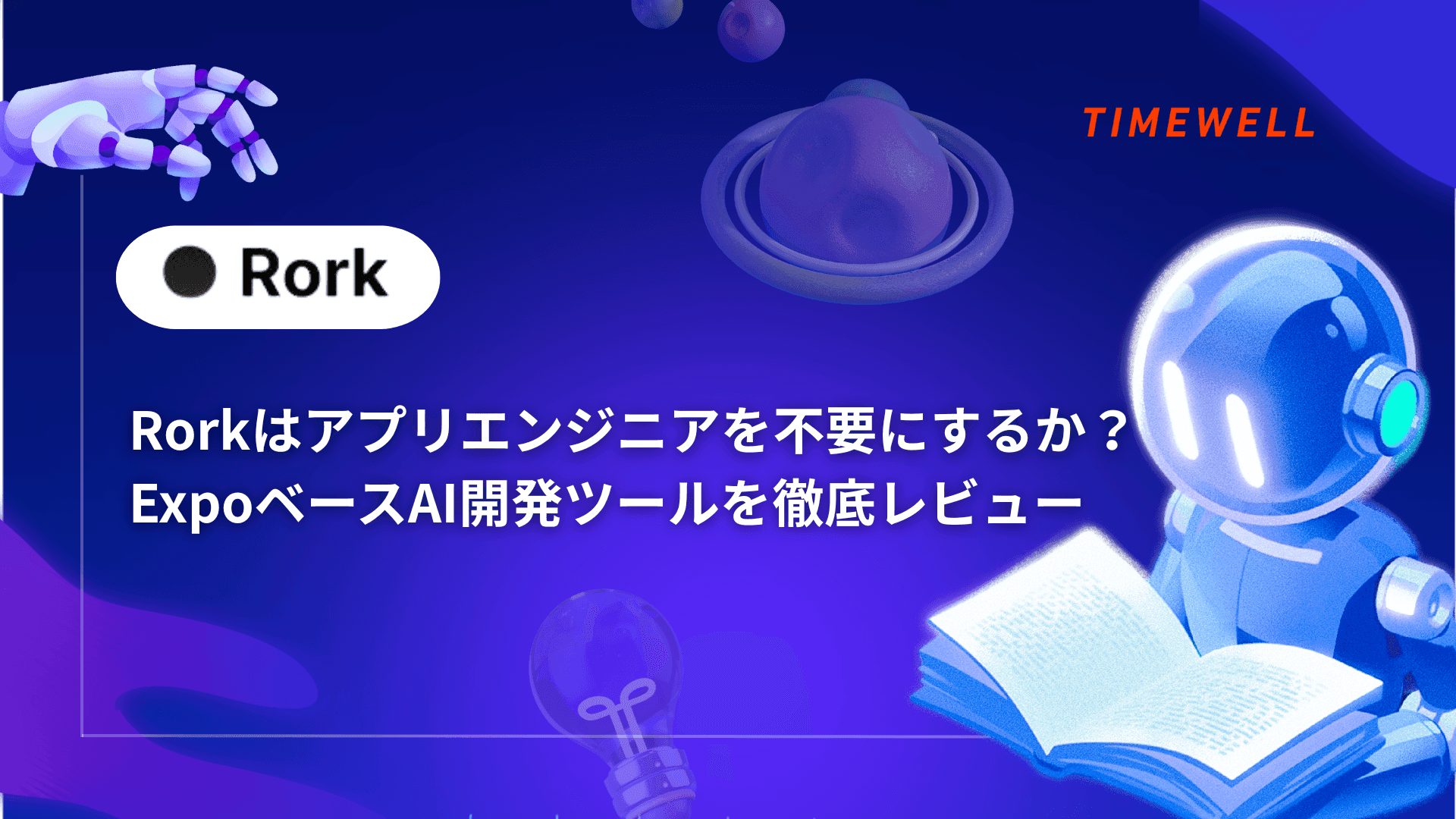
Rork is an AI-driven app development tool that generates iOS and Android code from plain text instructions. The coverage has been dramatic: some outlets ran "app engineers are finished" as their headline. Professional developers pushed back. The truth, as usual, is somewhere more interesting than either position.
This review approaches Rork from the perspective of an experienced Expo and React Native developer — someone who knows the underlying technology well enough to evaluate what's actually being produced.
What Rork is and how it's priced
Rork operates on a chat interface: describe what you want, and the system generates code. The aesthetic and workflow closely mirror BoltNew, a competing service with similar capabilities. Both use conversational AI to translate natural language into runnable code.
Pricing (approximate):
- Basic plan: ~¥3,000/month
- Standard plan: ~¥7,000/month
- Plans scale by message volume — higher tiers buy more messages, not lower per-message cost
Free tier constraints are significant: 30 messages per month, 5 per day. Six days at maximum daily usage exhausts the monthly allotment. For serious development work involving iterative refinement (which is the only way to use a tool like this effectively), these limits are prohibitive.
BoltNew uses token-based consumption rather than flat message counts, with volume discounts at higher tiers. For users who need flexibility, BoltNew may offer more practical value.
Code download: Only available on paid plans. Free users must work within Rork's platform without the ability to export and modify generated code externally.
The underlying technology: Expo and React Native
Generated code analysis confirms Rork is building on Expo, a framework built on top of Meta's React Native. This means:
- JavaScript/React-based development
- Simultaneous iOS and Android targeting from a single codebase
- Expo Go for instant device preview via QR code
- Claude (Anthropic's model — specifically versions identified as Claude 3.5 Sonnet and Claude Opus 4.5) handling code generation
Expo has improved dramatically over the years. Early React Native had a reputation for instability — frequent crashes, difficult environment setup, library compatibility nightmares. Expo has resolved much of that. But Expo still has specific constraints:
Native builds: Apps using OS-specific libraries (camera, GPS, advertising SDKs) require a native build process — converting Expo code into platform-specific Xcode or Android Studio projects. This is more complex than standard Expo Go preview and requires developer knowledge to execute correctly.
Platform-specific behavior: Mobile development has categories of problems that don't exist in web development: library compatibility across iOS/Android versions, OS update impacts, performance characteristics that vary by device. When these surface in Rork-generated code, a developer still needs to diagnose and fix them.
Demo results: what Rork actually generates
Weather app (simple prompt): Rork generated a functional-looking UI with weather display. What failed: text overflowing the screen boundary, no scroll functionality on the main view. These are basic UX problems. The output is impressive as a starting point; it would not survive App Store submission as-is.
Emotion tracking app (structured prompt — "three tabs: Record, Calendar, Settings"): Using NativeWind (Tailwind CSS for React Native), Rork produced a three-tab interface that looked reasonably polished. What failed: recorded data didn't persist across app restarts, specific screens lacked scroll. The structural complexity was handled; the data persistence — one of the most fundamental requirements of any record-keeping app — was not.
Both demos illustrate the same pattern: Rork produces a workable prototype that needs substantial additional work to become a shippable product.
The App Store wall
This is the most important practical consideration, and it is non-trivial.
Both Apple's App Store and Google Play have explicit quality standards for submissions. Apps that:
- Display only basic, freely available information
- Lack clear user value beyond what a browser already provides
- Have unresolved UI issues (text overflow, missing scroll)
- Fail to persist user data
...will be rejected. This is not an edge case — it is standard review behavior for apps at the quality level Rork generates in initial output.
Getting an app through review requires addressing all of the above, plus:
- Privacy compliance
- Platform UI guideline adherence
- Stability across device types and OS versions
- Demonstrated unique value
All of this requires human engineering judgment. Rork doesn't take you there.
Will AI replace app developers?
The honest answer: Not with Rork, not in its current form. But the question being asked is wrong.
The right question is what AI development tools change about the economics and skill requirements of mobile app engineering.
What is changing:
- Routine code generation is increasingly automatable. Boilerplate, standard UI patterns, common functionality — all of this is within scope for current AI tools.
- Prototyping speed has increased dramatically. Non-engineers can produce functional-looking mockups. Engineers can validate ideas faster.
- The knowledge premium is compressing. Knowing syntax and common patterns matters less when a model can generate both.
What is not changing:
- Requirements definition and system design
- Complex integrations (payments, real-time data, offline functionality)
- UI/UX craft at the detail level that passes review
- Quality assurance across device/OS combinations
- App Store review navigation
- Post-launch maintenance and performance optimization
The pattern is consistent with what AI is doing across knowledge work generally: the value of knowing things is declining relative to the value of judgment, design, and the ability to navigate complex systems. App engineers who understand what to build and why — and can use AI to generate the how faster — become more valuable. Engineers whose primary contribution was writing standard code faster than others become less differentiated.
Summary
Rork is a useful prototyping tool powered by strong AI (Claude 3.5 Sonnet/Opus) generating Expo-based React Native code. For validating ideas quickly, it delivers. For producing shippable products, it does not — the output requires substantial engineering work to reach App Store review standards, and the free tier's message limits make iterative development impractical.
App engineering is not at risk of elimination by Rork. It is at risk of transformation: engineers who adapt their skills toward higher-value work (design, architecture, AI direction) and away from routine code production will thrive. Those who don't will find the lower end of the market increasingly contested.
The appearance of tools like Rork is itself the signal. Engineers who treat it as an alarm — prompting skill development — are responding appropriately. Those who dismiss it as hype are not.
Take AI-driven development all the way to production
WARP is a hands-on program for teams who want more than headlines. Former enterprise DX and data strategy leads work alongside you until it runs.
Streamline event operations with AI | TIMEWELL Base
Struggling to manage large-scale events?
TIMEWELL Base is an AI-powered event management platform.
Proven Track Record
- Adventure World: Managed Dream Day with 4,272 participants
- TechGALA 2026: Centrally managed 110 side events
Key Features
| Feature | Impact |
|---|---|
| AI Page Generation | Event page ready in 30 seconds |
| Low-cost payments | 4.8% fee — industry's lowest |
| Community features | 65% of attendees continue networking after events |
Ready to make your events more efficient? Let's talk.