Technology shapes how we work, live, and think — often faster than we notice
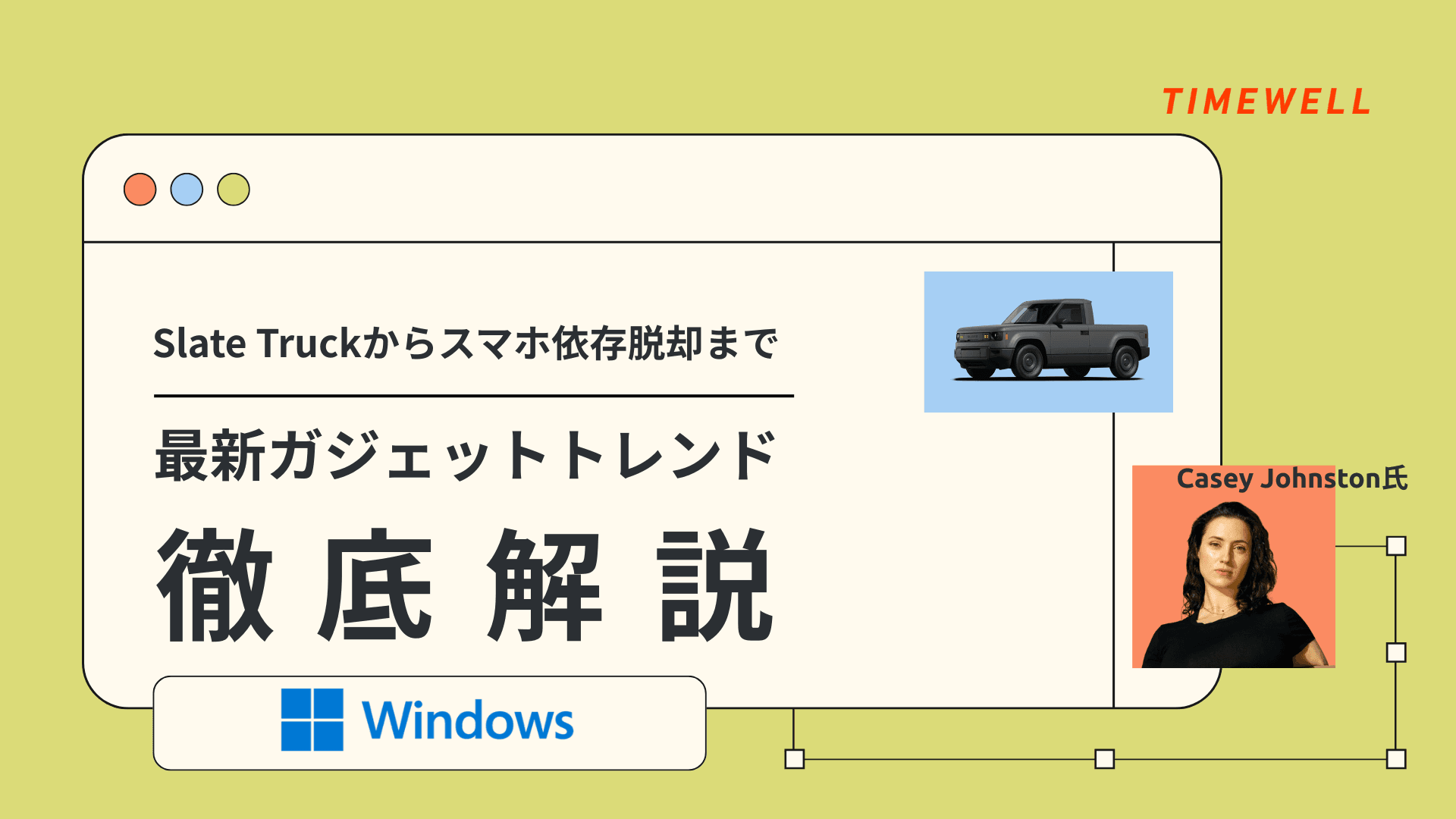
Three topics from a recent Vergecast episode cut through the noise: the Slate Truck, a radical new EV concept that could reshape the pickup market; Casey Johnston's practical approach to smartphone dependency; and the Windows laptop landscape's best answers to the MacBook Air question.
Looking to optimize community management?
We have prepared materials on BASE best practices and success stories.
Slate Truck: the EV pickup that strips everything back
The concept
Slate Auto's Slate Truck is being called one of the most interesting vehicles in years — not because of what it has, but because of what it doesn't. The word that keeps coming up in coverage is "minimalism."
The body panels are molded colored plastic rather than painted metal. Scratches don't expose bare metal; the color goes through the material. The surface is also optimized for vinyl wrapping — users can customize the color and design themselves. This removes the need for expensive paint booths in manufacturing, which contributes directly to cost reduction.
The interior extends the same logic. No touchscreen. No car audio standard. Manual crank windows. These omissions aren't just cost-cutting — they're deliberate invitations for user customization. Audio can be added through aftermarket kits or a Bluetooth speaker the owner brings themselves.
The specs that matter
The Slate Truck is a rear-wheel-drive EV with selectable battery sizes delivering 150–230 miles of range. Towing capacity is modest (around 1,000 lbs), but payload capacity (around 1,500 lbs) matches small trucks like the Ford Maverick. A kit allows seats to be added in the bed, converting it into an SUV configuration.
The target price: under $20,000 after federal incentives, with a base price around $25,000–$27,000. In a pickup truck market where average prices have reached $60,000, this is structurally different.
Why a truck?
Half-cab interior reduces costs. The "gets better with use" philosophy fits the truck ethos more naturally than a sedan. And there's genuine suppressed demand: many consumers remember when affordable small trucks existed — the Toyota T100, the Nissan Frontier era — and want that again.
Distribution model
No dealerships. Direct sales, with warranty service through national service chains (Midas and similar). "Slate University," an online knowledge base, will support user customization and basic repairs. The right-to-repair orientation is explicit.
The honest questions
The price point may be real or it may be budget-airline pricing — everything included in the base but all meaningful features as add-ons. Those who've spoken with Slate Auto's leadership report genuine belief in the mission rather than marketing positioning.
The standard risks for a new EV startup apply: production timeline (late 2026 target), supply chain, and whether the price holds. One informed estimate puts the probability of reaching production at 80–90%.
The ride quality question remains open — no public road test has been conducted yet.
Smartphone dependency: Casey Johnston's practical detox
The starting point
Casey Johnston — writer and author of the "She's a Beast" fitness newsletter — describes the problem not as a single moment of realization but as a gradual accumulation: the sense through late 2025 that her phone was consuming her time and that she'd lost control.
Her observation from researching others' experiences: the two features people can't give up when switching away from smartphones are group messaging and maps. That became the constraint she worked within — preserve those functions, make everything else as minimal as possible.
Why willpower doesn't work
The standard advice ("just use your phone less") runs into the standard failure mode: you delete an app, a trip requires Uber, a concert requires Ticketmaster, and within weeks you're back to the original state.
Johnston's framing comes from her fitness background: environment change matters more than willpower. Don't resist the pull; restructure so the pull isn't there.
Factory reset as the starting move
Rather than deleting apps one by one — which triggers a "do I really need this?" debate that usually ends in keeping everything — Johnston did a factory reset. Start from zero. Consciously choose what to reinstall.
Note: two-factor authentication apps require advance backup. Plan before resetting.
The second-device strategy
The most effective tactic she describes: take a old iPhone with a dying battery (Wi-Fi only), put all the problematic apps on it — Instagram and whatever else — and leave it on the desk.
The effect is that checking social media becomes a deliberate act: go to the desk, pick up the specific device, open the app. The unconscious sofa-and-bed scrolling disappears. Time on social media dropped dramatically. As a side effect, work accounts that require social media access are cleanly separated from the main phone.
The phone as a tool, not an identity
Johnston argues against making your phone "yours" — the child's photo on the lock screen, the carefully customized home screen. She deliberately uses a default, generic setup to reinforce the mental model: this is a tool. Tools should be slightly boring.
Grayscale mode was tried and found merely inconvenient rather than effective.
What to do with the recovered time
The discomfort of the first few days is real: in a queue, at a moment of waiting, the impulse to reach for the phone is strong. Johnston argues that sitting with boredom is the point. The mind needs unstructured time to process, to generate ideas, to notice what it actually wants. "Like a rock tumbler" — thoughts need time to roll and polish.
Even 15 minutes of intentional not-doing moves the needle.
Windows laptop: what to buy when MacBook Air isn't an option
The question
A longstanding Vergecast listener question: the MacBook Air has a clear answer for Mac users. What's the equivalent for Windows? The question went to gadget reviewer Antonio Debenedetto.
Why Dell XPS 13 lost the crown
The XPS 13 held the "default recommendation" position for years. The recent model's lattice-free keyboard — no gaps between keys, visually clean but poor for typing accuracy — ended that consensus. It may work for some users, but it's no longer a universal recommendation.
Current contenders
Microsoft Surface Laptop 7 Refined design, thin and light, good color options. Snapdragon X Elite/Plus processor delivers MacBook Air-class battery life and instant-on wake. The catch: Windows on ARM. Compatibility has improved significantly but some older software and certain games may not run. For users living in a browser and standard business apps, likely not an issue. For specialized software, check first.
Framework Laptop 13 AMD Ryzen AI 300 series. The standout feature: four expansion card slots where users choose their own port configuration (USB-C, USB-A, HDMI, microSD, even Ethernet). Memory and storage are user-upgradeable; motherboard upgrades are planned for future models. Sustainable in the literal sense — built to last and be repaired rather than replaced. Battery life is moderate, not exceptional. Design is functional without being attractive. If forced to pick one, Debenedetto and the host both pointed here.
Acer Swift 14 AI Intel Lunar Lake processor. Described as "the most boring laptop" — a compliment for users who want functionality without flair. Notable port selection for the size: 2× USB-C, 2× USB-A, HDMI. Balanced performance and battery. Solid keyboard and trackpad. Good choice for users who want reliability and port variety.
Asus ZenBook S14 (additional candidate) Same Lunar Lake chip as the Acer but with a more premium build and OLED display. Closer to MacBook Air aesthetics. Higher price point.
The chip landscape
The Windows laptop market is currently fragmented across Intel (Lunar Lake), AMD (Ryzen AI), and Qualcomm (Snapdragon). Each trades differently on performance, battery, and compatibility:
| Chip | Battery | Compatibility | Best for |
|---|---|---|---|
| Snapdragon X | Excellent | Some gaps | Battery-first users |
| AMD Ryzen AI | Moderate | Full | Power + repairability |
| Intel Lunar Lake | Good | Full | Balanced generalists |
No single answer exists. The Framework wins on the combination of repairability, port flexibility, and long-term value.
Summary
The Slate Truck poses a genuine question: is there a market for a simple, affordable, DIY-oriented EV pickup? If Slate Auto can hit its price and timeline targets, it opens a segment that the rest of the EV industry has ignored.
Johnston's smartphone approach is useful for anyone who has tried app deletion and failed. Environment design beats willpower. The second-device strategy, in particular, removes the friction-free access that makes habitual scrolling possible.
The Windows laptop landscape has improved. Framework, Surface Laptop 7, and the Lunar Lake machines give users real options. The MacBook Air equivalent doesn't exist in the sense of a single obvious choice — but the Framework comes closest for users who value longevity and flexibility.
Streamline event operations with AI | TIMEWELL Base
Struggling to manage large-scale events?
TIMEWELL Base is an AI-powered event management platform.
Proven Track Record
- Adventure World: Managed Dream Day with 4,272 participants
- TechGALA 2026: Centrally managed 110 side events
Key Features
| Feature | Impact |
|---|---|
| AI Page Generation | Event page ready in 30 seconds |
| Low-cost payments | 4.8% fee — industry's lowest |
| Community features | 65% of attendees continue networking after events |
Ready to make your events more efficient? Let's talk.