Infrastructure Has Become the New Frontier
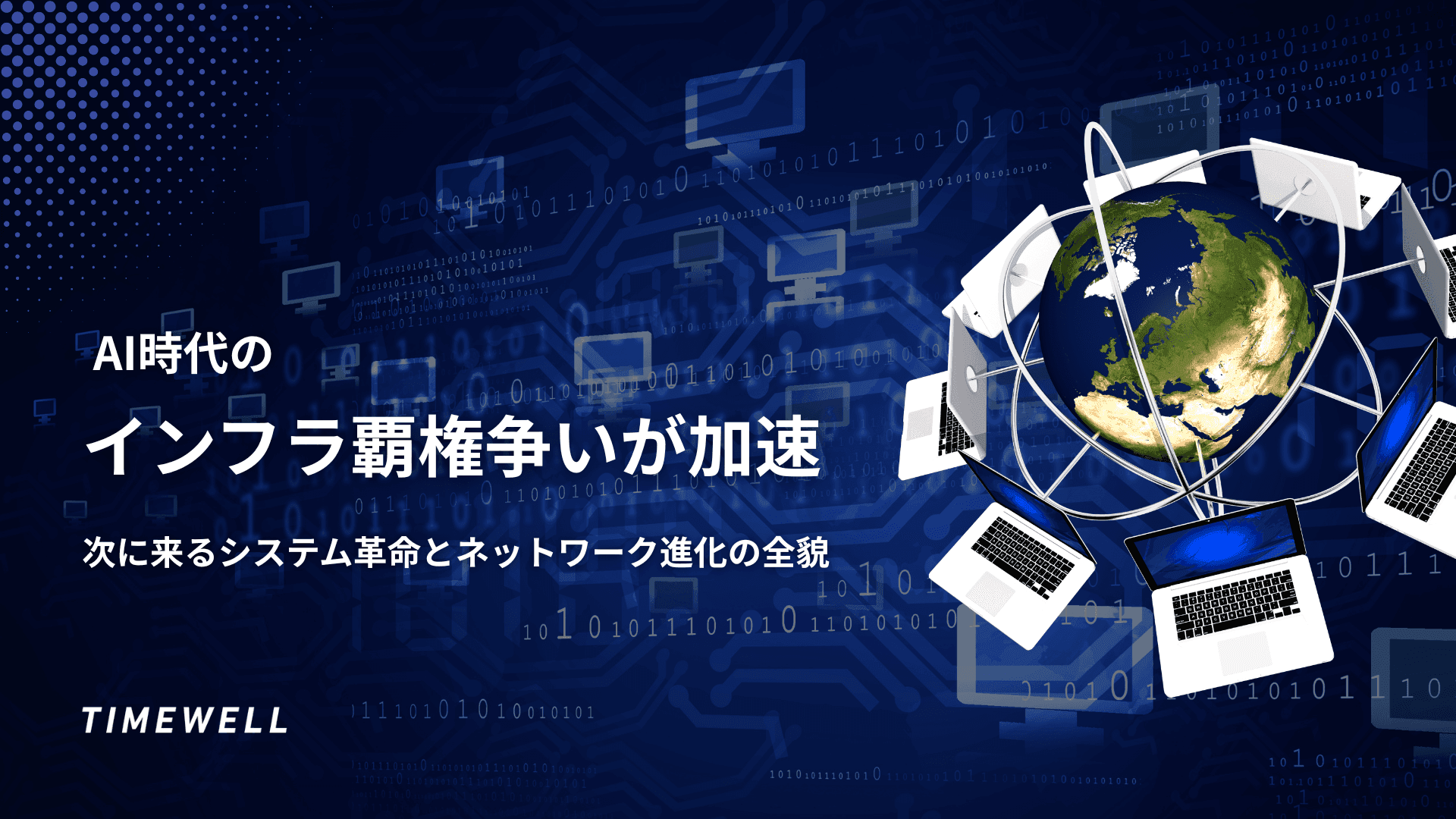
Infrastructure buildout is accelerating at a scale without precedent in recent decades — comparable to the explosive early growth of the internet, and in some measures larger. The forces behind it are national-level investment, massive capital projects, and AI demand that is outpacing every prior forecast. The consequences extend beyond technology into economics, national security, and geopolitics.
This article draws on conversations with leading industry experts to cover the current state of infrastructure construction, new processor development, and the network revolution that will determine who controls AI inference capacity going forward.
Looking to optimize community management?
We have prepared materials on BASE best practices and success stories.
Part 1: The Global Infrastructure Power Struggle
Infrastructure Is "Exciting" Again
"Infrastructure is exciting again" is more than a slogan — it's being reflected in actual construction decisions and enterprise strategy. The current infrastructure buildout cycle is being compared, favorably, to the internet's formative period. But the implications now reach into geopolitics, national security, and the structure of the international economy in ways that the 1990s internet boom did not.
The Engineers' Reality
Inside the organizations designing systems and data centers, engineers face a specific set of binding constraints: reliable power supply, land conversion, permitting processes. The demand side is not in question. Google's TPU (Tensor Processing Unit) program, after more than a decade of development, is running older-generation TPUs at 100% utilization — a figure that indicates user demand is substantially higher than anyone initially anticipated.
This reality pushes directly into procurement and capacity planning. Companies are moving toward "just-in-time" purchasing for some components while accepting that the depreciation cycles for space and power infrastructure — 25 to 40 years — require long-horizon commitments.
The Shift Away from Centralized Data Centers
The traditional assumption of single large centralized data centers is giving way. Companies are increasingly designing toward distributed configurations that locate compute closer to available power — not defaulting to fixed mega-facilities. The key constraints and their implications:
- Demand growth may outpace available power, land, and supply chain capacity
- Internal users always want the latest generation; managing old and new in parallel is a real operational challenge
- Distributed architecture is becoming standard for companies with flexibility in facility location
- Long depreciation cycles must be built into capital planning from the start
These are not theoretical concerns. Organizations are redesigning supply chains, global procurement strategies, and multi-region data center coordination — treating it as strategic systems work, not routine capital investment.
Part 2: How AI Is Reshaping System Architecture
From Scale-Out to Specialized Processors
Just as Google's early use of commodity PCs at massive scale was a revolution in the 2000s, the current shift in system architecture is equally significant. The scale-out model — aggregating large numbers of general-purpose servers — is now being combined with and, in some cases, replaced by specialized compute units: GPUs and TPUs designed for specific tasks.
Nvidia leads this market. The evidence for specialized processors is concrete: better power efficiency, faster processing, improved space efficiency. The direction of future system architecture is away from the old mainframe model and toward heterogeneous designs where different hardware handles different workloads.
The Development Challenge
Building specialized architecture is expensive and slow. Even with top-tier engineering talent, the path from concept to production takes multiple years. Companies face a genuine tension: invest now in systems that may be superseded before they're fully depreciated, or slow down and risk falling behind competitors who move faster. Given the clear efficiency advantages of specialized processors, demand for this hardware is only going to increase.
The Geopolitics of the Stack
Different countries and regions have taken different positions. Chinese manufacturers are producing at scale with 7nm technology, optimizing around abundant energy resources. US and other advanced producers are pursuing 2nm technology for superior power efficiency, facing different thermal management challenges. These divergences affect not just competitive dynamics between companies but the global structure of system architecture going forward. Game-theoretic considerations now shape which technology choices get made — and the next three years are likely to see substantial shifts.
Companies are also pursuing tighter partnerships across the full stack — from silicon through networking to application layer. The goal: system-wide optimization, not component-level optimization. Open ecosystems are maintained while interdependent competitive relationships are navigated — a structure that's genuinely new in how it combines cooperation and rivalry.
Part 3: The Network Race — AI Inference Infrastructure
Bandwidth and Latency at a New Scale
Network infrastructure has moved to the center of AI system design. While compute (processors) and power get most of the attention, networks are increasingly where performance bottlenecks form. The bandwidth and latency requirements of large-scale AI training and inference are well beyond what conventional network infrastructure can handle.
One example: a company built a "virtual data center" that logically unifies multiple physical facilities hundreds of kilometers apart into a seamless operational unit. Large-scale data exchange between sites happens in real time. This required not just physical network upgrades but deep optimization of protocols and algorithms — dynamic performance tuning rather than static design.
From Training to Inference
The network design requirements for training workloads and inference workloads are substantially different. Companies that built their network infrastructure for training are now redesigning for inference — prioritizing low latency and high reliability in a different configuration. A dedicated inference-native network infrastructure is becoming a requirement, not a nice-to-have.
AI Compounding on Itself
Inside organizations, AI tools are already being used for tasks once considered purely human: code migration, debugging, contract review, sales preparation. Engineers using these tools are reporting productivity gains that are difficult to achieve otherwise — large-scale codebase migration work that previously took months is now measured in weeks. The input and output optimization of AI models is delivering tangible results in real business workflows.
Network efficiency gains also have a multiplying effect. Network equipment consumes relatively little power compared to GPUs and TPUs — which means every efficiency gain in networking frees resources for more compute capacity. As one expert summarized: "Performance per kilowatt is the key to improving business efficiency while saving compute resources." The fusion of network and compute is becoming the central design challenge for next-generation systems.
Summary: The Infrastructure × AI Revolution Has Just Begun
The convergence of infrastructure investment and AI is moving faster than most organizations anticipated. The constraints are real — power, land, supply chain, depreciation cycles — and they impose structure on how quickly change can happen. But the direction is clear.
Key points:
- Infrastructure buildout is at a scale comparable to or exceeding the early internet era, with geopolitical and national security dimensions added
- The shift from general-purpose to specialized processors (TPUs, GPUs) is well underway and will continue
- Network infrastructure is moving from supporting role to central strategic challenge as AI inference becomes the dominant workload
- Companies must redesign not just hardware but full-stack ecosystems — silicon, network, software — in coordinated fashion
- AI is already compounding: tools that improve productivity are freeing resources to build better tools
The next three years will be decisive. Companies that understand the full picture — not just the processor specs, but the supply chain, the power economics, the geopolitical context, and the network architecture requirements — will be better positioned to make the right infrastructure bets.
Reference: https://www.youtube.com/watch?v=OsLRf6r5U9E
Streamline event operations with AI | TIMEWELL Base
Struggling to manage large-scale events?
TIMEWELL Base is an AI-powered event management platform.
Proven Track Record
- Adventure World: Managed Dream Day with 4,272 participants
- TechGALA 2026: Centrally managed 110 side events
Key Features
| Feature | Impact |
|---|---|
| AI Page Generation | Event page ready in 30 seconds |
| Low-cost payments | 4.8% fee — industry's lowest |
| Community features | 65% of attendees continue networking after events |
Ready to make your events more efficient? Let's talk.