60 Years of Foreign Aid — and What Happens When It Stops
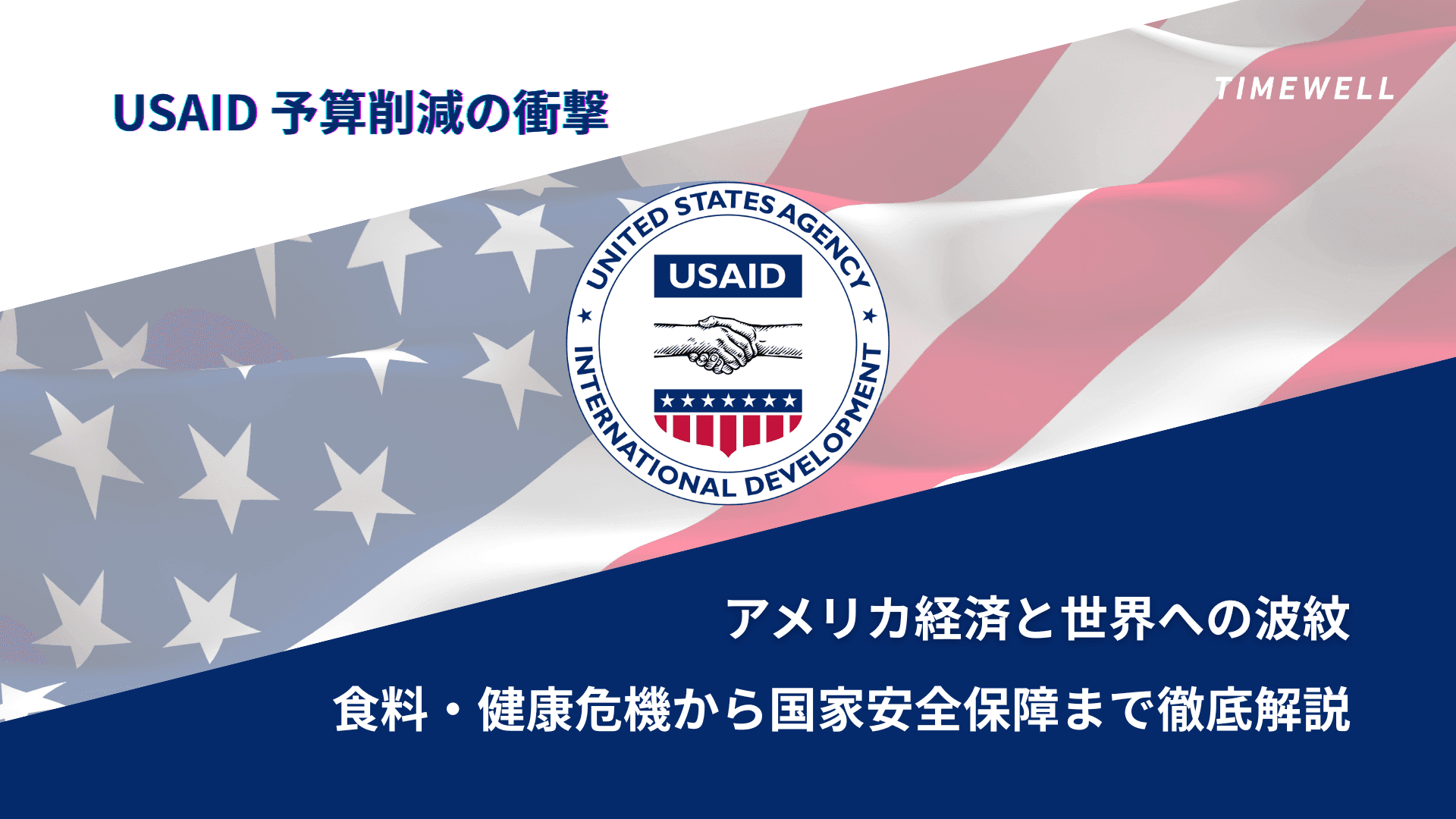
For over 60 years, the U.S. Agency for International Development (USAID) has been America's primary vehicle for foreign assistance: addressing hunger, fighting disease, and advancing U.S. foreign policy goals across the globe. The record is concrete. One billion children vaccinated. 2.2 billion malaria cases prevented. 26 million lives saved from AIDS. Forty percent of all global humanitarian assistance came from the United States, and two-thirds of that came through USAID.
Under the America First framework, former President Trump and Elon Musk moved to cut USAID's budget by more than 90% — a reduction of approximately $60 billion. The standard framing is that this reduces spending on foreign aid, which is "money going to foreigners." But the data does not support that framing.
This is a decision with blowback written into it — blowback that hits American consumers through food prices, American farmers through lost contracts, American public health through weakened disease surveillance networks, and American national security through deteriorating counterterrorism infrastructure. This article examines what USAID actually did, what it is no longer doing, and what the consequences are for the United States.
- The domestic economic reality of USAID: who actually received the money
- Food security: what the suspension of Food for Peace and Feed the Future means
- Global health and national security: the cascade effects
Looking for AI training and consulting?
Learn about WARP training programs and consulting services in our materials.
The Domestic Economic Reality of USAID
USAID's Washington, D.C. headquarters is now listed as "permanently closed" on Google Maps. Of the 13,000 staff the agency once employed, only a few hundred positions are expected to remain. This contraction is being pursued under the banner of domestic focus — but a close examination of where USAID money actually went challenges the simple narrative.
The criticism that "taxpayer money is being spent on foreigners" captures only part of the picture. Eighty percent of USAID contractors were American companies. USAID channeled funds back into the American economy through up to 50,000 American contractors working within universities, nonprofit organizations, and aid institutions. The annual expenditure — approximately $40 billion, just 0.7% of the total federal budget — funded programs for global health improvement, democracy promotion, and other U.S. foreign policy objectives while simultaneously supporting domestic economic activity.
The geographic reach of this network was extensive. Columbia University's research centers supported climate planning in multiple countries. A Coca-Cola partnership addressed water and sanitation access. Through these arrangements, USAID funds flowed into American universities, corporations, and foundations — funding R&D, creating employment, and driving technological innovation. The budget cuts have severed these partnerships. Research projects at universities have been halted. Related companies have lost contracts. Nonprofits have lost operating funds.
This isn't just a foreign aid cessation — it's a disruption to the domestic knowledge base and economic activity. For small and medium businesses and research institutions that had substantial exposure to USAID contracts, the cuts represent an existential challenge. The employment losses among what are estimated to be tens of thousands of American contractors carry regional economic ripple effects that cannot be dismissed. The USAID budget cut reduces America's role in the international community and simultaneously diminishes domestic economic vitality. This is the two-edged nature of treating foreign aid purely as a "cost."
Food Security: What the Suspension of Food for Peace and Feed the Future Means
One of USAID's most significant operational pillars was food assistance. The Food for Peace program — launched in 1954 — purchased surplus food from American farmers and delivered it to populations in need. Over its history, the program has benefited more than 4 billion people facing hunger worldwide. Forty-one percent of the food delivered through the program was procured directly from American farmers, generating approximately $3 billion in annual farm income. Iowa soybeans, Oklahoma wheat, Kansas lentils, Virginia and Georgia farm products, and peanut-based nutritional paste products all flowed through this system. American farmers had a guaranteed buyer. American food reached people who needed it.
Within days of the budget cuts beginning in mid-February, the situation had changed entirely. Approximately $750 million in food aid that had already been purchased and paid for by USAID, along with more than 500,000 tons of American agricultural products, was stranded at ports and in transit. Much of it faced spoilage risk. In Kansas, the Pawnee County Cooperative reported 1.5 million bushels of sorghum in storage with no buyer. In Houston, 235,000 tons of wheat were reported stuck in warehouses, alongside 30,000 tons of cornmeal, pinto beans, lentils, rice, and vegetable oil. Similar situations were reported at major ports in Boston, Miami, Norfolk, Savannah, New York, Chicago, and Lake Charles.
The international effects are immediate and severe. At Kenyan ports, approximately $300 million worth of emergency food aid remained undelivered. The food had been purchased and paid for — but contractors and local USAID staff responsible for delivering it from Kenyan ports to South Sudan lost access to payment when USAID operations were halted. South Sudan has more than 7.1 million people — over half the population — requiring food assistance, including 1.6 million children at acute malnutrition risk. Infrastructure conditions make delivery already difficult: reaching the remote area of Pagak requires a 2-hour flight, a 4-hour canoe journey, and a 6-hour walk through swampland. When support is delayed under these conditions, the most vulnerable populations are the first to die. The World Health Organization estimates 733 million people worldwide experience food insecurity at any given moment. USAID's suspension of food programs makes that number worse, not better.
The food issues extend into domestic research. The Feed the Future program provided millions of dollars to 17 food science research institutes at universities across the U.S. — Kansas State, University of Nebraska, Purdue, and others — funding research on crop resilience to disease and climate change. These research programs are now suspended. The University of Illinois Soybean Innovation Lab has already laid off 30 employees and faces closure if funding is not restored. This lab had been working with farmers in Madagascar, Nigeria, Pakistan, India, and Indonesia on soybean varieties resistant to diseases like soybean rust — work that directly benefits American farmers by helping them prepare for diseases spreading globally.
USAID also stabilized U.S. domestic prices for specific agricultural products. The coffee industry alone represents 1.6% of U.S. GDP and supports approximately 1.7 million American jobs. USAID had partnered with American coffee companies and small farmers in Africa, Latin America, and Indonesia to address crop disease and improve supply chains. That price stability guarantee is now gone. Similar programs in cocoa-producing Ivory Coast, Ghana, and Ecuador supported America's confectionery industry. McCormick and Company in Maryland benefited from a USAID partnership that strengthened spice production in Indonesia, improving yields of vanilla beans, nutmeg, cloves, cinnamon, black pepper, and pumpkin spice. Michelin's sustainable rubber plantation in Indonesia, supported by USAID financing, supplies rubber to American tire manufacturers in South Carolina.
These are examples of how USAID strengthened developing-country supply chains to maintain the availability and affordability of raw materials critical to American industry. That infrastructure is now being dismantled.
Global Health and National Security: The Cascade Effects
The health consequences of the USAID budget cuts extend well beyond the immediate disruption to food programs. In 2016, USAID-funded and Chemonics-operated Famine Early Warning Systems Network (FUSE NET) averted a famine in the Horn of Africa — potentially saving up to a million lives — by analyzing weather data and conflict information to project food crises and position food aid ahead of need. FUSE NET is now offline. Chemonics laid off 88% of its U.S. staff. Without FUSE NET, humanitarian response effectiveness will decrease and hunger-related instability will increase.
Food insecurity and violent extremism are documented correlates. In northeastern Nigeria, Boko Haram recruits by offering meals. In 2017, ISIS drew unaccompanied Syrian refugee children with food and cash. The ISIS connection is direct in another way: USAID budget cuts have affected U.S. support to the Syrian Democratic Forces (SDF), which manages camps holding approximately 10,000 ISIS fighters and family members in 28 prisons across northeastern Syria — with the al-Hol camp in Hasaka being the largest. American and Syrian officials have warned that security weaknesses here could enable ISIS reconstitution.
The health surveillance infrastructure is also deteriorating. The Trump administration cancelled more than 10,000 global health grants through USAID and the State Department. Among them: outbreak surveillance programs designed to detect and respond to emerging infectious disease. USAID had funded avian influenza surveillance in 49 countries — collecting samples from farms with high poultry mortality, testing them, notifying farmers, monitoring migratory birds and cross-border poultry trade, and sharing data internationally. This program is now terminated. In the context of an ongoing avian influenza outbreak spreading within the United States, this is a serious degradation of a critical surveillance capability. The previous avian influenza outbreak in 2014 cost the American poultry industry approximately $1.6 billion.
The cross-border disease reality is not theoretical. An Iowa man died from Lassa fever after traveling to West Africa. Uganda is currently facing its eighth Ebola outbreak — caused by the high-fatality Sudan strain — with a nurse confirmed dead in the capital Kampala in January. Contact tracing and traveler screening in Uganda have been disrupted by the USAID budget cuts, despite Elon Musk's acknowledgment in February that Ebola prevention funds had been cancelled in error. According to Wired reporting, the emergency waivers intended to maintain USAID humanitarian programs including Ebola response were not effective because most USAID staff had already been laid off. While the U.S. has been unable to play its historical role in Uganda's Ebola response, CBS has reported that Russia dispatched a mobile laboratory to assist with outbreak control.
In the Democratic Republic of Congo, a new unidentified hemorrhagic fever has emerged — 60+ deaths, 1,000+ cases. USAID has historically played a key role in pathogen identification by funding laboratory sample testing. The agency's dismantlement has made this investigation significantly harder.
The vaccine programs most Americans have never heard of are also casualties. Johns Hopkins research shows that every $1 invested in vaccination generates $16 in reduced treatment costs; including broader economic effects, the return may be as high as $44 per dollar. A $670 million grant to the South African Medical Research Council for HIV vaccine development — working toward Africa's first HIV vaccine, with clinical trials in South Africa, Kenya, and Uganda already enrolling volunteers — has been frozen. Because the United States has no FDA-approved HIV vaccine, a successful new vaccine developed abroad could become the first HIV vaccine in the U.S. That research is now indefinitely suspended. The Guardian has reported that withdrawal of other USAID antiretroviral treatment support could result in up to 500,000 South African deaths.
Key programs suspended or severely disrupted:
| Program | Impact |
|---|---|
| Food for Peace | Hundreds of millions in purchased food stranded at ports. Famine worsening in South Sudan and elsewhere. Direct losses to American farmers. |
| Feed the Future | University crop research suspended. Jobs lost. Long-term food security preparedness weakened. |
| Supply chain support (coffee, cocoa, etc.) | Developing-country production stabilization programs ended. Risk of price increases for American consumers. |
| FUSE NET famine early warning | System offline. Humanitarian response efficiency reduced. |
| Bird flu surveillance | International monitoring network terminated. Pandemic response capacity degraded. |
| Ebola response | Uganda response delayed. International transmission risk elevated. |
| HIV vaccine development | Promising South African clinical trials suspended. Millions of lives at risk. |
| Amazon Malaria Initiative | Regional malaria control programs terminated. Elevated child mortality risk. |
| ISIS containment support (SDF) | Management of ISIS detention camps disrupted. Terrorism reconstitution risk. |
In the Amazon basin, USAID's Amazon Malaria Initiative provided targeted funding to combat malaria in Brazil, Colombia, Ecuador, Guyana, Peru, and Suriname. The program's funding has been cut and staff laid off, destroying the trust and goodwill that USAID spent years building. In 2025, approximately 597,000 people died of malaria globally — the overwhelming majority in Africa, where 76% of deaths are in children under five.
Summary
USAID's budget cuts are not simply a reduction in foreign assistance. As documented throughout this article, they represent a set of decisions that will rebound onto American consumers through food prices, onto American farmers through lost contracts, onto American public health through degraded disease surveillance, and onto American national security through weakened counterterrorism infrastructure.
"Our tax dollars should be spent on domestic priorities" is a position that sounds straightforward. But it treats as separate things that are not separate. America's economic interconnection with the global supply chains USAID stabilized is real. The cost of communicable disease outbreaks that reach American soil — which USAID surveillance was designed to prevent — is real. The relationship between food insecurity and violent extremism that USAID programs were designed to interrupt is real.
USAID's food aid, disease surveillance, and supply chain stabilization work was simultaneously humanitarian assistance and a return-generating investment in American economic security and physical safety. Terminating that investment abruptly forfeits the stability it produced and the benefits America derived from it.
The weakening of disease surveillance carries near-term pandemic risk. The food insecurity and economic desperation that extremist groups exploit now faces less resistance. And America's abrupt withdrawal from humanitarian assistance at this scale creates a vacuum that China — having invested more than ¥150 trillion globally through the Belt and Road Initiative — is positioned to fill.
The full scope of USAID budget cut consequences is still becoming visible. But across food, health, economics, and security — the foundational dimensions of national welfare — serious negative impacts are unavoidable. The unanticipated and likely enormous costs of this decision to the United States itself demand sustained scrutiny and debate.
Reference: https://www.youtube.com/watch?v=hcvWU6gYpY4
Streamline Event Management with AI | TIMEWELL Base
Struggling to manage large-scale events?
TIMEWELL Base is an AI-powered event management platform.
Track Record
- Adventure World: Managed Dream Day with 4,272 attendees
- TechGALA 2026: Centralized management of 110 side events
Key Features
| Feature | Benefit |
|---|---|
| AI Page Generation | Event pages ready in 30 seconds |
| Low-Cost Payments | 4.8% transaction fee (among the lowest in the industry) |
| Community Features | 65% of attendees continue networking after events |
Feel free to reach out to discuss streamlining your event operations.