Digital Identity in the Age of Generative AI
Modern society is being reshaped by the rapid advance of artificial intelligence. Generative AI in particular has transformed how content is created, generating new challenges for the information environment — including the fundamental question of how to determine, in online interactions, whether you are dealing with a human or a machine.
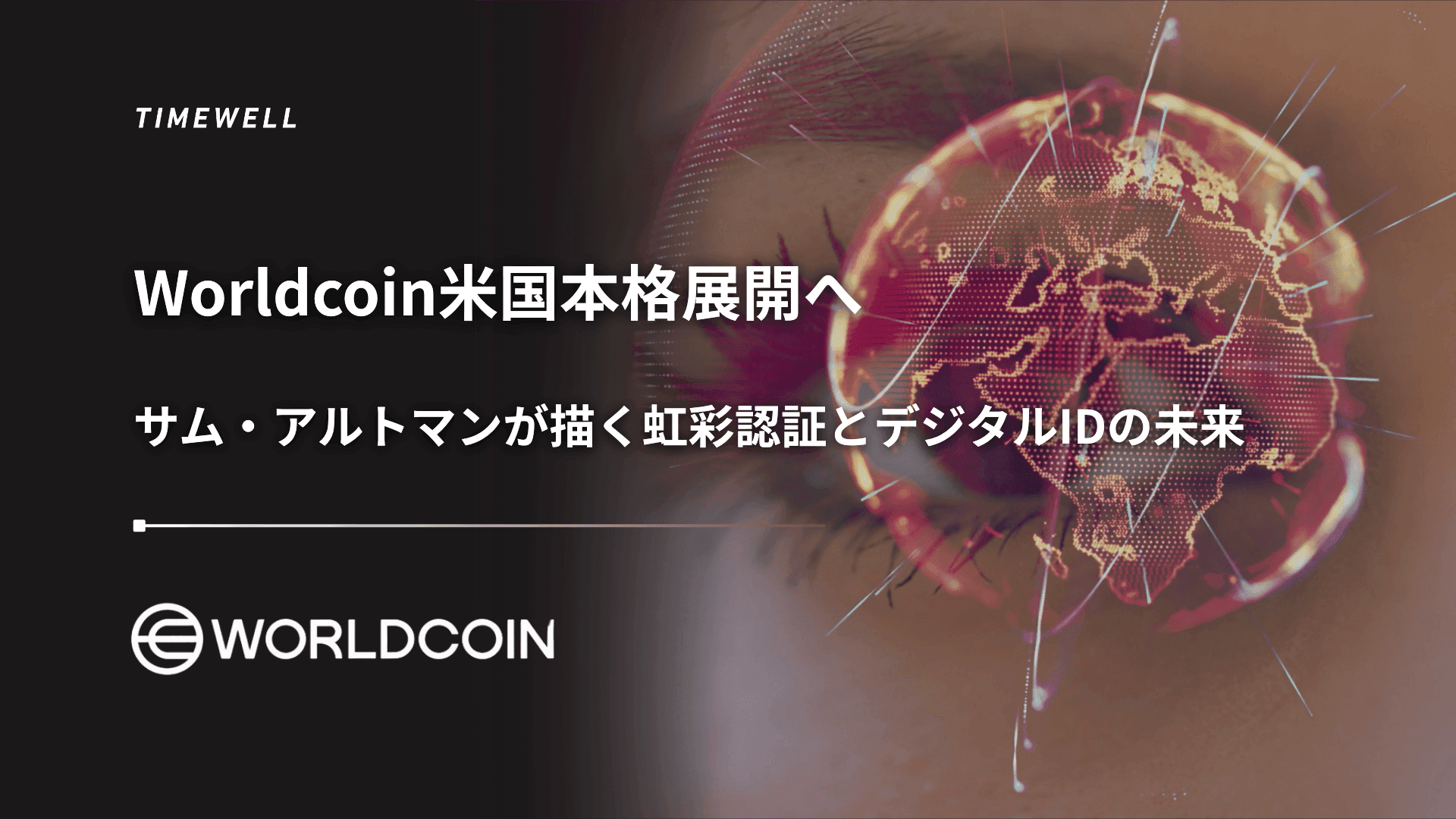
Worldcoin, the project co-founded by Sam Altman — also CEO of OpenAI — addresses this question directly. Using a spherical iris-scanning device called the Orb, Worldcoin creates a verified digital identity tied to biometric confirmation that the user is a unique human being. The company behind the project, Tools for Humanity, has been building toward a global digital ID network and associated cryptocurrency. A recent event in San Francisco revealed the current state of the project and its next major step: a full U.S. launch.
This article examines the technology and vision behind Worldcoin, the U.S. market entry strategy announced at the event, and the challenges the project must still overcome.
- What Worldcoin is: iris scanning, World ID, and the Proof of Personhood concept
- The U.S. launch: what was announced and why now
- Challenges and possibilities: adoption, privacy, and the role of Sam Altman
Looking to optimize community management?
We have prepared materials on BASE best practices and success stories.
What Worldcoin Is: Iris Scanning, World ID, and Proof of Personhood
Worldcoin is recognizable from several angles. For those familiar with AI, it is the project that Sam Altman — OpenAI's CEO — helped found. For those tracking cryptocurrency, it trades under the ticker WLD. And for most people encountering it for the first time, it is the spherical scanning device, the Orb, that reads human iris patterns to verify individual identity.
The Orb was developed to answer a specific problem: in a digital environment increasingly populated by AI bots and fake accounts, confirming that a given account belongs to a unique, real human being is increasingly difficult. The iris offers properties that make it well-suited to this purpose — it differs between individuals, is extremely difficult to fake, and changes very little over a person's lifetime. Iris verification creates a biometric basis for digital identity that meets a much higher standard than conventional account credentials.
The output of an Orb scan is a "World ID" — a digital identity attached to the verified individual. The intended scope of World ID extends well beyond distinguishing humans from bots. Worldcoin's design encompasses secure management of digital currency wallets, secure website login, and eventually identity verification across a wide range of online and offline services. The ambition is a universal, decentralized digital ID protocol that operates across borders.
The event in San Francisco represented a concrete demonstration of how close the project is to operational scale — and a preview of the U.S. rollout that would follow.
The U.S. Launch: What Was Announced and Why Now
The event was held in a large warehouse space near San Francisco Bay. Tools for Humanity organized a keynote running approximately 45 minutes, with co-founders Alex Blania and Sam Altman presenting. Topics covered included the current state of WLD token economics, Orb development and deployment plans, and the strategic partnerships built since the project's founding.
The single most significant announcement was the full launch of Worldcoin services in the U.S. market. This had not been possible previously: at the time of an early Orb demonstration in Los Angeles, U.S. residents could not receive WLD tokens. The reason was never officially stated, but the context was clear — the SEC had been pursuing aggressive enforcement actions against cryptocurrency projects, and Worldcoin chose to operate cautiously in that environment.
The regulatory context has shifted. The current administration has shown more receptivity to cryptocurrency projects than its predecessor. Figures like David Sacks have taken influential positions, creating a different operating environment. Worldcoin assessed that the conditions now support a full U.S. launch.
The Visa partnership announced at the event is significant in its own right. A debit card powered by Worldcoin, accepted everywhere Visa is accepted, automatically converting WLD to local currency at point of sale — this is a concrete mechanism for cryptocurrency utility in everyday consumer transactions, and it addresses one of the persistent criticisms of cryptocurrency projects: that they lack practical purchasing power outside crypto-native contexts.
The scale of the planned U.S. deployment is notable. Worldcoin announced more than 7,000 Orbs to be deployed in the U.S. — four times the concentration that had previously been seen in the U.S. at any point. These will be distributed through a retail concept called "World Space," designed with the approachability of an Apple Store: spaces where general consumers can encounter the technology and complete iris verification in a comfortable environment. The first San Francisco location opened the day after the event; Los Angeles, Atlanta, and other major cities are in the expansion plan.
An additional hardware development was disclosed at the event: the Orb Mini. A smartphone-form-factor device, smaller and more portable than the original Orb, designed to allow more operators to conduct iris scanning in more settings with proper consent. The Orb Mini extends the network's geographical reach without requiring fixed Orb installations.
Challenges and Possibilities
The most fundamental question for Worldcoin's adoption prospects is whether people will actually agree to scan their irises. The WLD token is a financial incentive — real value is deposited in the user's World Wallet upon completing a scan. But the psychological barrier is substantial. Biometric data is qualitatively different from other forms of user data. Providing it requires a level of trust that financial incentives alone may not be sufficient to generate, especially for a project that many people describe as feeling like a scene from a dystopian science fiction series.
The skepticism isn't irrational. The Orb is a visually striking device that does something most people have never been asked to do before. The project's association with AI and advanced technology simultaneously generates curiosity and wariness. Trust must be built by demonstrating practical value, not just future potential.
This is where the partnership announcements are most important. Stripe, Match Group (operator of Tinder), and Razer — payments, social matching, and gaming — provide concrete use cases for World ID as an authentication layer. The "utility play" is explicit: World ID should become a verification mechanism that people actually want to use because it improves their experience of existing services. This is a different strategic positioning from most cryptocurrency projects, which struggle to demonstrate value beyond speculative trading.
The potential is significant precisely because the underlying problem is real and growing. AI-generated content is now indistinguishable from human-created content in many contexts. Bot accounts are sophisticated enough to pass basic detection systems. The question of whether you're interacting with a human online is no longer academic — it affects decisions made daily across commerce, communication, and public discourse. Worldcoin's Proof of Personhood is an attempt to build infrastructure that makes this question answerable.
Sam Altman's involvement changes the scale of what the project can attempt. Tools for Humanity is not a typical cryptocurrency startup. The partnerships announced at the event — including with Visa — and the attendance of California Governor Gavin Newsom at the keynote reflect a level of access and credibility that most projects cannot access. The unusual dynamic of regulatory officials and the crypto community converging around the same project is itself a signal worth noting.
The challenges remain substantial: regulatory risk in multiple jurisdictions, the ongoing difficulty of changing user behavior around biometric data, and the hard work of converting initial registrations into habitual use. Whether Worldcoin can cross the gap between compelling proposition and genuine mass adoption depends on execution across all of these simultaneously.
Summary
The San Francisco event made clear that Worldcoin is moving beyond a global experiment into focused U.S. market development. The full U.S. token launch, the Visa partnership, 7,000+ Orbs, the Orb Mini, and integrations with Stripe, Match Group, and Razer together represent a concerted push toward the kind of practical utility that could drive genuine adoption.
The deeper questions the project poses are not going away. Are we prepared to scan our irises and use that biometric data as a passport for our online and physical-world activities? How do we balance the convenience and security benefits against privacy concerns and the risks of data misuse? How transparent should data management be? These are not questions specific to Worldcoin — they are questions that the intersection of AI and digital identity will force every society to address.
Sam Altman's involvement and Tools for Humanity's strategic approach to partnerships give the project unusual resources for navigating these challenges. Whether that's enough to build the social consensus and user trust that genuine mass adoption requires — that is what the coming months in the U.S. market will begin to answer.
Reference: https://www.youtube.com/watch?v=1iLF--DgWyg
Streamline Event Management with AI | TIMEWELL Base
Struggling to manage large-scale events?
TIMEWELL Base is an AI-powered event management platform.
Track Record
- Adventure World: Managed Dream Day with 4,272 attendees
- TechGALA 2026: Centralized management of 110 side events
Key Features
| Feature | Benefit |
|---|---|
| AI Page Generation | Event pages ready in 30 seconds |
| Low-Cost Payments | 4.8% transaction fee (among the lowest in the industry) |
| Community Features | 65% of attendees continue networking after events |
Feel free to reach out to discuss streamlining your event operations.