Google's attempt to reconcile two contradictory product philosophies
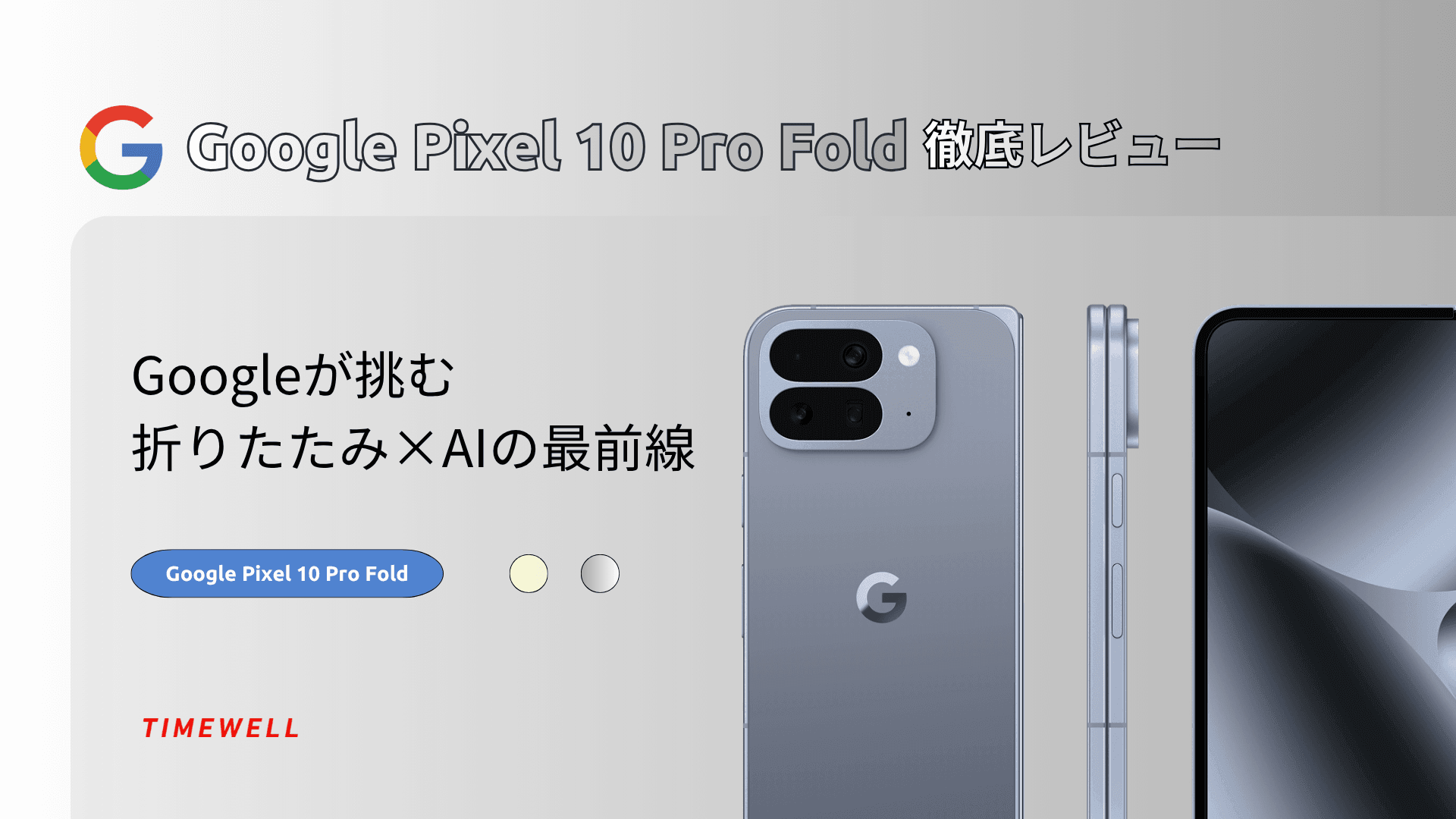
The foldable smartphone market is expanding, with more manufacturers entering at various price and performance tiers. Into this field, Google has launched the Pixel 10 Pro Fold — a device that attempts to reconcile two seemingly contradictory product philosophies: the Pixel brand's identity around smart software and practical everyday utility, and the premium, hardware-first orientation of foldable phones.
Pixel phones have traditionally been valued for intelligent software, excellent computational photography, and competitive pricing rather than specification leadership. Foldable phones, by contrast, command premium prices and justify them through cutting-edge hardware. The Pixel 10 Pro Fold tries to be both things simultaneously.
Redesigned hinge: the most tangible improvement
The most immediately noticeable change is the new gearless hinge design. Compared to the previous Pixel Fold, the new mechanism is smoother in motion while maintaining a satisfying resistance and premium feel. The redesign also allows the left bezel of the cover screen to be thinner, producing a more uniform frame around both displays.
In practice, opening and closing the phone has the tactile quality of a well-made physical object — a detail that matters for a device you interact with hundreds of times per day.
Display upgrades on both sides
The outer cover screen has grown to 6.4 inches (up from the previous model) and reaches 3,000 nits peak brightness. The improved outdoor visibility makes it much more usable as a standard smartphone in daily conditions.
The inner 8-inch display has also received a brightness improvement. When unfolded, the large screen supports side-by-side app usage, tablet-style video consumption, and rich multitasking — calendar alongside email, travel planning with map and booking simultaneously, document review with reference material visible. These are use cases that remain genuinely awkward on a single-screen phone.
Pixelsnap: magnetic accessory integration
New to the Pixel 10 series is Pixelsnap — a rear magnet system compatible with Qi2 wireless charging and MagSafe accessories. Car mounts, wireless chargers, and other accessories attach and detach cleanly. Users have noted it holds reliably even with the phone's added weight.
This also means compatibility with the existing MagSafe accessory ecosystem, expanding practical utility beyond first-party solutions.
Battery and durability
The 5,015mAh battery supports approximately 6 hours of screen-on time in typical usage — sufficient for most full-day business use when closed. Unfolded mode, as expected, draws more power.
Notably, the Pixel 10 Pro Fold becomes the first Pixel foldable with IP68 water and dust resistance — a meaningful durability upgrade for daily use and incidental exposure.
Software: where Pixel shines
Running Android 16 with Material 3 design, the Pixel 10 Pro Fold delivers the familiar Pixel software advantages:
- Call Screening — AI handles unknown incoming calls
- Now Playing — background music and audio identification
- Gemini AI integration throughout the system
- Real-time translation
- AI-assisted photo organization
The foldable form factor enables a more capable version of these features. Split-screen in the unfolded state allows genuinely productive parallel workflows rather than the compromised multitasking possible on a standard-sized display.
Animations under Android 16 are smooth and visually polished. The overall software experience reinforces what Pixel phones are known for: intelligence and refinement over raw specification.
Where the trade-offs show
Weight and handling: The device is noticeably heavier than recent ultra-thin foldables from competing manufacturers. Holding it closed for extended one-handed use is tiring by comparison. This is an inherent consequence of the robust hinge, battery, and component quality — but the comparison to lighter competitors is real.
Processor: The Tensor G5 chip handles everyday tasks and multitasking well. In heavy gaming or sustained high-load workloads, it falls short of Snapdragon 8 Elite devices. For business use and casual consumers, this is unlikely to matter. For power users who push hardware limits, it will.
Camera: The camera system performs well for everyday photography and social media. Compared to Google's own non-folding flagship Pixels, detail in challenging conditions and low-light noise reduction show some disadvantage. For document scanning, video calls, and standard-quality photography, performance is fully adequate.
How it compares to the competition
The Pixel 10 Pro Fold's main competition comes from Samsung's Galaxy Z Fold series and emerging thin-and-light foldables from other manufacturers. The thinner competitors offer a more comfortable closed-form experience and more powerful processors. The Pixel's advantages are its software ecosystem, Google's AI integration, and the unique value of the full Pixel experience in a large-format device.
The choice largely comes down to priorities: if hardware performance and physical lightness are paramount, competitors have advantages. If software intelligence, AI capabilities, and ecosystem integration are more important, the Pixel 10 Pro Fold makes a compelling case.
Summary
The Pixel 10 Pro Fold represents meaningful progress over its predecessor. The gearless hinge is a genuine improvement. The brighter displays make the device more practical in daily conditions. Pixelsnap adds useful accessory flexibility. IP68 protection removes a significant concern. The software experience is excellent.
The weight, Tensor G5 performance ceiling, and camera shortcomings versus non-folding Pixels are real. Buyers who value Pixel's software identity and want it in a large-format foldable will find the trade-offs reasonable. Those prioritizing cutting-edge hardware performance have stronger alternatives.
As a statement of intent from Google — that it can bring its core product philosophy to the foldable category — the Pixel 10 Pro Fold succeeds. The challenge for future generations will be closing the remaining hardware gaps while maintaining what makes Pixel worth choosing.
Take AI-driven development all the way to production
WARP is a hands-on program for teams who want more than headlines. Former enterprise DX and data strategy leads work alongside you until it runs.
Streamline event operations with AI | TIMEWELL Base
Struggling to manage large-scale events?
TIMEWELL Base is an AI-powered event management platform.
Proven Track Record
- Adventure World: Managed Dream Day with 4,272 participants
- TechGALA 2026: Centrally managed 110 side events
Key Features
| Feature | Impact |
|---|---|
| AI Page Generation | Event page ready in 30 seconds |
| Low-cost payments | 4.8% fee — industry's lowest |
| Community features | 65% of attendees continue networking after events |
Ready to make your events more efficient? Let's talk.