As Online Interactions Accelerate, Questions About Who Is Real Are Growing
As online interactions and exchanges accelerate rapidly, the question "Am I really talking to a live human being, or am I interacting with an AI bot?" is coming up more and more often. With the rapid advance of AI technology, chatbots and deep learning-generated digital content are proliferating — and it is becoming increasingly difficult to determine whether you are dealing with a real person. In this context, we are facing a growing need for new ways to prove "being a real human being." One of the most notable projects responding to that need is "World ID" from Tools for Humanity.
This project combines an innovative biometric authentication technology — using a biometric camera called the "Orb" to perform identity verification based on the user's iris and facial image — with an open-source approach that enables users to prove their identity with certainty while protecting their own privacy. It is attracting attention as a future technology.
This initiative is drawing considerable expectations as a new security technology to guarantee that actual humans are involved in all kinds of online services — social networks, online dating, e-commerce, and concert ticket sales. Particularly as malicious automation by AI bots and fake accounts has become a serious problem, "World ID," which uses highly reliable biometric authentication technology, has the potential to become an indispensable infrastructure for the internet society of the future.
In this article, drawing on a conversation with Adrian Ludwig — who has approximately 30 years of computer security experience and serves as Chief Security Officer and Chief Architect at Tools for Humanity — we explain in depth the workings and security of World ID, specific examples of its implementation around the world, and this latest technology and the biometric authentication system poised to shape the future.
AIBot Era Human Identification Needs and the Background to World ID's Birth Achieving Transparency and Security Through Open Source and Blockchain Technology The Future World ID Envisions — Achieving an Online Society That Balances Trust and Privacy Summary AI Bot Era: Human Identification Needs and the Background to World ID's Birth
As the internet has developed in recent years, automation and impersonation using AI technology have advanced, and companies and social media platforms are facing the risks of fake engagement by bots, advertising fraud, and digital fraud. Online behavioral analysis alone has been making it increasingly difficult to achieve reliable identity verification. To solve this challenge, Tools for Humanity developed a new identity authentication system called "World ID."
The background to this project is heavily influenced by Adrian Ludwig's extensive experience. With a background of approximately 30 years building computer security and internet services — including experience at Android, Adobe, and Atlassian — he developed this new identity verification system. His track record — from early Android development to expansion to more than two billion users worldwide — underpins the project's credibility and is reflected in this new initiative.
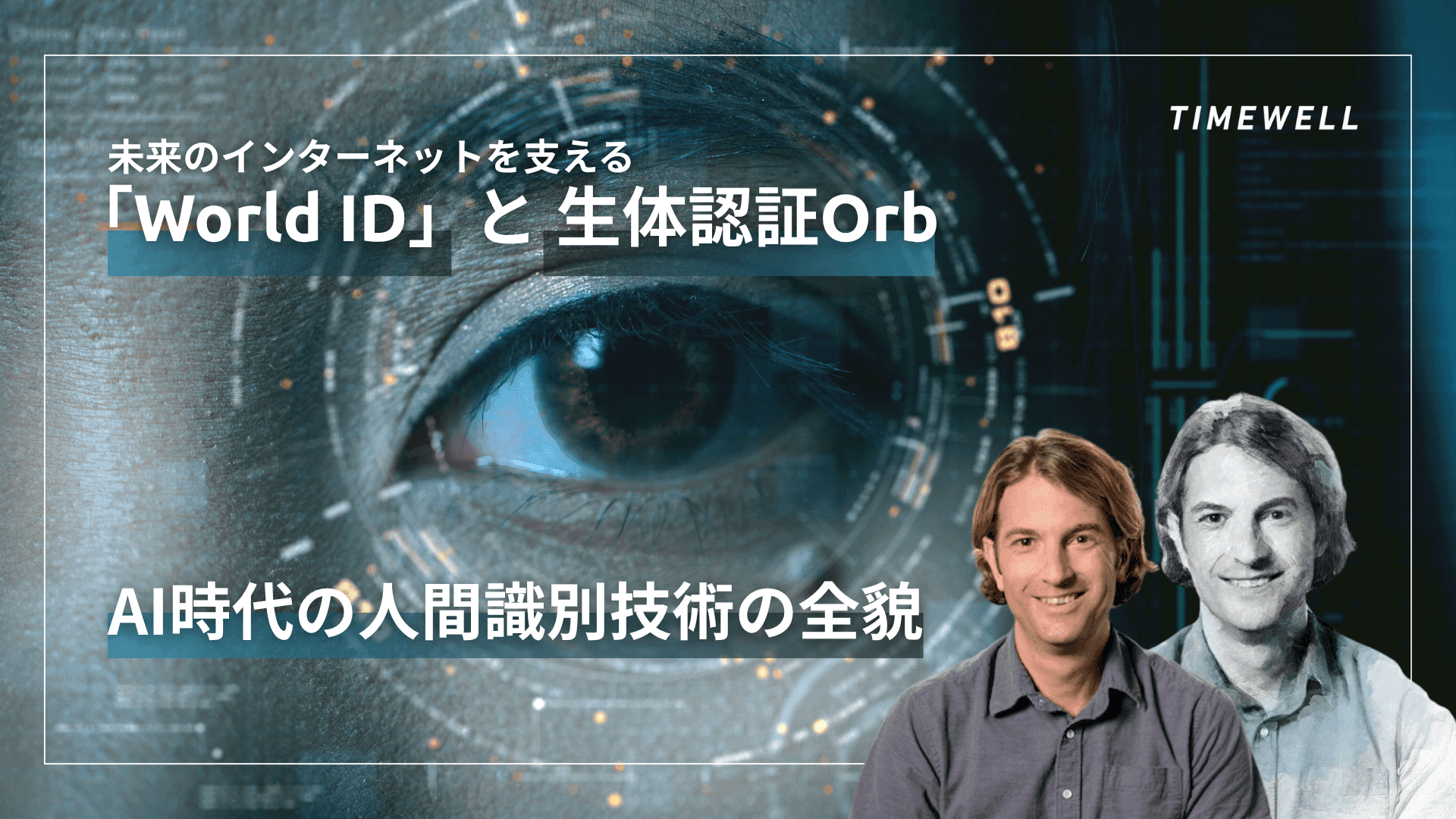
The core system that "World ID" realizes is built around a special camera device called the Orb. This Orb shoots the human face with visible light and infrared, and analyzes the iris, facial expressions, and other physical characteristics with advanced algorithms. This enables not just image matching, but real-time biometric analysis that AI cannot imitate even using deep learning.
As a technical safety measure, images photographed by the Orb are analyzed instantly on the spot and are not transmitted to external servers. Individual user authentication information is managed by the users themselves, and when used for various services, a scheme is adopted — using a technology called zero-knowledge proof — that conveys only the minimum necessary information to the other party. As a result, for example, in online shopping in situations where age or identity verification is required, it becomes possible to prove only the fact that one is "a real human" without publicly disclosing any specific private information whatsoever.
In terms of actual operational examples, more than 17,000 Orbs are already operating in over 24 countries worldwide, and users are steadily growing in Japan, the US, Europe, and major Asian cities. As a result, integration is advancing in major social networks, online dating, and payment systems, and a new foundation is being built to prevent fraudulent activities and bot abuse online.
Furthermore, this system is designed not to accumulate biometric information in a centralized database — data acquired by each Orb is analyzed on the spot and immediately discarded. This has the major advantage that even if hacking or information leakage occurs, individual privacy is protected.
These technological innovations are considered the most appropriate authentication method for the digital age compared to traditional paper-based or centrally managed proof systems like driver's licenses and passports. In particular, amid concerns about personal information leakage and unauthorized use by third parties, distributed high-security authentication systems are expected to contribute to improving the reliability of society as a whole. Adrian indicated his view that proving "real humans" in the online world is not limited to security measures alone but is directly linked to improving the quality of various services in the future.
For example, preventing fake accounts and misinformation from proliferating on social media and promoting healthy interaction between real people improves the overall user experience, he explained. In online ticket sales and e-commerce as well, the effect of reducing the risk of fraudulent bot purchases and scalping and creating a transaction environment that does not betray consumers' trust is expected. These points are major benefits that World ID as a latest and future technology brings to the world — and it will surely evolve into an indispensable technology across various industries going forward.
In addition, Tools for Humanity is actively pursuing partnerships with major global customer companies, with dialogue progressing with Reddit and other major social networks. They are taking head-on the challenge of "reliability" in complex online ecosystems that conventional systems have been unable to solve. As only relying on third parties to manage user information is no longer sufficient to protect privacy, the "World ID" system — in which all data is under the user's own control — is an innovative approach that updates conventional authentication systems on both reliability and safety.
Open Source and Blockchain Technology Achieving Transparency and Security
A major feature of the "World ID" project lies in its technological transparency and security. Tools for Humanity is proceeding with open-sourcing all hardware specifications and software code — distinguishing itself from traditional centrally managed authentication systems. As a result, third-party security experts and researchers, and even general users, can verify the authentication process and the internal structure of devices to confirm reliability. The open-source approach is valued not only for ensuring technical transparency but for creating an environment where communities around the world can participate in improving the technology, leading to the early discovery and correction of security holes.
Furthermore, this technology provides not just high security but also an environment where researchers and engineers around the world can freely review and improve its code by ensuring transparency in the development process through open-source development. Because anyone can understand and replicate its workings, it becomes something that users, governments of various countries, and online platforms can adopt with confidence as a truly independent means of identity verification that doesn't depend on any specific company.
Furthermore, "World ID" integrates with blockchain technology. Authentication information generated by the Orb is recorded on the blockchain together with an ID that the user themselves generates, with transactions managed in an irreversible and transparent form. As a result, a clear record remains of who was authenticated when — creating a system where falsification and fraudulent data manipulation are extremely difficult. Through blockchain integration, companies and service providers can easily verify the legitimacy of users, making a major contribution to preventing fraudulent use by bots and AI.
The open-sourced hardware also enables independent verification and improvement by users and independent engineers. Detailed information is published on Orb's core components including the camera module, image analysis algorithms, and communication protocols. As a result, the risk of damage from a single data breach or malicious hacking is dramatically lower than with traditional centrally managed databases. Since users retain data themselves and only the minimum necessary information is shared when cooperating with various services, the risk of personal information leakage is minimized.
Furthermore, World ID is structured not to accumulate all data on central servers, incorporating a series of encryption technologies used in authentication and zero-knowledge proof encryption. As a result, while users can prove that they are over a certain age or are a real person, none of their other personal information is disclosed at all — only the necessary information is verified. For example, in fields like dating apps, SNS, and even concert ticket sales, it becomes important that only real humans — not fake IDs — can use these legitimately. Adrian says that as such use cases expand, reliability in online spaces will improve dramatically.
Also, Orb's firmware and analysis algorithms have already been audited for security multiple times by third-party organizations, with results made public. As a result, not only on the technological side but also in actual operations, a structure is maintained that keeps standards high — earning strong trust from users and partner companies. Since images are never sent to the cloud when using services and everything is processed within the device, the design eliminates even concern about data leakage in communication channels. Such a system can provide sufficient reliability and safety for use not only by individual users but also at the national and large corporate level.
The Future World ID Envisions — Achieving an Online Society That Balances Trust and Privacy
The emergence of "World ID" is attracting much attention as an attempt to present new standards of trust and security in the future online environment. Conventional internet services have held large amounts of personal information on central servers in order to guarantee individual identities, at the cost of user privacy. In contrast, World ID realizes an entirely new mechanism — combining zero-knowledge proof, blockchain technology, and the transparency of open source — based on the principle of users themselves controlling their own data and sharing only the minimum necessary information safely. Adrian Ludwig emphasized that through this system, companies and online services can confirm user authenticity in a trustworthy form, dramatically reducing the risks of fraudulent activities, bot abuse, and privacy violations.
The future of World ID holds the prospect of application across all fields — online entertainment, commerce, government procedures, and more. For example, not only in advanced countries but also in developing nations, by using this technology as an accurate and secure authentication means in place of traditional ID systems, an environment is created where all citizens can equally benefit from digital society. In specific services as well, it is expected that mechanisms will be introduced where exclusive benefits for actual attendees or event participation are linked to offline real-world experiences with online authentication. As a result, the malicious operations seen in conventional digital services — "lottery manipulation by bots" and "automated purchasing" — will be improved, and truly real dialogue between users and companies will be promoted.
Companies as well must shift toward providing services that prioritize trustworthiness and privacy without relying on excessive collection of user information. In this regard, World ID is positioned as a tool that contributes greatly to building trust with users — being able to confirm only necessary authentication information while maintaining user anonymity and safety. Furthermore, World ID's system also has the potential to be used by governments and public institutions — for example, it is expected to be utilized as a means of proving that one is a genuine individual during online government procedures or when receiving public services.
Such a future vision will be not only a technological evolution but a major opportunity to build new relationships of trust between users and service providers, and society as a whole. For users, being able to participate as a "real human" in all transactions — SNS, online games, and even restaurant reservation sites — provides peace of mind, and this ultimately leads to the formation of a healthy ecosystem across the entire internet.
Adrian expresses concern that the prevalence of misrepresentation and fake accounts online is having a large negative impact on corporate revenue and user experience — and forcefully argues that World ID can be the solution. He says that in the future online society, all transactions changing to sincere exchanges based on real people will fundamentally transform digital advertising and marketing strategies, realizing a fairer and healthier business environment.
As a result, companies will evolve in the direction of valuing the real experiences and trust of each individual user rather than simply relying on the volume of data. Furthermore, users themselves will gain new freedom and peace of mind in being able to manage their own information in an environment where privacy is protected and trustworthy. World ID continues to evolve toward such a future, harboring great potential as an attempt to fundamentally transform our online experience.
Summary
"World ID" is an innovative technology for realizing trustworthy exchanges with "real humans" in today's online society where AI bots and fake accounts proliferate. Tools for Humanity, with its long background in security technology, developed a unique biometric authentication device called the Orb, realizing a mechanism to enhance user privacy protection and safety by combining open-sourcing of hardware and software, blockchain technology integration, and zero-knowledge proof.
In an environment where verifying online authenticity is difficult, this technology is drawing attention as a groundbreaking step toward providing peace of mind to companies and service users and building a foundation for healthy exchanges and transactions. Furthermore, unlike previous centrally managed systems, the mechanism where users themselves can manage data has the potential to become a new standard for personal information protection in the future online society.
In the coming era, as AI advances and online trustworthiness becomes increasingly important, "World ID" will surely become an indispensable foundation as an effective means of distinguishing real humans from bots. We must look forward to the evolution and spread of this technology, expecting progress toward a safer, privacy-conscious online environment, while continuing to pay attention to future technological innovation and its dissemination.
Reference: https://www.youtube.com/watch?v=IyRfnFJrNUc
Looking for AI training and consulting?
Learn about WARP training programs and consulting services in our materials.
Streamline Event Operations With AI | TIMEWELL Base
Are you struggling with large-scale event operations?
TIMEWELL Base is an AI-powered event management platform.
Track Record
- Adventure World: Operated Dream Day with 4,272 participants
- TechGALA 2026: Centralized management of 110 side events
Key Features
| Feature | Effect |
|---|---|
| AI Page Generation | Event page complete in 30 seconds |
| Low-Cost Payment | 4.8% fee (industry-leading low rate) |
| Community Features | 65% continue engaging after the event |
Please feel free to reach out for a consultation on streamlining your event operations.
Related Articles
- The Reality of a Working Mother Returning from Two Maternity Leaves — And How Her Work Philosophy Changed | TIMEWELL
- Before Taking Paternity Leave (Part 2): Three Absolute Must-Dos for Taking Leave During a Busy Season
- A First-Class Architect Who Stays Close to the Job Site — Finding My Own Path as the Fifth-Generation Leader of a Construction Company