Hello, this is Ryuta Hamamoto from TIMEWELL.
Where you buy a memory chip is normally a procurement decision. Over the past month it turned into a foreign policy question.
On August 14, Commerce Secretary Howard Lutnick was reported to have said that the administration does not favor Apple sourcing memory from Chinese manufacturers.1 Two weeks earlier, seven US senators had written to CEO Tim Cook asking Apple to commit that memory from CXMT or YMTC would not go into any Apple product sold anywhere in the world.2 The response deadline is August 21, a few days after I am writing this.
What put Apple in this position is the memory shortage now squeezing every hardware maker on earth. So this is not really a story about one company's sourcing policy. It is a story about how far a government can constrain where you look when supply runs out. And it lands on component suppliers in Japan, Korea, and everywhere else.
Three moves in one month
The reporting arrived in fragments, so here is the sequence.
On July 16, Chairman John Moolenaar and Representative George Whitesides of the House Select Committee on the CCP wrote to Secretary Lutnick, urging him not to authorize American purchases of Chinese memory.3 The letter carries three recommendations. BIS should strengthen Entity List restrictions on YMTC and expedite a formal review to add CXMT. The administration should issue an executive order or agency directive barring procurement of memory from listed or designated entities for AI systems, data centers, federal IT, and critical infrastructure. And third, the United States should work with trusted allies including Japan, Korea, and the EU on a coordinated approach that keeps those suppliers from using the global shortage to enter allied supply chains. Hold that third one; I will come back to it.
Then the Senate letter, dated July 29. The signatories are Jeanne Shaheen (D-NH), ranking member of the Senate Foreign Relations Committee, Jim Banks (R-IN), Chuck Schumer (D-NY), Mike Crapo (R-ID), Andy Kim (D-NJ), Jim Risch (R-ID), and Pete Ricketts (R-NE). Seven senators, both parties.2
The letter poses seven questions. Will Apple commit not to incorporate CXMT or YMTC memory anywhere? Where does testing and qualification currently stand, and for which product lines and memory types? What product information, technical specifications, or roadmaps has Apple shared, or would it share, during qualification? Has Apple assessed whether that memory relies on US or allied intellectual property, and whether the suppliers are licensed? Under a hypothetical agreement, what access would those suppliers or their personnel have to Apple's design, production, or supplier-management facilities, and what data could they collect? During the shortage, has Apple asked any US or allied manufacturer for additional supply or priority, and what happened? And has Apple analyzed the risk of dependence on supply that Beijing could restrict or cut off?
Anyone who has run a qualification program will feel the weight of that list. Questions three and five are not really about vendor selection. They are about information security.
Then on August 13, Lutnick attended the opening of Apple's advanced manufacturing center in Houston, and the remark surfaced the following day. With the administration's position public, the path where Apple proceeds with a blessing looks narrow.
For the record: that Apple is testing CXMT DRAM, and that it lobbied the administration, are both press accounts. Apple has not announced either. Read the rest with that caveat attached.
Replace siloed classification work with AI.
METI's FY2024 data shows 52% of foreign exchange law violations stem from classification errors. Download the TRAFEED product catalog covering features and rollout.
Why Apple looked there at all
It reads as politics. It started as arithmetic.
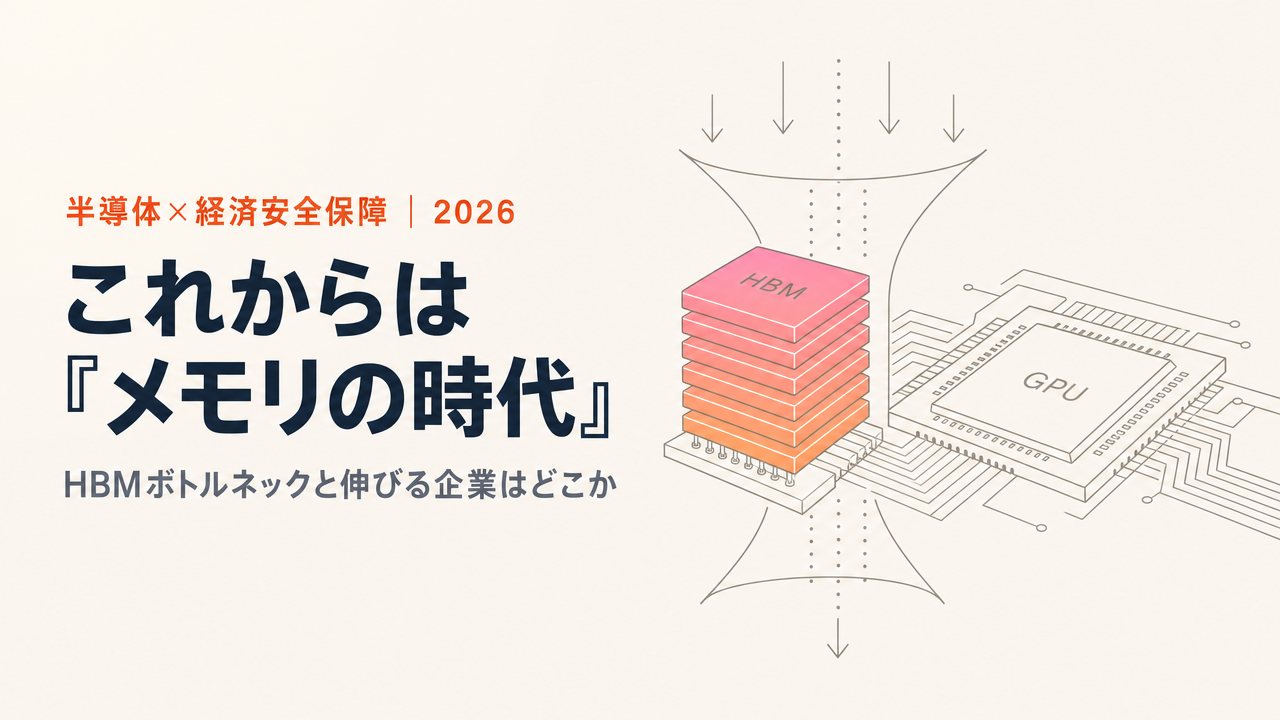
The 2026 memory market is tighter than anything people in the industry say they have seen. The cause is not mysterious: high-bandwidth memory for AI accelerators. As the major DRAM makers shifted capacity toward HBM, what was left for commodity DRAM and NAND in phones and PCs thinned out. Kioxia's 2026 NAND output has effectively been spoken for, with some large customers reported to be seeking supply agreements stretching into 2027 and 2028. New fabs do not reach meaningful volume until late 2027 or 2028. For at least the next eighteen months, money does not conjure wafers.
Memory hits the bill of materials hard. Capacities keep climbing while unit prices climb faster, so it either shows up in the retail price or it eats margin. I have written about that mechanism in Apple's price increases and memory costs and in where GPU and memory prices are heading. The largest buyer in consumer electronics adding a new supplier to its evaluation list is, on its own, ordinary procurement behavior.
The Senate letter takes aim at the assumption underneath it, though. Analysis indicates CXMT's pricing is in some cases higher than global competitors, and that it recently raised prices on existing customers. Even if Apple negotiated a lower price, the letter argues, that would not justify the security exposure created by qualifying a designated supplier into its products.
One more thing worth saying out loud: when supply gets tight, everyone widens the funnel. New counterparties, more intermediaries, more layers between you and the factory. That is precisely when verification discipline slips. If you want a fast read on your own position, try the three-minute export compliance check.
Getting the regulatory picture right: three separate regimes
This is where coverage tends to blur, so let me separate it. "Blacklisted Chinese chipmaker" collapses three different instruments into one phrase.
| Regime | Administered by | CXMT | YMTC | Effect |
|---|---|---|---|---|
| Section 1260H list | Department of Defense | Listed | Listed | Published as a Chinese military company. Not itself a trade ban |
| Entity List | Commerce (BIS) | Not listed; addition under discussion | Listed in 2022 | License required for exports of covered US-origin items and technology |
| Section 5949 | Federal procurement | Covered | Covered | From December 23, 2027, federal agencies may not procure products containing covered semiconductors |
The Senate letter states that the Defense Department designated both companies under Section 1260H and that both remain on the list it updated the previous month, while its Entity List reference is only to YMTC in 2022.2 The House letter asks BIS to expedite a review to add CXMT, which tells you CXMT was not on the Entity List as of mid-July.3
An important caveat: a listing or designation is a regulatory classification. It is not a judicial finding that the company did something wrong. The letters use forceful language, but that is political argument from the legislative branch, and it should be read separately from established fact. Blur that line in internal materials and you create needless friction with counterparties.
Section 5949 is the one least discussed in Japan and the one that bites hardest in practice. Enacted in the FY2023 NDAA, it prohibits executive agencies from procuring electronic products or services that include semiconductor products or services produced or furnished by SMIC, CXMT, YMTC, or their affiliates. It takes effect December 23, 2027. On February 17, 2026, the FAR Council published the proposed rule implementing it: FAR Case 2023-008, published at 91 FR 7223.4 Comments closed on April 20, so the final shape should not be far off.
So the US is running two distinct machines: one that stops exports (the Entity List) and one that stops government purchases (Section 5949). Apple is not a federal agency, so 5949 does not bind it directly. The senators' point was that Apple would be directly supporting a supply chain the government is legally obligated to phase out.
Does a windfall arrive in Japan and Korea?
Back to that third recommendation, the one naming Japan, Korea, and the EU.
Read plainly, the more the US suppresses Chinese memory in allied supply chains, the better the position of Micron, Samsung, SK hynix, and Kioxia as trusted suppliers. The Senate letter leans the same way, citing memory expansion underway in Indiana, Idaho, New York, and Virginia, and naming the advanced packaging plant SK hynix is building next to Purdue University.
Japan's public investment points the same direction. On the Ministry of Economy, Trade and Industry's list of certified semiconductor production facility plans, a plan by Micron Memory Japan and Micron Technology was certified on September 12, 2025 with a maximum subsidy of 500 billion yen.5 Micron broke ground on a new fab building in Hiroshima in July 2026 for an EUV-based leading-edge DRAM node. A Kioxia-related plan certified in February 2024 carries up to 150 billion yen. Few countries are putting public money into memory capacity at this scale.
Is that a windfall? I do not think it is that simple, for three reasons.
Timing, first. The fight is about supply in 2026 and 2027, but the new buildings in Hiroshima and Kitakami ship in volume around 2027 to 2028. They do nothing for the current gap.
Price, second. Contract prices are already high, and there is a ceiling on what device makers can absorb. If the senators are right that CXMT is not actually cheap, this is not a contest between cheap Chinese supply and expensive allied supply. It is simply everyone being short. Buyers have weak leverage no matter whom they buy from.
Third, demand protected by regulation moves when regulation moves. A change of administration, or a turn in US-China negotiations, could loosen this. In March 2026 a revised 1260H document briefly circulated appearing to change both companies' status before being pulled. Building a capital plan on that tailwind is risky. The durable advantage for Japanese and Korean makers has to be quality and delivery certainty, not "the Chinese option is unavailable."
What suppliers should do, even outside federal procurement
Section 5949 constrains federal agencies. It is tempting to conclude that if you do not sell to the US government, none of this touches you. It does not work that way.
US companies selling into federal procurement will have to verify that covered semiconductors are absent from their products and services, and represent that contractually. Those verification demands flow down to whoever supplies the parts. Japanese component makers, module makers, and equipment makers will increasingly be asked to identify the manufacturer of the DRAM on a given board.
Which puts the question squarely at bill of materials level: can you name the maker? For memory you buy directly, yes. It gets hard where an ODM or EMS partner owns the design and sourcing, where memory sits inside a purchased module, or where a service part was substituted mid-life. Start digging only after the questionnaire arrives, and a meaningful share of it turns out to be unrecoverable.
The work is unglamorous. Sort the memory devices in your products into what you can trace and what you cannot. Build a route for asking suppliers about the second group. Then record what you confirmed and what you could not, with dates. Get that done before December 2027 and you can answer a customer questionnaire on the spot.
This uses the same muscles as export control classification and counterparty screening. Trace the item, verify the counterparty, keep the reasoning. TRAFEED, which we build, is designed around preserving that reasoning as a record. Honestly, though, before choosing a tool, decide which function inside your company owns the answer. At most companies this question floats unowned between procurement, quality, and legal.
For the broader regulatory picture, see US-China semiconductor controls and the impact on Japan.
Two things to watch next: Apple's August 21 response deadline, and the final FAR rule under Section 5949. The first lands in days, the second probably this year. Both will change what shows up in the questionnaires your customers send you.
If you are trying to work out how far back you can actually trace your own supply chain, and where visibility stops, get in touch. Starting before the rules harden is always cheaper.
Footnotes
-
Secretary Lutnick's remark was reported by The Wall Street Journal on August 14, 2026 and picked up widely. He had attended the opening of Apple's advanced manufacturing center in Houston, Texas the previous day ↩
-
US Senate Committee on Foreign Relations, "Shaheen, Banks, Schumer, Colleagues Demand Apple Reject Chinese Military-Linked Chips" (published July 30, 2026; letter dated July 29). Press release and full letter text ↩ ↩2 ↩3
-
US House Select Committee on the CCP, "Moolenaar, Whitesides to Secretary Lutnick: Hold Firm on Chinese Memory Chips Ban" (July 16, 2026). Committee announcement ↩ ↩2
-
Federal Acquisition Regulation: Prohibition on Certain Semiconductor Products and Services (proposed rule, FAR Case 2023-008, RIN 9000-AO56, 91 FR 7223, February 17, 2026). Federal Register ↩
-
Ministry of Economy, Trade and Industry, "Certified Plans for Specified Semiconductor Production Facilities." Micron Memory Japan and Micron Technology, plan 2025-001-1, certified September 12, 2025, maximum subsidy 500 billion yen. List page, in Japanese ↩