Hello, this is Ryuta Hamamoto from TIMEWELL.
On November 11, 2026, Reuters reported that a Chinese university on the US trade blacklist had bought Nvidia H200 chips. AFP followed the next day. If you work in export control, you know what comes next: someone in sales or on the board asks whether your own deals with universities are safe.
A note on tone before the facts. This article is not an accusation against any institution. Placement on the US Entity List is a regulatory classification by the US government. It does not mean the university did something wrong, and the university has its own account to give. What matters for a Japanese company is knowing where a counterparty sits in the regulatory map and having a repeatable way to check. So I will separate what the reports establish from what they do not, then walk through which universities are listed and what to verify.
If you would like to see where your screening stands today before reading on, the 3-minute export control check makes it easier to map each point below to your own process.
What the reports establish, and what they do not
The reports rest on public procurement records. According to Reuters, Northwestern Polytechnical University in Xi'an bought two H200 chips for its School of Management for 874,700 yuan, about $123,000 by Reuters' conversion, in a procurement record dated October 21, 2026. The seller was not Nvidia but a domestic reseller, Shaanxi Bosuan Network Technology. Reuters says it could not find contact details for that company.1 AFP added that the university's cybersecurity school bought two H200 chips for 796,000 yuan under a separate notice dated September 4.2
The picture is messier than a single purchase. Reuters reported that the university also gained access to H200 and other Nvidia processors this year through five computing-rental contracts with Chinese companies. For the cybersecurity school, two seven-month contracts signed in January covered servers with eight H200 chips each, for fine-tuning and reinforcement learning. AFP calls one of these a purchase and Reuters calls it a rental, so the two outlets do not even agree on the nature of the transaction. AFP also noted that the notices had disappeared from the university's website by the 12th. I have not seen the originals myself.
Other institutions appear in the Reuters review of 26 Chinese procurement and corporate records. Shenzhen University bought three H100 chips for 769,800 yuan in September. Wuhan University of Technology bought an H100 server for 355,000 yuan in June. Beihang University bought four A800 chips for 489,000 yuan in April. For the University of Chinese Academy of Sciences, government notices in July and September selected suppliers of computing services based on H800 and A800 chips.1
Now the part that matters most in practice: what we do not know. Northwestern Polytechnical University, Nvidia, and the US Bureau of Industry and Security (BIS) did not respond to requests for comment, according to Reuters. The reports do not say when, from where, or through which route the chips reached the domestic reseller. Information on where the rented servers sit and where their chips came from is described as scarce.1 Nothing in the coverage lets anyone say a rule was broken. It is not even clear whether these were old stock or goods that passed through a third country.
What the "Seven Sons of National Defence" are, and who is on the list
The question I hear most is simply which universities these are. Northwestern Polytechnical University, at the center of the reports, is one of seven institutions known in China as the "Seven Sons of National Defence": Beihang University, Beijing Institute of Technology, Harbin Institute of Technology, Harbin Engineering University, Nanjing University of Aeronautics and Astronautics, Nanjing University of Science and Technology, and Northwestern Polytechnical University. They are engineering universities under the department that oversees China's defense science and industry,2 strong in aviation, space, shipbuilding, and weapons-related fields, and they also produce a large amount of civilian research and many graduates.
I went through the Federal Register to trace each listing. This is what I could confirm as of November 13, 2026.
| University | Entity List listing | Federal Register record |
|---|---|---|
| Northwestern Polytechnical University | May 14, 2001 | 66 FR 24266, cited in a 2019 rule. Review policy changed to presumption of denial in August 20193 |
| Beihang University (BUAA) | On the list since May 2001 | Stated in a 2013 rule4 |
| Harbin Institute of Technology | June 5, 2020 | 85 FR 344955 |
| Harbin Engineering University | June 5, 2020 | 85 FR 344955 |
| Beijing Institute of Technology | Effective December 18, 2020 | 85 FR 834166 |
| Nanjing University of Aeronautics and Astronautics | Effective December 18, 2020 | 85 FR 834166 |
| Nanjing University of Science and Technology | Effective December 18, 2020 | 85 FR 834166 |
The list does not stop at the seven. The National University of Defense Technology was added in February 2015 (80 FR 8524),7 and Sichuan University's entry received added aliases and addresses in a March 2023 revision.8 On the other hand, Shenzhen University and Wuhan University of Technology, both named in the reports, did not turn up by name in BIS Federal Register documents. That is easy to overlook: institutions that are not listed were also reported buying the latest AI chips. I could not confirm a listing for the University of Chinese Academy of Sciences itself either.
The Federal Register also states the reasons, briefly. The 2020 rules cite concern about acquiring, or trying to acquire, US-origin items in support of People's Liberation Army programs.56 That is the US government's regulatory judgment. It does not include the universities' side or the Chinese government's position, and I ask you to read it that way.
The 2019 rule on Northwestern Polytechnical University matters in practice. The review policy became a presumption of denial, which means a license is required and approvals are rare.3 Even for goods shipped from Japan, US rules can reach them when they contain US-origin parts or technology. I cover that in how the EAR can follow goods exported from Japan.
Replace siloed classification work with AI.
METI's FY2024 data shows 52% of foreign exchange law violations stem from classification errors. Download the TRAFEED product catalog covering features and rollout.
What the H200 rule changed, and what it left alone
A second point often gets garbled: the January 2026 BIS rule. From January, the Trump administration moved to case-by-case review for exports of chips such as the H200 to China. The formal title is "Revision to License Review Policy for Advanced Computing Commodities" (91 FR 1684), effective January 15, 2026.9 For items below 21,000 in total processing performance (TPP) and below 6,500 GB/s of DRAM bandwidth, such as the H200, the policy for China and Macau changed from presumption of denial to case-by-case.
That is not a blanket green light. Applicants must show, among other things, that cumulative shipments to China stay at or below 50 percent of volume shipped to US customers, that an independent third-party lab verifies each shipment, and that the final consignee runs rigorous know-your-customer procedures to prevent remote access by unauthorized parties.9 The rule itself excludes transactions caught by end-use and end-user controls. Entity List parties sit outside the relaxation.
If I had to pick the lesson of this episode, it is the remote-access piece. When a university buys a chip, you check the buyer. When it rents servers from a domestic operator, the burden of knowing who is actually using the machine shifts toward the lessor. In its May 31, 2026 guidance, BIS restated that a license is required to export advanced computing items to entities headquartered in Country Group D:5 or Macau, even when those entities sit outside those places. It also said that bona fide data center operators need not stop ongoing use or servicing until further notice.10 Cloud and rental treatment is still being worked out.
The checks I would run before dealing with a university
Refusing every Chinese university is not realistic. Universities are natural counterparties for exchange students, joint research, and equipment sales, and most of that activity is ordinary teaching and research. What I would build instead is a process that adjusts the depth of checking to each deal.
Start by widening name matching. The Northwestern Polytechnical University entry carries aliases such as "Northwestern Polytechnic University," "Northwest Polytechnic University," and "Northwest Polytechnical University," and a March 2023 revision added seven more aliases and nine addresses.8 Beihang University's entry has eleven aliases and names regional institutes, such as the Beihang University Hangzhou Innovation Institute.8 If your screening matches only the English name and misses simplified-Chinese forms and abbreviations, the same university slips through.
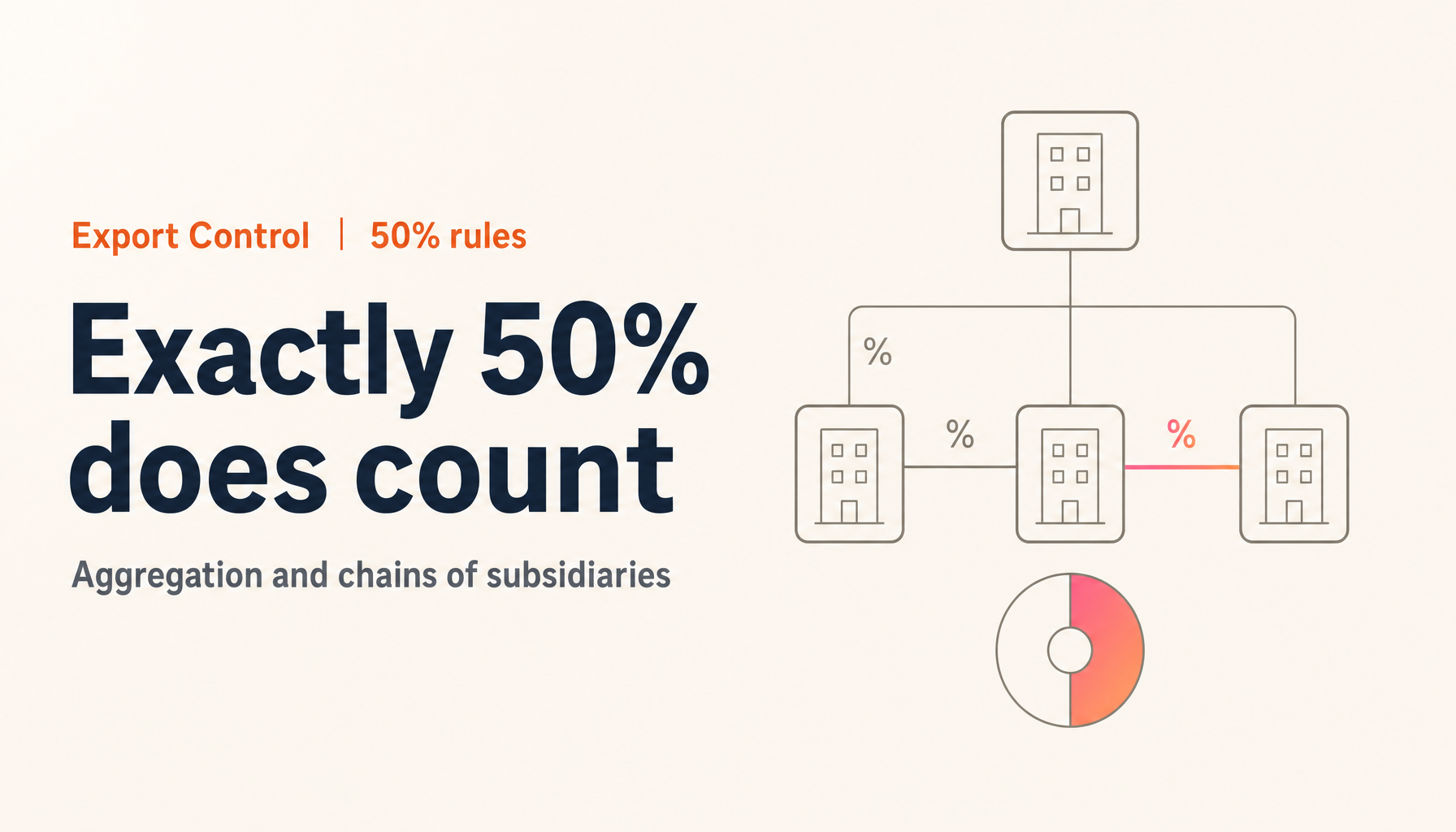
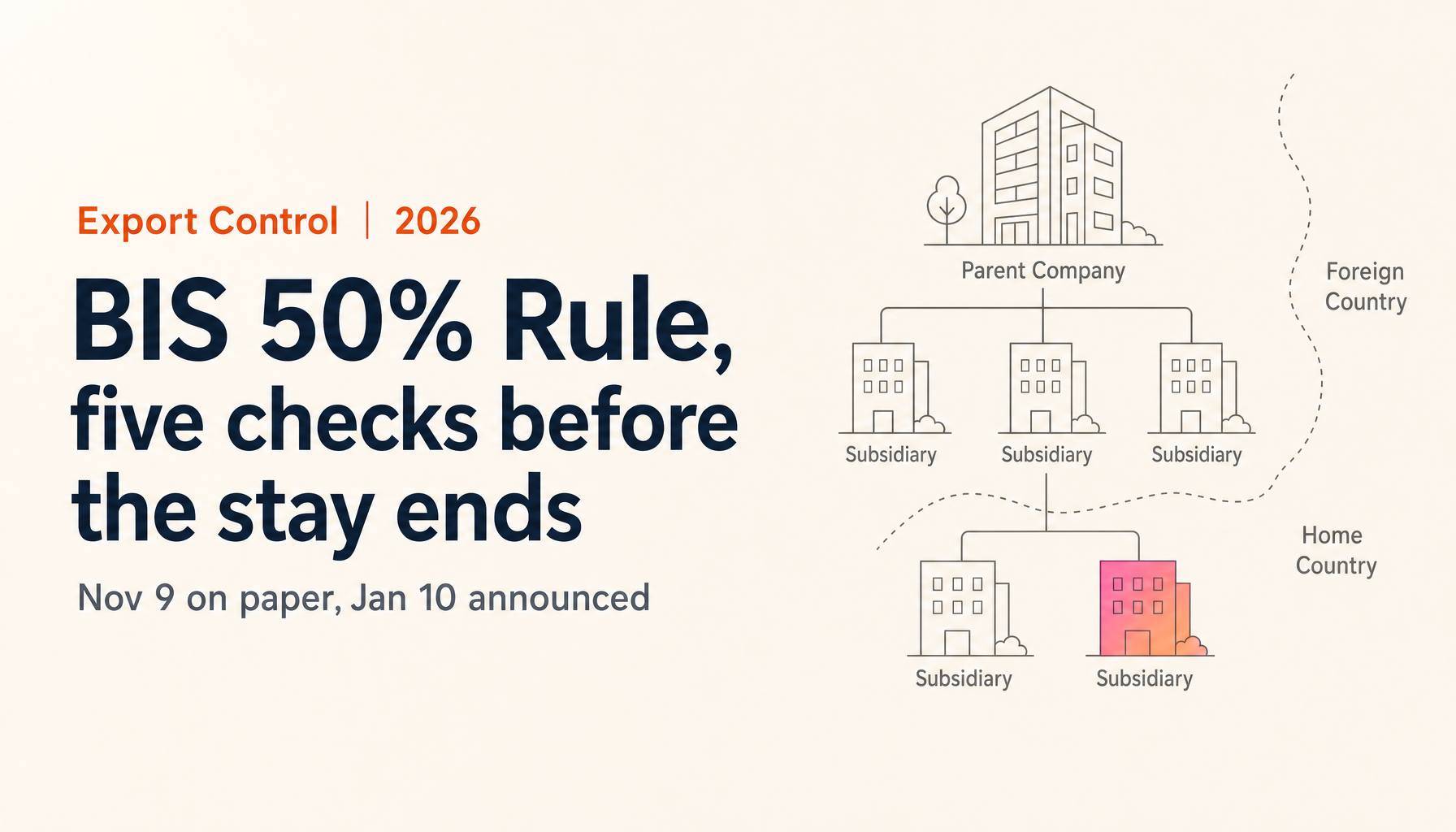
Next, look below the university level. In these reports the buyers were a school of management and a school of cybersecurity, not "the university." Quotes and contracts often name a school, a lab, or a company the university invested in. Ownership checks belong here, and they overlap with how the BIS 50 percent rule works.
Third, pin down the end user whenever a distributor is in the chain. The purchases reported here went through a domestic reseller, not Nvidia. If you sell to a distributor, get a written end-user statement and restrict onward resale by contract. Our guide to circumvention red flags lists the signals.
Fourth, confirm end use. A university absent from METI's end-user list can still trigger Japan's catch-all controls through the objective and "inform" requirements. The end-user list is reference information, not a pass or fail test: a listing calls for more care, but no listing does not mean no check. Please read the latest version on METI's site, and if METI notifies you to apply for a license, see the guide to the inform requirement.
Fifth, if you provide compute or cloud capacity, confirm who the user is and where they connect from, and design for cutting off remote access. The January rule already asks the consignee for remote-access KYC, so I expect counterparties to ask providers the same questions soon.
Finally, keep records: the date you screened, which version of each list you used, and why you decided as you did. Lists change, and the 2023 alias additions show how an entry can widen after the fact. Re-screen existing counterparties on a schedule, not only new ones. The same logic applies to exchange students, which I cover in due diligence for admitting foreign students.
Turning this into a process with TRAFEED
None of these steps is new on its own. The hard part is repeating them deal after deal at the same quality. List matching that changes when aliases are added, ownership checks that reach schools and affiliated companies, and written reasons for each decision all lean heavily on individual experience.
TRAFEED, our export control AI agent, brings reflection of rules across jurisdictions, counterparty screening, and decision records into one flow. For university and research-institute deals, the aim is to keep the screening result and its basis on file so a colleague can review it later. The final determination remains with your export control officer. TRAFEED supplies the material for that judgment.
What to take from this
The reports describe a listed university reportedly obtaining current AI chips, and a route that is still unknown. From the practitioner's side, four points stand out.
- All seven "Seven Sons" institutions have Entity List records in the Federal Register. A listing is a regulatory classification, not a verdict on the institution.
- Unlisted universities, such as Shenzhen University, were also reported buying chips. List matching is the starting point; end use and end user are the substance.
- Match names against aliases, abbreviations, and affiliated institutes. List entries can widen later.
- Computing rental raises a new question about remote access, and both the rules and practice are still settling.
I do not think "Chinese universities are risky" is a useful reading of this news. Most Japanese companies that work with universities are doing ordinary research and education business. What they need is a way to tell, with evidence, which of those deals deserve a closer look. If you want to review your counterparty screening, please contact us about TRAFEED. We will listen first and work through it together.
References
The reports cited are from November 11 to 13, 2026, and figures follow each outlet's own wording. US regulatory facts were checked against the Federal Register and official BIS materials.
Footnotes
-
Yahoo Finance Canada (syndicated Reuters exclusive), "Exclusive-PLA-linked Chinese university bought Nvidia H200 chips despite US blacklist, records show", November 11, 2026. https://ca.finance.yahoo.com/news/exclusive-pla-linked-chinese-university-051540362.html ↩ ↩2 ↩3
-
AFPBB News (AFP), "Chinese military-linked university bought Nvidia AI chips under US export controls" (Japanese), November 12, 2026. https://www.afpbb.com/articles/-/3662116 ↩ ↩2
-
Federal Register, "Addition of Certain Entities to the Entity List, Revision of Entries on the Entity List, ...", 84 FR 40237, August 14, 2019 (FR Doc. 2019-17409). https://www.federalregister.gov/d/2019-17409 ↩ ↩2
-
Federal Register, "Addition of Certain Persons to the Entity List; Amendment of Entity List Entries", 78 FR 75458, December 12, 2013 (FR Doc. 2013-28663). https://www.federalregister.gov/d/2013-28663 ↩
-
Federal Register, "Addition of Entities to the Entity List, Revision of Certain Entries on the Entity List...", 85 FR 34495, June 5, 2020 (FR Doc. 2020-10869). https://www.federalregister.gov/d/2020-10869 ↩ ↩2 ↩3
-
Federal Register, "Addition of Entities to the Entity List, Revision of Entry on the Entity List, ...", 85 FR 83416, December 22, 2020 (FR Doc. 2020-28031). https://www.federalregister.gov/d/2020-28031 ↩ ↩2 ↩3 ↩4
-
Federal Register, "Addition of Certain Persons to the Entity List; and Removal of Person From the Entity List...", 80 FR 8524, February 18, 2015 (FR Doc. 2015-03321). https://www.federalregister.gov/d/2015-03321 ↩
-
Federal Register, "Additions and Revisions of Entities to the Entity List", 88 FR 13673, March 6, 2023 (FR Doc. 2023-04558). https://www.federalregister.gov/d/2023-04558 ↩ ↩2 ↩3
-
Federal Register, "Revision to License Review Policy for Advanced Computing Commodities", 91 FR 1684, effective January 15, 2026 (FR Doc. 2026-00789). https://www.federalregister.gov/d/2026-00789 / BIS, "Department of Commerce Revises License Review Policy for Semiconductors Exported to China", January 13, 2026. https://www.bis.gov/press-release/department-commerce-revises-license-review-policy-semiconductors-exported-china ↩ ↩2
-
BIS, "Guidance Regarding Enforcement of License Requirements for Advanced Computing Items for Entities Headquartered in Country Group D:5 and Macau", May 31, 2026. https://www.bis.gov/media/documents/bis-guidance-may-31-2026.pdf ↩