This article is an overview as of July 2026. The US interim final rule of November 19, 2026 (new checks for foundries and OSATs, license requirements for advanced computing items to five countries, and more) is covered in our article on the US foundry rule.
Hello, this is Hamamoto from TIMEWELL. Since the start of 2026, the pace of movement around semiconductors at the international level has clearly accelerated. On April 2, a bipartisan bill known as the MATCH Act (H.R. 8170) was introduced in the US House, calling on allies to align with expanded export controls, and on April 22 the House Foreign Affairs Committee ordered it reported, as amended, by 36-8. Separately, China's Ministry of Commerce placed 40 Japanese entities on its export control list and export control watch list on February 24 (Announcements No. 11 and No. 12 of 2026), and on June 29 added 20 more entities to the control list (Announcement No. 27) and another 20 to the watch list (Announcement No. 28). Listing is a classification under China's export control regime and is not a judgment on the merits of the listed companies or institutions. In addition, reports in February indicated that TSMC's second Kumamoto fab will shift from the originally planned 6/7nm node up to 3nm.
Update, November 20, 2026: Corrected the timing of the AI Diffusion Rule's rescission (May 2025 was the announcement; the text was formally rescinded by the interim final rule of November 19, 2026). Otherwise the body reflects the situation as of July 2026.
Line up the events of the past few months and it becomes clear that semiconductors are no longer just commodities—they are strategic goods that can shape a country's national security. TIMEWELL supports customers on the front lines of export compliance, so we hear daily from semiconductor equipment and materials makers saying, "we're not even sure which lists our customers are on." Below, I walk through the timeline from the October 2022 BIS rules to the April 2026 MATCH Act, and dig into the key issues that Japanese companies need to address.
US controls against China: what has piled up over the past three and a half years
The starting point for understanding US semiconductor controls against China is the comprehensive export control package announced by BIS on October 7, 2022. For the first time, concrete technology boundaries were drawn: logic at or below 16/14nm, DRAM at or below 18nm, and NAND with 128 or more layers. Advanced semiconductors above those thresholds, along with the equipment used to make them, were effectively banned for export to China. At the same time, the Foreign Direct Product Rule (FDPR) was extended to China, applying controls to products containing US-origin technology even when routed through Japan or South Korea.
In October 2023, the second package addressed loopholes in AI chip exports. At the time, NVIDIA was shipping derivatives such as the H800 and A800 to China with specifications deliberately trimmed to sit under the existing rules. BIS responded with a new metric, Total Processing Performance (TPP), designed to measure overall compute more comprehensively, and swept these derivatives into scope. In December 2024, the third package was announced, bringing significant revisions: 140 companies added to the Entity List, expanded HBM controls, and tightened foreign direct product controls on advanced-node manufacturing equipment.
When the Trump administration came in, the AI Diffusion Rule—published under Biden—had its rescission announced in May 2025 (the text was formally rescinded by the interim final rule of November 19, 2026). But the regulations themselves did not loosen. They simply shifted to an individual licensing regime, and operations became arguably less transparent. In February 2026, a limited approval of NVIDIA H200 exports to China was reported (this article has not confirmed the volumes or conditions against a primary source); some see exceptional approvals being used as bargaining chips. Then on April 2, 2026, the "Multilateral Alignment of Technology Controls on Hardware Act," commonly known as the MATCH Act (H.R. 8170), was introduced in the House to extend equipment controls to older generations and to ask allies to align. The House Foreign Affairs Committee ordered it reported, as amended, by 36-8 on April 22, and a Senate bill of the same name, S. 4281, was introduced on April 13. Neither chamber had passed it on the floor as of July 2026. Depending on how the bill progresses, the reach of these controls could expand further.
Replace siloed classification work with AI.
METI's FY2024 data shows 52% of foreign exchange law violations stem from classification errors. Download the TRAFEED product catalog covering features and rollout.
Japan's 23-item rules: design and scope
Japan activated its own semiconductor manufacturing equipment controls in 2023. METI announced its plan to add 23 items on March 31, published the amendment to the ministerial ordinance on goods on May 23, and brought it into force on July 23. The rules cover advanced equipment used in six major process steps—cleaning, deposition, thermal processing, lithography, etching, and inspection—that can produce logic at or below 14nm, putting them comprehensively under export controls.
The impact of these rules on Japan's semiconductor equipment industry has been significant. In 2022, exports of semiconductor manufacturing equipment from Japan to China stood at roughly JPY 820 billion, a 31% share and the largest single market. Around ten companies were named as the main affected players, including Tokyo Electron, SCREEN Holdings, Nikon, Advantest, and Disco. After the rules took effect, these vendors' China revenues declined sharply, and they have been compensating with orders from friendly markets—United States, Taiwan, South Korea, and Europe.
It is worth emphasizing that these rules do not stop at the equipment makers who directly export. The 23 items include numerous components, materials, and control software, meaning that secondary and tertiary suppliers also need to assess classification. Under Article 69-7 of FEFTA, an unauthorized export can be penalized with up to seven years' imprisonment and/or a fine of up to JPY 20 million (or five times the value of the goods where that is greater), rising to ten years and/or a JPY 30 million fine for goods designated as carrying a particularly high risk of use in the development of nuclear weapons and the like. Administrative sanctions such as an export ban of up to three years (Article 53) can apply on top of that, so compliance is no longer optional for top-tier suppliers to equipment makers. In fact, TIMEWELL is increasingly approached through equipment makers with requests such as "we are struggling internally to determine where our parts land under the 23-item appendix."
The trilateral US-Japan-Netherlands framework that isn't easy to see
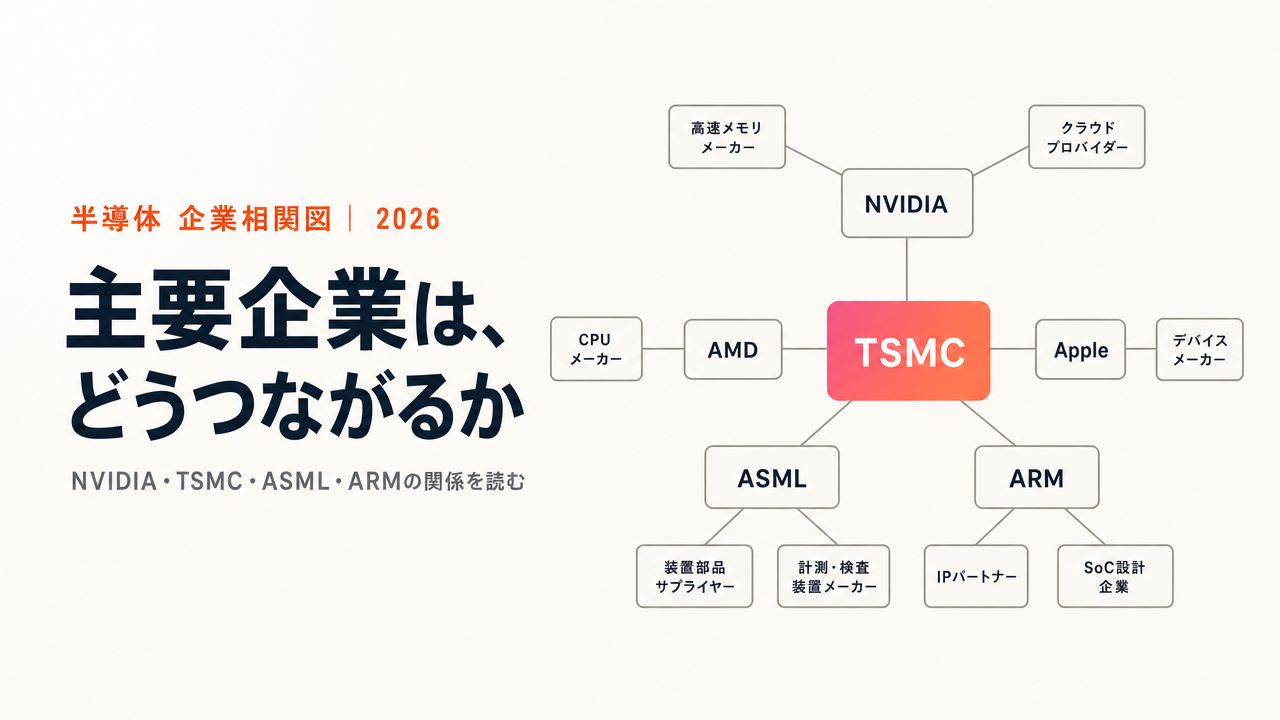
For US controls against China to bite, cooperation from Japan and the Netherlands—suppliers of advanced semiconductor manufacturing equipment—was essential. The most advanced lithography tools needed to produce below 14nm logic are effectively monopolized by ASML in the Netherlands, and Japanese vendors hold large global shares in etching, deposition, cleaning, and inspection. Built on this structural reality, a de facto agreement among the US, Japan, and the Netherlands was reached in January 2023, and the three-party framework—where each side enforces parallel controls through its own legal system—began to move.
On the Dutch side, the government expanded export controls on semiconductor manufacturing equipment in September 2023, and from January 1, 2024, added NA 0.33 EUV machines and the TWINSCAN NXT:2000i and above DUV lithography tools to controls. In April 2024, it revoked part of the already-issued export licenses for China, and entering 2026, debate has turned to whether to extend controls even to maintenance and parts supply for previously installed equipment. The Dutch Minister of Economic Affairs is reportedly caught between protecting domestic industry and maintaining alignment with allies, and ASML's China revenue share is estimated to have dropped from 49% in 2024 to the low 20% range by 2026.
On the Japanese side, METI applies general permissions to 42 friendly countries, so exports to the US, South Korea, Taiwan, and Europe are substantively unaffected. However, the MATCH Act introduced in the US Congress in April 2026 (H.R. 8170 in the House and S. 4281 in the Senate) seeks to extend semiconductor equipment controls against China to older generations, and the House Foreign Affairs Committee ordered the bill reported by 36-8 on April 22. If it is enacted, the reach of controls may extend beyond Japan's own 23-item framework. Equipment makers such as Tokyo Electron and ASML have already shifted their mid-term plans to reflect lower China revenues, but the mutual influence among allies' laws is a persistent operational burden for export control teams.
TSMC Kumamoto and Rapidus: the domestic industry being rebuilt behind the scenes
Export controls slow down advanced manufacturing capacity on the Chinese side, which conversely means strong motivation to build out manufacturing capacity on the allied side. Grounded in this logic, TSMC Kumamoto (JASM) and Rapidus have been stood up in Japan. Both are backed by major government subsidies, with JASM's first and second fabs combined receiving up to JPY 1.208 trillion, and Rapidus receiving cumulative public support exceeding JPY 920 billion.
JASM's first fab opened in February 2024 and produces logic from 28/22nm up to 12/16nm at a scale of 55,000 wafers per month. The second fab was announced in February 2024, originally targeting 6/7nm at launch, but reports in February 2026 indicate the production node will be upgraded to 3nm. At a December 2025 press conference, JASM President Yuichi Hotta stated, "construction of the second fab is progressing steadily," explicitly denying observations in some reports suggesting a "pause." The domestic materials sourcing rate is expected to rise from 46% in 2025 to over 50% in 2026, with a goal of reaching 60% in 2030.
Rapidus is building a mass-production fab in Chitose, Hokkaido, using 2nm Gate-All-Around (GAA) transistors. Production tool installation began in December 2024, process tuning was carried out in March 2025, and operation of a GAA prototype chip was confirmed in June 2025. Mass production is planned for 2027, and multiple customers including Tenstorrent in the US have already announced design outsourcing deals. While export controls suppress China's advanced manufacturing, Japan is moving to complete its own advanced node production base—a national strategic timeline in which the years around 2027 are widely seen in industry as the decisive window.
The counterattack from SMIC and Huawei—and what Japan needs to watch in 2026
You cannot ignore moves on the Chinese side either. In August 2023, SMIC surprised the world by embedding a 7nm-class Kirin 9000S (N+2 process) into Huawei's Mate 60 Pro. Less than three years later, in early 2026, SMIC has pushed the "N+3" 5nm-class process into mass production, powering Huawei's new flagship Kirin 9030. This has been achieved by pushing multi-patterning with DUV lithography to its limits, and while yields are estimated at only 30–40% (versus TSMC's 80%+), the Chinese government is absorbing the inefficiency through subsidies on national security grounds. Huawei and SMIC are also reportedly targeting tape-out of a 3nm GAA chip in 2026 and continue to develop a domestic laser-driven plasma EUV approach.
In China's AI chip market, adoption of domestic chips such as Huawei's Ascend series is reported to be growing (this article has not confirmed market-share figures against a primary source). The reported limited approval of H200 exports to China in February 2026 should be read in this context—a selective transaction that presupposes progress in domestic substitutes, used as currency in US-China negotiations. For Japanese equipment and materials makers, China demand is unlikely to recover in the short term, and the strategic pivot continues toward new fab projects in the US, Taiwan, and Europe.
So what should Japanese companies watch in 2026? From our vantage point on the compliance front lines, there are four issues. First, the fate of the US MATCH Act. It cleared the House Foreign Affairs Committee on April 22, and if enacted it could restrict the export of equipment, parts, and materials to China beyond Japan's own 23-item framework. Second, the reverse risk of whether your supply chain has been caught in China's export control lists targeting Japan. With 40 Japanese entities listed on February 24, 2026 (MOFCOM Announcements No. 11 and No. 12) and a further 20 added to the control list on June 29 (Announcement No. 27), effects are beginning to appear in semiconductor-related materials and intermediate goods. Listing is a regulatory classification and not a judgment on the merits of the listed companies or institutions. Third, improvements in the precision of end-user screening. Renamed affiliates inside China and diversion transactions through third countries are increasing, and the ability to see through a counterparty's actual identity has become a management issue. Fourth, opportunities to join domestic supply chains radiating out from TSMC Kumamoto and Rapidus. A moment when subsidies and demand move simultaneously is historically rare, and new business is opening up across materials, equipment, and design services.
Summary: the new normal for export compliance at semiconductor-related companies
Export controls around semiconductors have been reshaped remarkably in the three and a half years since the BIS rules of October 2022. Multiple layers now move in parallel—the first, second, and third US packages, Japan's 23-item rules, the Netherlands' EUV/DUV controls, the MATCH Act, and China's export controls targeting Japan—and looking at any single law in isolation won't give you the full picture. Whether you are an equipment maker, materials maker, trading company, or electronic components maker, you need an ongoing capability to see where your transactions sit across these layered controls.
Semiconductor export controls are a field where operating on the extension of past practices will inevitably leave gaps. To prepare for what's coming after 2026, I strongly recommend rebuilding your internal classification logic and screening processes now.
Related articles worth reading alongside this piece include China's export controls on Japan and the reality Japanese companies face, Latest US export controls and tariff policy trends, What the blocked Makino Milling acquisition tells us about US investment screening, and Supply chain strategy around critical minerals. Read together, they bring the economic security context around semiconductors into sharper, three-dimensional relief.
If you want 23-item classification and end-user screening to run as a routine process, you can contact us about TRAFEED. An overview of its features is in the TRAFEED product catalog (PDF).
(Originally published on April 24, 2026. Updated on July 30, 2026 with primary-source checks on the status of the US MATCH Act, China's additional MOFCOM announcement, and the penalty provisions of Japan's FEFTA.)
Primary sources
- H.R.8170, "Multilateral Alignment of Technology Controls on Hardware Act (MATCH Act)", as introduced April 2, 2026 (US GPO). https://www.govinfo.gov/content/pkg/BILLS-119hr8170ih/html/BILLS-119hr8170ih.htm
- H.R.8170 official legislative status data (BILLSTATUS, published by the US GPO). The House Foreign Affairs Committee ordered the bill reported, as amended, by 36-8 on April 22, 2026. https://www.govinfo.gov/bulkdata/BILLSTATUS/119/hr/BILLSTATUS-119hr8170.xml
- S.4281, the Senate MATCH Act, introduced April 13, 2026 (US GPO). https://www.govinfo.gov/content/pkg/BILLS-119s4281is/html/BILLS-119s4281is.htm
- MOFCOM Announcement No. 11 of 2026 (Feb 24, 2026; 20 Japanese entities placed on the export control list). https://www.mofcom.gov.cn/zwgk/zcfb/art/2026/art_b5159a773124428a9813884015d1b8b3.html
- MOFCOM Announcement No. 12 of 2026 (Feb 24, 2026; 20 Japanese entities placed on the export control watch list). https://www.mofcom.gov.cn/zwgk/zcfb/art/2026/art_bac18400512d408a8d4c2f964e36ac11.html
- MOFCOM Announcement No. 27 of 2026 (June 29, 2026; 20 Japanese entities placed on the export control list). https://www.mofcom.gov.cn/zwgk/zcfb/art/2026/art_df87be1437044874a35f85cf6e076f3d.html
- MOFCOM Announcement No. 28 of 2026 (June 29, 2026; 20 Japanese entities placed on the watch list). https://www.mofcom.gov.cn/zcfb/blgg/gg/2026/art/2026/art_1a0adf5de9b84cd091992669d59e10d4.html
- Foreign Exchange and Foreign Trade Act, Article 69-7 (penalties) and Article 53 (administrative sanctions), e-Gov. https://laws.e-gov.go.jp/law/324AC0000000228