Hello, this is Ryuta Hamamoto from TIMEWELL.
The Monday after a veteran leaves, a younger engineer sits frozen in front of a drawing. Sales looks at a drawing that just arrived from a customer, can't read the labor hours, and can't produce a quote. There is no longer anyone in-house who can judge whether the cost is reasonable. We have heard about scenes like this again and again from our manufacturing customers. Decades of judgment disappear from the company the moment someone retires — and most people sense it coming yet can't do anything about it.
Knowledge transfer is the kind of issue that gets pushed off with "we'll get to it someday." But the people who carry that knowledge retire on a fixed date. In this article, I'll use primary sources to lay out why knowledge transfer and skill succession stall so badly in manufacturing, and then walk through how AI approaches — drawing AI and a knowledge-transfer knowledge base — can turn a veteran's expertise into an organizational asset, all from the practical perspective of design, sales, and production engineering. If you're wondering how ready your own company is, it's fine to start by taking stock with our free AI readiness check.
The conclusion, in three lines
- Knowledge transfer stalls not because of attitude but because of structure: an aging workforce and hiring difficulty. Left alone, drawing judgment and quoting stay locked in individuals and are lost to retirement.
- Manuals, videos, and skill maps help, but they hit limits — "made once and forgotten," "nobody can find it," "tacit knowledge doesn't get captured" — so on their own they can't preserve the decision-making process.
- Once AI can read the drawings themselves and surface similar past drawings, defect history, and the reasoning behind quotes, even younger staff and sales can move decisions forward. The realistic operating model is not full automation but "AI drafts, people make the final call."
The "quiet loss" happening on the shop floor right now
When I bring up knowledge transfer, many executives tell me, "We're still fine." The line is running, and they're keeping up with orders. But when I dig into the details, the picture starts to look a little different.
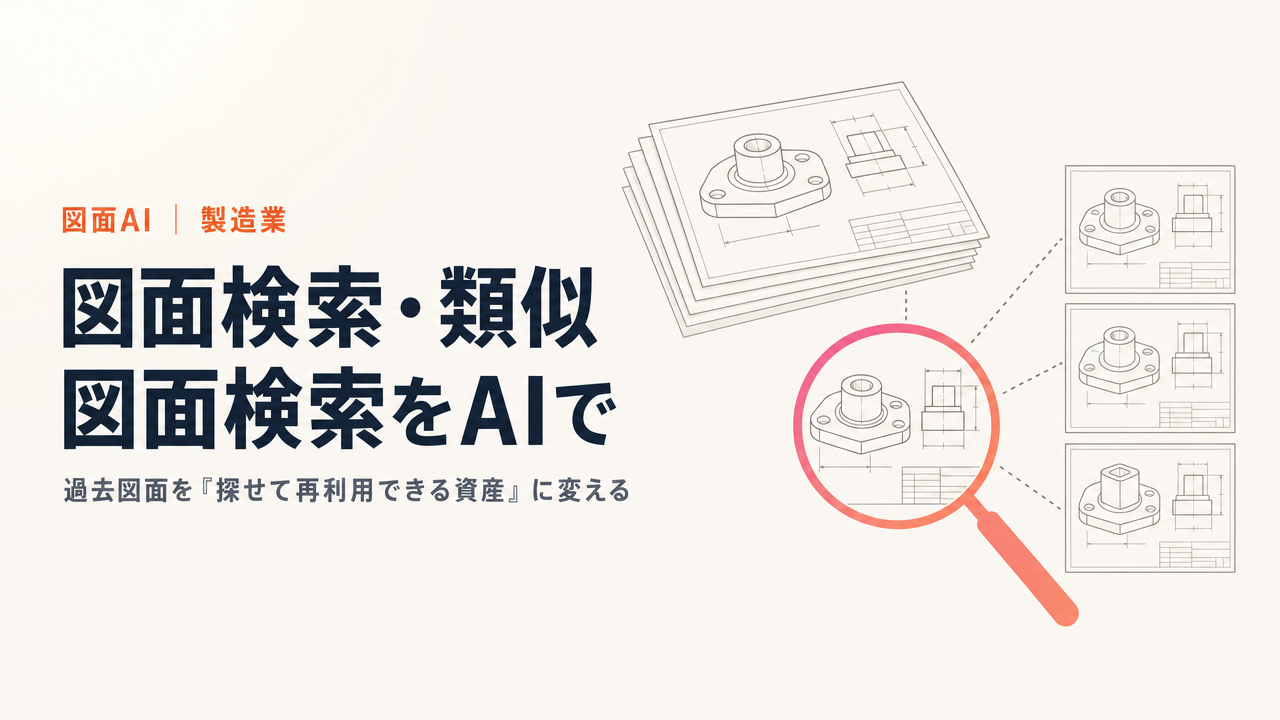
Take design. A drawing may list tolerances and materials, but it doesn't record the intent — "why this dimension," "why this material was chosen." Those reasons live inside a veteran's head. Hand a younger engineer the drawing and they can read the numbers, but they can't decode the design philosophy. Similar past drawings must exist somewhere, but they're scattered across paper, scanned PDFs, individual local PCs, and file servers — impossible to find — so they end up redrawing from scratch. This "time spent searching" and "time spent redrawing" piles up quietly, never showing up in a daily report.
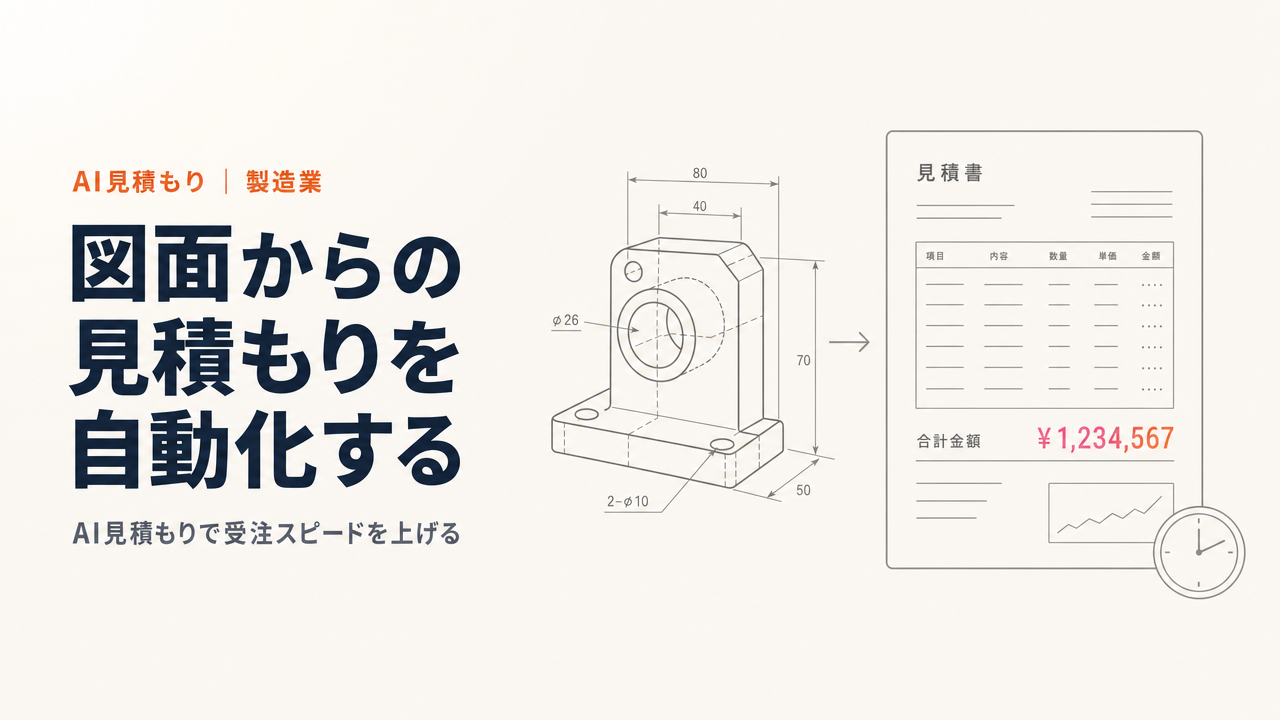
Sales and quoting are even more pressing. Even when a drawing arrives from a customer, sales can't read the labor hours or the going rate. They have no choice but to go ask design or manufacturing, and it takes two or three days to get an answer. In the meantime the deal flows to a competitor and is lost. As for cost calculation, it rests on a veteran's intuition, and because the basis for the build-up isn't recorded, when that person is out no one can judge "will we actually make a profit at this price."
Skill succession on the floor follows the same pattern. It takes years to become fully competent, yet the veterans who should be teaching are too busy to find the time, and it's hard to hire the younger staff who would learn in the first place. Training can't keep pace with the speed of generational change, and states like "only that person understands that equipment" and "that setup won't run without that person" become entrenched. If someone who has become a single point of failure retires or takes extended leave, the line stops and you can't fulfill orders. This is no longer a question of efficiency — it's a question of whether the business can continue.
The reason the loss is so hard to see, I've come to feel, is that what's disappearing is not "things" but "judgment." Equipment failure is obvious to everyone; the loss of judgment progresses quietly. By the time you notice, the person who could make that call is no longer in the company. That is exactly where the danger of putting off knowledge transfer lies.
What actually differs between "knowledge transfer" and "skill succession"
Let me sort out the terms. These two get conflated, but the scope they point to is a little different.
There's no fixed, strict definition, but in practice they're often used as follows. Skill succession refers to passing a craftsperson's physical skills on to the next person — laying a weld bead, sensing an abnormality from the sound and vibration of cutting, the sequence and force of assembly, the so-called skills of the hand. Knowledge transfer is broader: it covers judgment and knowledge, too, such as how to read a drawing, design intent, countermeasures when a defect occurs, and the knack of setup.
That said, what people really struggle with on the floor isn't the difference in wording. The essence is the same for both: whether you can preserve for the organization the "decision-making process" inside a veteran's head. This is where the concepts of tacit and explicit knowledge come in. Documented knowledge, like manuals and drawings, is explicit knowledge; knowledge acquired through experience and hard to put into words is tacit knowledge. The single biggest reason knowledge transfer fails is that the most valuable judgment sits on the tacit side, and as-is it can't be searched or shared.
In other words, the practical work of knowledge transfer can be restated as an effort to bring tacit knowledge as close to explicit as possible — or at least to make it "retrievable." Even if it's hard to transfer the feel of the hand wholesale, you can preserve the information that feeds a decision. This is exactly where AI does its work.
Struggling with AI adoption?
We have prepared materials covering ZEROCK case studies and implementation methods.
Why is succession so hard right now?
Some people say, "There have always been generational handovers, even in the old days." But today's difficulty has clear structural causes. Let's look at the numbers.
According to Japan's Ministry of Economy, Trade and Industry (METI) 2024 White Paper on Monozukuri, the number of people employed in manufacturing has fallen by roughly 1.57 million over the past 20 years.1 On top of the shrinking talent pool itself, the number of younger workers has declined over the long term, and the share of older workers aged 65 and over has risen. Today's manufacturing looks like this: the people who carry the work are aging, and they're reaching retirement age in a wave.
Layered on top of this is what's known in Japan as the "2025 problem." The baby-boom generation (those born from 1947 to 1949) all reach 75 or older, and the mass retirement of skilled workers and the shortage of successors advance at the same time. The "2024 problem" can't be ignored either. Caps on overtime under work-style reform legislation began applying to logistics and construction in April 2024, and the constraints on logistics rippled across entire supply chains. When there's no slack left for overtime on the floor, the time available for OJT and training younger staff gets squeezed too. No time to teach, and no one to teach — this double bind makes succession even harder.
At the root of it all is the long-term decline of the working-age population (people aged 15 to 64).2 Hiring difficulty and the difficulty of skill succession both, when you get down to it, trace back to this shrinking pool. In other words, knowledge transfer is not an individual company's problem that can be solved with effort and willpower — it's a challenge that requires redesigning your approach on the premise of population structure. That's precisely why you need a mechanism to preserve and retrieve expertise with limited staff. And that's where using AI becomes not just an option but a necessity.
How AI changes knowledge transfer
Here's the heart of it. When you use AI — and in particular GraphRAG (a way of connecting knowledge in a graph structure and using it for search and answers) that can relate information across the company — the landscape of knowledge transfer changes. The key is to turn the information that feeds a decision into something you can "search, retrieve, and hand on." Let's look at the representative approaches, alongside the before-and-after of adoption.
| Approach | Before | After |
|---|---|---|
| Similar-drawing search with drawing AI | Past drawings are scattered; 30 minutes to search. Can't find them, so redraw | Drawings with similar design philosophy suggested as candidates in tens of seconds; a person confirms and selects |
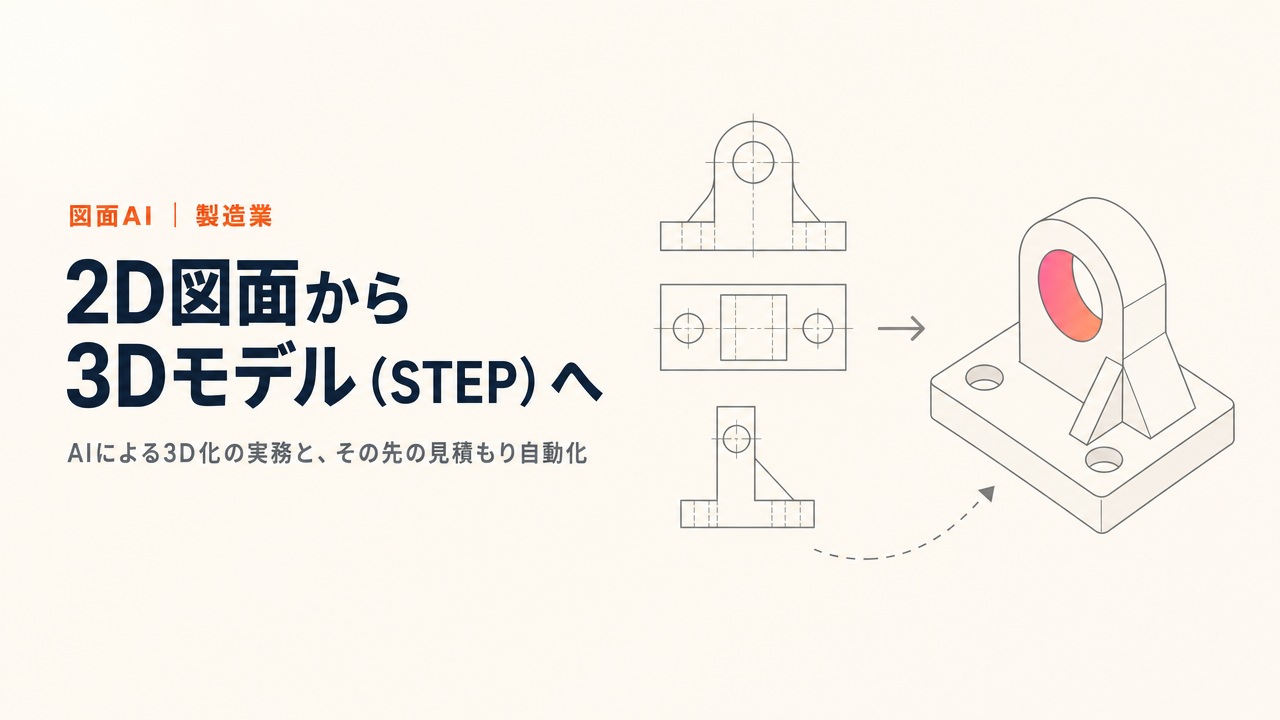
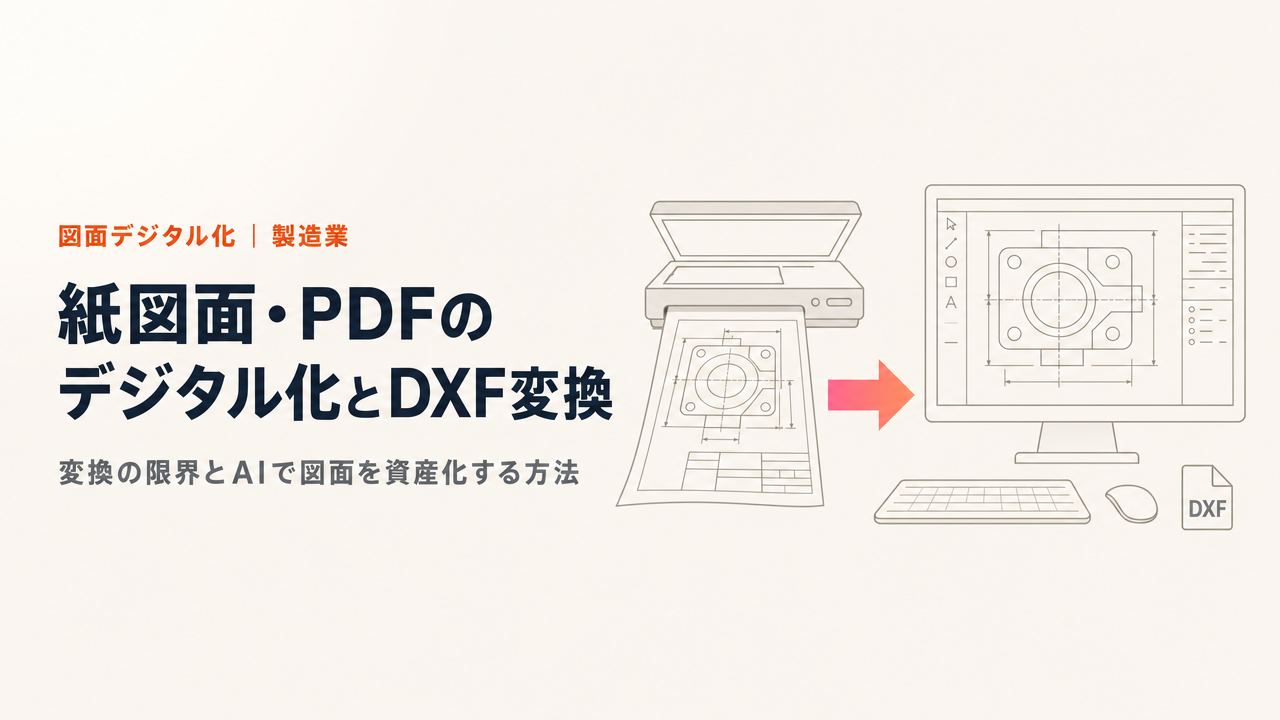
| DXF conversion / 2D-to-3D for scanned drawings | Redraw paper drawings from scratch; a full day to build the 3D | AI produces a first draft; final check in CAD cuts it to tens of minutes |
| Knowledge-transfer knowledge base | The only option is to ask an expert "how did we handle this before" | Cross-search past troubleshooting and defect countermeasures; candidate answers surfaced instantly |
| AI support for quotes and cost | Can't read labor hours even looking at the drawing; two or three days to reply | Generate a draft quote from machining content and past results; same-day replies become possible |
Let me add a note on each. First, similar-drawing search with drawing AI. Once you import past drawings (PDF, TIFF, DXF, STEP, and so on), you can find drawings with similar design philosophy — not just keyword matches. It presents "there must have been a drawing like that part before" as candidates in tens of seconds, and you can view them with material, dimensions, and even past defect history linked in. Younger staff can move design forward starting from the accumulated past. I go into more detail in How to do similar-drawing search with AI.
Next, turning drawing assets into data. Drawings that only survive as paper or scanned PDFs can be converted to DXF with AI, or you can generate a 3D model (STEP) from a 2D drawing. Here too, accuracy depends on the condition of the drawing, so the premise is that AI produces an 80-to-90-percent first draft and you verify the dimensions in CAD. I've written up the details in How to convert drawing PDFs to DXF and How to generate a 3D model (STEP) from a 2D drawing.
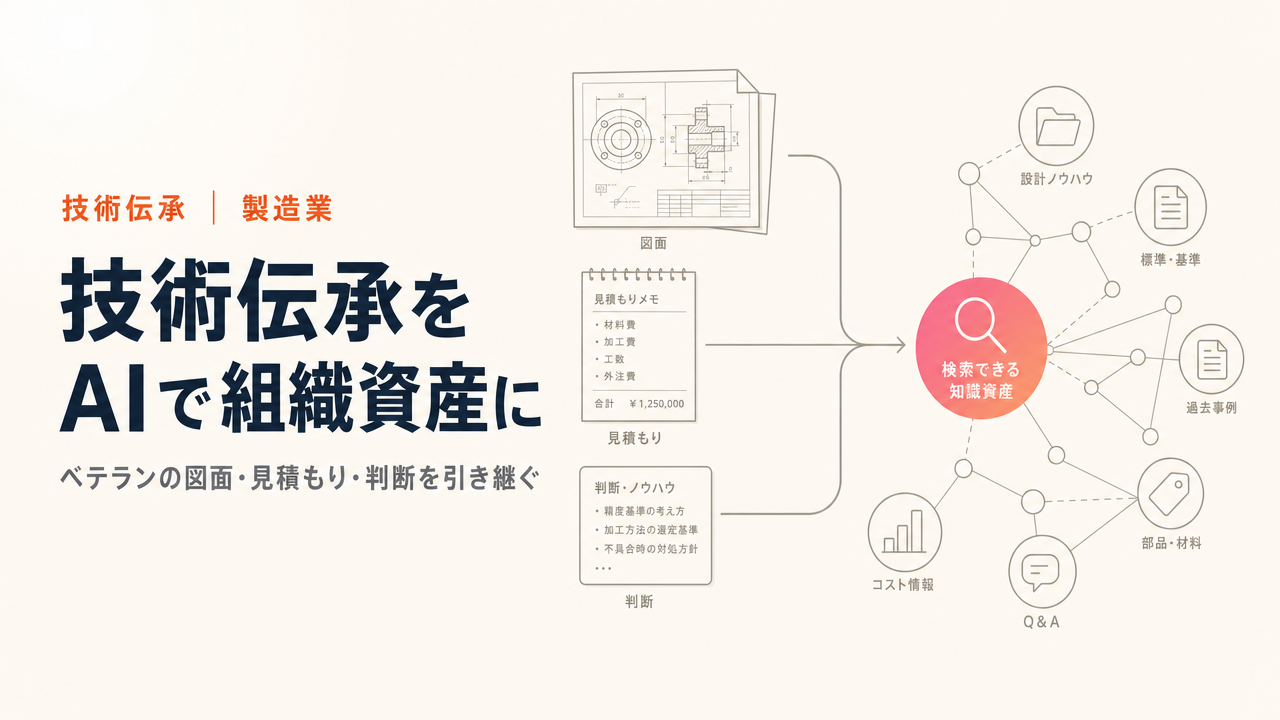
And then the knowledge-transfer knowledge base. Once you structure a veteran's decision criteria, responses to past trouble, and defect countermeasures with GraphRAG, you can instantly return candidate answers to "how did we handle that defect before." Even after a veteran retires, the knowledge stays in the organization and younger staff can learn naturally. Even on a floor that can't spare time for OJT, a mechanism can shoulder part of the succession. AI support for quotes and cost works by reading the machining content from a drawing and producing a draft after learning from your own unit-price tables and past quotation records. You can gradually replace a veteran's intuition with numbers that have a basis.
Let me also share a concrete figure. In a project where we supported a precision-parts manufacturer (a customer with about 800 employees, including the engineering department), engineers were spending an average of one hour and fifteen minutes a day searching for information. By simple arithmetic that's roughly 300 hours per person per year, equivalent to 240,000 hours company-wide. After adopting ZEROCK, they were able to cut this search time by about 80%. This is a value from our own case, not an industry-wide average, but I think it conveys just how large the savings from cutting search time can be. I touch on this thinking in more detail in ZEROCK adoption case study in manufacturing.
There's one operating philosophy I want to emphasize here. We don't aim for full automation. AI produces a first draft, and CAD or an expert makes the final check. Holding this premise firmly is, I believe, the trick to running in the real world over the long term without overreaching. Both excessive expectations of accuracy and, conversely, dismissing it too readily lead to the wrong adoption decision.
Pointers and tool selection so you don't stumble on rollout
I also often hear, "We brought in AI or a DX tool before, but it stalled on the wall of data preparation." A mood of "AI doesn't work for us" lingers on the floor, and the next step never gets taken. Let me share, in the order you'd actually do them, the pointers for not repeating that mistake.
Start small at first. Don't roll out company-wide all at once; begin with a single high-pain task. The trick is to choose an area where the effect is clearly visible, like drawing search or a first draft of a quote. Next, always test with your own real drawings. Only when you test with the real thing — with faint lines and your company's own notation conventions, not catalog-spec accuracy — do you learn whether it's usable. Create one small success experience, and the mood of "AI doesn't work for us" changes surprisingly fast.
Confirming security is essential, too. Drawings and inspection records are technical information itself. Is the data stored encrypted on domestic servers? Is the contract set up so that uploaded drawings aren't used to retrain the AI? Can they issue a certificate of deletion if you need one? This is a place you can't compromise on, from the standpoint of export control and confidentiality management as well.
Let me summarize the checkpoints for choosing a tool, laid out so they're easy to confirm.
- Can you trial it with your own real drawings? Being able to verify accuracy on the real thing — with faint lines and quirks — matters most.
- Does it go end to end through DXF conversion, 3D, and quoting? If tools are split, you get drawing handoffs and duplicate management.
- How is training data handled and where is it stored? Confirm in the contract that it won't be used for retraining and that it's stored domestically.
- Can it accumulate knowledge? Is there a mechanism to teach it your unit-price tables, past results, and internal notation to raise accuracy?
- Does it cover work beyond drawings? If you can do meeting minutes, internal document search, and document creation on the same platform, the return on investment changes.
If cost is a concern, public support is also worth considering. Programs that back labor-saving and DX investment and human-resource development may be available in some cases. Because eligibility requirements change each fiscal year, please confirm with the latest program guidelines. If you'd like to judge whether ZEROCK fits your own challenges, you can review its features and adoption flow on the ZEROCK service page.
What ZEROCK can do
At the risk of tooting our own horn, ZEROCK, the AI agent for manufacturing that we provide, implements the approaches raised in this article on a single platform. Similar-drawing search with drawing AI, DXF conversion of scanned drawings and 2D-to-3D (STEP) conversion, drafting quotes from drawings and support for cost calculation, and a knowledge-transfer knowledge base — you can use them all simply by importing your drawings and internal documents. It's designed to turn the drawings, inspection records, and history of judgment that veterans have built up into an organizational asset you can search, retrieve, and hand on.
Data is stored encrypted on domestic AWS servers, and your drawings and data are never used to retrain the AI. Because accuracy depends on the condition of your drawings and documents, we have you try it on your own actual drawings before adopting. A 7-day free trial and a demo using your real drawings are both available. If you'd like to discuss concretely how to move your knowledge transfer forward, feel free to reach out through ZEROCK consultation and document request. If you'd rather get the big picture first, take a look at The complete guide to AI in manufacturing and drawing AI as well.
Frequently asked questions
How should I distinguish between knowledge transfer and skill succession? There's no strict rule, but it's easier to sort out if you think of skill succession as the skills of the hand and knowledge transfer as the broader handover that includes judgment and knowledge. What people struggle with on the floor is the same in both cases: whether you can preserve a veteran's judgment for the organization.
How much tacit knowledge can AI preserve? You can't fully replace the physical senses themselves, like sound and feel. But if you structure the material surrounding those senses — past responses to defects, the basis for cost build-ups, the criteria for reading drawings — so it can be retrieved, you can dramatically reduce the situations where younger staff can't figure something out without asking one specific person.
Can small and mid-sized companies get started too? In fact, this is an area where smaller companies — heavily dependent on veterans and hit hardest by retirements — tend to see the biggest impact. I recommend starting small with a single high-pain task, such as drawing search or a first draft of a quote.
In closing
Skill succession looks like a story about efficiency, but it's really a story about whether the business can continue. Under the immovable premise of population structure, how do you build a mechanism that preserves and retrieves expertise even with limited staff? That's the question being asked.
- Knowledge transfer stalls because of structure, not attitude. An aging workforce and hiring difficulty are at the root.
- Manuals, videos, and skill maps are needed as a foundation, but the burden of updating them and the wall of tacit knowledge mean they can't preserve judgment.
- With drawing AI and a knowledge-transfer knowledge base, you can turn drawings, inspection records, and veterans' judgment into something you can "search, retrieve, and hand on."
- The linchpin of operation is "AI drafts, people make the final call." Not aiming for full automation is what makes it run smoothly in the end.
- The way to proceed is to start small and trial with real drawings. A small success experience changes the mood on the floor.
Once drawing judgment and quoting intuition are lost, the cost of getting them back skyrockets. Start with a single drawing and a single pain point. That will be your first step toward keeping decades of expertise inside the company.
References
Related articles
- The complete guide to AI in manufacturing and drawing AI
- How to convert drawing PDFs to DXF
- How to generate a 3D model (STEP) from a 2D drawing
- How to do similar-drawing search with AI
- ZEROCK for Makers | AI for manufacturing